
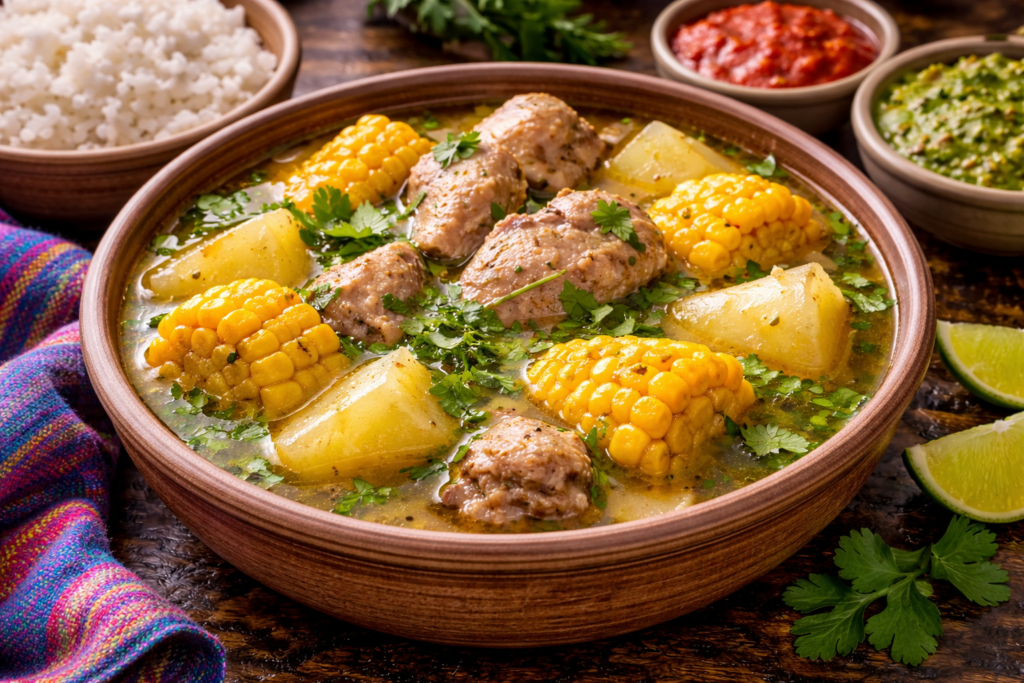
Panamanian cuisine reflects the country’s unique position as a crossroads of cultures, blending Indigenous, Spanish, African, and Caribbean influences into a cuisine that is hearty, vibrant, and deeply rooted in local ingredients. Corn, rice, and plantains form the foundation of many meals, while cassava, yuca, and tropical fruits bring both substance and brightness to the table. Fresh seafood is common along the coasts, while chicken, pork, and beef are widely used inland, often paired with vegetables like peppers, onions, tomatoes, and root crops.
The flavor palette tends to favor aromatic depth over intense heat. Garlic, onions, culantro, and sweet peppers create the base of many broths and stews, while herbs such as cilantro and oregano add freshness. Mild chiles provide gentle warmth rather than heavy spice, and citrus—especially lime—brings balance and brightness. Influences from the Caribbean introduce ingredients like coconut and plantains, while Spanish techniques shape many slow-simmered dishes. The result is a cuisine defined by comforting broths, fragrant rice dishes, and layered savory flavors that highlight Panama’s diverse cultural and agricultural heritage.