Blueberry and lavender aren’t a conventional pairing, and if either one is pushed too far, they can easily work against each other. But when they’re handled with restraint, they meet in a place that feels balanced rather than competing. The blueberry brings depth and natural sweetness—soft, slightly jammy, and familiar—while the lavender sits just behind it, adding a gentle aromatic lift that keeps the syrup from feeling heavy or one-dimensional. It doesn’t read as overtly floral. Instead, it sharpens and brightens the fruit, giving the syrup a cleaner, more structured finish.
Fruit and floral can easily work against each other if one isn’t kept in check. Lavender, especially, has a tendency to overpower if it’s not handled carefully. Here, the goal is restraint. The blueberry leads—rich, slightly jammy, and familiar—while the lavender sits just behind it, adding a subtle aromatic layer rather than taking over. It should read as lifted, not perfumed. That balance is what makes the syrup usable across more than just one application.
Building flavor without losing clarity.
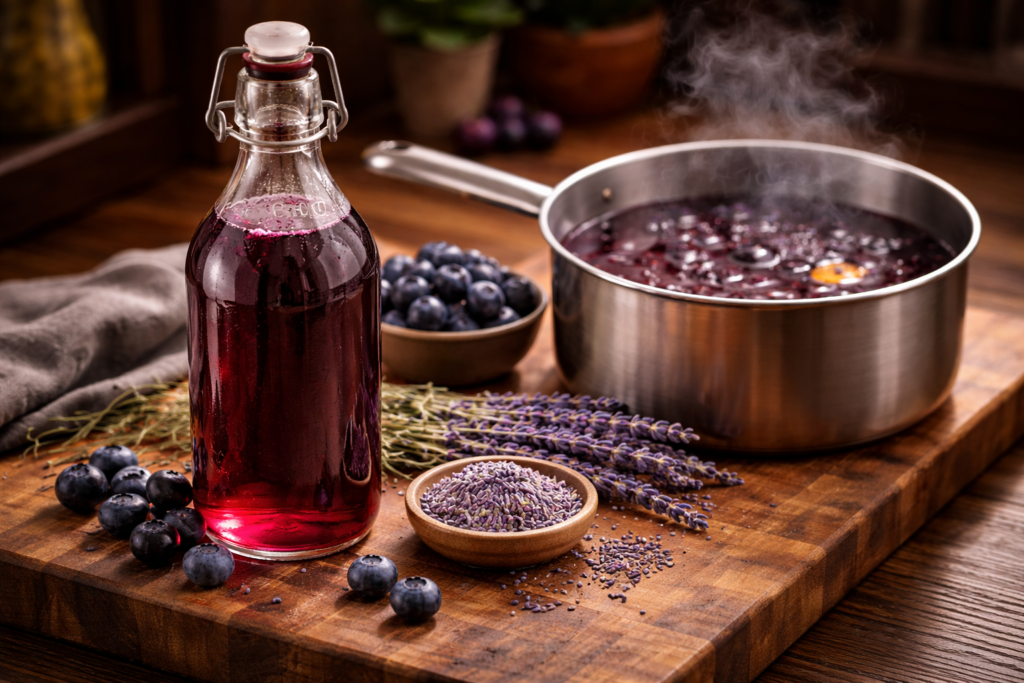
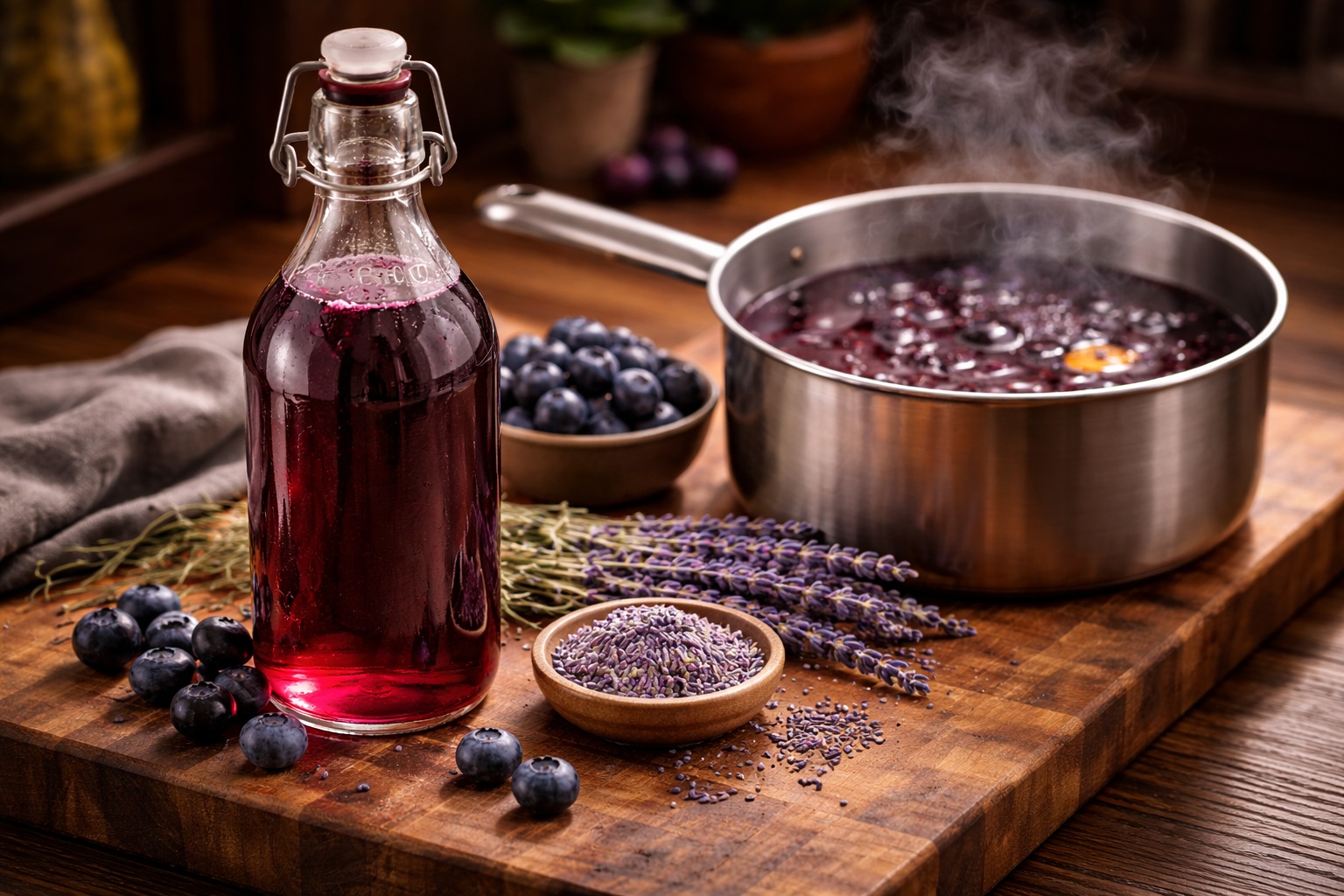
Like any infused syrup, this comes down to timing—but more importantly, control. Blueberries break down quickly once they hit heat, releasing their juice, color, and natural pectin into the liquid. That early breakdown is what gives the syrup its body and structure, creating a base that feels full rather than thin. The fruit does most of its work upfront, and it does it fast.
Lavender doesn’t follow the same rules. It extracts quickly, but not always cleanly. Left too long, it can shift from soft and aromatic to sharp, medicinal, or overly perfumed. It’s not something you build over time—it’s something you layer in carefully and pull back before it takes over. That’s why the process is split in intention. A controlled simmer allows the blueberries to fully express themselves, while the lavender is handled with a shorter, more deliberate steep—just long enough to integrate, not dominate. You’re not chasing intensity here. You’re managing it. Push the lavender too far, and the syrup loses clarity. Pull it at the right moment, and it simply lifts the fruit, sharpening the edges and keeping everything balanced.
Where it lands.
When it’s dialed in, the syrup reads as focused and adaptable rather than overtly fruit-forward or floral. The blueberry gives it body and a subtle tartness that holds up under dilution, while the lavender keeps the profile lifted and clean, preventing it from settling into something dense or overly sweet. That balance is what makes it useful—it doesn’t dominate, it integrates.
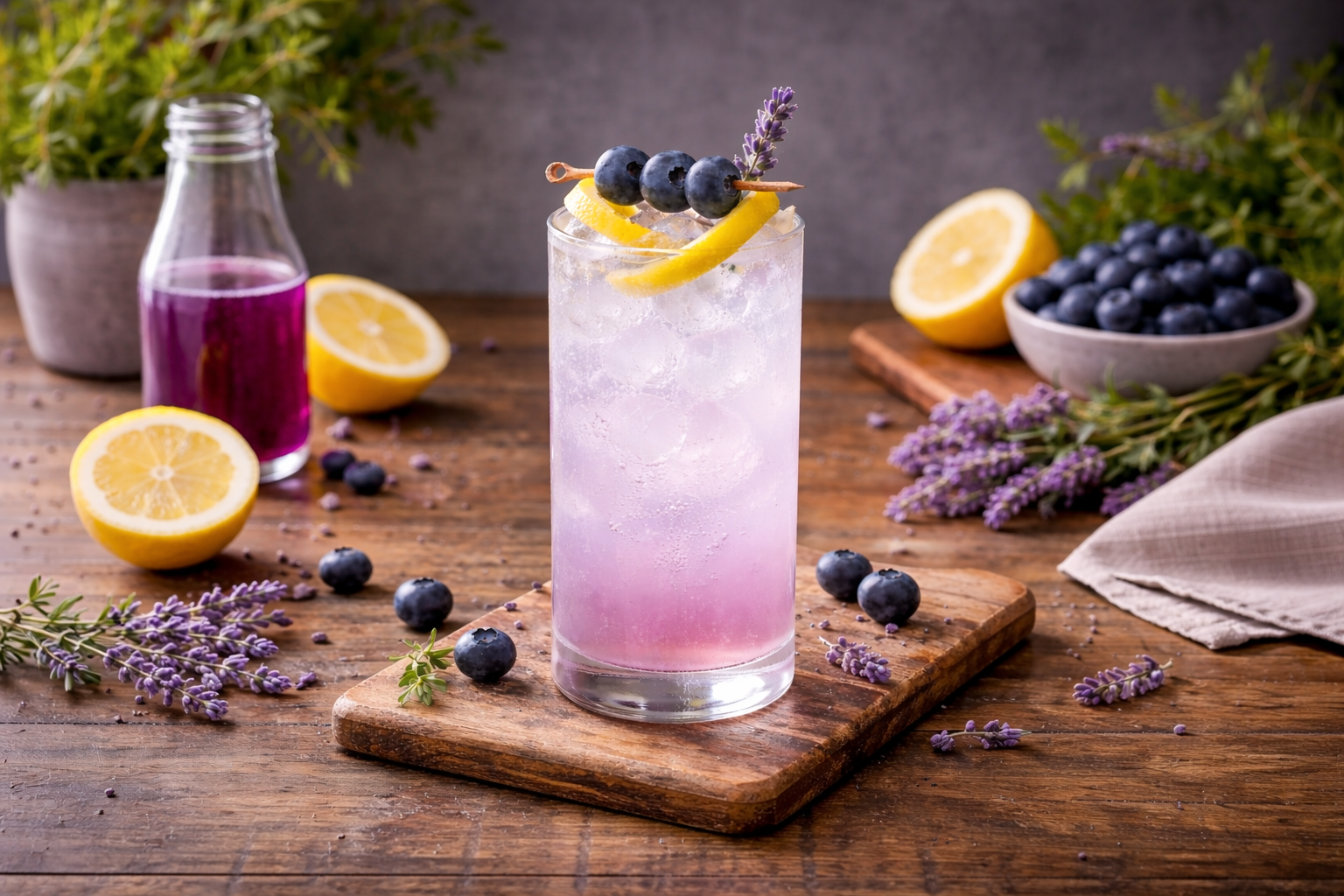
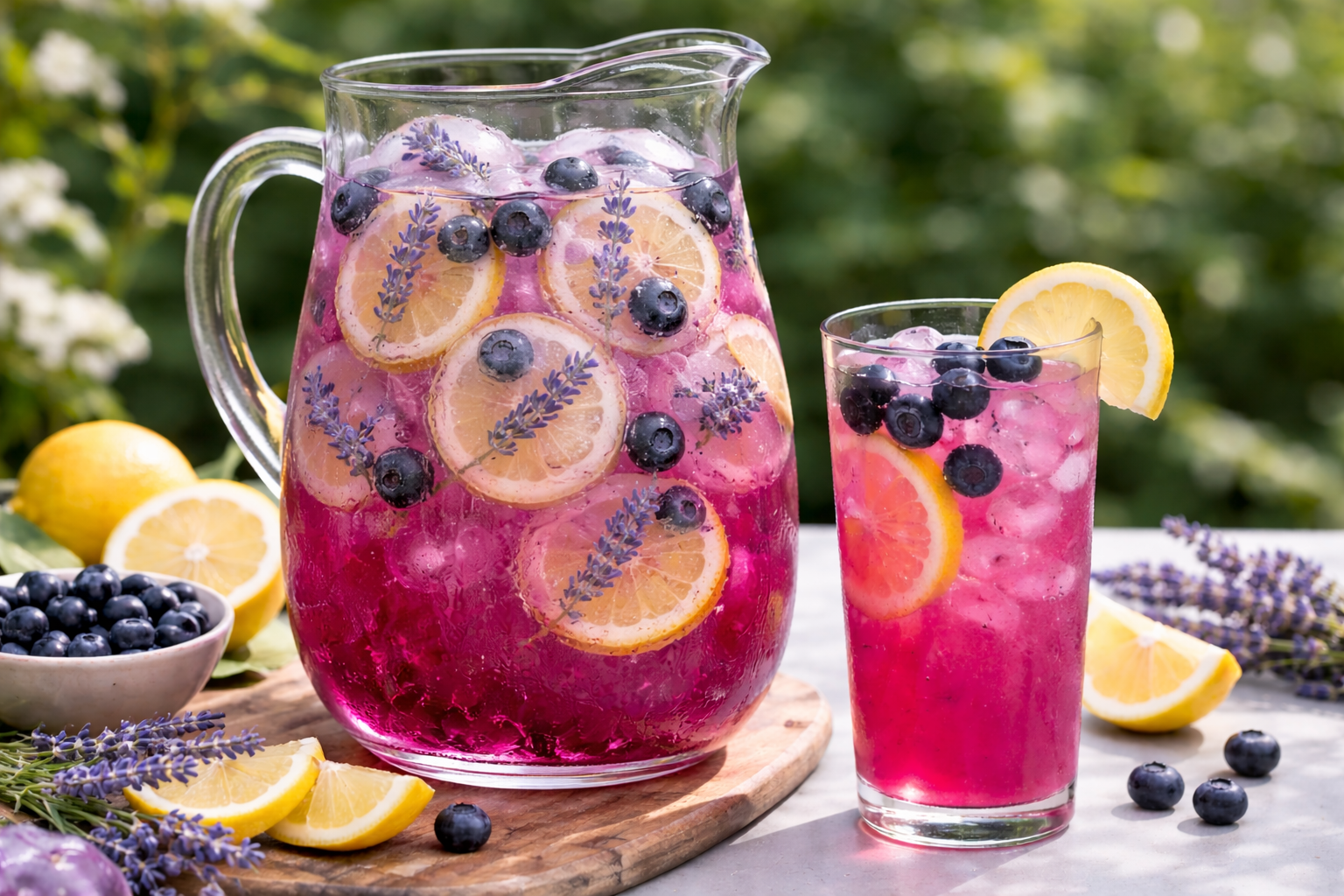
It’s the kind of syrup that opens up once it’s in use. Stir it into lemonade and the citrus sharpens the fruit, bringing the blueberry forward while keeping the finish clean. Add it to iced tea and the lavender becomes more pronounced against the tannins, giving the drink a more aromatic, almost structured quality. Build it into a cocktail and it shifts again—gin pulls the floral notes forward, vodka lets the blueberry lead, and something like bourbon or a darker spirit rounds it out into something deeper and more grounded.
What you end up with isn’t a syrup that dictates direction—it’s one that responds to it. It adapts to what you build around it, giving you something that can move between bright and refreshing, or more layered and composed, depending on how you use it.
What I typically use it in.
This is a syrup that works best when it sets the direction rather than competing for it, especially in lighter, more aromatic builds where that balance of fruit and floral can stay intact.
At the bar, it shifts depending on the base. With gin, the lavender becomes more pronounced and structured without feeling overly botanical. With vodka, the blueberry carries more of the weight, while the lavender keeps the profile clean. Added to sparkling wine or soda, it opens up—lighter, more refreshing, and more aromatic as it stretches across the glass. It also works well in tea-based builds, where tannins give the lavender more definition and keep the drink from drifting too sweet.
In the kitchen, it’s just as effective where a little lift is needed. Brushed into cakes or sponge layers, it adds moisture without weighing them down. Spoon-drizzled over ice cream, panna cotta, or custards, it cuts through richness and adds structure. Folded into fruit-based desserts—compotes, fillings, or macerated fruit—it sharpens and refines rather than simply sweetening.
Blueberry Lavender Simple Syrup leans into an unexpected pairing—ripe, jammy blueberry layered with the soft, aromatic lift of lavender—bringing fruit and floral together in a way that feels balanced rather than competing. The blueberry provides depth and natural sweetness, while the lavender adds just enough brightness to keep it from reading heavy or overly sweet, creating a syrup that’s both structured and nuanced.
If you are using fresh blueberries, wash thoroughly. Skip this step if using frozen.
Syrup Prep
Pour 3 cups of granulated white sugar into 6-cup stockpot.
Add 3 cups of blueberries into stockpot and muddle into sugar until blueberries are thoroughly smashed and sugar is stained with blueberry juice completely.
Add 3 cups filtered water onto muddled sugar and stir to combine.
Cooking
Bring ingredients to a boil in the stockpot until sugar is completely dissolved.
Reduce heat to and let ingredients simmer for at least 30 minutes.
Add 1 tbsp culinary grade lavender buds.
Remove stockpot from heat and let lavender steep in mixture while it cools for at least 1 hour.
Straining
Place mesh strainer over large pot or bowl (deeper than the depth of the strainer so that the liquid clears the bottom of the strainer).
Slowly pour contents of simmered liquid into strainer. Using muddler, gently press as much liquid from the contents of the strainer as possible (without damaging your strainer from the pressure).
Storing
Pour syrup into glass swing-top bottle (or jar if you don't have a bottle) and store at least 4 hours in the fridge to cool. Overnight cooling is even better.