To make this drink, you’ll need to have the Blueberry Lavender Syrup ready ahead of time—preferably made the day before and fully chilled, or at least prepared a few hours in advance.
That rest time matters. Freshly made, the syrup can feel a bit disjointed—the blueberry hasn’t fully rounded out, and the lavender can come across sharper than intended. Given time in the fridge, everything settles into place. The fruit becomes more defined, the floral note softens, and the overall profile reads cleaner and more controlled.
It also improves how the drink comes together. A cold syrup helps manage dilution and keeps the texture consistent, so you’re not compensating with extra shaking or ice. With the syrup already balanced and at temperature, the rest of the build becomes straightforward and precise.
Choosing the Right Gin
This is where the drink is won or lost. Lavender is already doing the floral work. If you pair it with a highly botanical or floral-forward gin, the drink stacks those aromatics on top of each other—and that’s when it starts to feel perfumed instead of refreshing. You’re not trying to showcase the gin here—you’re using it to anchor the drink and keep the lavender from getting out of control.
Go with something dry, clean, and restrained:
London Dry styles work beautifully
Avoid anything described as “garden,” “floral,” or “new western” heavy on botanicals
Ice Matters More Than You Think
A Collins is a long drink, which means dilution is part of the structure—not just a side effect. If you want to elevate the presentation and control that dilution, use a Collins spear instead of standard cubes. Even better, suspend a few blueberries or a strip of lemon peel inside the ice when you freeze it. Check out my post on Blueberry Lavender Lemon Ice.
It’s one of those small upgrades that makes the whole drink feel more considered. You get a slower, more controlled dilution, a cleaner visual (no floating debris, no clutter), and a built-in garnish that evolves as the drink opens up
Rethinking the Balance: Lemon vs. Soda
Traditionally, a Collins leans heavily on club soda to give the drink its length. That approach works, but it also means you’re diluting flavor just as much as you’re adding lift. I tend to pull that balance back a bit. Too much soda can flatten a drink over time, stretching it out while muting the very flavors you built it around. Instead, I lean slightly heavier on lemon juice and ease up on the soda—just enough to keep the acidity present and carry the structure of the drink forward.
That shift does a few important things. The citrus stays active instead of fading, the fruit reads more clearly, and the overall profile holds together from the first sip through the last. You still get the brightness and lift that define a Collins, but with more intention behind how the drink evolves in the glass.
The Garnish: Clean, Intentional, Functional
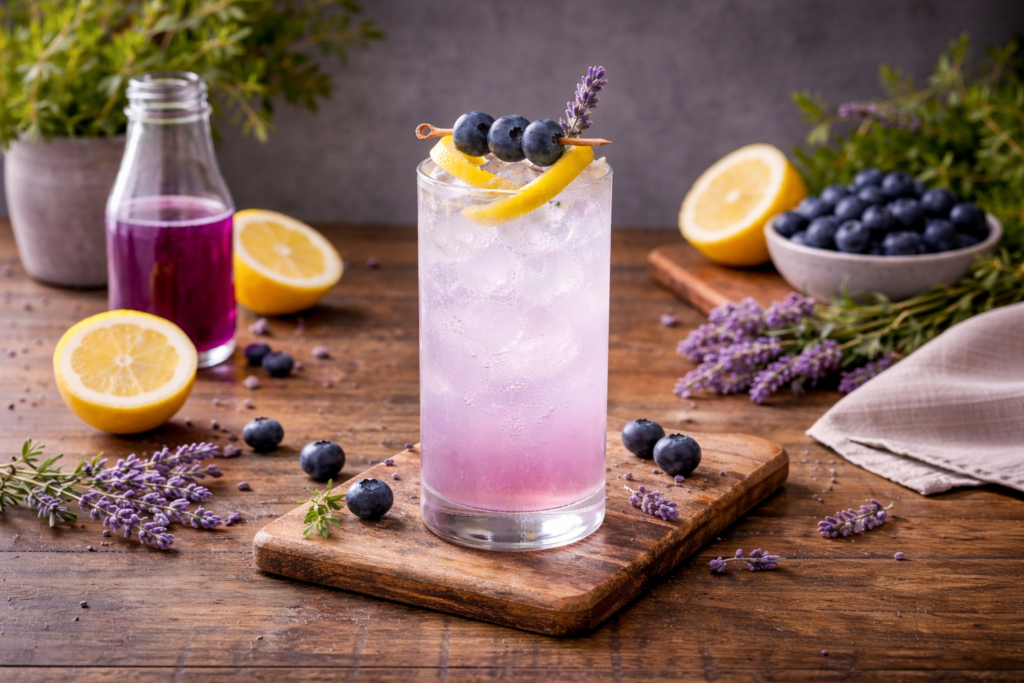
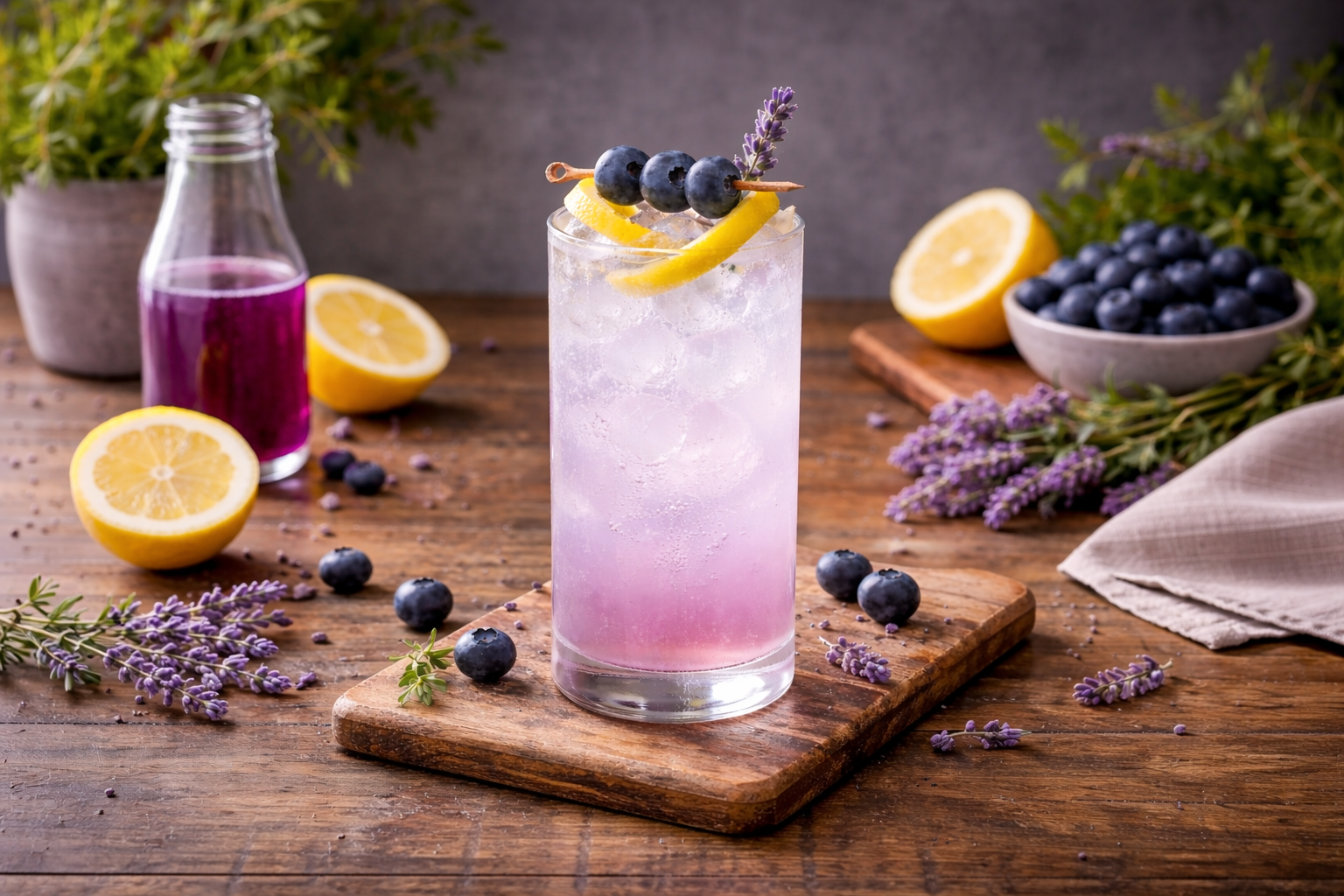
The final garnish should echo the drink rather than compete with it. In this case, a lemon twist wrapped around a garnish skewer of blueberries keeps everything aligned with what’s already in the glass while maintaining a clean, intentional presentation.
The twist reinforces the citrus aromatics that carry through the drink, adding a subtle lift each time it’s brought to the nose. The blueberries tie directly back to the syrup, giving visual continuity without introducing anything unnecessary. Everything stays structured—no loose herbs, no excess, nothing drifting out of place as the drink sits.
If you want to refine it further, technique starts to matter. A proper twist isn’t just decorative; it controls how the oils are expressed across the surface of the drink and how long that aroma lingers. I’ll be putting together a separate post on using a channel knife to create clean, consistent spirals that hold their shape and finish the drink with the same level of precision as the build itself.
Final Thoughts
What makes this drink stand out is how easily it moves beyond the glass. The balance of citrus, soft fruit, and restrained floral notes gives it a natural place at the table, not just as a standalone refresher.
It pairs especially well with food that leans fresh, herb-driven, or lightly rich. Grilled chicken, seared shrimp, or a simple piece of fish with lemon and olive oil all benefit from the drink’s acidity and lift. The subtle lavender plays nicely with herbs like thyme or rosemary without clashing, while the blueberry adds just enough roundness to soften sharper flavors.
It’s also a strong match for creamy elements—goat cheese, burrata, or even a lightly dressed pasta—where the citrus can cut through and reset the palate between bites. And because it stays clean and structured, it works just as well at the start of a meal as it does alongside it, without ever feeling like it’s competing for attention.
You’ll find the full method outlined below. The ingredients are simple, but the balance is what makes it work—clean citrus, controlled sweetness, and just enough lift to keep everything aligned.
Blueberry Lavender Collins
Bright, aromatic, and built to refresh, the Blueberry Lavender Collins balances soft berry sweetness with a restrained floral edge and a clean citrus backbone. Lemon juice brings just enough haze and acidity to keep the drink lifted, while gin ties the fruit and lavender together without letting either take over. Finished with soda for a light, effervescent finish, it drinks crisp and structured—more composed than sweet, and designed to stay refreshing from first sip to last.