







Member Features Save ingredients to your Stock, Shopping List, and Avoid List.
Sign In

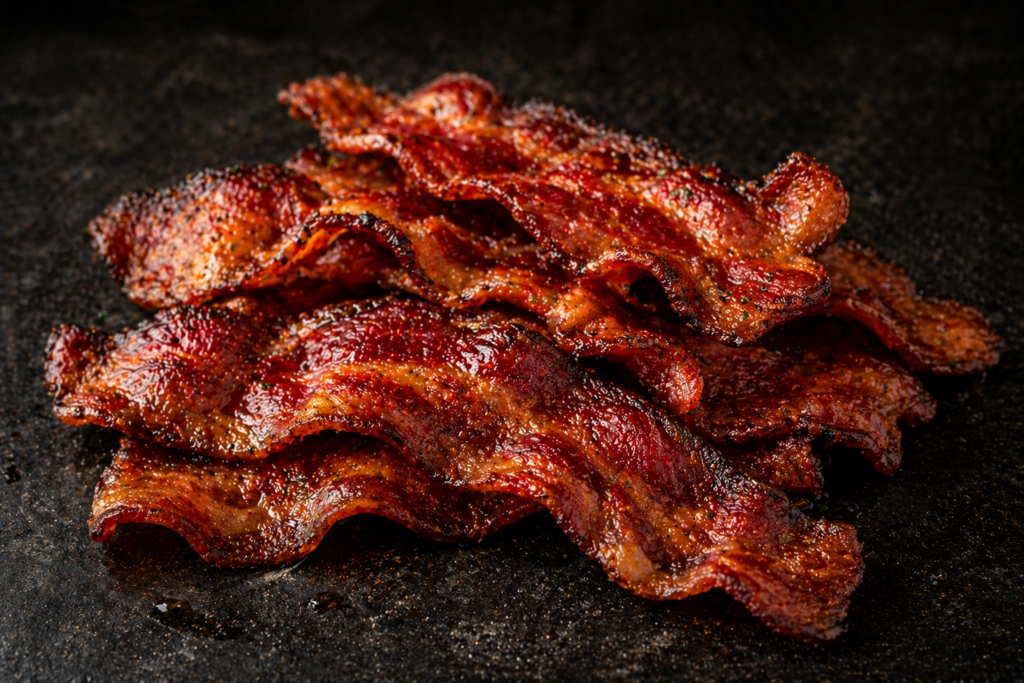
Bacon

Cured pork belly with salty, smoky, fatty flavor, used as a main ingredient, garnish, or flavor base.

About

Bacon brings a layered intensity of salt, smoke, and rendered fat that transforms the character of a dish almost instantly. As it cooks, it releases a rich, savory fat that can be used as a foundation—coating vegetables, building depth in soups, or anchoring a pan before anything else is added.

The meat itself shifts from supple to crisp, creating a contrast in both texture and flavor that plays well across a wide range of applications. Crumbled into salads, layered into sandwiches, folded into soups, or served alongside eggs, bacon rarely sits quietly in the background. Instead, it acts as both seasoning and ingredient, lending a concentrated, smoky richness that elevates even the simplest preparations.

Flavor Profile

Bacon is intensely savory, defined by a pronounced saltiness and a deep, lingering smokiness that carries through each bite. Beneath that, there’s a richness from the rendered fat that gives it weight and presence, often balanced by a subtle sweetness depending on the cure.

As it cooks, its flavor becomes more concentrated. Crisped bacon develops a deeper, almost roasted quality with lightly nutty undertones, while less-cooked pieces retain a softer, more rounded richness. The result is a flavor that feels both bold and layered, capable of standing on its own or enhancing the elements around it.

SWEET
SALTY
UMAMI
SMOKY

Texture Profile

CRISPY
CHEWY
TENDER
Culinary Use

Bacon is best used where a concentrated hit of savory, smoky richness can sharpen and elevate a dish. It pairs especially well with ingredients that benefit from contrast—eggs, potatoes, beans, and creamy elements like cheese or dairy—where its salt and smoke cut through richness and add definition. It’s equally effective alongside slightly sweet or earthy ingredients such as maple, apples, corn, cabbage, and Brussels sprouts, where the interplay of flavors feels balanced rather than heavy.

In composed dishes, bacon is often used in small amounts to amplify rather than dominate. It can be layered into sandwiches, folded into pastas, or scattered over salads and grain bowls, where its presence is felt in bursts. It also works well in soups and stews, particularly those built around legumes or root vegetables, where its intensity carries through the dish without requiring large quantities. Used thoughtfully, bacon acts as both contrast and connector—bringing disparate elements together through its depth and intensity.

Cooking Methods
Sautéed Quick cooking in a small amount of fat. Roasted Slow, dry heat in an oven for browning. Fried Submerged in hot oil (includes deep-frying and pan-frying). Baked Dry heat in an oven, typically at lower temperatures than roasting. Air Fried High-speed convection to mimic frying with minimal oil.

Prep Notes

Keep cold until ready to cook. Slice or dice before cooking if using as a flavor base; cook whole strips when the finished texture matters.

Storage Notes

Keep bacon refrigerated and tightly wrapped in its original packaging or an airtight container to prevent exposure to air and cross-contamination. Store it on a lower shelf to avoid drips onto other foods. If not using within a few days, transfer it to the freezer to preserve freshness and prevent spoilage.

Freezer Friendly

Freeze tightly wrapped portions. Thaw in the refrigerator or cook from frozen if separated into strips.

Shelf Life

Refrigerated:
1–3 days for raw meats; cured meats vary by package.
Frozen:
2–6 months for best quality.

Storage Locations
Refrigerator Standard cold storage for perishables. Freezer Long-term sub-zero storage.
Storage Methods
Airtight Container The gold standard for dry goods (flour, sugar, cereal) and leftovers to prevent staleness and pests. Vacuum Sealed Best for long-term freezer storage to prevent freezer burn. Sealed Bag Zip-top bags for cheese, deli meats, or snacks where a rigid container isn't necessary. Original Packaging Often best for items like eggs (which absorb odors through shells) or specifically designed produce bags.

Where to Buy

Shop this item online from trusted retailers.

Nutrition Facts Servings per container:
More nutrition
Soluble Fiber not listed, Insoluble Fiber not listed, Sugar Alcohols not listed, Net Carbs not listed.
Nutrition information is estimated using USDA FoodData Central and other reference sources. Actual values may vary based on ingredient variety, preparation method, brand, ripeness, processing, and measurement accuracy.

come back again
Because our site features alcohol, you must be over 21 to enter
are you at least 21 yearold?