

Member Features Save ingredients to your Stock, Shopping List, and Avoid List.
Sign In

Balsamic Glaze

Also known asBalsamic Reduction

A thick, sweet-tart reduction of balsamic vinegar used as a finishing drizzle for savory and sweet dishes.

About

Balsamic glaze is a concentrated expression of balsamic vinegar, reduced to a thick, syrupy consistency that intensifies both its sweetness and acidity. Through that reduction, what begins as a fluid ingredient becomes something more deliberate—richer, darker, and more controlled in how it’s used.

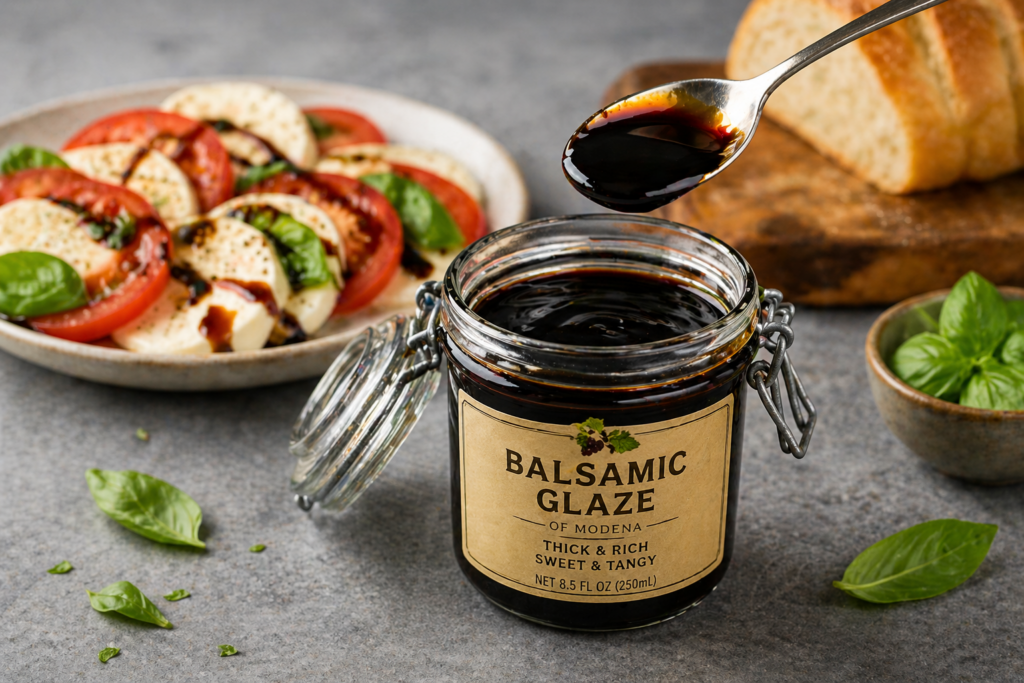
It’s most often applied at the end of a dish, where a light drizzle can add contrast, gloss, and visual definition. Whether drawn across fresh vegetables, layered over proteins, or used to finish composed plates, balsamic glaze functions as both flavor and accent—bringing balance and a sense of completion with just a small amount.

Flavor Profile

Balsamic glaze is sweet and tangy with a dark, fruit-forward depth that leans toward notes of fig, raisin, and cooked grape. The reduction softens the sharper edges of the vinegar, rounding its acidity into something smoother and more integrated, while the concentration amplifies its natural sweetness.

Its texture adds to the experience—thick and syrupy, it coats the palate in a way that feels rich without being heavy. When well reduced, it can take on an almost jammy quality, with a depth that lingers and unfolds gradually rather than hitting all at once.

SWEET
ACIDIC
FRUITY
BRIGHT

Texture Profile

SILKY
Culinary Use

Balsamic glaze is best used as a finishing element, where a small amount can add contrast, depth, and visual definition just before serving. Its thick, syrupy consistency makes it ideal for drizzling, allowing it to sit on the surface of a dish rather than disappear into it. Applied with intention, it can highlight key components and bring a sense of balance to the plate.

It pairs especially well with ingredients that benefit from a sweet-acid contrast. Fresh salads, roasted vegetables, and grilled meats gain clarity and lift from its brightness, while cheeses—particularly creamy or aged varieties—are complemented by its richness and subtle sweetness. It also works surprisingly well with fruit, where its dark, jammy notes echo and deepen natural sugars.

On flatbreads, appetizers, and composed dishes, balsamic glaze often functions as both flavor and garnish, tying elements together while adding a polished, finished look. Used sparingly, it enhances without overwhelming, delivering impact in just a few drops.

Cooking Methods
Raw No heat applied. Roasted Slow, dry heat in an oven for browning. Grilled Direct heat (usually from below) for char and smokiness.

Prep Notes

No preparation needed. Use sparingly, since its concentrated sweetness and acidity can dominate delicate ingredients.

Storage Notes

Store tightly sealed at room temperature away from heat and direct light. Vinegar is shelf-stable, though flavor is best preserved in a closed bottle.

Shelf Life

Generally shelf-stable for years; best flavor within 1–2 years after opening.

Storage Locations
Pantry General shelf-stable storage (dry, room temp). Freezer Long-term sub-zero storage. Cool, Dark Place A specific requirement for items sensitive to light/heat (like oils and potatoes).
Storage Methods
Airtight Container The gold standard for dry goods (flour, sugar, cereal) and leftovers to prevent staleness and pests.

Where to Buy

Shop this item online from trusted retailers.

Nutrition Facts Servings per container:
More nutrition
Soluble Fiber not listed, Insoluble Fiber not listed, Sugar Alcohols not listed, Net Carbs not listed.
Nutrition information is estimated using USDA FoodData Central and other reference sources. Actual values may vary based on ingredient variety, preparation method, brand, ripeness, processing, and measurement accuracy.

come back again
Because our site features alcohol, you must be over 21 to enter
are you at least 21 yearold?