There’s something about Potatoes Au Gratin that feels timeless. It isn’t flashy. It isn’t complicated. But when done correctly, it commands the table.
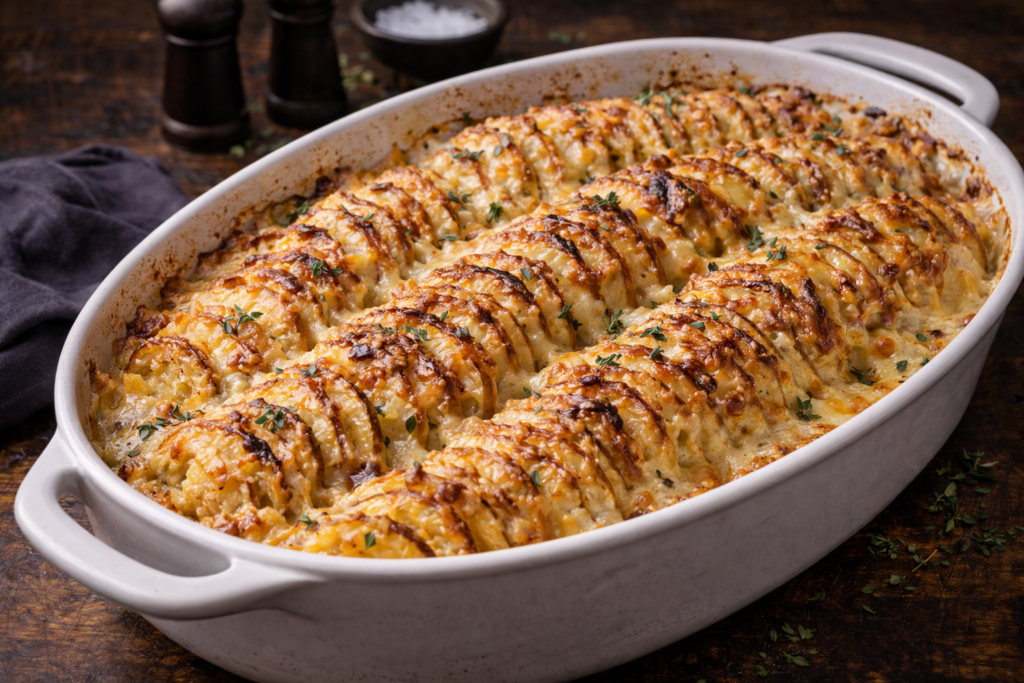
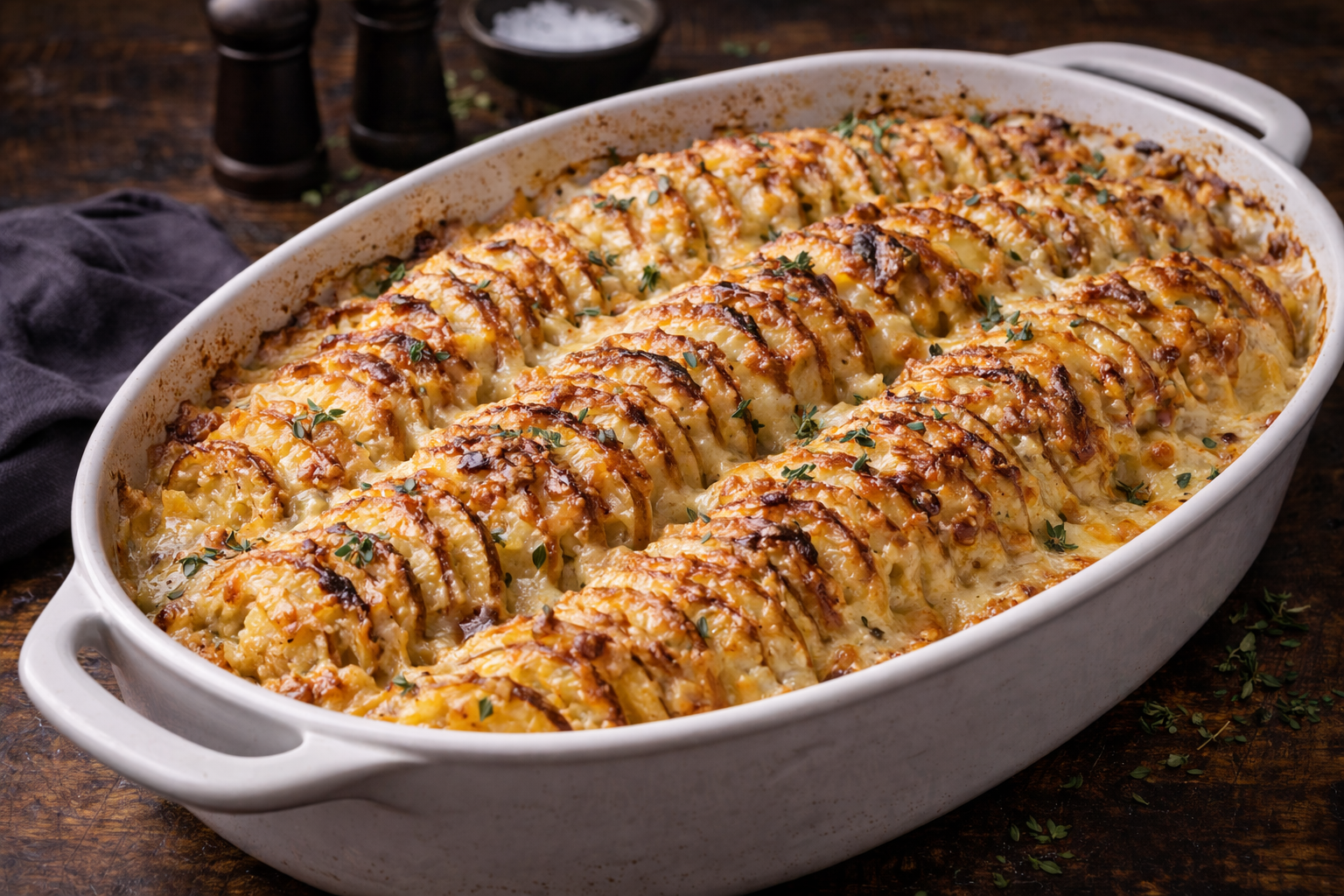
This version leans into technique and presentation just as much as flavor. Thinly sliced potatoes are arranged vertically—like a ratatouille—allowing the sauce and Gruyère to weave through every layer. The result isn’t just creamy; it’s structured, defined, and intentional.
Why Gruyère matters.
If you’re making a true gratin, the cheese shouldn’t just melt—it should contribute character.
Gruyère is nutty, slightly sweet, and complex without overpowering the dish. It melts seamlessly into the sauce while still browning beautifully on top. Those caramelized ridges are where the depth lives—and Gruyère delivers that every time, especially coupled with Parmesan, like this recipe calls for in addition.
All about the Roux.
This gratin begins with butter and seasoned flour cooked briefly before being whisked with milk or half-and-half. Milk keeps it classic. Half-and-half leans more indulgent. Either way, the roux is what makes the texture intentional.
Starting with a roux gives the sauce body from the beginning. It creates a creamier, thicker consistency that coats each slice evenly and bakes into something structured rather than loose. The result is a gratin that slices cleanly and holds its shape without sacrificing silkiness.
Mandoline or Knife? Both Work.
I recommend using a mandoline because it allows you to set a consistent thickness—and consistency matters in a dish like this. Even slices cook evenly. They absorb the sauce at the same rate. They soften without turning mushy.
But if you’re confident with a chef’s knife, use it. A steady hand and a sharp blade will give you just as beautiful a result. The key is thin, uniform slices—not the tool itself. Technique matters more than equipment.
The Finish.
As it bakes, the sauce tightens and the Gruyère bubbles into golden ridges across the surface. The top should be deeply caramelized— not pale, not scorched—just structured and bubbling. Let it rest before serving. The layers settle. That’s when you know the technique worked.
You’ll find the full method outlined below, from preparing the roux to arranging the potatoes for that vertical finish. The process is straightforward—precision matters more than complexity. If you make it, let me know how it holds its structure—and what you paired it with.
Gruyère Pommes de Terre Au Gratin
Thinly sliced potatoes layered vertically and baked in a rich cream infusion with nutty Gruyère until bubbling and golden. Crisp edges, tender centers, and a deeply savory finish make this French-inspired classic equal parts elegant and indulgent. Structured in presentation, layered in flavor, and unapologetically rich.
Wash and peel potatoes, making sure to re-rinse each potato after peeling, drying each with a paper towel.
Pre-heat oven to 400℉
Using a kitchen mandoline, slice each potato into ⅛" or 3mm slices. Once all the potatoes are sliced, use paper towel to soak up excess water from slices, and place in a mixing bowl.
Sprinkle 1 tsp salt, ½ tsp pepper, 1 tsp onion powder, ½ tsp thyme onto potato slices and mix in bowl until all the slices are coated with the seasoning blend.
Sauce
In a medium sauce pan, melt 4 tbsp butter on medium heat.
Once butter is melted, add 4 tbsp flour, ½ tsp garlic powder, ½ tsp paprika and whisk until combined; heat until mixture has a nice golden color.
Add 2 cups milk (or half and half) and whisk until the milk, butter, and flour are nice and creamy smooth (no clumps); bring the sauce to a simmer.
Constantly stirring, continue to cook for about 10 minutes or until sauce thickens and coats the whisk; remove from heat.
Add 1½ cups of the grated Gruyère and ¼ cup of the grated Parmesan, folding it into the sauce until melted and thoroughly incorporated.
Assembly
Grease casserole dish and load in potato slices standing vertically in about three rows (much how you would arrange the veggies in a ratatouille); be sure not to pack the slices too tightly, as you want the sauce to be able to work its way between the slices as it cooks.
Pour half the sauce over the potatoes, taking a fork to ensure the sauce works its way between the slices; top with remaining sauce, spreading evenly and making sure the potatoes are completely covered.
Top with remaining ½ cup Gruyère and ¼ cup Parmesan cheeses, spreading evenly.
Cover with lid (or foil if dish doesn't have a lid) and bake for 45 minutes.
Uncover and continue baking for another 35 minutes or until the potatoes are tender (when fork is inserted) and the cheese has a golden brown color.
Remove from oven and let rest on the counter for about 10 minutes before serving. This gives the sauce time to cool and bind.