Member Features Save ingredients to your Stock, Shopping List, and Avoid List.
Sign In

Granulated Sugar (/ˈɡrænjəleɪtɪd ˈʃʊɡər/)

Also known asWhite Sugar, Table Sugar, Refined Sugar, White Granulated Sugar

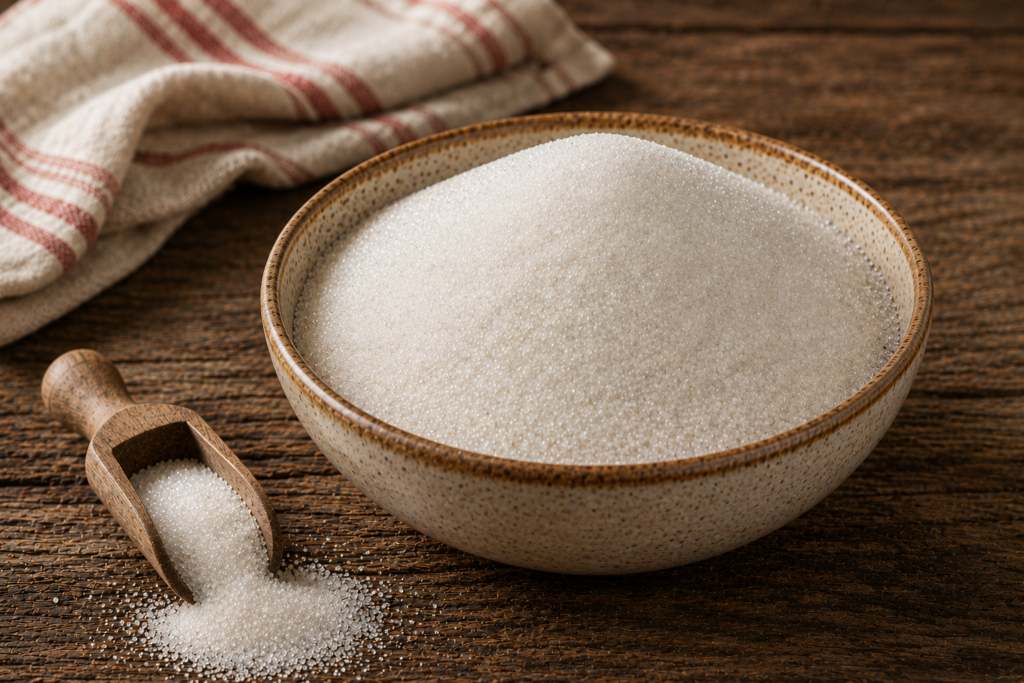
A refined crystalline sweetener produced primarily from sugar cane or sugar beets. Granulated sugar is the standard white sugar used in baking, cooking, beverages, preserving, and confectionery applications.

About

Granulated sugar is one of the most widely used ingredients in the world and serves as the standard reference point for sweetness in both home and professional kitchens. Produced by refining sucrose from sugar cane or sugar beets, granulated sugar is valued not only for sweetness but also for the numerous functional roles it performs in cooking and baking.

In baked goods, sugar influences moisture retention, tenderness, browning, spread, aeration, and shelf life. In sauces, beverages, and desserts, it balances acidity, bitterness, saltiness, and spice while enhancing overall flavor perception.

Sugar also plays a critical role in preservation. Jams, jellies, syrups, candied fruits, and many traditional preserves rely on sugar’s ability to bind water and inhibit microbial growth.

Though often viewed simply as a sweetener, granulated sugar is one of the most functionally important ingredients in culinary science, contributing texture, color, stability, and structure in ways that extend far beyond sweetness alone.


Flavor Profile

Granulated sugar delivers clean, straightforward sweetness with virtually no secondary flavor characteristics. Unlike brown sugars, honey, maple syrup, or less refined sweeteners, granulated sugar contributes sweetness without significant molasses, caramel, floral, or mineral notes.

Its neutral flavor profile allows it to enhance fruit, dairy, spices, chocolate, citrus, coffee, and countless other ingredients without competing for attention.

SWEET

Texture Profile

Granulated sugar consists of small, dry crystalline particles that flow freely and dissolve readily in liquids. When incorporated into baked goods, sugar contributes tenderness, moisture retention, browning, and structure. During cooking, it may dissolve completely, caramelize, crystallize, or form syrups depending on temperature and application.

FIRM
CRUMBLY
Culinary Use

Granulated sugar is used across virtually every category of cooking and baking. It sweetens beverages, baked goods, desserts, sauces, glazes, candies, preserves, syrups, and fruit preparations.

In baking, sugar contributes tenderness, moisture retention, browning, volume, and texture. In savory cooking, smaller amounts are frequently used to balance acidity, bitterness, spice, and salt. Sugar also serves as the foundation for caramel, meringues, simple syrup, candy making, jams, jellies, and countless dessert preparations.

Cooking Methods
Raw No heat applied. Simmered Gentle cooking in liquid just below the boiling point. Baked Dry heat in an oven, typically at lower temperatures than roasting. Poached Gently cooked in hot liquid.
Best Uses
Dressings & Vinaigrettes Marinades Sauces & Gravies Pickling Preserves & Jams Baked Goods Desserts Cocktails Mocktails

Storage Notes

Store granulated sugar in an airtight container in a cool, dry environment away from humidity, moisture, and strong odors. Properly stored sugar remains highly stable and can maintain quality for years without significant degradation.

Shelf Life

Granulated sugar has an extremely long shelf life when protected from moisture. While quality may slowly decline if exposed to humidity or contamination, properly stored sugar remains usable for many years.

Spoilage Signs

Granulated sugar rarely spoils. Quality issues are typically caused by moisture exposure, which can lead to hard clumping, contamination, or off odors from nearby foods.

Discard sugar if signs of pests, mold, water damage, or contamination are present.

Storage Locations
Pantry General shelf-stable storage (dry, room temp).
Storage Methods
Airtight Container The gold standard for dry goods (flour, sugar, cereal) and leftovers to prevent staleness and pests. Keep Dry

Did You Know

Sugar does far more than make foods sweet. In baking, it helps create tenderness, browning, moisture retention, aeration, and shelf stability, making it one of the most functionally important ingredients in the kitchen.

Buying Tips

Choose packages that are dry, intact, and free from hard clumps or moisture damage. For most home cooking and baking applications, standard granulated sugar remains the most versatile and widely used sugar product.

Cultural Notes

Granulated sugar became globally widespread through centuries of sugar cane cultivation, trade, and industrial refining. Today it serves as the foundational sweetener across countless culinary traditions, appearing in everything from European pastries and American baked goods to Asian desserts, Latin American confections, and Middle Eastern sweets.

Where to Buy

Shop this item online from trusted retailers.

Nutrition Facts Servings per container: ; Serving size: 100 g (100g) Amount per serving: Calories 1,610, Total Fat 0.3g, Sodium 1mg, Total Carbohydrate 99.6g, Total Sugars 99.8g, Protein 0g, Calcium 1mg, Iron 0.1mg, Potassium 2mg.
More nutrition
Soluble Fiber not listed, Insoluble Fiber not listed, Sugar Alcohols not listed, Net Carbs 99.6g, Phosphorus 0mg, Magnesium 0.3mg, Zinc 0.0mg, Copper 0.0mg, Manganese 0.0mg, Water 0.0g.
Nutrition information is estimated using USDA FoodData Central and other reference sources. Actual values may vary based on ingredient variety, preparation method, brand, ripeness, processing, and measurement accuracy.

come back again
Because our site features alcohol, you must be over 21 to enter
are you at least 21 yearold?