












Member Features Save ingredients to your Stock, Shopping List, and Avoid List.
Sign In

Ginger (/ˈdʒɪndʒər/)

Zingiber officinale
Also known asFresh Ginger, Ginger Root, Common Ginger

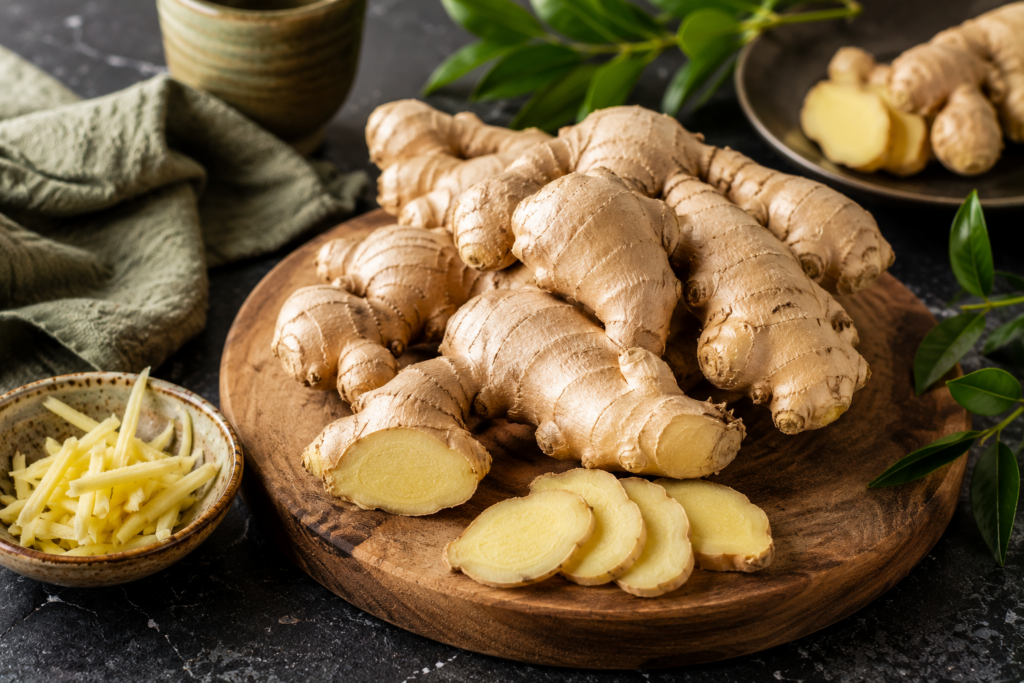
A pungent aromatic rhizome prized for its warm spice, citrusy brightness, and versatility in both savory and sweet cooking. Ginger is widely used across Asian, Indian, Middle Eastern, Caribbean, and Western cuisines.

About

Ginger is one of the world’s most important aromatic ingredients, cultivated for thousands of years for both culinary and traditional medicinal purposes. Technically a rhizome rather than a root, ginger grows underground and develops the warm, spicy flavor that has become essential to countless cuisines.

Its culinary versatility is remarkable. In savory cooking, ginger provides brightness, warmth, and aromatic complexity to curries, stir-fries, marinades, sauces, soups, braises, and noodle dishes. In sweet applications, it contributes spice and fragrance to cookies, cakes, candies, preserves, and beverages.

Fresh ginger is especially valued for its ability to add intensity without heaviness. Unlike chile peppers, which contribute heat through capsaicin, ginger produces a warming sensation that feels bright, fragrant, and layered. This quality makes it equally effective in rich dishes, light vegetable preparations, seafood, poultry, and desserts.

Across Asia, India, the Middle East, Africa, and the Caribbean, ginger remains a foundational ingredient whose flavor is immediately recognizable yet endlessly adaptable.

Flavor Profile

Fresh ginger delivers a distinctive combination of warming spice, citrus-like brightness, earthy depth, and aromatic pungency. Its flavor is simultaneously sharp and refreshing, making it one of the most versatile aromatic ingredients in the culinary world.

Young ginger tends to be milder, juicier, and less fibrous, while mature ginger develops greater intensity, heat, and earthy complexity. When cooked, ginger mellows considerably, contributing warmth and fragrance without overwhelming heat.

Its unique flavor profile allows it to bridge savory and sweet applications equally well, appearing in everything from curries and stir-fries to cookies, cakes, teas, and cocktails.

SWEET
EARTHY
HERBAL
BRIGHT
SPICY

Texture Profile

Fresh ginger is firm, dense, and moderately fibrous, especially as it matures. Young ginger is noticeably more tender and juicy with thinner skin and fewer fibers.

When finely grated or minced, ginger breaks down easily into sauces, marinades, and dressings. Larger pieces retain some structure during cooking and are often removed before serving in stocks, braises, and infused liquids.

FIRM
JUICY
FIBROUS
Culinary Use

Ginger is commonly grated, minced, sliced, julienned, crushed, or infused into liquids. It serves as a foundational aromatic in stir-fries, curries, noodle dishes, soups, marinades, sauces, braises, and spice blends.

It pairs especially well with garlic, soy sauce, sesame, citrus, coconut milk, honey, scallions, chile peppers, seafood, poultry, pork, and root vegetables.

Beyond savory cooking, ginger is widely used in baking, tea, cocktails, syrups, preserves, candies, and desserts. Its ability to complement both sweet and savory ingredients makes it one of the most versatile flavoring agents in the kitchen and bar.

Cooking Methods
Raw No heat applied. Sautéed Quick cooking in a small amount of fat. Roasted Slow, dry heat in an oven for browning. Grilled Direct heat (usually from below) for char and smokiness. Braised Searing followed by slow cooking in a small amount of liquid. Steamed Cooking with hot vapor to retain nutrients and moisture. Simmered Gentle cooking in liquid just below the boiling point. Baked Dry heat in an oven, typically at lower temperatures than roasting. Poached Gently cooked in hot liquid. Stewed Slow cooking small pieces fully submerged in liquid.
Best Uses
Aromatic Bases & Simmers Dressings & Vinaigrettes Marinades Sauces & Gravies Spice Blends & Rubs Rice & Grain Dishes Soups & Stews Stir-Fries Charcuterie & Cheese Boards Garnishes Pickling Baked Goods Desserts Cocktails Mocktails

Prep Notes

Fresh ginger may be peeled with a spoon, vegetable peeler, or paring knife, though very young ginger often requires little to no peeling. Grating produces the strongest flavor extraction, while slicing or julienning creates milder flavor release and more visible texture within finished dishes.

Washing Notes

Rinse ginger thoroughly under cool water to remove dirt from creases and growth rings. Scrub gently if using unpeeled ginger.

Trimming & Cutting Notes

Trim away dried, shriveled, moldy, or damaged sections before use. Break larger rhizomes into manageable pieces for easier storage and preparation.

Storage Notes

Store fresh ginger refrigerated in a breathable bag or loosely wrapped container. Whole unpeeled ginger retains quality longer than cut pieces. For extended storage, ginger may also be frozen whole and grated directly from frozen as needed.

Freezer Friendly

Ginger freezes exceptionally well with minimal flavor loss. Whole frozen ginger can be grated directly into recipes without thawing. Freezing often makes ginger easier to grate while preserving its aromatic compounds for extended periods.

Shelf Life

Ginger freezes exceptionally well with minimal flavor loss. Whole frozen ginger can be grated directly into recipes without thawing. Freezing often makes ginger easier to grate while preserving its aromatic compounds for extended periods.

Spoilage Signs

Discard ginger that becomes soft, slimy, moldy, shriveled beyond recovery, or develops fermented or sour odors. Dark internal discoloration may also indicate deterioration.

Storage Locations
Refrigerator Standard cold storage for perishables. Freezer Long-term sub-zero storage.
Storage Methods
Airtight Container The gold standard for dry goods (flour, sugar, cereal) and leftovers to prevent staleness and pests. Keep Dry

Did You Know

Despite being commonly called “ginger root,” ginger is actually a rhizome—an underground stem that grows horizontally beneath the soil.

Buying Tips

Choose ginger that feels firm, heavy, and smooth with tight skin and minimal shriveling. Younger ginger tends to be juicier and less fibrous, while older ginger offers stronger flavor and greater intensity. Avoid pieces that feel soft, moldy, wrinkled, or excessively dried out.

Seasonal Notes

Fresh ginger is available year-round in most markets. Young ginger, sometimes called spring ginger, typically appears seasonally and features thinner skin, higher moisture content, and a milder flavor profile.

Cultural Notes

Ginger has been cultivated for thousands of years and plays a foundational role in Chinese, Indian, Japanese, Thai, Korean, Middle Eastern, African, Caribbean, and Southeast Asian cuisines. It remains one of the most globally influential aromatic ingredients, valued for both its culinary versatility and cultural significance.

Where to Buy

Shop this item online from trusted retailers.

Nutrition Facts Servings per container: ; Serving size: 100 g (100g) Amount per serving: Calories 333, Total Fat 0.8g, Saturated Fat 0.2g, Trans Fat 0g, Cholesterol 0mg, Sodium 13mg, Total Carbohydrate 17.8g, Dietary Fiber 2g, Total Sugars 1.7g, Protein 1.8g, Vitamin D 0mcg, Calcium 16mg, Iron 0.6mg, Potassium 415mg.
More nutrition
Polyunsaturated Fat 0.2g, Monounsaturated Fat 0.2g, Soluble Fiber not listed, Insoluble Fiber not listed, Sugar Alcohols not listed, Net Carbs 15.8g, Vitamin A 0mcg RAE, Vitamin C 5mg, Vitamin E 0.3mg, Vitamin K 0.1mcg, Thiamin (B1) 0.0mg, Riboflavin (B2) 0.0mg, Niacin (B3) 0.8mg, Vitamin B6 0.2mg, Folate 11mcg DFE, Folic Acid 11mcg, Vitamin B12 0mcg, Pantothenic Acid 0.2mg, Phosphorus 34mg, Magnesium 43mg, Zinc 0.3mg, Selenium 0.7mcg, Copper 0.2mg, Manganese 0.2mg, Caffeine 0mg, Alcohol 0g, Water 78.9g.
Nutrition information is estimated using USDA FoodData Central and other reference sources. Actual values may vary based on ingredient variety, preparation method, brand, ripeness, processing, and measurement accuracy.

come back again
Because our site features alcohol, you must be over 21 to enter
are you at least 21 yearold?