
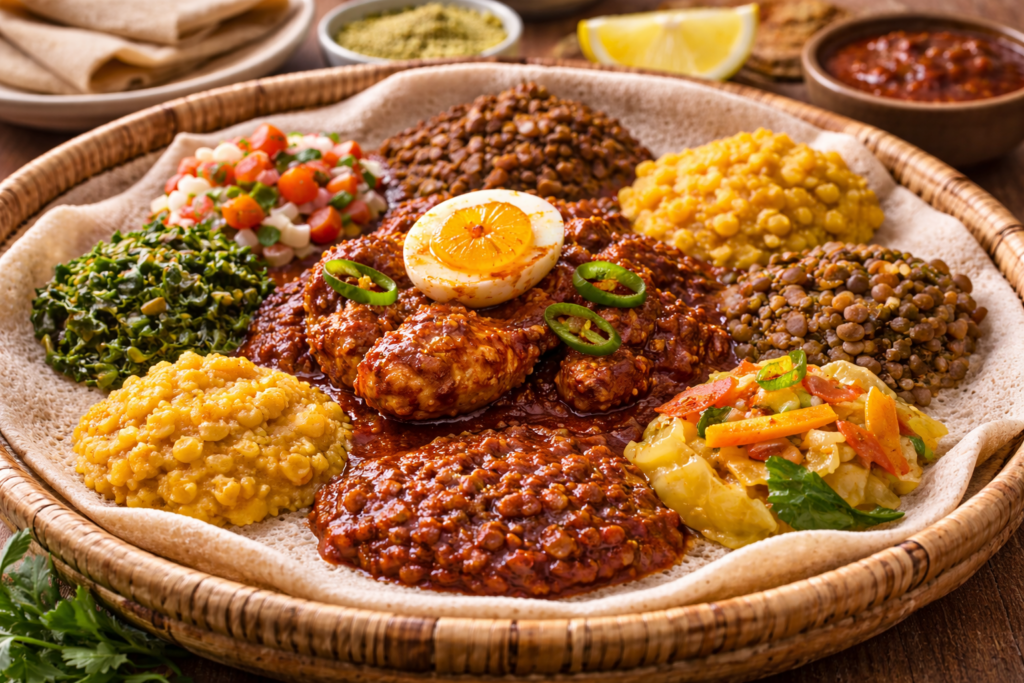
Ethiopian cuisine is built around bold spices, slow-simmered stews, and a deeply communal style of eating. At the center of the table is injera, a soft, tangy flatbread made from fermented teff flour that serves as both plate and utensil. Rich stews known as wats—often made with lentils, vegetables, or chicken—are layered across the injera and shared among diners.
The cuisine is defined by its vibrant spice blends, most famously berbere, a complex mixture of chili peppers, garlic, ginger, fenugreek, and warm spices that gives many dishes their deep red color and heat. Aromatics like onion, garlic, and niter kibbeh—a spiced clarified butter infused with herbs and spices—add further depth to the slow-cooked stews.
Signature dishes such as doro wat, a richly spiced chicken stew served with a boiled egg, and misir wat, a fiery lentil dish, highlight the balance of heat, earthiness, and tangy fermentation that defines Ethiopian cooking. The result is a cuisine that is bold, aromatic, and rooted in the tradition of sharing food from a single communal platter.