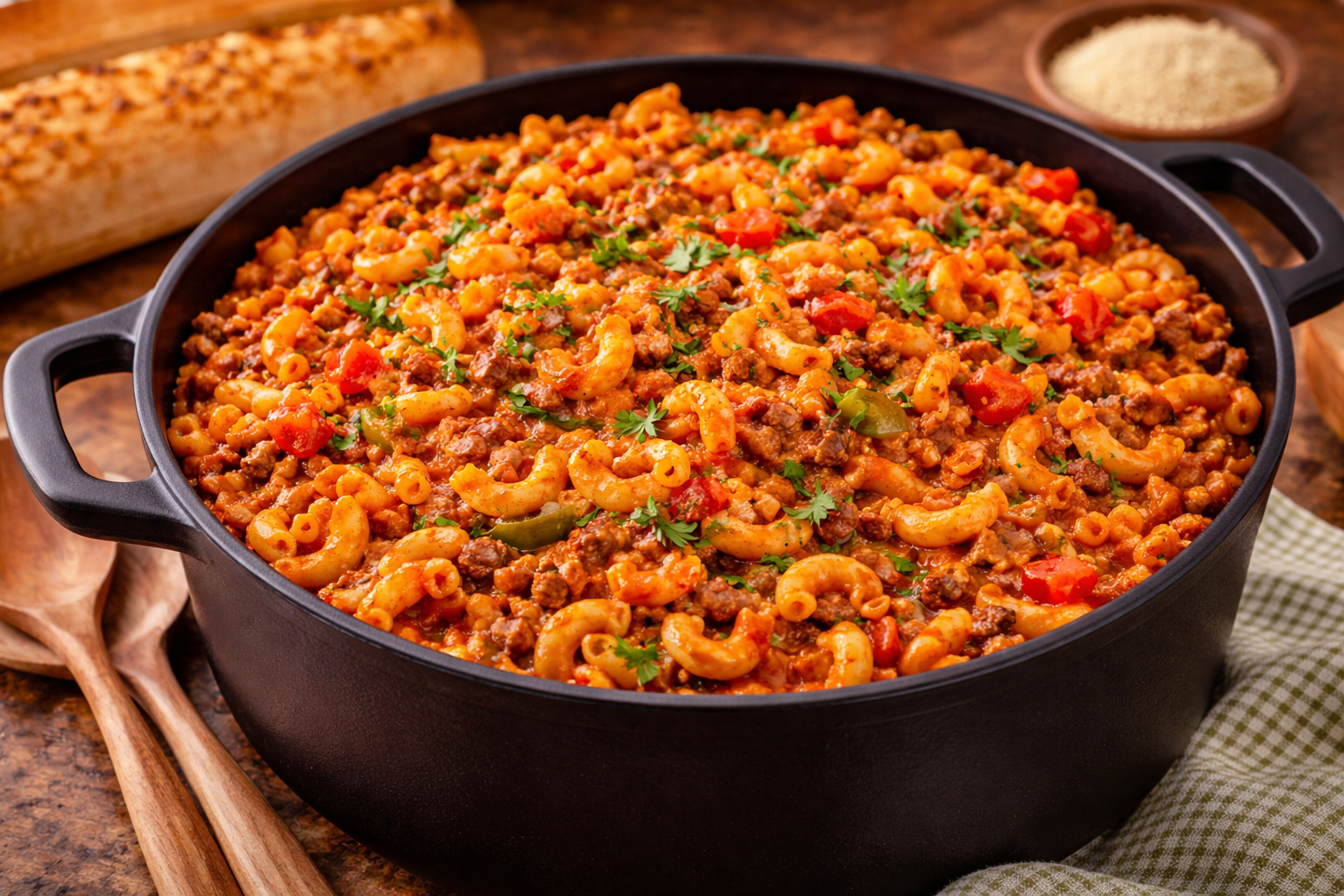


Midwestern cuisine reflects the agricultural heart of the United States, shaped by fertile farmland, long winters, and generations of immigrant communities who brought their culinary traditions to the region. German, Scandinavian, Polish, and Czech settlers all left their mark on the Midwestern table, contributing hearty dishes built around grains, dairy, pork, and beef. The result is a style of cooking that values comfort, practicality, and the ability to feed a crowd.
Many Midwestern classics center on simple, satisfying flavors—slow-roasted meats, creamy casseroles, butter-rich baked goods, and dishes designed to stretch pantry staples into something deeply comforting. Casseroles, often affectionately called hotdish, are a hallmark of the region, combining ingredients like ground beef, vegetables, and potatoes into one warm, communal meal. Likewise, dishes such as meatloaf, beef stroganoff, and chicken and noodles over mashed potatoes reflect the region’s love of hearty, home-style cooking.
The Midwest is also known for its deep connection to dairy and grain agriculture. Wisconsin’s famous cheese curds, Minnesota’s wild rice dishes, and the region’s many breads, pies, and butter-laden desserts all highlight the bounty of the land. Along the Great Lakes, freshwater fish like walleye and perch are regional staples, often lightly breaded and fried.
At its core, Midwestern cuisine is about warmth and generosity—food meant to bring people together around the table. It’s less about elaborate technique and more about honest ingredients, nostalgic flavors, and meals that feel like home.