
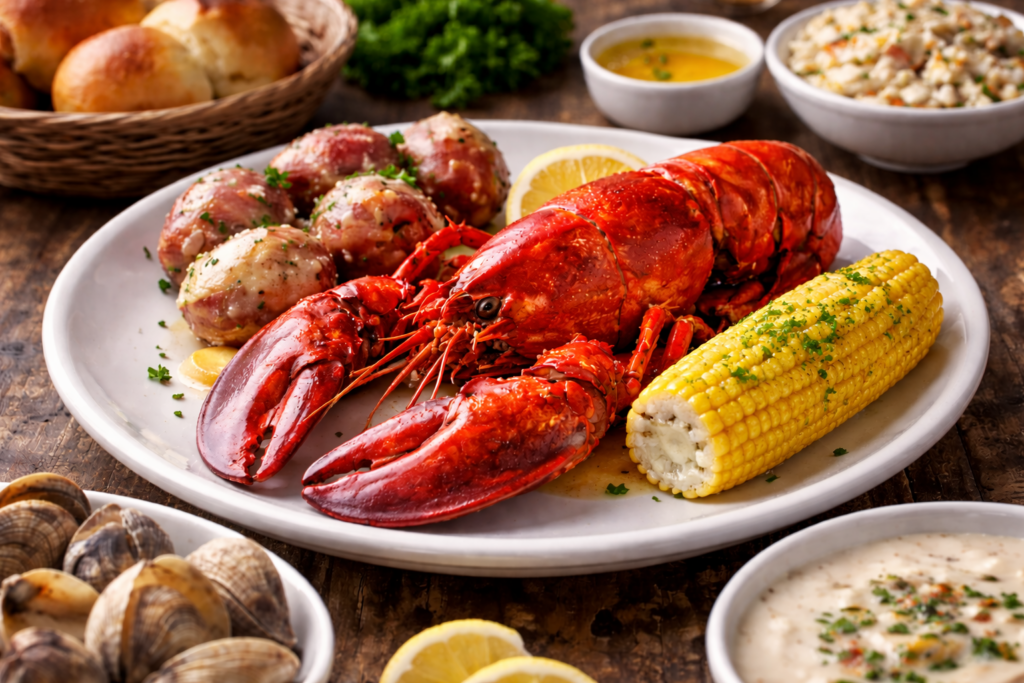
New England cuisine is deeply tied to the region’s rugged coastline, dense forests, and long, cold seasons. Influenced by early English settlers and shaped by the abundance of the Atlantic, its cooking has always leaned toward simplicity—letting fresh seafood, dairy, grains, and orchard harvests speak for themselves. Cod, haddock, clams, oysters, and lobster have defined the coastal table for centuries, often prepared with little more than butter, cream, or a squeeze of lemon.
Many of the region’s most iconic dishes come directly from its maritime heritage. Clam chowder, rich with potatoes and salt pork, remains one of New England’s most recognizable staples, while lobster boils & rolls celebrate the shellfish that have sustained coastal communities for generations. Along the Atlantic seaboard, simple preparations like pan-fried haddock and fish and chips continue a long fishing tradition that defines much of the region’s identity.
Further inland, the cuisine reflects the practicality required by a colder climate. Hearty dishes like New England baked beans, pot roast, and cornbread echo early colonial foods, while maple syrup—harvested from the region’s sugar maples—adds sweetness to breakfasts and desserts alike. Seasonal harvests also play a starring role, with apples, blueberries, cranberries, and pumpkins finding their way into pies, breads, and preserves throughout the year.
Having been born in Maine, this is where my culinary story begins. Growing up around New England’s food traditions taught me early that great cooking doesn’t need to be complicated—it begins with quality ingredients and a respect for the place they come from.