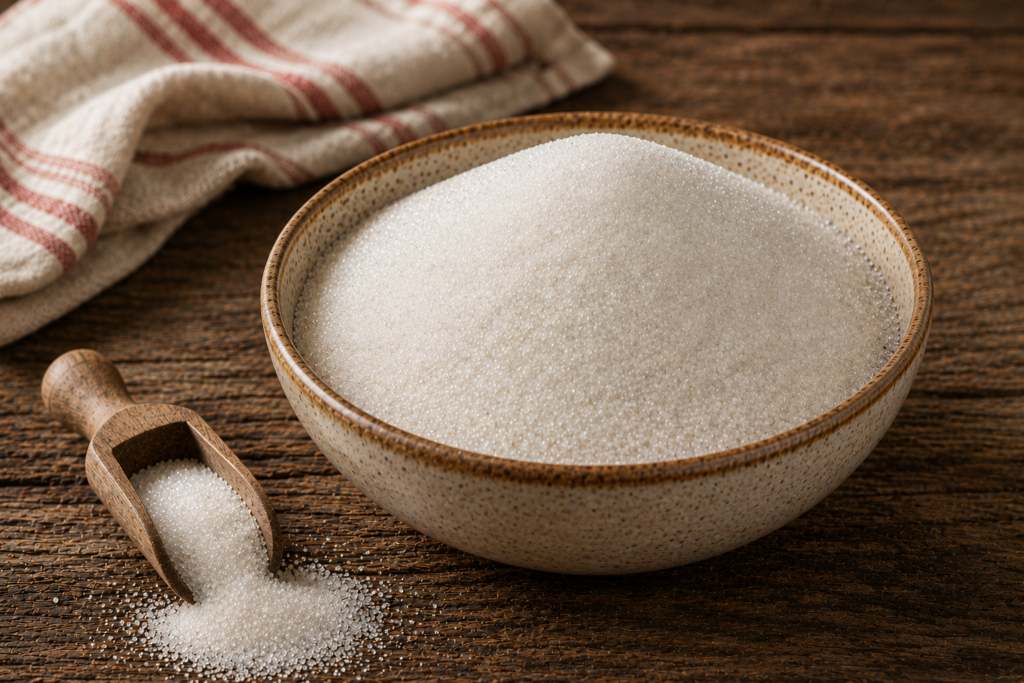
Granulated sugar is one of the most widely used ingredients in the world and serves as the standard reference point for sweetness in both home and professional kitchens. Produced by refining sucrose from sugar cane or sugar beets, granulated sugar is valued not only for sweetness but also for the numerous functional roles it performs in cooking and baking.
In baked goods, sugar influences moisture retention, tenderness, browning, spread, aeration, and shelf life. In sauces, beverages, and desserts, it balances acidity, bitterness, saltiness, and spice while enhancing overall flavor perception.
Sugar also plays a critical role in preservation. Jams, jellies, syrups, candied fruits, and many traditional preserves rely on sugar’s ability to bind water and inhibit microbial growth.
Though often viewed simply as a sweetener, granulated sugar is one of the most functionally important ingredients in culinary science, contributing texture, color, stability, and structure in ways that extend far beyond sweetness alone.