Member Features Save ingredients to your Stock, Shopping List, and Avoid List.
Sign In

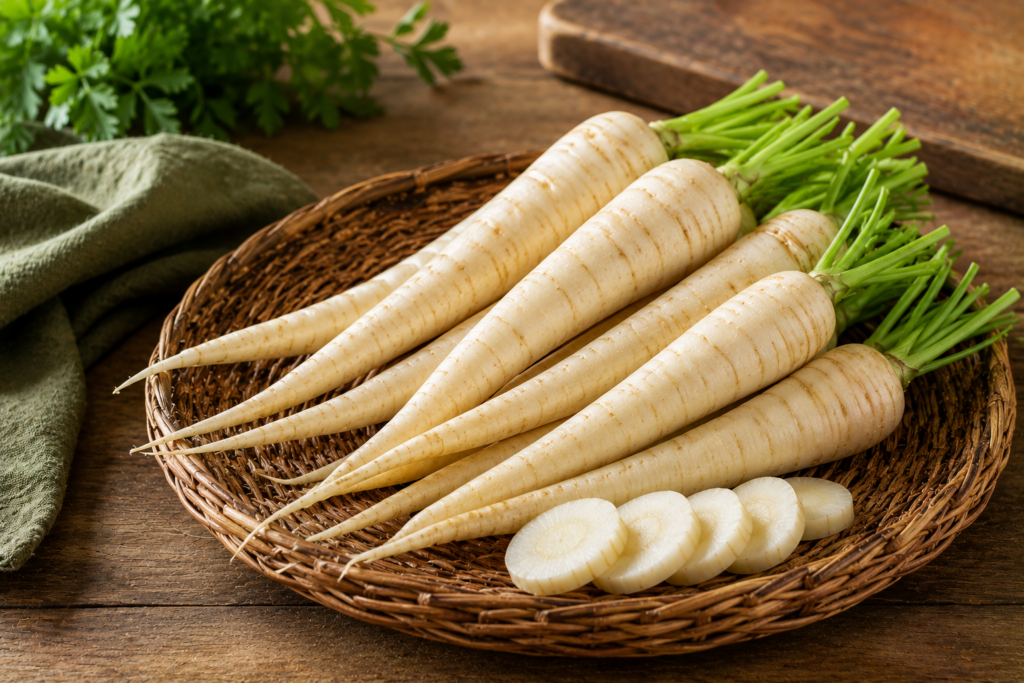
White Carrot (/ˈwaɪt ˈkɛr.ət/)

Daucus carota subsp. sativus
Also known asWhite Root Carrot, Heirloom White Carrot

A pale heirloom carrot variety known for its mild sweetness, earthy flavor, and creamy white color. White carrots are prized for their subtle flavor profile and refined appearance in roasted, puréed, and root vegetable preparations.

Parent:Carrot
About

White carrots are among the oldest cultivated carrot varieties and are believed to resemble some of the earliest domesticated carrots before the widespread development of orange cultivars. Their pale ivory coloring and understated flavor give them a more refined, delicate character compared to sweeter modern carrots.

Unlike orange carrots, white carrots contain little to no beta carotene, resulting in a flavor profile that feels earthier, less fruity, and slightly more savory. Their restrained sweetness allows them to pair exceptionally well with butter, cream, herbs, roasted meats, warm spices, and other root vegetables.

In modern cooking, white carrots are often used in seasonal or heirloom vegetable dishes where visual contrast and subtle flavor are prioritized. Their pale color also makes them especially effective in blended soups, purées, and elegant plated presentations where vibrant orange pigmentation would dominate the dish visually.

Though less common commercially, white carrots continue to appear in specialty farming, heirloom agriculture, and fine-dining vegetable programs where diversity of flavor and appearance are highly valued.


Flavor Profile

White carrots are milder and earthier than orange carrots with less pronounced sweetness and a more subdued vegetal profile. Their flavor often carries gentle mineral notes alongside subtle bitterness and mild nuttiness.

Raw white carrots taste cleaner and less sugary than common orange varieties, while cooking softens their earthy edges and develops a mellow root-vegetable sweetness. Roasting enhances their nutty undertones while preserving their delicate overall flavor profile.

SWEET
BITTER
EARTHY
NUTTY

Texture Profile

White carrots are crisp, dense, and crunchy when raw with a firm bite similar to other carrot varieties.

During cooking, they soften gradually while maintaining good structural integrity in roasted, braised, and simmered dishes. Properly cooked white carrots develop smooth, creamy interiors that work especially well in purées and elegant vegetable preparations.

CRUNCHY
TENDER
SOFT
FIRM
Culinary Use

White carrots are especially well suited for roasting, braising, purées, soups, root vegetable medleys, and refined plated vegetable dishes where their mild flavor and pale color can stand out subtly without overpowering surrounding ingredients.

Their restrained sweetness makes them useful in savory-forward applications that benefit from earthy depth without excessive sugar development. White carrots are also effective in creamy soups, blended sauces, and mixed heirloom carrot preparations.

Because they maintain their pale color during cooking, they are frequently used to create visual contrast alongside darker vegetables and proteins.

Cooking Methods
Raw No heat applied. Sautéed Quick cooking in a small amount of fat. Roasted Slow, dry heat in an oven for browning. Braised Searing followed by slow cooking in a small amount of liquid. Blanched Briefly boiled then "shocked" in ice water to preserve color and snap. Steamed Cooking with hot vapor to retain nutrients and moisture. Simmered Gentle cooking in liquid just below the boiling point. Baked Dry heat in an oven, typically at lower temperatures than roasting. Poached Gently cooked in hot liquid. Stewed Slow cooking small pieces fully submerged in liquid. Air Fried High-speed convection to mimic frying with minimal oil.
Best Uses
Stocks & Broths Braised Dishes Rice & Grain Dishes Roasted Dishes Soups & Stews Stuffings & Fillings Salads Sautés

Prep Notes

Scrub thoroughly before use, especially around the crown where soil collects easily against the pale skin. Peeling is optional but often preferred for refined presentations due to the visibility of surface blemishes.

Uniform cutting helps ensure even cooking and balanced caramelization during roasting or braising.

Washing Notes

Wash under cold running water while gently scrubbing away dirt and debris from natural ridges and creases.

Because of their pale coloring, discoloration and surface bruising are often more visible than on darker carrot varieties.

Trimming & Cutting Notes

Trim both ends before peeling or slicing. Remove any fibrous, split, or discolored sections before cooking.

Larger mature white carrots may develop firmer cores that benefit from splitting lengthwise before roasting or braising.

Storage Notes

Store white carrots refrigerated in high-humidity produce storage away from ethylene-producing fruits. Remove greens before storage to preserve moisture and texture.

Because discoloration is more visible on white carrots, gentle handling helps maintain appearance quality during storage.

Freezer Friendly

White carrots freeze well after blanching. Blanching helps preserve texture and prevents flavor deterioration during frozen storage.

Frozen white carrots are best suited for soups, stews, purées, and cooked vegetable preparations rather than raw applications.

Shelf Life

Whole white carrots can last several weeks under proper refrigerated storage conditions.

Cut or peeled carrots should generally be used within several days for best texture and flavor.

Spoilage Signs

Discard white carrots that become slimy, excessively limp, moldy, sour-smelling, or heavily discolored. Dark crown areas, internal dryness, or rubbery texture are also signs of aging and deterioration.

Storage Locations
Refrigerator Standard cold storage for perishables. Freezer Long-term sub-zero storage.
Storage Methods
Airtight Container The gold standard for dry goods (flour, sugar, cereal) and leftovers to prevent staleness and pests. Damp Wrap Wrapping an ingredient (like hardy herbs or asparagus) in a damp paper towel before bagging.

Did You Know

White carrots are considered one of the oldest carrot color varieties and likely resemble some of the earliest cultivated carrots grown before orange carrots became dominant in Europe.

Buying Tips

Choose white carrots that feel firm, dense, and smooth with minimal cracking or discoloration. Avoid carrots that appear limp, shriveled, rubbery, or bruised near the crown.

Seasonal Notes

White carrots are most commonly harvested during cooler growing seasons, particularly autumn and winter, when root vegetables develop stronger sweetness and more balanced flavor.

Cultural Notes

White carrots are most commonly associated with heirloom farming, heritage vegetable cultivation, and seasonal fine-dining cuisine, where they are valued for their subtle flavor and elegant visual presentation.

Where to Buy

Unfortunately, none of our preferred vendors currently carry this ingredient.

Nutrition Facts Servings per container: ; Serving size: 100 g (100g) Amount per serving: Calories 41, Total Fat 0.2g, Saturated Fat 0.0g, Trans Fat 0g, Cholesterol 0mg, Sodium 69mg, Total Carbohydrate 9.6g, Dietary Fiber 2.8g, Total Sugars 4.7g, Protein 0.9g, Vitamin D 0mcg, Calcium 33mg, Iron 0.3mg, Potassium 320mg.
More nutrition
Polyunsaturated Fat 0.1g, Monounsaturated Fat 0.0g, Soluble Fiber not listed, Insoluble Fiber not listed, Sugar Alcohols not listed, Net Carbs 6.8g, Vitamin A 835mcg RAE, Vitamin C 5.9mg, Vitamin E 0.7mg, Vitamin K 13.2mcg, Thiamin (B1) 0.1mg, Riboflavin (B2) 0.1mg, Niacin (B3) 1.0mg, Vitamin B6 0.1mg, Folate 19mcg DFE, Folic Acid 19mcg, Vitamin B12 0mcg, Pantothenic Acid 0.3mg, Phosphorus 35mg, Magnesium 12mg, Zinc 0.2mg, Selenium 0.1mcg, Copper 0.0mg, Manganese 0.1mg, Caffeine 0mg, Alcohol 0g, Water 88.3g.
Nutrition information is estimated using USDA FoodData Central and other reference sources. Actual values may vary based on ingredient variety, preparation method, brand, ripeness, processing, and measurement accuracy.

come back again
Because our site features alcohol, you must be over 21 to enter
are you at least 21 yearold?