
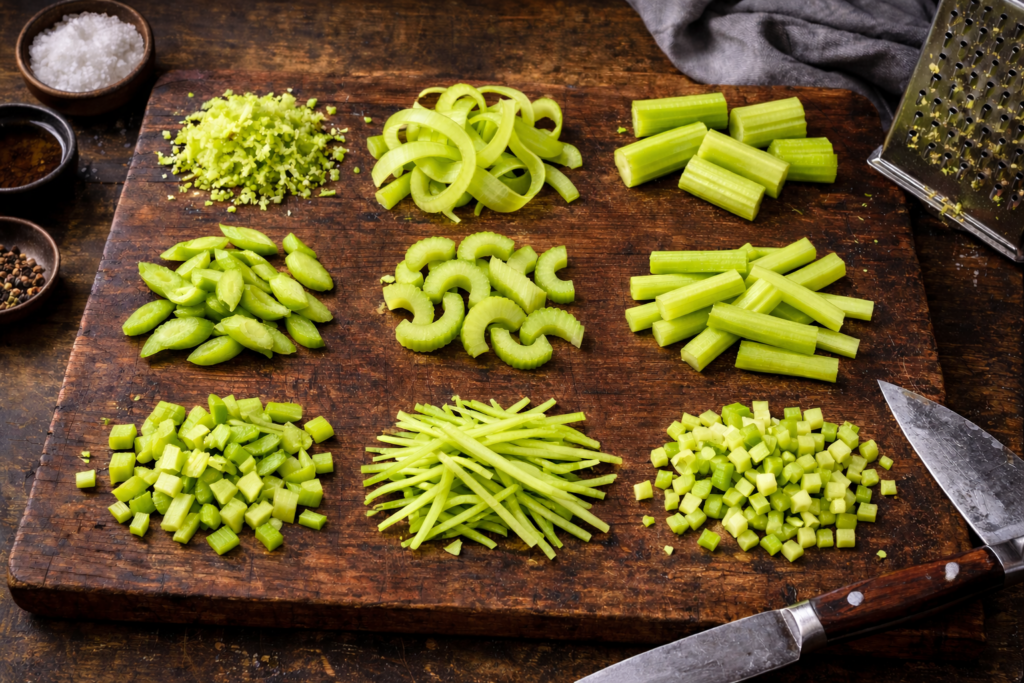
Celery holds its structure as it cooks, which makes the cut more than just a prep step—it’s a decision about how the ingredient will behave. Size and shape determine how much bite it keeps, how quickly it softens, and whether it sits in the background or stays clearly present in the dish.
Think of these cuts as a progression rather than a set of separate techniques. You’re starting with a whole stalk and choosing how far to break it down. Each step shifts celery’s role—from something structured and distinct to something more integrated and subtle—giving you control over both texture and how it carries through the final dish.
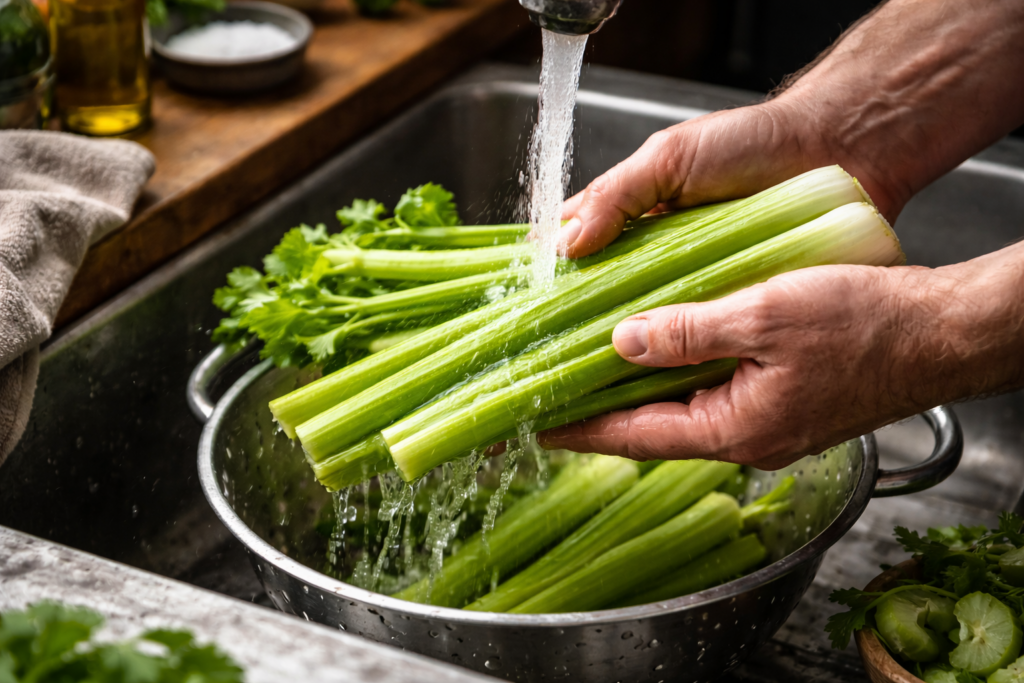
Before anything else, wash the celery thoroughly. It grows low to the ground, and grit has a way of working its way deep into the base and between the ribs. Rinse under cold running water, taking the time to separate the stalks and run water through each one. If you skip this step—or rush it—you’re not just affecting the final dish, you’re carrying that grit into anything the celery touches, including your scrap bin.
Trim off the root end and the tops, but don’t discard them. The base, leaves, and any excess trimmings are ideal for vegetable broth or stock. Because those scraps are often saved and built up over time, washing matters just as much here as it does for what you’re cooking in the moment. Clean scraps make clean stock. Keep a container in the freezer and add to it as you go, knowing everything going in is already properly rinsed. From here, you’re working with clean stalks and usable trimmings—nothing wasted, nothing carried forward that shouldn’t be.
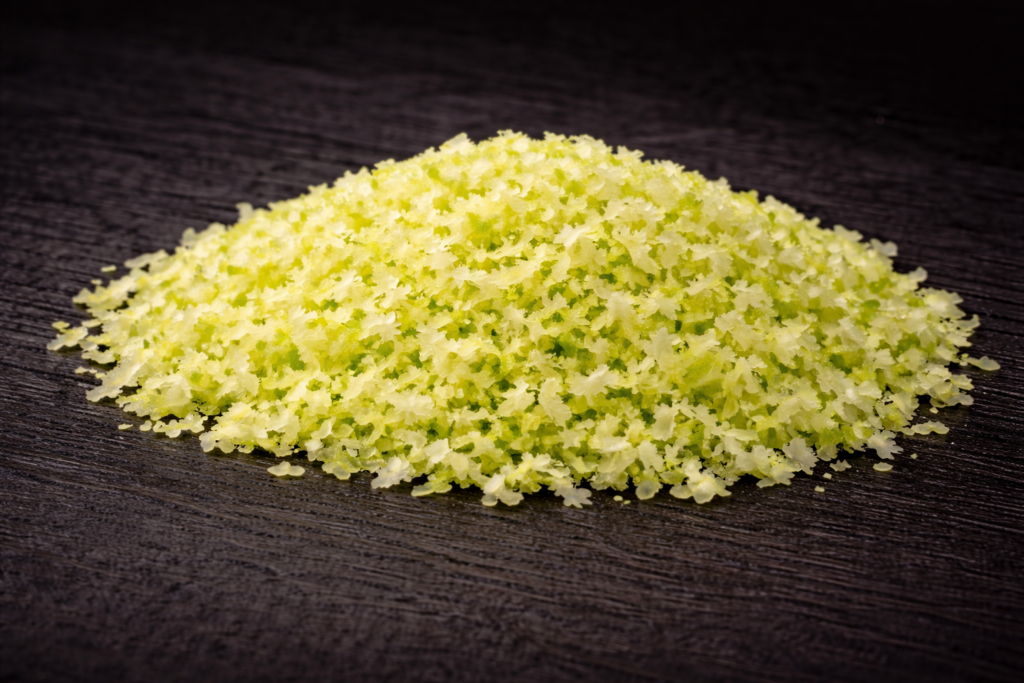
Run the full stalk across a grater, pressing the cut face of the rib (the half-moon side) against the surface—not the length of the stalk. Working from that short side breaks the celery down into fine, compact shreds rather than long strands, giving you a tighter, more consistent texture. At that point, celery loses most of its structure. Instead of distinct pieces, you’re left with a light, moist grate that disperses easily and releases its flavor quickly. It doesn’t read as “celery” in a structural sense—it becomes part of the background.
This is useful when you want the flavor and freshness without the bite. Grated celery works well in dressings, relishes, slaws, and finely textured salads, or anywhere you’re building layers without introducing noticeable pieces. It can also be folded into sauces or spreads where you want subtle lift and moisture rather than structure.
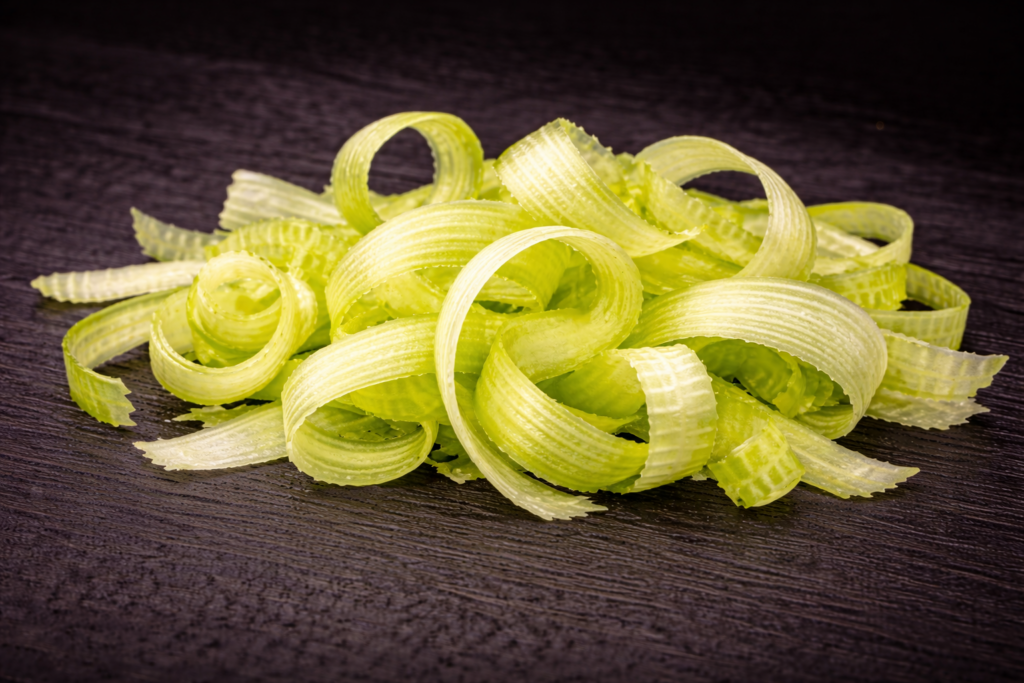
Run a vegetable peeler along the length of the stalk, shaving it into long, thin ribbons. Working lengthwise keeps the fibers intact, giving you flexible strips that curl naturally and hold a bit of shape. This cut keeps more structure than grating but feels lighter than sliced pieces. The ribbons bend and layer rather than sit rigidly, adding texture without weight. They stay crisp, but in a more delicate, almost airy way. Ribbons work well in salads, garnishes, and lighter preparations where you want celery to feel fresh and present without dominating the bite. They also take on dressings easily, coating evenly without pooling. If you want shorter ribbons, cut the stalks in half before peeling.
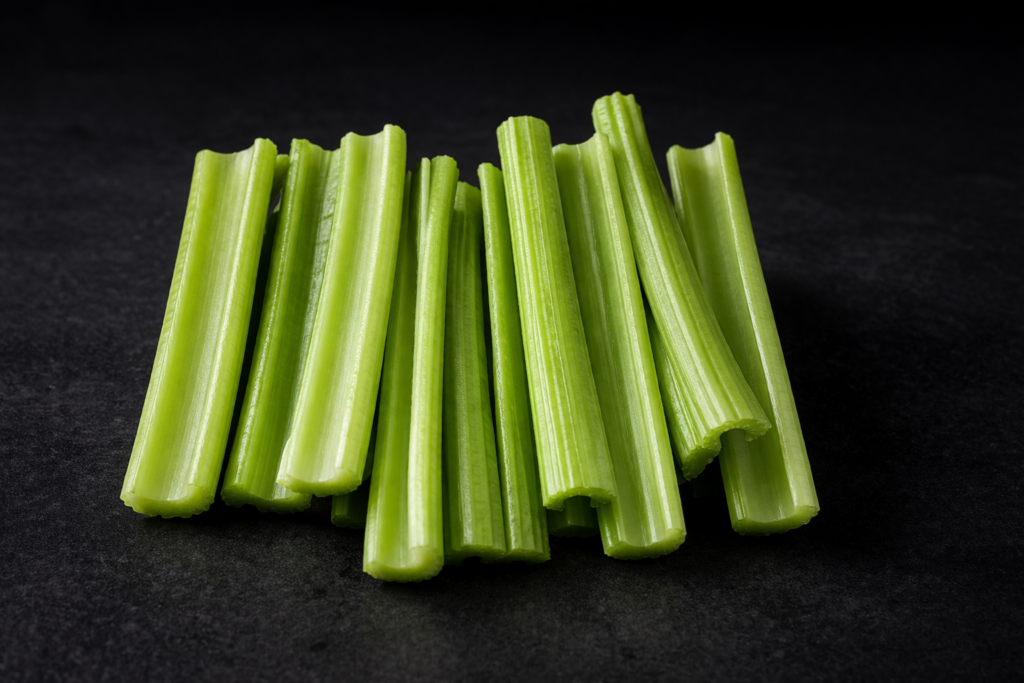
This is the form you’ll reach for when celery is meant to hold its shape and act as a vessel or a base. Classic examples lean into that structure—crudité platters, stuffed applications, or something like Ants on a Log, where the celery isn’t just part of the dish, it is the platform. The length gives you something to build on, while the natural curve of the stalk creates space for fillings or spreads.
Start by cutting the stalk into 3–4 inch segments. This is the foundation for everything that follows. On its own, this cut keeps celery fully intact—long, structured, and clearly present. It’s less about breaking the ingredient down and more about preserving it. It’s also useful in braises or longer cooks where you want larger pieces that can be removed later or left intact for texture. At this stage, you’re not shaping celery—you’re deciding to keep it whole and let everything else build around it.
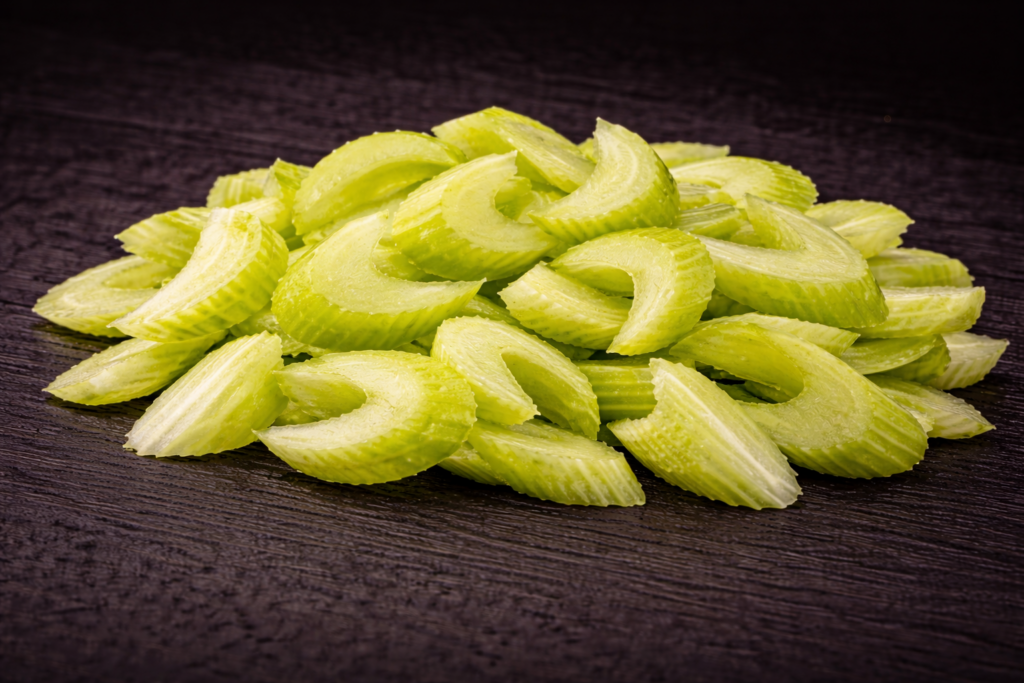
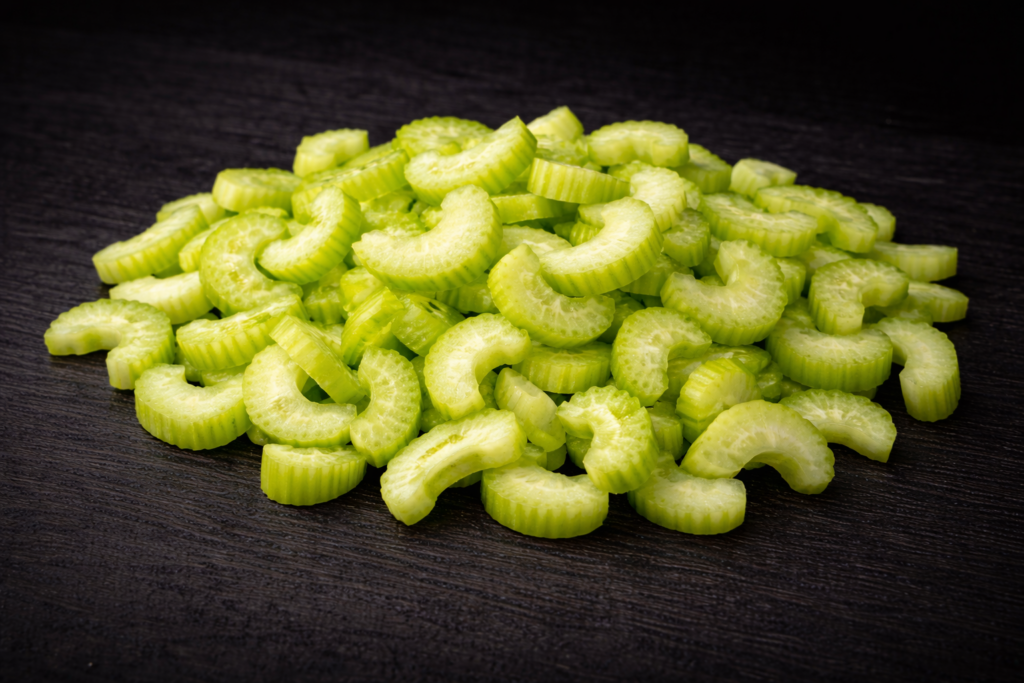
This is the standard cut of celery—and the one you’ll use most often. At this point, you’re no longer working with length, but with thickness. Thinner slices soften quickly and fold into the dish, while thicker ones keep a bit of structure and stay more noticeable.
Like the Bias Cut, this cut also starts from the Thirds; instead, slice the thirds straight across into ⅛”–¼” pieces, letting the natural curve of the celery form those familiar half-moons. Lining the pieces up before cutting keeps the slices consistent and speeds up the process, especially when working through multiple stalks. Because everything is uniform, the pieces cook evenly and distribute without effort. It’s a straightforward cut that doesn’t ask much from you but gives you a lot of flexibility in return—equally at home in soups, sautés, and just about anything that starts with a pan and builds from there.
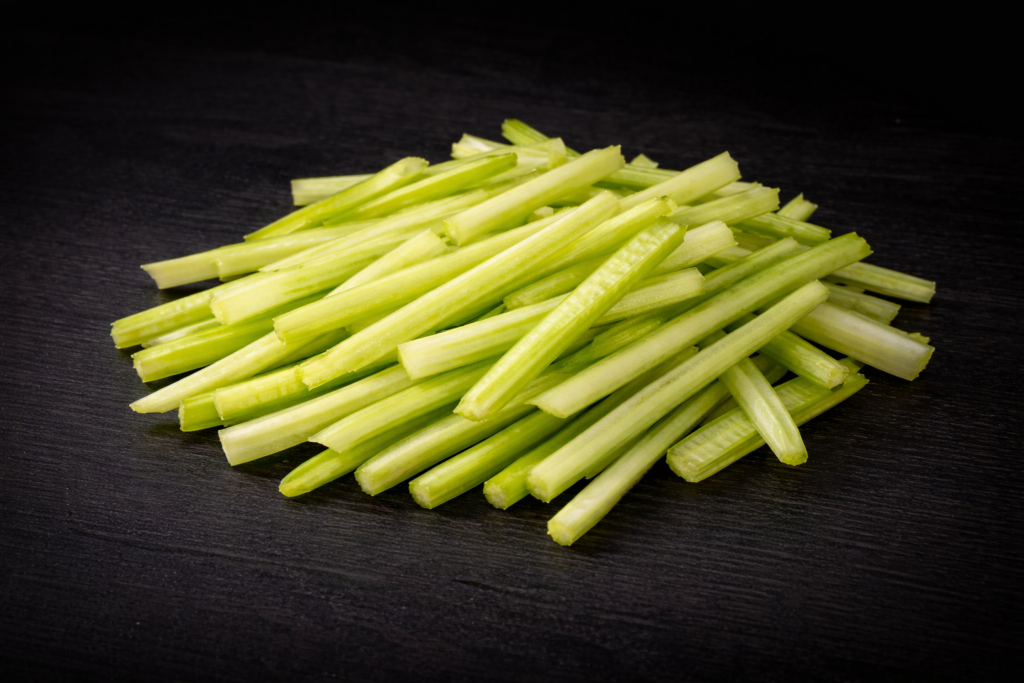
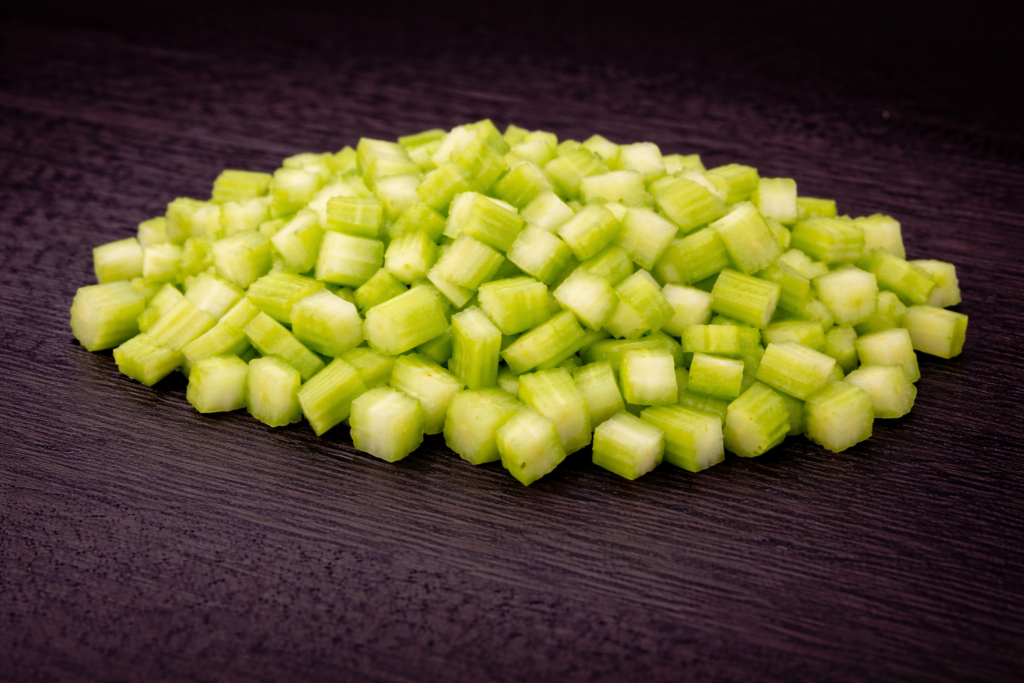
Starting from batons, cut across the width in quick, uneven passes to break them down into smaller pieces. This is a looser, more practical cut—less about precision and more about reducing size. The pieces won’t be uniform, and that’s the point. Some will soften quickly, others will hold a bit longer, creating a mix of textures as they cook.
Use a rough chop when you’re building a base or cooking for time—soups, stews, stocks, and long-simmered dishes where everything eventually comes together. It’s fast, efficient, and does exactly what it needs to without slowing you down.
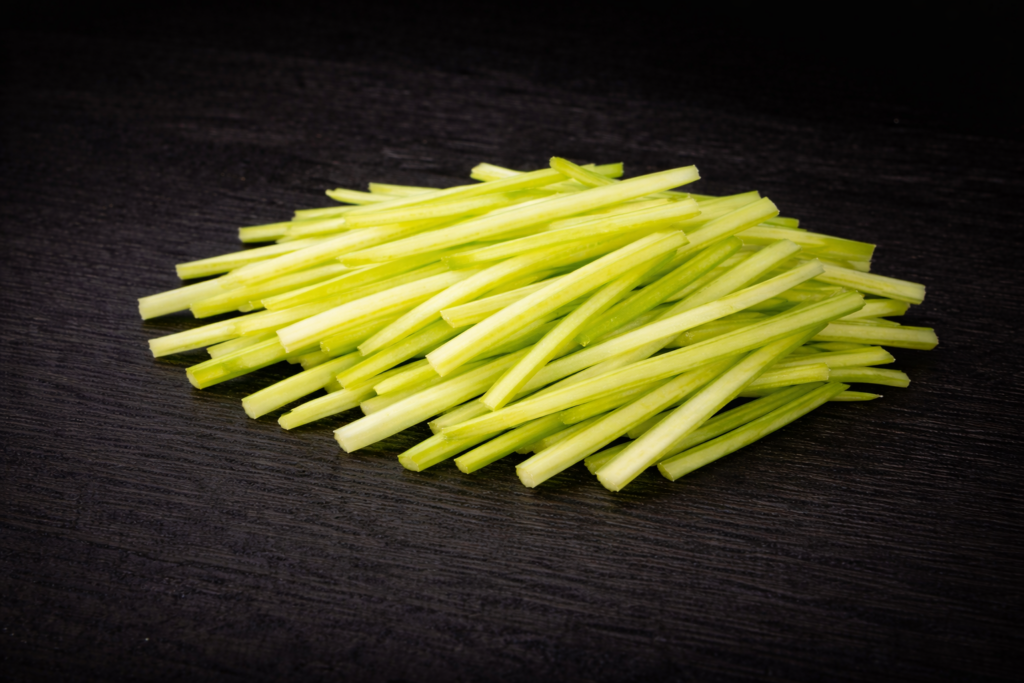
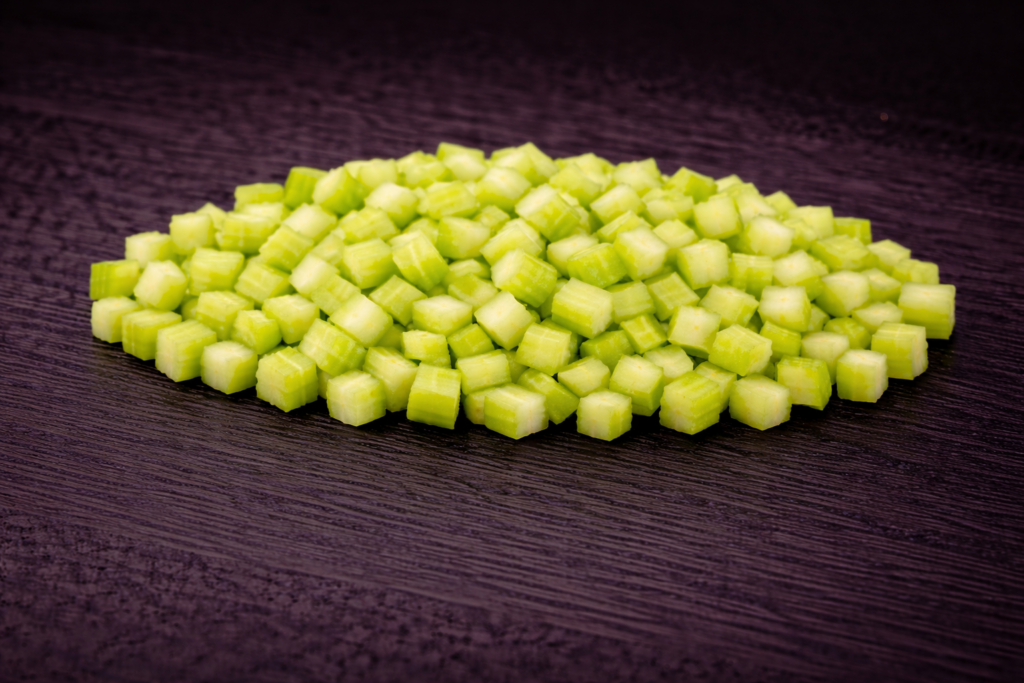
Starting from julienne, cut across the matchsticks to create small, uniform pieces. This is the next step in the progression—taking those fine strips and turning them into consistent, evenly sized cuts. Diced celery distributes cleanly and cooks evenly, giving you a balanced texture throughout the dish. The smaller size softens more quickly, allowing the flavor to integrate without standing out as a distinct element.
Use this cut when you want celery to be present but not prominent—sauces, fillings, and composed dishes where consistency matters and everything should come together as one.