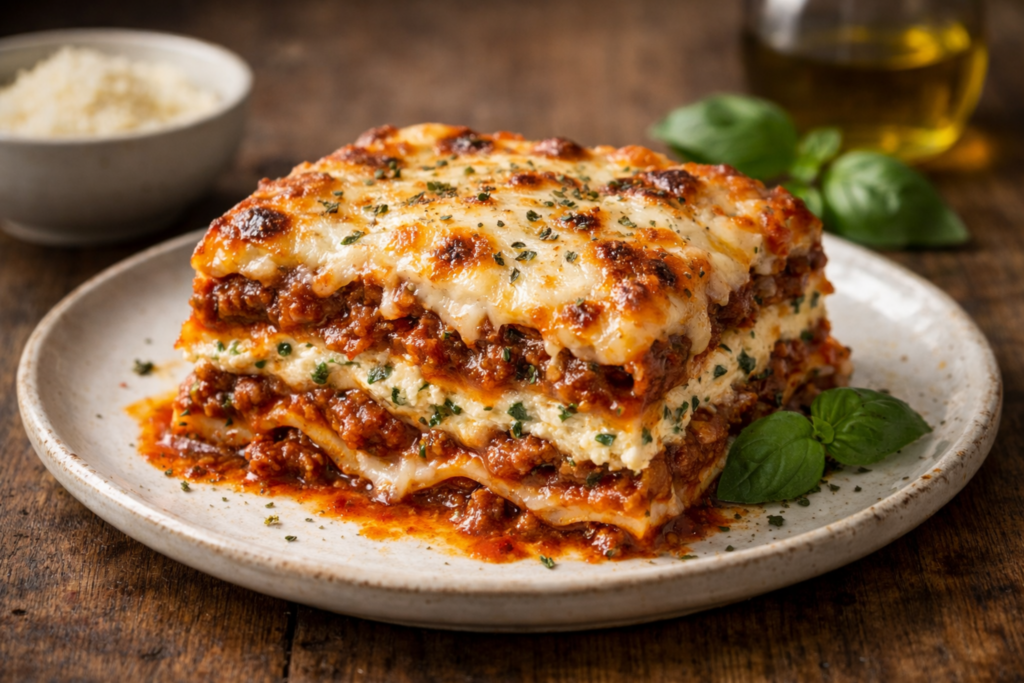
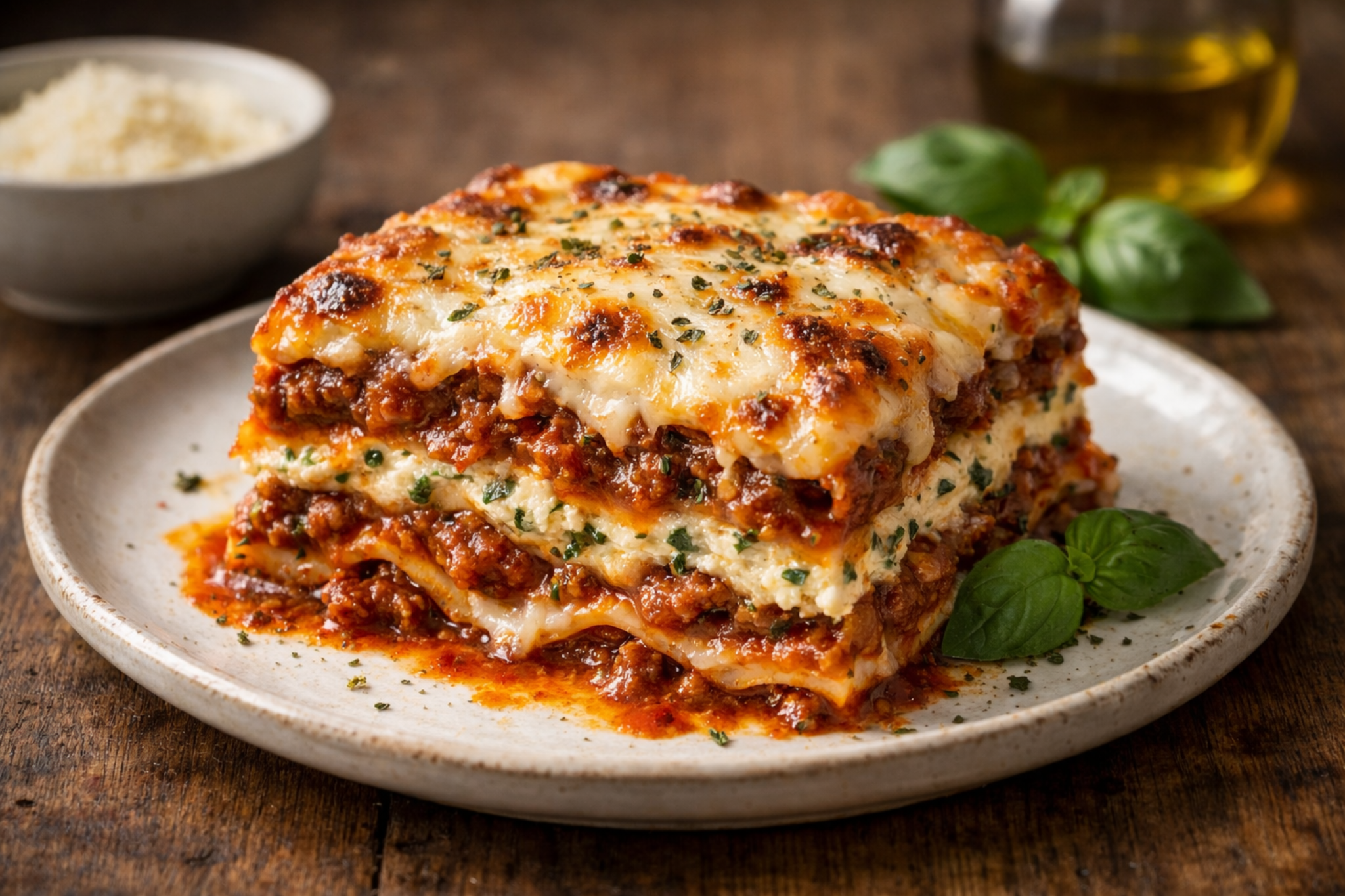
This is where Daddy’s Ragù alla Bolognese moves into a full build—pasta, herbed ricotta, and melted cheeses layered with enough control to keep each component defined. The focus is on how everything comes together in the dish, so the final slice holds its structure from edge to center without collapsing or blending into one.
Start with the ragù.
This lasagna is built around my ragù, so it’s best to make that ahead of time. Let it cool slightly before assembling—warm enough to work with, but not hot. That gives you better control when layering and keeps the ricotta from breaking down as you build. It also gives the sauce time to settle, which helps it hold its place between layers instead of spreading too thin. Think of the lasagna as an extension of the ragù, not a separate recipe. The sauce is doing most of the work—you’re just giving it structure.
Breaking the build into parts.
Start by mixing the ricotta fully—egg, cheese, and herbs integrated so it spreads evenly without clumping. From there, divide it into three equal portions. Do the same with your shredded cheese. It’s a small step, but it keeps the layers consistent and prevents you from overloading one section while leaving another thin.
Once everything is portioned, the assembly becomes controlled instead of guesswork. Each layer has a clear role, and the final result reflects that. What makes this come together cleanly is treating each component as its own step.
Layering with structure.
The order matters. A thin layer of ragù goes down first to anchor the noodles. From there, the pattern builds—noodles, ricotta, cheese, then a heavier layer of sauce. That sequence repeats, giving you a balance of creaminess, melt, and depth in every bite.
The final layers shift slightly to finish clean:
noodles
herb ricotta cheese mixture
a layer of sauce
shredded cheese
and a final layer of cheese with a light dusting of oregano
That top layer sets the tone—golden, structured, and just enough texture to contrast what’s underneath.
Why this works.
This lasagna comes together cleanly because each component is built and layered with intention. As it bakes, everything settles into place. The sauce thickens slightly, the cheese melts and integrates, and the layers hold without blending into each other.
The ragù provides depth and structure, the ricotta—set with egg and fresh herbs—spreads evenly and holds its place, and the cheese layers bind everything without overwhelming the dish. Dividing the ricotta and cheese ahead of time keeps each layer consistent, so nothing feels heavy in one section or thin in another.
When it’s rested and cut, the slice should hold clean lines—defined layers, balanced proportions, and a structure that carries from the first cut to the plate.
You’ll find the full method outlined below. The ingredients are familiar, but the structure is what makes this version work—built step by step so the final dish feels as intentional as the sauce it’s based on.
Lasagna Bolognese with Ricotta
Lasagna Bolognese is a layered build that turns a slow-cooked ragù into something structured and complete—pasta, herbed ricotta, and melted cheeses stacked with intention so each layer holds its place. It’s rich without being heavy, balanced between meat, creaminess, and acidity, and built to let the ragù carry the dish from the first bite to the last.
Bring a large pot of salted water to a boil. Cook 15 whole lasagna noodles until just shy of al dente—they'll finish cooking while the lasagna bakes in oven.
Drain and rinse lightly with cool water to stop the cooking. Dry and lay noodles flat on a sheet tray or parchment so they don’t stick. Let cool completely in fridge.
Prepare the Ricotta Mixture
Add the following to the mixing bowl:
15 oz ricotta cheese
1 large egg
¼ cup parmesan cheese
2 tsp onion powder
½ tsp Kosher salt
¼ tsp black pepper
Wash and dry basil, parsley, and thyme.
Chop all herbs and place in the mixing bowl with the other ingredients.
Combine all ingredients until thoroughly integrated.
Separate into 3 equal portions.
Divide the Shredded Cheese
Separate the 6 cups mozzarella cheese(shredded) and 1½ cups parmesan cheese (shredded) into 3 equal parts (2 cups of mozzarella + ½ cup of parmesan) so you have even amounts for each layer.
Assemble the Lasagna
Spread a thin layer of Daddy's Ragù alla Bolognese (about 1 cup) into the bottom of a deep 9x13 baking dish.
Use a slotted spoon when measuring out sauce to remove almost all of the liquid, making your sauce layers more concentrated. Excess liquid will cause the lasagna to become watery/runny. You can even strain with cheese cloth, if needed.
Add a layer of lasagna noodles, followed by ⅓ of the Ricotta mixture, followed by 2 cups Daddy's Ragù alla Bolognese, followed by ⅓ of shredded cheese.
Repeat layer sequence two more times.
On final shredded cheese layer, top with 1 tsp Kosher salt and ½ tsp dried oregano.
Baking
Cover 9x13 dish with tented aluminum foil and bake at 375℉ for 30 minutes.
Remove foil after 30 minutes and bake an additional 15-20 minutes until golden and bubbling.
Resting
Let rest for 15–20 minutes before cutting. This allows the layers to set and hold their structure.
Notes
NUTRITION NOTE: Because the internal nutrition calculator uses an API program to pull the nutrition information, it did not pull the nutritional information for the ragù. For correct nutritional calculations, you must add the nutritional information for 7 servings of Daddy's Ragù alla Bolognese to 8 servings of the amounts listed above and divide the total by 8 servings to get the TRUE nutritional information per serving—I've done the math for you below: