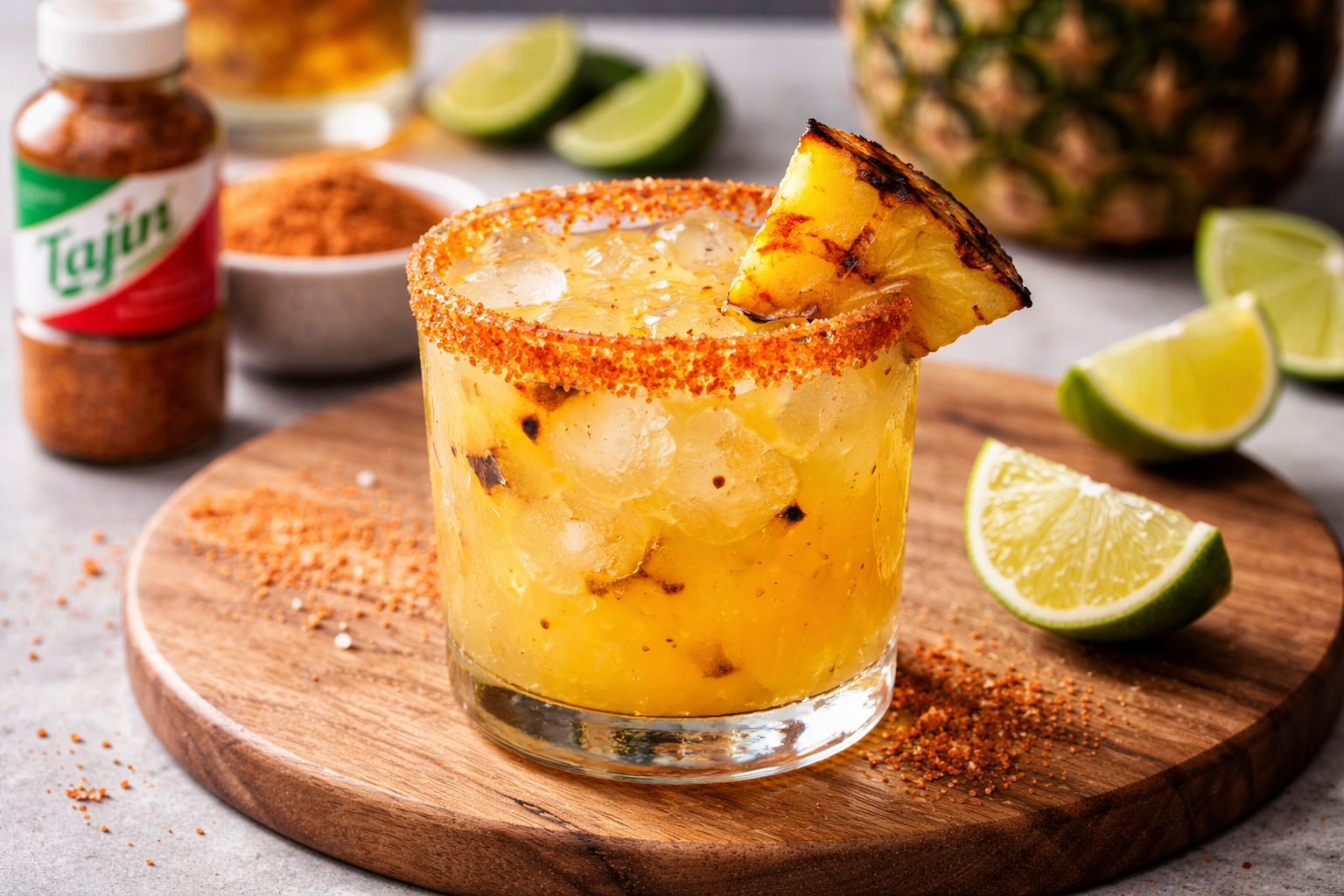
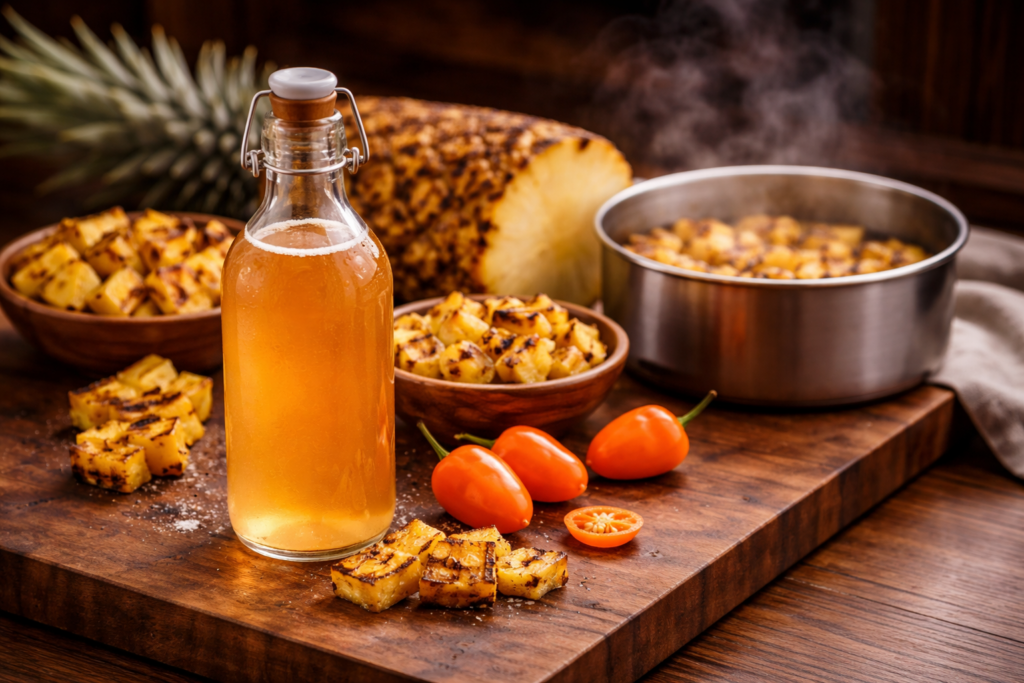
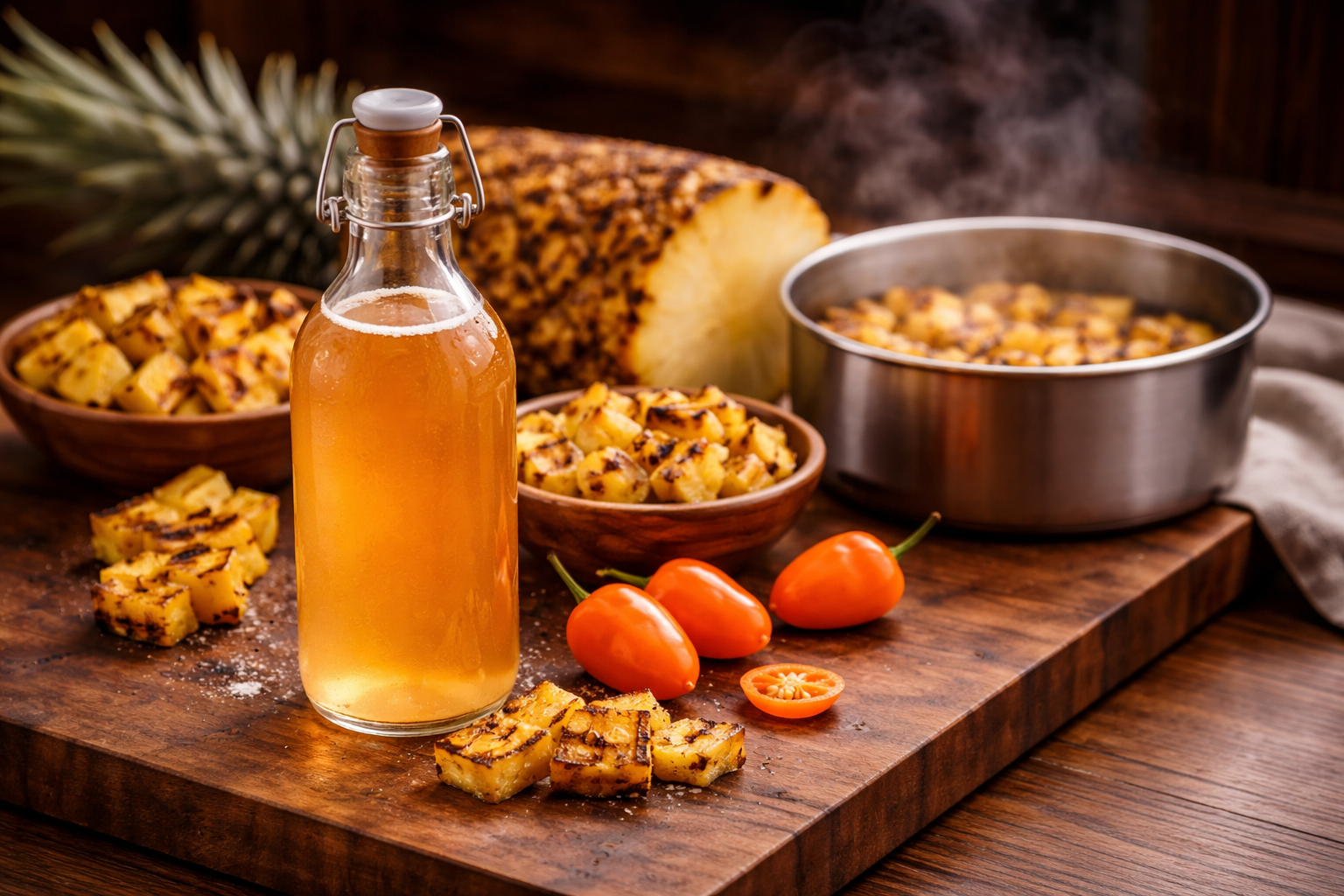
This is where sweetness meets fire and holds a steady balance between the two. Pineapple brings a bright, tropical sweetness that feels familiar at first, but it quickly deepens as the heat begins to rise. The habanero doesn’t hit all at once—it builds gradually, settling into a warm, lingering finish that stays present without overwhelming the palate.
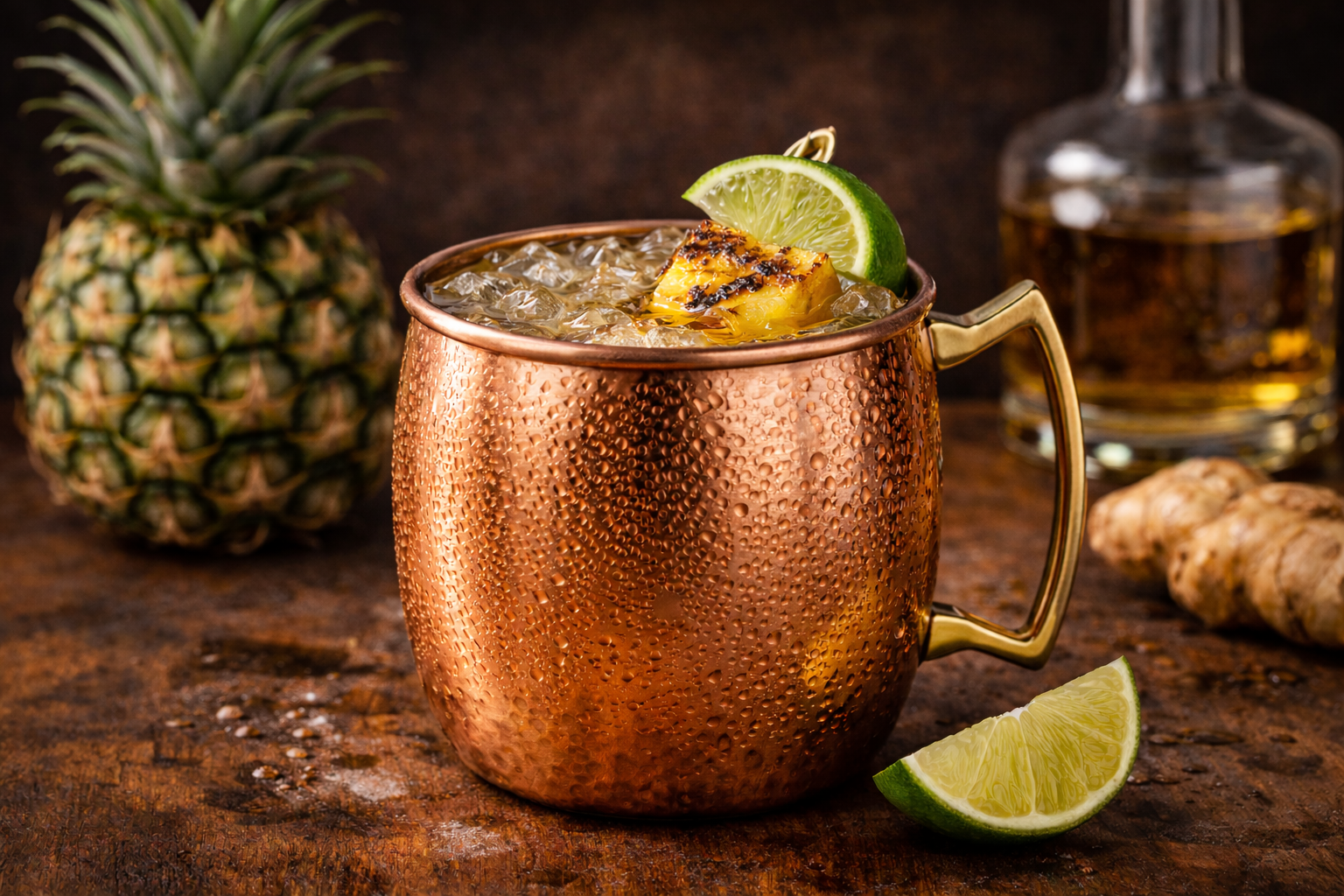
What makes this syrup work is how those elements move together. The sweetness carries the heat forward, giving it structure and length, while the heat sharpens the fruit and keeps it from reading as one-dimensional. The result is a profile that feels layered and intentional, where each component supports the other instead of competing for attention. Used well, it shifts whatever it touches.
Raising the Char
Grilling the pineapple does more than add color—it changes how the fruit behaves in the syrup. As it hits the heat, the natural sugars begin to caramelize and the surface develops char, introducing a deeper, more complex flavor before anything ever reaches the pot.
That process creates:
caramelization, which deepens and rounds out the fruit’s natural sweetness
light char, adding a subtle smokiness and a hint of bitterness
contrast, keeping the final syrup from reading as overly sweet
You’re not cooking the pineapple through—you’re transforming the exterior just enough to build that foundation. That early layer carries all the way through the syrup, giving it structure instead of letting it fall flat.
The Demerara Difference
Instead of standard white sugar, this uses demerara—and that shift changes more than just sweetness. Demerara retains a natural molasses content, which brings a deeper, more developed flavor into the syrup from the start. Rather than a clean, neutral sweetness, it introduces warm, toffee-like notes and a slightly darker profile that gives the syrup more presence. There’s also a subtle weight to it, allowing the flavor to carry longer instead of falling off quickly.
When combined with the charred pineapple, it reinforces the caramelization already in play instead of working against it. The two build on each other—one from the grill, one from the sugar—creating a base that feels layered and intentional. The result is a syrup that reads fuller and more cohesive, with a depth that standard sugar simply doesn’t provide.
Building the Base
The pineapple isn’t just steeped—it’s muddled directly into the sugar first, which changes how the entire syrup comes together. As the fruit breaks down, it releases its juice into the sugar, creating a thick, coarse mixture where the two are already integrated before any heat is applied. Instead of dissolving sugar into water and then layering flavor on top, the process starts by binding the sweetness directly to the fruit.
By the time water is added and the mixture hits the stove, the base is no longer separate components trying to come together—it’s already unified. That early integration allows the sugar to pull more from the pineapple, especially after it’s been charred, carrying those deeper, caramelized notes through the entire build rather than leaving them at the surface.
This approach may seem subtle, but it has a clear impact on the final result. The syrup reads more cohesive, with a flavor that feels fully developed from start to finish instead of something that comes together at the end.
Bringing the Burn
Habanero is a deliberate choice here. It brings more than just heat—it carries a natural fruitiness that mirrors the brightness of pineapple, allowing the two to work together instead of pulling in opposite directions. Where other peppers can read sharp or one-dimensional, habanero adds a fuller, more rounded heat that builds gradually and holds through the finish.
Controlling that heat starts with how the pepper is handled. The seeds and pith contain the highest concentration of capsaicin, so removing them keeps the burn from tipping too far. What’s left is a cleaner, more measured heat—one that layers into the syrup rather than dominating it. The goal is a slow rise, not an immediate spike.
Timing also plays a role. Adding the habanero after the sugar has dissolved allows the infusion to stay controlled, while a short boil followed by a longer steep gives the heat time to develop without becoming aggressive. The result is a burn that’s present and intentional—something that enhances the syrup rather than overwhelming it.
SAFETY NOTES: Because capsaicin is an oil, it doesn’t just rinse away with water. Wearing gloves when cutting the habanero is a simple step that prevents irritation or lingering burn on your skin. If you choose not to use gloves, make sure to wash your hands thoroughly with soap and cold water. Hot water can open your pores, allowing the capsaicin oils to penetrate deeper into the skin and potentially cause irritation or even blistering. And definitely do not touch your face or other body parts until your hands are thoroughly washed.
A note before you start.
This recipe is straightforward, but a few details shape the final result:
Don’t skip the charring step—that’s where the depth starts to build
Muddle the pineapple directly into the sugar so the base forms before it ever hits the heat
Keep the infusion controlled—you’re drawing out heat from the habanero, not letting it take over
Let the syrup fully cool before using—the char, sugar, and heat settle into a more balanced finish
You’ll find the full method outlined below, step by step—but the key is restraint. The char shouldn’t burn. The sugar shouldn’t overpower. The heat shouldn’t take over. Each step is about shaping the final balance, not just combining ingredients.
Piña de Fuego Syrup
Piña de Fuego is built on contrast—sweet, charred pineapple layered with the deep, molasses notes of demerara sugar and finished with a controlled hit of habanero heat. Grilling the fruit first brings a subtle smokiness that cuts through the sweetness, while the pepper infuses just enough warmth to linger without overpowering. The result is a syrup that’s bold but balanced, where caramelized sugar, bright fruit, and slow-building heat come together in a clean, cohesive finish.
Throughly wash and dry a 2 lb. pineapple and 1 large habanero pepper (or 2 small peppers).
Cut top off pineapple; use pineapple corer/slicer to remove core and cut into rings.
Cut open habanero pepper and remove seeds and piths (a pepper's strongest heat is always in these parts, especially the pith); cut pepper into slices and set aside.
TIP: ALWAYS put on a pair of food safe, disposable gloves when handling any hot pepper, regardless of type. If you do not have gloves, just be sure not to touch any other part of your body, especially eyes and softer membranes—or your Piña de Fuego could painfully become Pinga de Fuego!It's also important that you wash your hands in COLD water and soap. Washing your hands in hot water will open your pores and potentially allow the capsaicin oil into your pores, which can burn and cause blistering.
Grilling Pineapple Outdoors
If you do not have an outdoor gas or charcoal grill, skip to step about Grilling Pineapple Indoors.
If you have an outdoor grill, load pineapple rings into a grill basket and place on grill until rings have a nice char from the flames; let basket cool before removing pineapple rings.
Grilling Pineapple Indoors
If you do not have an outdoor gas or charcoal grill, you can always use a stovetop grill pan to grill your pineapple rings. However, please note that it will not produce the same char as grilling them over an open flame, which will alter the final flavor profile slightly.
Syrup Prep
Chop charred pineapple until you have approximately 3 cups.
Pour 3 cups demerara sugar into 6-cup stockpot.
Add 3 cups pineapple into stockpot and muddle the pineapple into the sugar until a thick, coarse paste forms.
Add 3 cups water (filtered) into stockpot and stir to combine.
TIP: Instead of muddling, you can combine the water and charred pineapple chunks into a blender until well blended and pour into the stockpot over sugar; however, I have found that muddling/infusing the flavors into the sugar creates a better flavor.
Cooking
Heat ingredients in the stockpot over medium-high heat, stirring occasionally until sugar is completely dissolved.
Once the sugar is dissolved, add the sliced habanero.
Increase heat and bring to a boil for 5-7 minutes.
Remove from heat let ingredients steep for at least 30 minutes as it cools.
TIP: Periodically taste the syrup to check the heat level of the habanero as it steeps; remove habanero slices from the stockpot once you are happy with the heat level and allow syrup to cool completely.
Straining
Place mesh strainer over large pot or bowl (deeper than the depth of the strainer so that the liquid clears the bottom of the strainer).
Slowly pour contents of simmered liquid into strainer. Using muddler, gently press as much liquid from the contents of the strainer as possible (without damaging your strainer from the pressure).
Storing
Pour syrup into glass swing-top bottle (or jar if you don't have a bottle) and store at least 4 hours in the fridge to cool. Overnight cooling is even better.