

Member Features Save ingredients to your Stock, Shopping List, and Avoid List.
Sign In

Carrot (/ˈkɛr.ət/)

Daucus carota subsp. sativus
Also known asGarden Carrot, Orange Carrot, Root Carrot

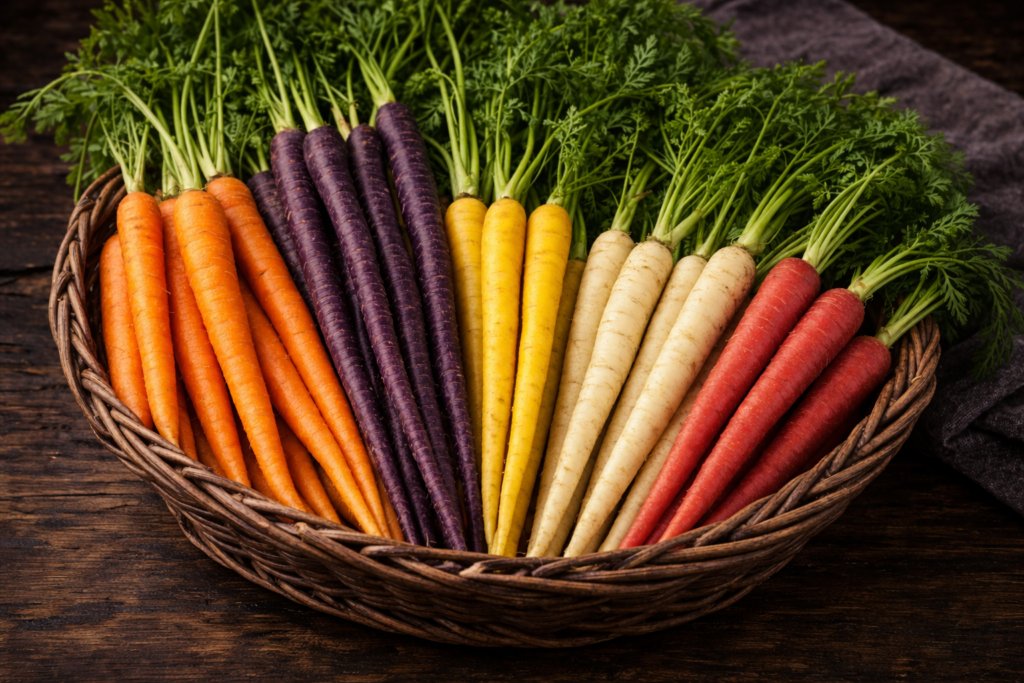
A naturally sweet root vegetable prized for its crisp texture, earthy flavor, and versatility across raw, roasted, braised, baked, and savory applications. Carrots are foundational ingredients in cuisines around the world.

About

Carrots are among the world’s most recognizable and versatile root vegetables, valued for their sweetness, color, texture, and ability to adapt across an enormous range of culinary applications. Though most commonly associated with their familiar orange form, carrots also exist in purple, red, yellow, and white varieties, each with slightly different flavor profiles and pigment characteristics.

In savory cooking, carrots are foundational aromatic vegetables frequently paired with onions and celery to form flavor bases for soups, stocks, sauces, braises, and stews. Their natural sweetness balances acidity, bitterness, spice, and savory depth, making them one of the most structurally important vegetables in countless cuisines.

Raw carrots provide crisp freshness and crunch in salads, slaws, snacks, and pickled preparations. When cooked, they transform significantly—developing deeper sweetness, softer texture, and subtle caramelized notes that make them equally effective in roasted dishes, purées, glazed vegetables, and even desserts.

Their versatility, long shelf life, and broad culinary compatibility have made carrots staples in kitchens around the world for centuries.

Flavor Profile

Raw carrots are crisp, earthy, mildly grassy, and naturally sweet with subtle mineral undertones that become more pronounced in mature carrots. Their sweetness is clean and vegetal rather than sugary, allowing them to work equally well in savory and sweet preparations.

Cooking dramatically changes the flavor of carrots. Roasting and sautéing intensify their sugars, creating deeper sweetness and caramelized complexity, while simmering softens their earthy edges and allows them to contribute body and subtle sweetness to soups, braises, and stocks.

Younger carrots tend to taste sweeter and fresher, while larger mature carrots often develop more pronounced earthy or woody characteristics near the core.

SWEET
BITTER
EARTHY
NUTTY

Texture Profile

Raw carrots are dense, crisp, and crunchy with a firm cellular structure that delivers a pronounced snap when fresh.

As they cook, carrots gradually soften while maintaining structure longer than many root vegetables. Simmered carrots become tender and silky, while roasted carrots develop lightly crisp edges and creamy interiors.

Their relatively low moisture content helps them hold shape well across roasting, braising, glazing, and long-cooked savory dishes.

CRUNCHY
TENDER
SOFT
FIRM
Culinary Use

Carrots are used across both savory and sweet cooking applications. They are commonly diced into aromatic cooking bases, roasted as side dishes, simmered in soups and stews, puréed into sauces, shredded into salads and slaws, glazed for vegetable preparations, and incorporated into cakes, muffins, and quick breads.

Their sweetness makes them especially useful for balancing acidity, spice, bitterness, and umami-heavy dishes. Carrots also contribute body and subtle sugar to stocks and broths without overpowering surrounding ingredients.

Because they retain structure relatively well during cooking, carrots perform exceptionally well in braises, roasts, sheet pan meals, stir-fries, and slow-cooked dishes.

Cooking Methods
Raw No heat applied. Sautéed Quick cooking in a small amount of fat. Roasted Slow, dry heat in an oven for browning. Grilled Direct heat (usually from below) for char and smokiness. Braised Searing followed by slow cooking in a small amount of liquid. Fried Submerged in hot oil (includes deep-frying and pan-frying). Blanched Briefly boiled then "shocked" in ice water to preserve color and snap. Steamed Cooking with hot vapor to retain nutrients and moisture. Simmered Gentle cooking in liquid just below the boiling point. Baked Dry heat in an oven, typically at lower temperatures than roasting. Poached Gently cooked in hot liquid. Stewed Slow cooking small pieces fully submerged in liquid. Air Fried High-speed convection to mimic frying with minimal oil.
Best Uses
Aromatic Bases & Simmers Stocks & Broths Braised Dishes Rice & Grain Dishes Roasted Dishes Soups & Stews Stir-Fries Pickling Salads Snacks Baked Goods Desserts

Prep Notes

Wash thoroughly before use, especially near the stem end where soil commonly collects. Peeling is optional and often depends on carrot age, texture, and intended presentation.

Large carrots may have thicker cores that become slightly woody or less sweet. Splitting or trimming oversized carrots can improve texture consistency during cooking.

Washing Notes

Scrub carrots thoroughly under cold running water to remove soil and debris, particularly around the crown and natural ridges.

Young carrots with thin skins may only require scrubbing, while older carrots are more commonly peeled.

Trimming & Cutting Notes

Trim both ends before slicing, dicing, peeling, or roasting. Remove any split, shriveled, or discolored sections before use.

For even cooking, cut carrots into similarly sized pieces, especially for roasting or braising applications.

Storage Notes

Store carrots refrigerated with minimal moisture exposure and good airflow. Whole carrots retain texture longest when stored unpeeled and away from ethylene-producing fruits like apples and bananas.

Carrot greens, if attached, should be removed before storage since they draw moisture from the root and accelerate softening.

Freezer Friendly

Carrots freeze well when blanched before freezing. Blanching helps preserve texture, color, and flavor during long-term frozen storage.

Frozen carrots are best suited for cooked applications such as soups, stews, sauces, casseroles, and roasted dishes rather than raw preparations.

Shelf Life

Whole carrots can last several weeks when refrigerated properly in high-humidity produce storage.

Cut or peeled carrots should generally be used within several days for best texture and flavor.

Spoilage Signs

Discard carrots that become slimy, rubbery, excessively limp, moldy, sour-smelling, or heavily blackened near the crown or tip.

White surface film on carrots is often harmless dehydration rather than spoilage, though texture quality may decline.

Storage Locations
Refrigerator Standard cold storage for perishables. Freezer Long-term sub-zero storage. Root Cellar High-humidity, cold storage specifically for root crops and apples.
Storage Methods
Airtight Container The gold standard for dry goods (flour, sugar, cereal) and leftovers to prevent staleness and pests. Sealed Bag Zip-top bags for cheese, deli meats, or snacks where a rigid container isn't necessary. Submerged in Liquid For ingredients that must stay wet, like fresh mozzarella (in brine) or tofu (in water). Keep Dry

Did You Know

Orange carrots were selectively cultivated in the Netherlands centuries ago, eventually becoming the dominant carrot variety throughout much of the modern culinary world.

Buying Tips

Choose carrots that feel firm, dense, and brightly colored with smooth skin and minimal cracking. Avoid carrots that appear limp, rubbery, heavily split, or shriveled near the tip.

Smaller to medium carrots are often sweeter and more tender than oversized mature carrots.

Seasonal Notes

Carrots are available year-round, though peak harvest seasons typically occur in spring and autumn. Cooler growing temperatures often produce sweeter carrots due to increased natural sugar development.

Cultural Notes

Carrots appear in culinary traditions across Europe, the Middle East, Asia, North Africa, and the Americas, serving roles that range from aromatic foundations and roasted vegetables to pickles, desserts, preserves, and street foods.

Where to Buy

Shop this item online from trusted retailers.

Nutrition Facts Servings per container: ; Serving size: 100 g (100g) Amount per serving: Calories 41, Total Fat 0.2g, Saturated Fat 0.0g, Trans Fat 0g, Cholesterol 0mg, Sodium 69mg, Total Carbohydrate 9.6g, Dietary Fiber 2.8g, Total Sugars 4.7g, Protein 0.9g, Vitamin D 0mcg, Calcium 33mg, Iron 0.3mg, Potassium 320mg.
More nutrition
Polyunsaturated Fat 0.1g, Monounsaturated Fat 0.0g, Soluble Fiber not listed, Insoluble Fiber not listed, Sugar Alcohols not listed, Net Carbs 6.8g, Vitamin A 835mcg RAE, Vitamin C 5.9mg, Vitamin E 0.7mg, Vitamin K 13.2mcg, Thiamin (B1) 0.1mg, Riboflavin (B2) 0.1mg, Niacin (B3) 1.0mg, Vitamin B6 0.1mg, Folate 19mcg DFE, Folic Acid 19mcg, Vitamin B12 0mcg, Pantothenic Acid 0.3mg, Phosphorus 35mg, Magnesium 12mg, Zinc 0.2mg, Selenium 0.1mcg, Copper 0.0mg, Manganese 0.1mg, Caffeine 0mg, Alcohol 0g, Water 88.3g.
Nutrition information is estimated using USDA FoodData Central and other reference sources. Actual values may vary based on ingredient variety, preparation method, brand, ripeness, processing, and measurement accuracy.

come back again
Because our site features alcohol, you must be over 21 to enter
are you at least 21 yearold?