Member Features Save ingredients to your Stock, Shopping List, and Avoid List.
Sign In

Red Onion (/ˌrɛd ˈʌn.jən/)

Allium cepa
Also known asPurple Onion, Red Bulb Onion

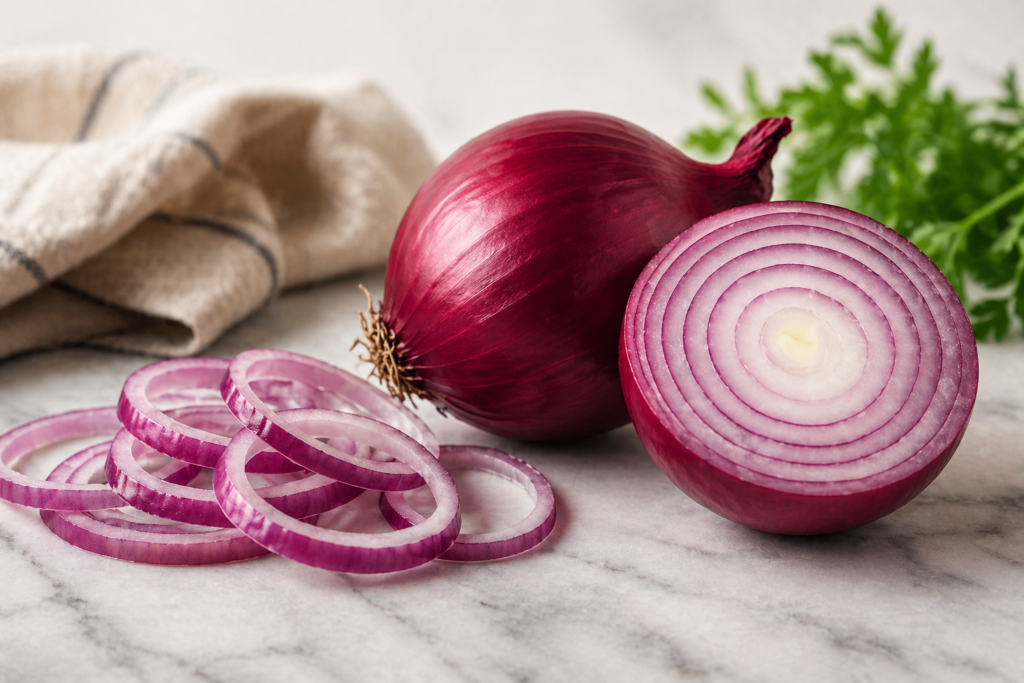
A colorful onion variety known for its crisp texture, vibrant purple-red skin, mild sweetness, and sharp raw bite. Red onions are especially valued in fresh preparations, pickling, grilling, and Mediterranean-style cooking.

Parent:Onion
Substitutions:Onion
About

Recognizable by their deep purple-red skin and vividly colored inner rings, red onions are prized for their brightness, crisp texture, and visual impact as much as their flavor. They are commonly used raw in salads, sandwiches, salsas, burgers, grain bowls, and Mediterranean dishes where their color and sharpness help cut through richer ingredients.

Compared to yellow onions, red onions tend to taste cleaner, fresher, and slightly sweeter, especially when served raw. Their moderate pungency makes them approachable without sacrificing the characteristic bite associated with fresh onions.

Red onions are also exceptionally popular for pickling. Their vibrant pigments intensify into electric pink tones when exposed to acidic ingredients like vinegar or citrus juice, making pickled red onions both visually striking and highly versatile.

Though often associated with fresh preparations, red onions also grill and roast beautifully, developing sweetness while retaining a subtle brightness that distinguishes them from deeper, more savory yellow onions.


Flavor Profile

Red onions are brighter and cleaner in flavor than yellow onions, with a noticeable sweetness balanced by a sharp, peppery bite. Their sulfur compounds are generally less aggressive than white onions, making them especially popular in raw preparations.

When cooked, red onions soften into a mellow sweetness while retaining more brightness and acidity than yellow onions. Grilling and roasting deepen their sweetness while enhancing their subtle fruity notes.

SWEET
GRASSY
BRIGHT
PUNGENT

Texture Profile

Raw red onions are crisp, juicy, and firm with a pronounced crunch that holds up well in salads, sandwiches, tacos, and slaws.

When cooked, they soften considerably while still maintaining slightly more structure than yellow onions. Roasted or grilled red onions become tender, silky, and lightly jammy around the edges.

CRUNCHY
TENDER
FIRM
JUICY
Culinary Use

Red onions are especially well suited for raw and lightly cooked applications where their brightness, color, and crisp texture can stand out. They are widely used in salads, sandwiches, burgers, tacos, wraps, salsas, grain bowls, and cold vegetable preparations.

They are also one of the most common onions used for quick pickling due to their vibrant color retention and balanced bite. In cooked dishes, red onions are frequently grilled, roasted, sautéed, or caramelized to develop sweetness while preserving some of their characteristic sharpness.

Their visual appeal also makes them popular as garnishes and finishing ingredients.

Cooking Methods
Raw No heat applied. Sautéed Quick cooking in a small amount of fat. Roasted Slow, dry heat in an oven for browning. Grilled Direct heat (usually from below) for char and smokiness. Fried Submerged in hot oil (includes deep-frying and pan-frying). Broiled Intense direct heat from above. Air Fried High-speed convection to mimic frying with minimal oil.
Best Uses
Grilled Dishes Roasted Dishes Sandwiches & Wraps Stir-Fries Tacos & Wrap Fillings Garnishes Pickling Salads Sautés

Prep Notes

For milder raw flavor, soak sliced red onions briefly in cold water before serving. This softens some of their sharper sulfur compounds while preserving crunch. Thin slicing is especially effective for salads, sandwiches, tacos, and pickled preparations where texture and even flavor distribution matter.

Trimming & Cutting Notes

Trim both ends before removing the papery outer skin. Remove any bruised or softened outer layers before use. For rings or half-moons, slice across the onion from stem to root to preserve the circular structure of the layers.

Safety Notes

Like other onions, red onions release sulfur compounds when cut that may irritate the eyes and cause tearing.

Storage Notes

Store whole red onions in a cool, dry, well-ventilated place away from direct light, such as a pantry, cellar, or similar low-light storage area. Proper airflow is essential—hanging or tiered baskets, mesh bags, or open containers help prevent moisture buildup, which can lead to soft spots and spoilage. While basements and root cellars can be suitable, conditions should remain dry with good ventilation, as excess humidity can encourage mold and rot.

Once cut, red onions should be tightly wrapped or stored in an airtight container and refrigerated. This helps preserve their moisture and prevents their aroma from affecting other foods. For best quality, use cut onions within several days, as their flavor and texture will gradually degrade over time.

IMPORTANT: Keep onions separate from potatoes, as the gases and moisture they release can shorten each other’s shelf life.

Freezer Friendly

Red onions can be frozen, but freezing breaks down their cell structure, which softens their texture. As a result, they lose their crisp bite and are no longer suitable for raw uses like salads or garnishes. They’re best frozen pre-cut (sliced or diced) and used later in cooked applications such as soups, stews, sauces, and sautés. For best results, spread the pieces out on a tray to freeze individually before transferring to a freezer-safe bag or container to prevent clumping.

Shelf Life

Whole red onions can last several weeks when stored properly in cool, dry conditions. Cut red onions are best used within several days when refrigerated.

Spoilage Signs

Discard red onions that feel soft, slimy, hollow, moldy, or heavily sprouted. Excess moisture, sour odors, or darkened inner layers are also signs of deterioration.

Storage Locations
Pantry General shelf-stable storage (dry, room temp). Refrigerator Standard cold storage for perishables. Freezer Long-term sub-zero storage. Cool, Dark Place A specific requirement for items sensitive to light/heat (like oils and potatoes). Basement / Cellar Large-scale or overflow storage with consistent, moderate temps. Hanging / Tiered Baskets Vertical storage for high-ventilation items (onions, garlic).
Storage Methods
Airtight Container The gold standard for dry goods (flour, sugar, cereal) and leftovers to prevent staleness and pests. Sealed Bag Zip-top bags for cheese, deli meats, or snacks where a rigid container isn't necessary. Mesh / Perforated Bag Allows maximum airflow for dry produce like onions and citrus. Loose / Open No packaging at all; sitting directly on a shelf or counter (best for whole apples or squash). Keep Dry

Did You Know

The pigments that give red onions their purple color are anthocyanins—the same antioxidant compounds found in blueberries, purple cabbage, and red wine.

Buying Tips

Choose red onions with deeply colored skin, firm structure, and dry outer layers. Avoid onions with soft spots, damp patches, sprouting, or wrinkled skin.

Seasonal Notes

Red onions are available year-round, though freshly harvested onions tend to appear from late summer into autumn before entering long-term storage distribution.

Cultural Notes

Red onions are heavily featured throughout Mediterranean, Mexican, Middle Eastern, Southeast Asian, and Latin American cuisines, where their brightness and color are often used to balance rich meats, creamy sauces, grilled foods, and acidic dressings.

Where to Buy

Shop this item online from trusted retailers.

Nutrition Facts Servings per container: ; Serving size: 100 g (100g) Amount per serving: Calories 44, Total Fat 0.1g, Sodium 1mg, Total Carbohydrate 9.9g, Dietary Fiber 2.2g, Protein 0.9g, Calcium 17mg, Iron 0.2mg, Potassium 197mg.
More nutrition
Soluble Fiber not listed, Insoluble Fiber not listed, Sugar Alcohols not listed, Net Carbs 7.7g, Vitamin C 8.1mg, Biotin 0mcg, Phosphorus 41mg, Iodine 0mcg, Magnesium 11.4mg, Zinc 0.2mg, Selenium 0.5mcg, Copper 0.1mg, Manganese 0.1mg, Water 88.6g.
Nutrition information is estimated using USDA FoodData Central and other reference sources. Actual values may vary based on ingredient variety, preparation method, brand, ripeness, processing, and measurement accuracy.

come back again
Because our site features alcohol, you must be over 21 to enter
are you at least 21 yearold?