






Member Features Save ingredients to your Stock, Shopping List, and Avoid List.
Sign In

Onion (/ˈʌn.jən/)

Allium cepa
Also known asBulb Onion, Common Onion, Garden Onion

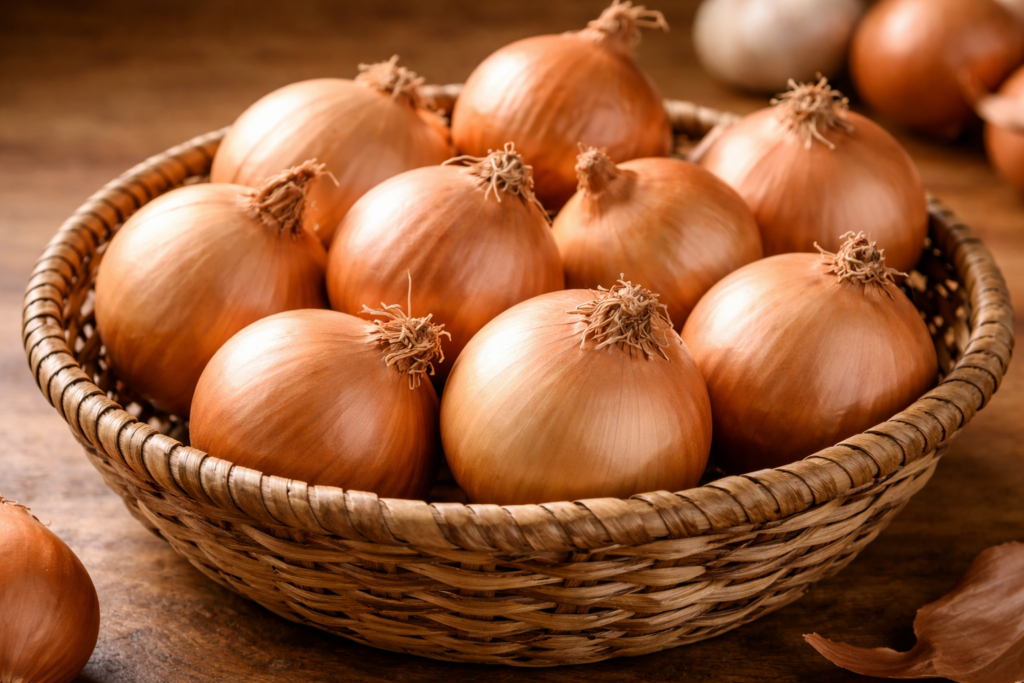
A bulb-forming allium prized for its sharp raw bite, savory depth, and transformative sweetness when cooked. Onions form the aromatic backbone of countless cuisines and are foundational to stocks, soups, sauces, braises, and savory cooking worldwide.

About

Few ingredients are as foundational to savory cooking as the onion. Whether slowly caramelized into deep sweetness, sweated gently into the base of a soup, or sliced raw for sharp contrast and crunch, onions shape the flavor architecture of cuisines around the world.

Part of the allium family alongside garlic, shallots, leeks, and chives, onions are valued for their ability to transform dramatically depending on how they are prepared. Raw onions are pungent, sulfurous, grassy, and sharp. With heat, those aggressive compounds soften into sweetness, savoriness, and rich aromatic depth.

While many varieties exist—including yellow, white, red, sweet, pearl, and cipollini onions—the yellow onion is generally considered the standard all-purpose cooking onion in Western kitchens.

Flavor Profile

Raw onions are sharp, sulfurous, grassy, and aggressively aromatic with a lingering pungency that can range from mildly peppery to eye-wateringly intense depending on the variety and freshness.

As onions cook, their flavor changes dramatically. Gentle heat softens their bite while drawing out natural sugars, creating savory sweetness and rich aromatic depth.

SWEET
UMAMI
EARTHY
GRASSY
BRIGHT
PUNGENT

Texture Profile

Raw onions are crisp, juicy, and layered, offering both crunch and moisture depending on the cut.

As onions cook, their texture softens considerably. Sweated onions become silky and tender, while slowly caramelized onions collapse into jammy strands with deep sweetness.

CRUNCHY
TENDER
SOFT
JUICY
Culinary Use

Onions serve as one of the most important aromatic foundations in savory cooking. They are frequently combined with ingredients like celery, carrots, peppers, garlic, or ginger to create flavor bases that support soups, stews, sauces, braises, curries, stir-fries, stocks, and roasted dishes.

They may be used raw for crunch and sharpness, lightly cooked for sweetness and body, or deeply caramelized for richness and complexity.

Cooking Methods
Raw No heat applied. Sautéed Quick cooking in a small amount of fat. Roasted Slow, dry heat in an oven for browning. Grilled Direct heat (usually from below) for char and smokiness. Braised Searing followed by slow cooking in a small amount of liquid. Fried Submerged in hot oil (includes deep-frying and pan-frying). Blanched Briefly boiled then "shocked" in ice water to preserve color and snap. Steamed Cooking with hot vapor to retain nutrients and moisture. Simmered Gentle cooking in liquid just below the boiling point. Baked Dry heat in an oven, typically at lower temperatures than roasting. Broiled Intense direct heat from above. Poached Gently cooked in hot liquid. Seared High-heat browning of the surface. Stewed Slow cooking small pieces fully submerged in liquid. Air Fried High-speed convection to mimic frying with minimal oil.
Best Uses
Aromatic Bases & Simmers Sauces & Gravies Stocks & Broths Braised Dishes Grilled Dishes Pasta Dishes Rice & Grain Dishes Roasted Dishes Sandwiches & Wraps Soups & Stews Stir-Fries Stuffings & Fillings Tacos & Wrap Fillings Garnishes Pickling Salads Sautés Breakfast Dishes

Prep Notes

Trim the root and stem ends, then peel away the papery outer skin to expose the firm, layered flesh beneath. Depending on the dish, onions can be sliced into thin half-moons, diced for even distribution, minced for a finer texture, or cut into wedges for heartier preparations. The way the onion is cut directly affects both texture and how its flavor develops during cooking.

When working with onions, the natural sulfur compounds released during cutting can cause tearing. To minimize this, chill the onion beforehand or rinse it briefly under cold water, which helps slow the release of those compounds. Using a sharp knife and working efficiently can also make a noticeable difference.

Trimming & Cutting Notes

Remove any soft, bruised, sprouted, or discolored layers before use.

For diced onion, make horizontal and vertical cuts before slicing downward across the grain.

Safety Notes

Cutting onions releases sulfur compounds that may irritate the eyes and cause tearing.

Storage Notes

Store whole onions in a cool, dry, well-ventilated place away from direct sunlight. Avoid sealed plastic bags, which trap moisture and encourage spoilage.

IMPORTANT: Keep onions separate from potatoes, which can shorten their storage life. Once cut, refrigerate in an airtight container.

Freezer Friendly

Onions can be frozen raw or cooked, but freezing softens their texture. Frozen onions are best used in cooked dishes like soups, stews, sauces, casseroles, and sautés rather than raw applications. Dice or slice before freezing, spread on a tray until firm, then transfer to a freezer-safe bag or container.

Shelf Life

Whole onions can last several weeks to months depending on the variety and storage conditions. Cut onions should typically be used within several days when refrigerated properly.

Spoilage Signs

Discard onions that feel soft, slimy, moldy, heavily sprouted, or emit sour or fermented odors.

Storage Locations
Pantry General shelf-stable storage (dry, room temp). Refrigerator Standard cold storage for perishables. Freezer Long-term sub-zero storage. Basement / Cellar Large-scale or overflow storage with consistent, moderate temps.
Storage Methods
Airtight Container The gold standard for dry goods (flour, sugar, cereal) and leftovers to prevent staleness and pests. Mesh / Perforated Bag Allows maximum airflow for dry produce like onions and citrus. Keep Dry

Did You Know

The compounds responsible for making onions pungent—and for causing tears while cutting—are released only after the onion’s cell walls are damaged.

Buying Tips

Choose onions that feel heavy for their size with tight, dry outer skins and no soft spots.

Seasonal Notes

Storage onions are typically harvested in late summer and autumn before being cured for long-term storage.

Cultural Notes

Onions appear in the foundational cooking traditions of nearly every major cuisine in the world.

Where to Buy

Shop this item online from trusted retailers.

Nutrition Facts Servings per container: ; Serving size: 100 g (100g) Amount per serving: Calories 40, Total Fat 0.1g, Saturated Fat 0.0g, Trans Fat 0g, Cholesterol 0mg, Sodium 4mg, Total Carbohydrate 9.3g, Dietary Fiber 1.7g, Total Sugars 4.2g, Protein 1.1g, Vitamin D 0mcg, Calcium 23mg, Iron 0.2mg, Potassium 146mg.
More nutrition
Polyunsaturated Fat 0.0g, Monounsaturated Fat 0.0g, Soluble Fiber not listed, Insoluble Fiber not listed, Sugar Alcohols not listed, Net Carbs 7.6g, Vitamin A 0mcg RAE, Vitamin C 7.4mg, Vitamin E 0.0mg, Vitamin K 0.4mcg, Thiamin (B1) 0.0mg, Riboflavin (B2) 0.0mg, Niacin (B3) 0.1mg, Vitamin B6 0.1mg, Folate 19mcg DFE, Folic Acid 19mcg, Vitamin B12 0mcg, Pantothenic Acid 0.1mg, Phosphorus 29mg, Magnesium 10mg, Zinc 0.2mg, Selenium 0.5mcg, Copper 0.0mg, Manganese 0.1mg, Caffeine 0mg, Alcohol 0g, Water 89.1g.
Nutrition information is estimated using USDA FoodData Central and other reference sources. Actual values may vary based on ingredient variety, preparation method, brand, ripeness, processing, and measurement accuracy.

come back again
Because our site features alcohol, you must be over 21 to enter
are you at least 21 yearold?