






Member Features Save ingredients to your Stock, Shopping List, and Avoid List.
Sign In

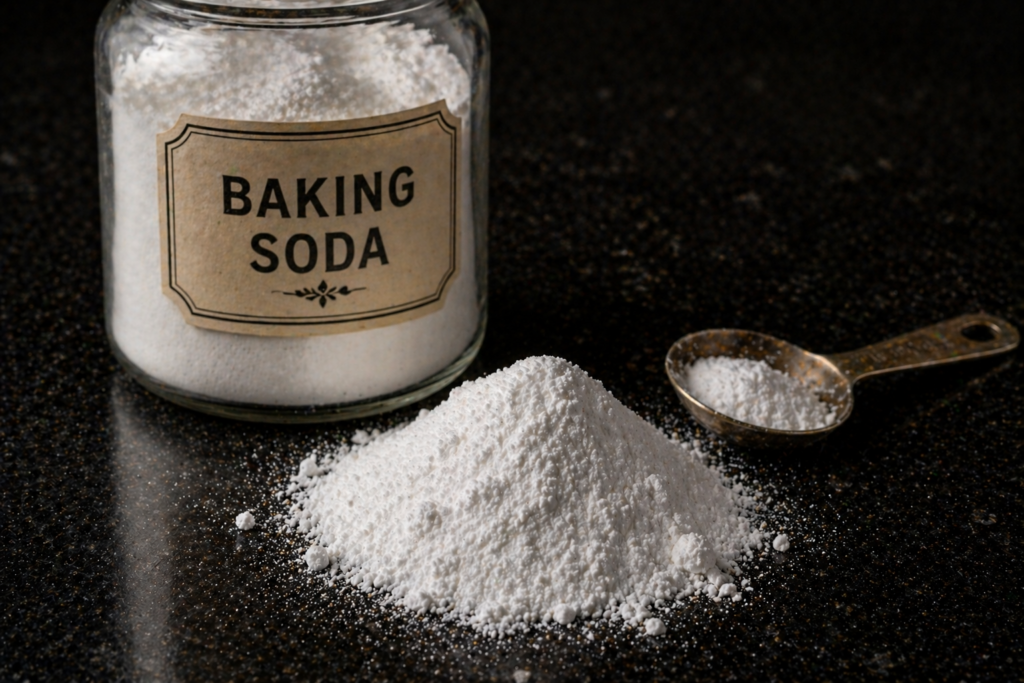
Baking Soda

Also known assodium bicarbonate, bicarbonate of soda

An alkaline leavening agent used in baking to help batters and doughs rise when combined with acid.

About

Baking soda is less about flavor and more about function—a quiet but essential player that shapes texture, structure, and color in baked goods. Known to many from grade-school science experiments (and the inevitable volcano project), it’s the same reaction at work in the kitchen. When combined with acidic ingredients, baking soda releases carbon dioxide, creating the lift that allows batters and doughs to rise and set properly.

Its place in the kitchen reflects a shift toward more reliable, controlled baking. As home baking evolved beyond yeast-only methods, baking soda became a staple for quick breads, cookies, and cakes—recipes that depend on immediate lift rather than long fermentation. Today, it’s a small but indispensable ingredient, used not for what it tastes like, but for how it transforms everything around it.

Flavor Profile

Baking soda is largely neutral in small amounts, though it carries a slightly alkaline, faintly bitter edge on its own. In properly balanced recipes, its presence isn’t meant to be tasted—it works quietly in the background, with its impact showing up in structure rather than flavor.

When used in excess or without enough acidity to react against, that neutrality breaks down. The result can be a lingering bitterness with a distinct, almost soapy or metallic aftertaste that sits on the palate. It’s a reminder that baking soda isn’t a forgiving ingredient—its effectiveness depends entirely on balance.

BITTER


Texture Profile

SILKY
Culinary Use

Baking soda is used in recipes that rely on quick, controlled lift—most often in quick breads, cakes, cookies, pancakes, and batters that include an acidic component such as buttermilk, yogurt, citrus, or brown sugar. In these applications, it activates immediately, helping structure set as the batter cooks rather than developing over time like yeast.

Beyond baking, it has a few practical roles in the kitchen. In small amounts, it can be used to tenderize meat by altering surface proteins, or to help vegetables soften more quickly during cooking. It’s also commonly used as a gentle cleaning agent—its mild abrasiveness and alkalinity make it effective for scrubbing pans and removing stubborn residue without harsh chemicals. And perhaps most familiarly, it’s kept in the refrigerator to absorb and neutralize lingering odors, quietly keeping the rest of your ingredients from picking up unwanted smells.

Cooking Methods
Baked Dry heat in an oven, typically at lower temperatures than roasting.

Prep Notes

Measure carefully and level the spoon; too much can affect flavor and color. Mix evenly into dry ingredients before combining with wet ingredients.

Storage Notes

Store in a cool, dry place away from heat and humidity. Keep the container closed between uses to protect freshness and prevent pests.

Shelf Life

Unopened:
Follow package date.
Opened:
6–12 months when stored properly.

Storage Locations
Pantry General shelf-stable storage (dry, room temp).
Storage Methods
Airtight Container The gold standard for dry goods (flour, sugar, cereal) and leftovers to prevent staleness and pests. Keep Dry

Where to Buy

Shop this item online from trusted retailers.

Nutrition Facts Servings per container:
More nutrition
Soluble Fiber not listed, Insoluble Fiber not listed, Sugar Alcohols not listed, Net Carbs not listed.
Nutrition information is estimated using USDA FoodData Central and other reference sources. Actual values may vary based on ingredient variety, preparation method, brand, ripeness, processing, and measurement accuracy.

come back again
Because our site features alcohol, you must be over 21 to enter
are you at least 21 yearold?