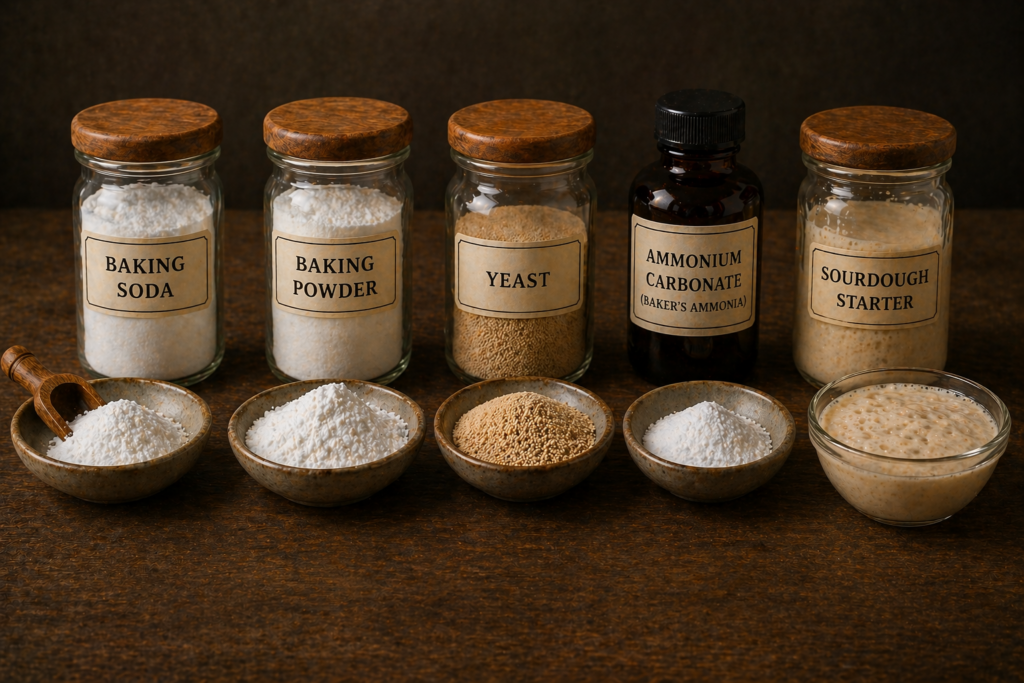
Leavening agents are what give baked goods their lift, transforming dense mixtures into something light, airy, and structured. Whether chemical or biological, they work by producing gas—most often carbon dioxide—which expands within a batter or dough as it heats or ferments, creating the pockets that define texture.
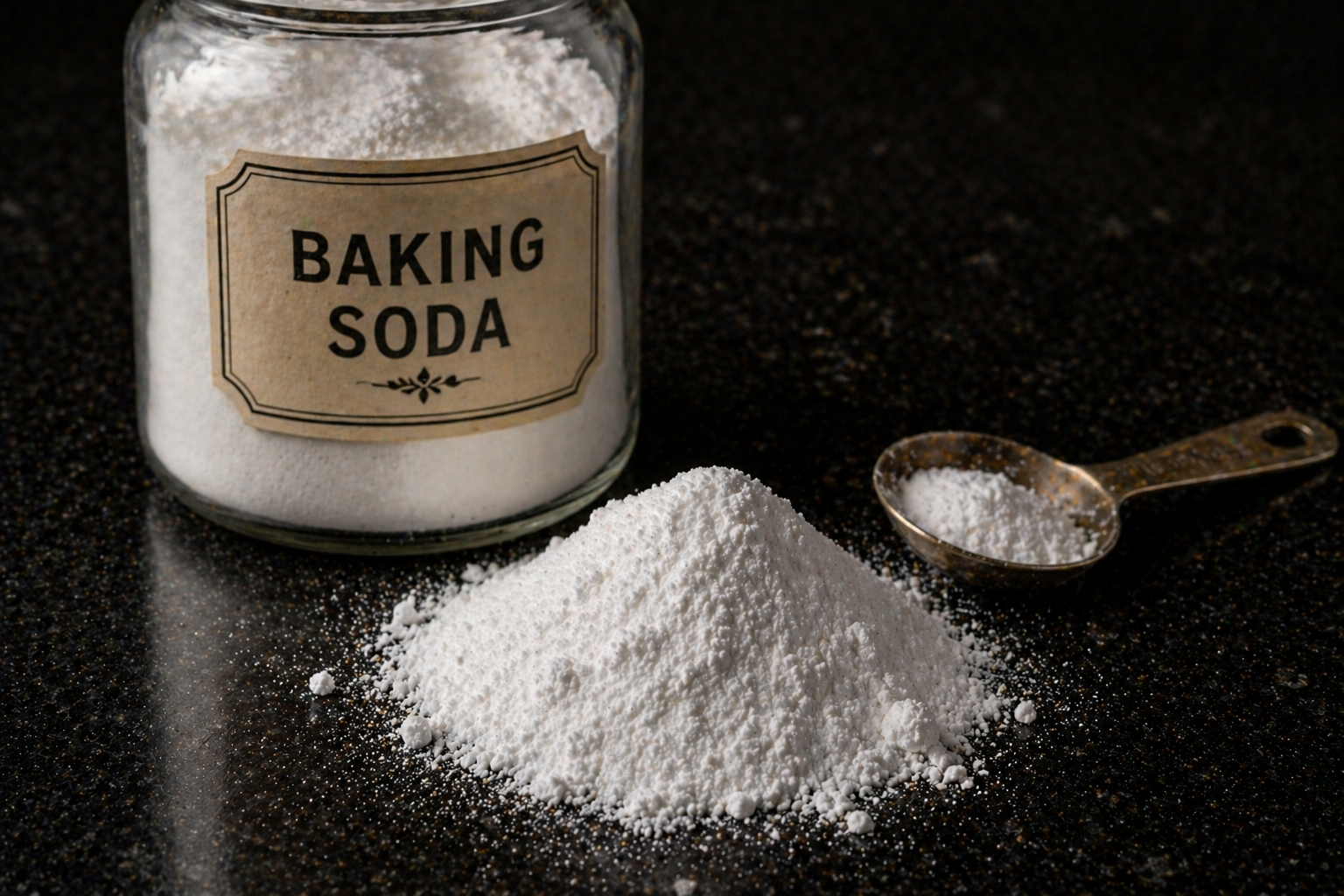
Each type brings its own rhythm and behavior. Baking soda reacts quickly in the presence of acid, making it ideal for recipes that need immediate rise. Baking powder is more controlled, often releasing gas in stages to carry a batter from mixing through baking. Yeast and sourdough starter work more slowly, fermenting over time to develop both structure and flavor. Though their mechanisms differ, they all serve the same purpose: to open up the interior of a dish, turning weight into lightness and giving form to what would otherwise remain flat.