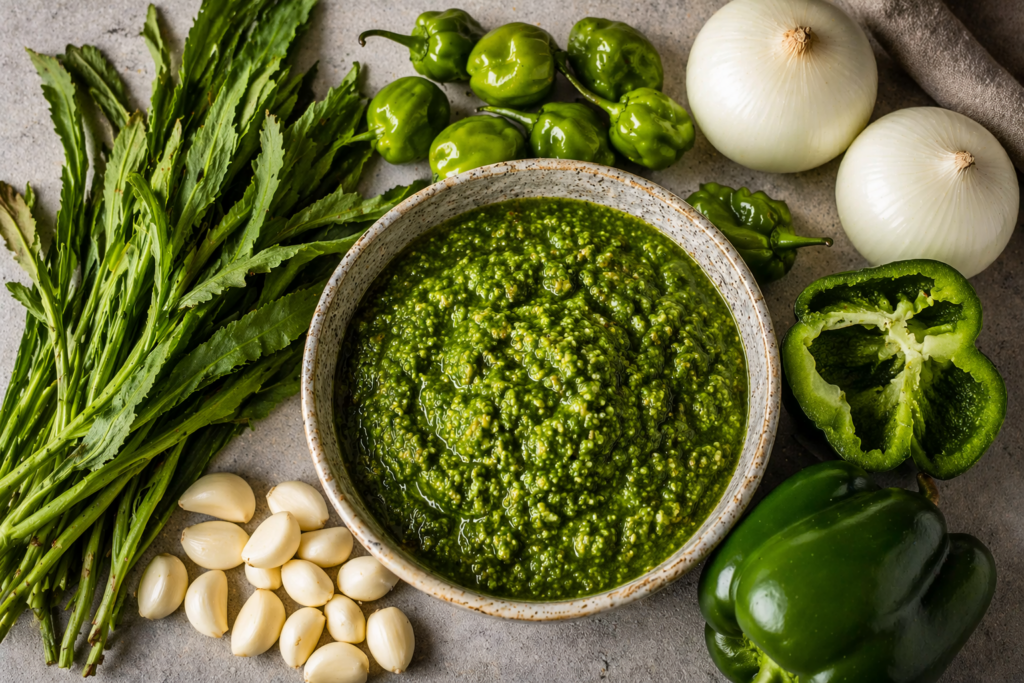
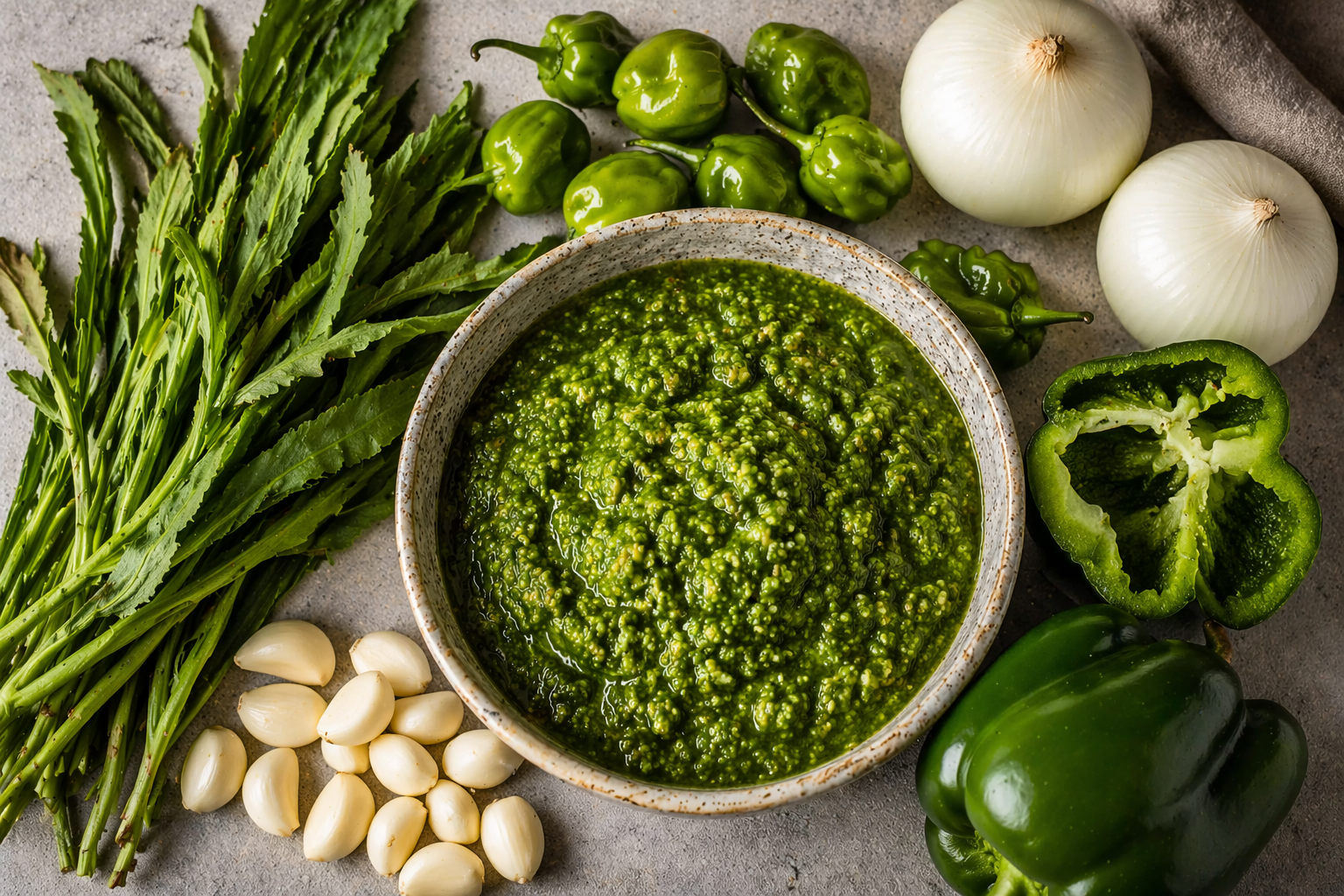
Recaíto is a green, herb-forward aromatic base used throughout Puerto Rican cooking, built from peppers (green bell and ají dulce), onion, garlic, and fresh herbs (culantro and cilantro) blended into a coarse paste. It’s the backbone of dishes like arroz con gandules, beans, and stews, where it sets the direction of the flavor from the first step..
the ingredients that define it
Recaíto is built from a small group of ingredients, but each one plays a specific role in shaping its flavor. Its character comes from the balance between fresh herbs and mild, aromatic peppers, creating a base that is both bright and savory with a depth that builds as it cooks. The texture allows it to disperse quickly in the pan, coating ingredients and setting the tone early, so that every layer of the dish develops from the same foundation.
Recao (Culantro)
At the center of it all is recao, also known as culantro. Despite the similar name, it is not a typo or variation of cilantro—they are two distinct plants with different structures and flavor profiles. This is where recaíto gets its name, and it’s what gives the blend its defining character.
While often compared to cilantro, the flavor is more concentrated and slightly deeper, with a more pronounced herbal edge. The leaves are long and serrated rather than soft and feathery, and they hold up well in blended preparations, giving the mixture a more persistent, grounded flavor.
Cilantro
Cilantro works alongside recao, adding brightness and lift. It softens the intensity of culantro without replacing it, keeping the blend balanced and preventing it from feeling too dense.
ajíes dulces
Ajíes dulces are small, aromatic peppers commonly used in Caribbean cooking. They resemble small habaneros in shape but carry little to no heat. Instead, they bring a gentle sweetness and a distinct fragrance that defines the aroma of recaíto.
Green bell (or Cubanelle) peppers
These form the base of the pepper component. Green bell peppers bring a slightly bitter, vegetal edge, while cubanelle peppers are milder and a bit sweeter. Either works well, with the choice subtly influencing the final balance.
onion and garlic
Onion and garlic provide body and depth. Onion adds moisture and a mild sweetness, while garlic brings sharpness that mellows once cooked, anchoring the brighter elements of the blend.
How It Works
Recaíto is prepared in advance by blending the ingredients into a coarse paste using a blender or food processor, allowing the flavors to combine before they ever reach the pan. This creates a mixture that is already unified, so it develops as a whole rather than as separate components during cooking.
Because of this, it is commonly made in batches and kept on hand. It can be refrigerated for short-term use or frozen in small portions, making it easy to incorporate into dishes without additional preparation.
How It’s Used
Recaíto is added to hot oil at the beginning of cooking and briefly sautéed to release its aroma. From there, the rest of the dish is built on top of it, whether that’s rice, beans, or a stew. The amount used depends on the dish, but even a small quantity has a noticeable impact. Additional spoonfuls can be added later if needed, allowing the flavor to be adjusted as the dish develops.
storage
Recaíto is typically made in batches and stored for later use. It can be kept in an airtight container in the refrigerator for up to a week, though its flavor is best when used within a few days. For longer storage, it can be portioned into small containers or frozen in ice cube trays, then transferred to a sealed bag once solid. Freezing in cubes makes it easy to use—depending on the size, just add a cube or two directly to the pan when starting a dish. This approach keeps the process efficient while preserving the integrity of the blend.
Recipes that Use recaíto
Recaíto
Recaíto is a green, herb-forward aromatic base used throughout Puerto Rican cooking, built from peppers, onion, garlic, and fresh herbs blended into a coarse paste. It’s the backbone of dishes like arroz con gandules, beans, and stews, where it’s added at the start to establish flavor that carries through the entire dish.Its character comes from the balance between fresh herbs and mild, aromatic peppers, creating a base that is both bright and savory with a depth that builds as it cooks. The texture allows it to disperse quickly in the pan, coating ingredients and setting the tone early, so that every layer of the dish develops from the same foundation.