The foundation here is unmistakable: the Hemingway Daiquiri—a drink defined as much by what it leaves out as what it includes. Built at El Floridita and shaped to suit Ernest Hemingway himself, it leans sharp, dry, and direct—lime and grapefruit pulling tight against a clean rum base, with just enough maraschino liqueur to hold the line. It’s a drink with structure, but also with edges. One that doesn’t soften itself for anyone.
The Variation
Blood in the Afternoon starts from that same framework, but shifts how the pieces interact. The citrus remains bright and lifted. The grapefruit still carries its quiet bitterness. But instead of allowing those elements to sit in tension, the Blood Ruby syrup draws them into alignment—rounding the profile without dulling it, giving the drink a through-line where the original can feel angular. It doesn’t make the drink sweeter so much as it makes it complete. What was once sharp becomes precise. What was once austere becomes intentional.
The Homage
Blood in the Afternoon—drawn from Death in the Afternoon—isn’t just a reference, it’s the through-line for the entire drink. Hemingway wrote about Spanish bullfighting as a kind of tragic ballet—controlled, deliberate, and always carrying the weight of what’s coming. That sense of tension is what this variation is built around.
The original Hemingway Daiquiri is famously lean—bright, dry, and almost severe in its structure. This version keeps that foundation intact, but introduces the Blood Ruby element as a way to deepen it. Not to sweeten, but to add dimension—bringing in a darker citrus note that mirrors the contrast Hemingway wrote about: beauty alongside brutality, brightness cut with something more grounded.
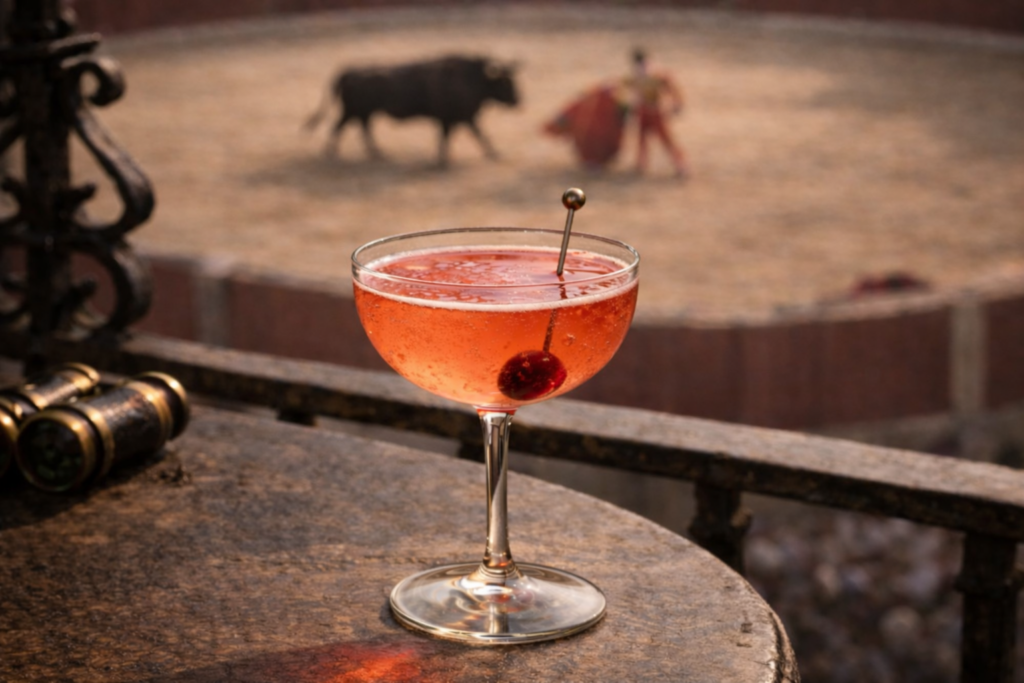
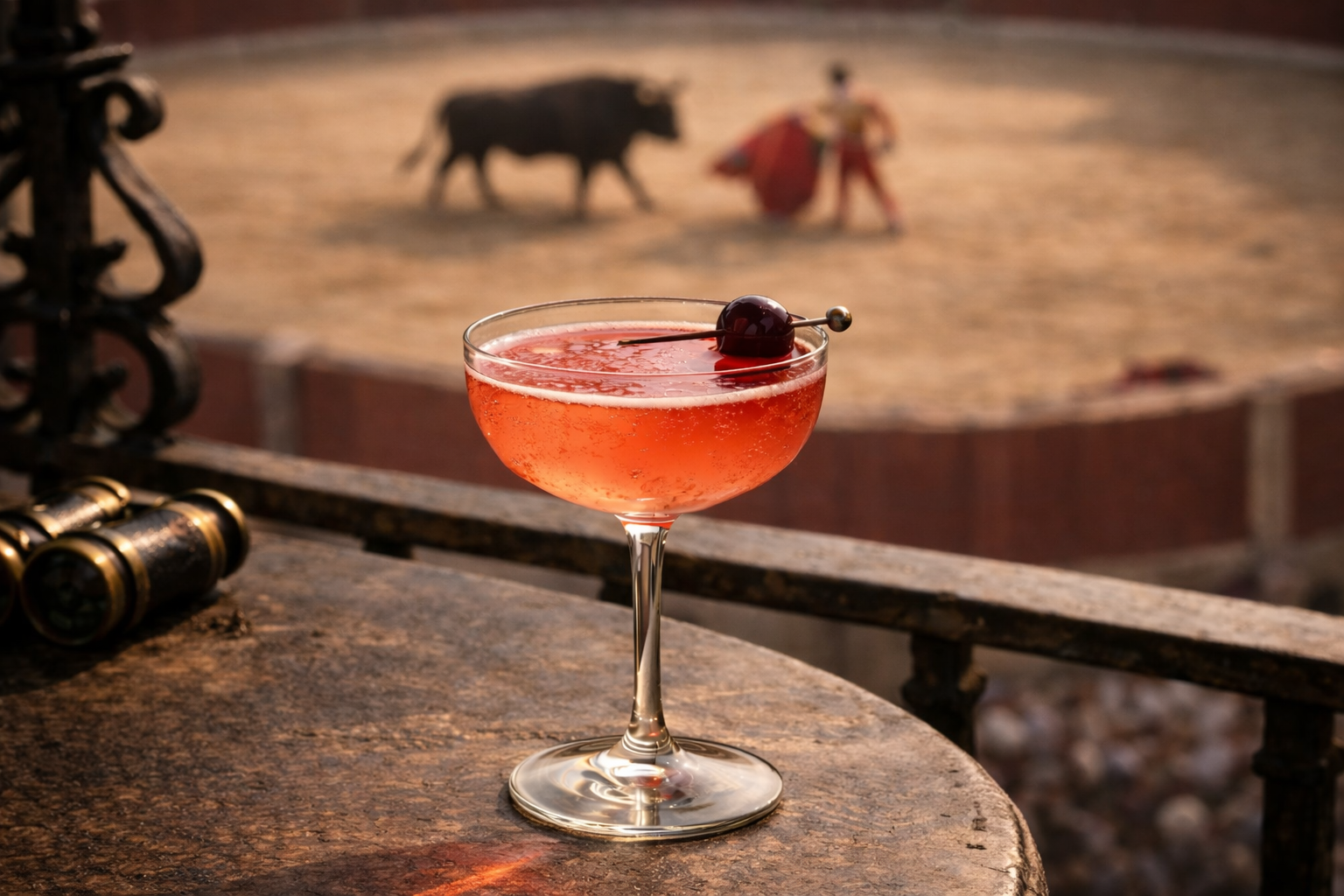
Even the rum choice follows that same line of thought. Flor de Caña is a quiet nod to El Floridita, where the Hemingway Daiquiri took shape. Clean and structured, it keeps the drink anchored in its origin without pulling focus. And then there’s the cherry. Submerged, suspended—not sitting on top, not decorative. It becomes part of the composition, echoing the idea behind the name. A single, dark element held within an otherwise bright structure.
Nothing here is accidental. Each choice points back—to the original drink, to its history, and to the story that gave this version its name.
The Composition
Shaking the drink brings everything together—citrus, syrup, and spirit—into a slightly clouded, integrated base. That texture matters. It gives the drink presence and keeps it from reading thin or overly sharp. In the glass, this is where the build proves itself. The aeration gives it lift without dilution, keeping the texture light while the flavors stay defined. Citrus stays forward, bitterness stays controlled, and the sweetness never separates from the rest of the drink. Everything lands in proportion—and stays there.
The best variations don’t try to outdo the original. They understand it. Blood in the Afternoon keeps the bones of the Hemingway Daiquiri intact, but refines the way they move together—carrying the same identity, just brought into clearer focus.
Blood in the Afternoon
Bright citrus, subtle bitterness, and a structure that holds from first sip to last—Blood in the Afternoon lands exactly where a summer drink should. Light rum and lifted lime keep it crisp, while the Blood Ruby syrup pulls everything into focus without adding weight. Served ice-cold with a suspended cherry, it’s clean, controlled, and just restrained enough to keep you coming back.
In a Boston shaker, add 2 oz Flor de Caña, ¼ oz Luxardo Maraschino Liqueur, ½ oz Blood Ruby syrup, ¾ oz fresh lime juice, ¼ oz ruby red grapefruit (optional—though recommended).
Fill shaker with ice, close tins, and shake vigorously until outside of shaker is frosty.
With a Hawthorne strainer, strain liquid into small tin of Boston shaker set.
Pour contents of small tin through a small mesh strainer into a chilled coupe glass.
Garnish with 1 whole Luxardo cherry, pierced with garnish skewer so that the cherry sits suspended under the liquid.