Fire & Ash is built on two defining elements—mezcal and ancho chile liqueur—each bringing a distinct character that gives the drink its name. Mezcal lays down the foundation with its unmistakable smoke, a dry, lingering quality that reads as ash on the palate. Ancho Reyes builds from there, adding warmth and depth with a slow, controlled heat that doesn’t spike, but settles and carries through the finish. Together, they form the core of the drink—one grounded, one rising—setting up a structure that’s bold but measured.
Citrus with Structure
Where the drink opens up is in the citrus.
The Blood Ruby syrup brings together blood orange and ruby red grapefruit, adding both sweetness and a subtle bitterness that keeps everything in check. It doesn’t just brighten the drink—it gives it shape. The blood orange leans deeper and slightly richer, while the grapefruit sharpens the edges, keeping the profile clean and focused.
Lime reinforces that structure, cutting through the smoke and heat to keep the drink lifted. The result lands somewhere in the space of a Paloma, but darker, more layered, and more intentional.
Where There’s Smoke…
This isn’t a drink that leans in one direction—it evolves across the palate. It opens with bright citrus, lightly sweet but already in balance, before the mezcal begins to expand, bringing a grounded, smoky depth through the mid-palate. As the sip finishes, the warmth from the ancho chile liqueur builds gradually, lingering just long enough to leave an impression without overstaying.
The citrus carries the heat forward, while the smoke provides structure underneath. Each element moves into the next with purpose, creating a profile that feels continuous rather than segmented—nothing overpowering, nothing falling away.
Built with Intention
Shaking the drink brings everything together—citrus, syrup, and spirit—into a slightly clouded, integrated base. That texture matters. It gives the drink presence and keeps it from reading thin or overly sharp.
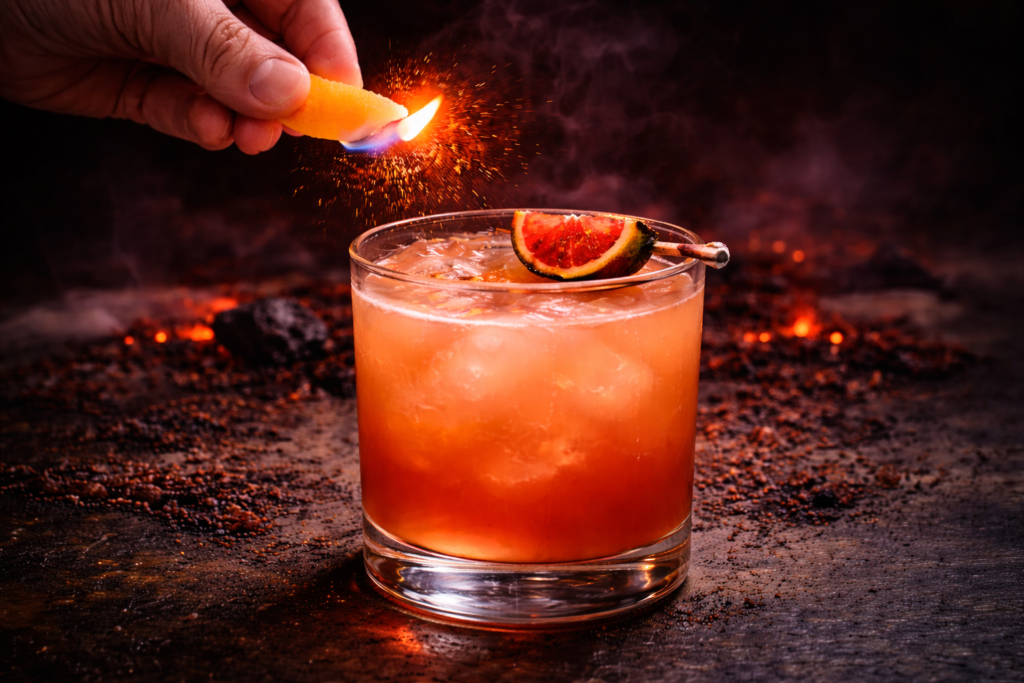
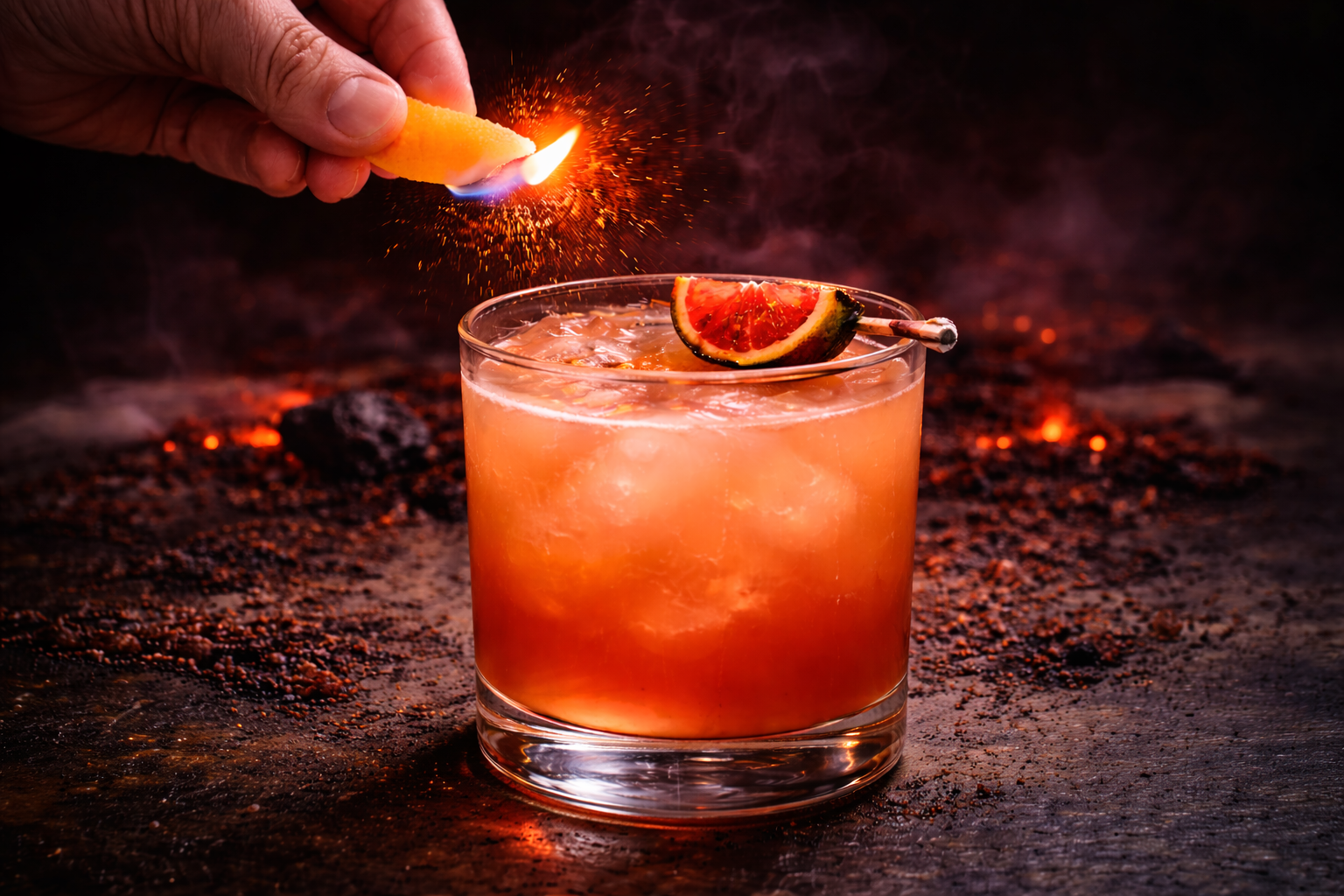
The garnish follows the same philosophy. A charred blood orange segment reinforces the citrus while adding a subtle caramelized note, and a flamed grapefruit peel expressed over the glass introduces a final layer of aroma—bright citrus oils ignited briefly, then settling into the drink.
It’s a small moment, but one that ties directly back to the name.
The process is straightforward, but the balance is deliberate. Each component plays a role, and small shifts will change how the drink reads from start to finish.
Fire & Ash
Fire & Ash is built on contrast—smoke and citrus, heat and brightness, all held in balance. Mezcal lays down a deep, smoldering foundation while ancho chile liqueur brings a slow, warming heat. Blood orange and grapefruit from the Blood Ruby syrup sharpen the profile, with lime cutting through to keep everything lifted and precise. The result is a cocktail that opens bright, settles into smoke, and finishes with a lingering warmth that stays just long enough.
1inchruby red grapefruit peel(expressed with flame)
Instructions
Blood Orange Garnish Prep
Cut 1 blood orange into ½" thick wheels, then cut each wheel into four equal segments.
Using a set of metal kitchen tongs, gently hold the blood orange segments so that the rind side is face out.
Char each rind using a crème brûlée torch.
Let each cool and pierce with garnish skewer so that charred rind is on bottom; set aside in bowl or jar.
Drink Prep
Fill rocks glass with ice and garnish with charred blood orange segment so it is rind side down in glass.
In a Boston shaker, add 2 oz Mezcal, ½ oz Solerno, ½ oz Ancho Reyes (Red), ¾ oz Blood Ruby syrup, and ¾ oz fresh lime juice.
Fill shaker with ice and shake vigorously until the outside of the tin is frosty.
Using Hawthorne strainer, strain liquid from shaker into prepared rocks glass.
Flame Expressed
Using a vegetable peel, remove 1" wide piece of ruby red grapefruit rind.
With a lit match in your dominant hand and the peel in your other, warm the peel over the flame briefly to draw out the citrus oil.
Holding both over glass, give the peel a gentle squeeze to release citrus oil onto the flame; some of the oil will ignite while the rest will fall into the cocktail.
Rub the rind along the rim of the glass; drop into cocktail and serve.