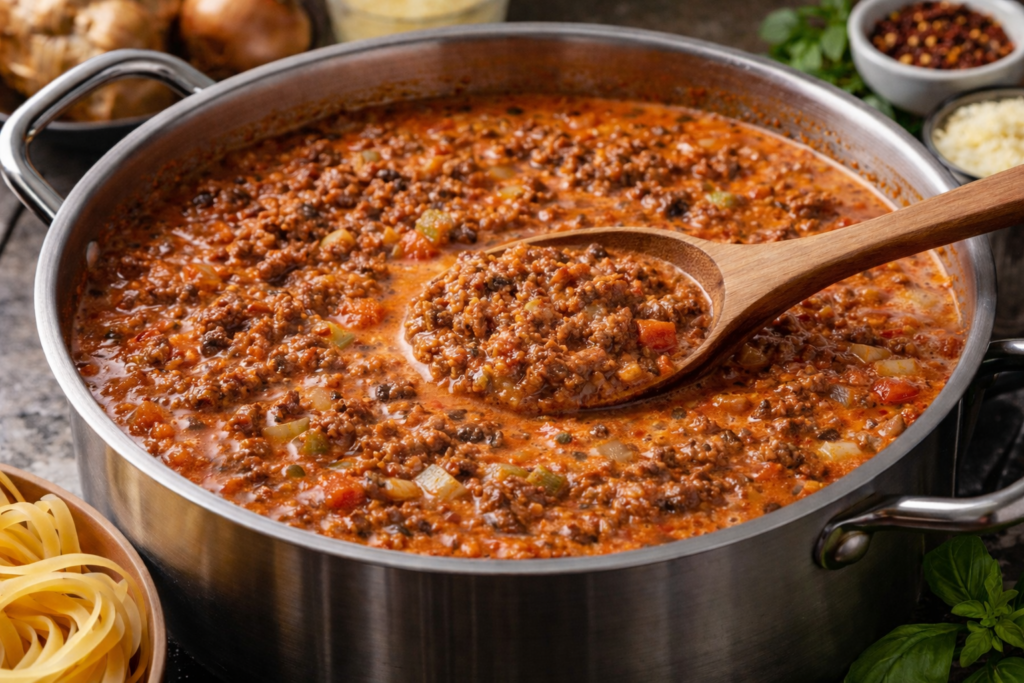
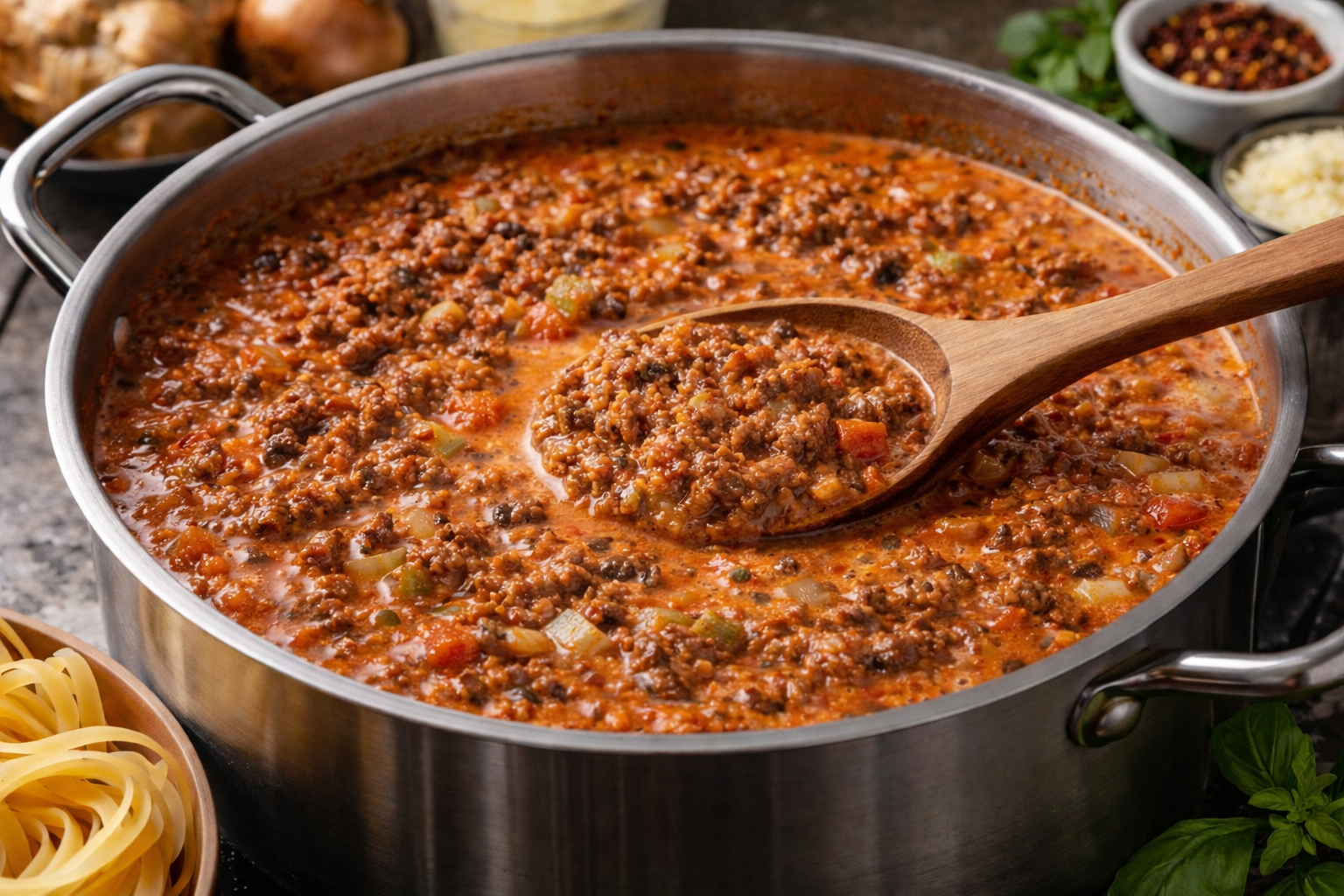
This is a ragù that leans into tradition but doesn’t stay rigid to it—ground sausage in place of pancetta, and a staged build that keeps each element defined before it comes together. The mushrooms in this version are optional, but I like to include them for the added layer of umami and depth they bring to the sauce. It’s rich, meaty, and structured, finished with just enough cream to round it out without softening its identity.
Where it comes from.
This is a recipe that sits somewhere between memory and refinement. The foundation came from my mother—simple, comforting, and built with intention. I remember standing at the counter helping where I could, washing vegetables, cutting onions and carrots, and being handed the spoon every so often to stir the pot. It wasn’t rushed. The sauce would sit and develop, filling the house slowly, becoming part of the rhythm of the day as much as the meal itself.
Later, when I was in college, that foundation picked up a few new layers. A close Italian-American friend introduced me to his grandmother, who had her own way of doing things—small adjustments that made a difference. One of the simplest was adding just a pinch of sugar to the tomatoes to soften their acidity. Not enough to sweeten the sauce, just enough to round it out. It’s a detail I still come back to when the tomatoes need it.
Over time, those influences came together. What I’ve kept is the patience and intention behind the original—nothing rushed, nothing overloaded—just a process that builds gradually so each component has its place. What’s changed is how deliberately I approach each step now, paying closer attention to how everything comes together in the end. It’s still rooted in where it started. It’s just been shaped along the way.
Building it in stages.
What makes this ragù work isn’t just the ingredient list—it’s the sequencing. Each component is cooked separately at first, allowing it to develop its own flavor before being combined. The sausage renders fat and builds the base. The mushrooms deepen the savory profile. The soffritto softens and sweetens. The beef is seasoned and browned on its own, giving it structure before it ever hits the sauce. Nothing is rushed into the pot all at once. Everything is given space to develop, then brought together once it’s ready.
Why the adjustments work.
A few small shifts change the character of the sauce without pulling it away from its roots. Using sweet Italian sausage instead of pancetta keeps the pork element but adds more body and seasoning. The mushrooms—optional, but worth it—reinforce that depth, giving the sauce a more rounded, savory backbone without changing its identity.
From there, the adjustments are more subtle, but just as important. Garlic isn’t traditional in a classic ragù, but used sparingly, it adds a layer of aroma that supports the soffritto without taking over. Anchovy paste works the same way—completely disappearing into the sauce while adding a quiet, underlying umami that deepens everything around it.
Seasoning the beef directly in the pan builds flavor early, giving the meat its own structure before it’s incorporated into the sauce. The wine deglaze then pulls everything together, lifting the fond and setting a clean, cohesive base before the rest of the ingredients come in. None of these changes are meant to redefine the dish. They’re there to refine it—small adjustments that build a little more depth, a little more structure, and a little more control into the final result.
Letting it come together.
Once everything is in the pot, the work slows down. The simmer is where the sauce becomes cohesive—where the fat, liquid, and solids integrate into something that feels unified rather than layered. It thickens gradually, deepens in flavor, and settles into a texture that holds together without feeling heavy. There’s no shortcut here. Time is what turns the individual components into a proper ragù.
What I typically serve it with.
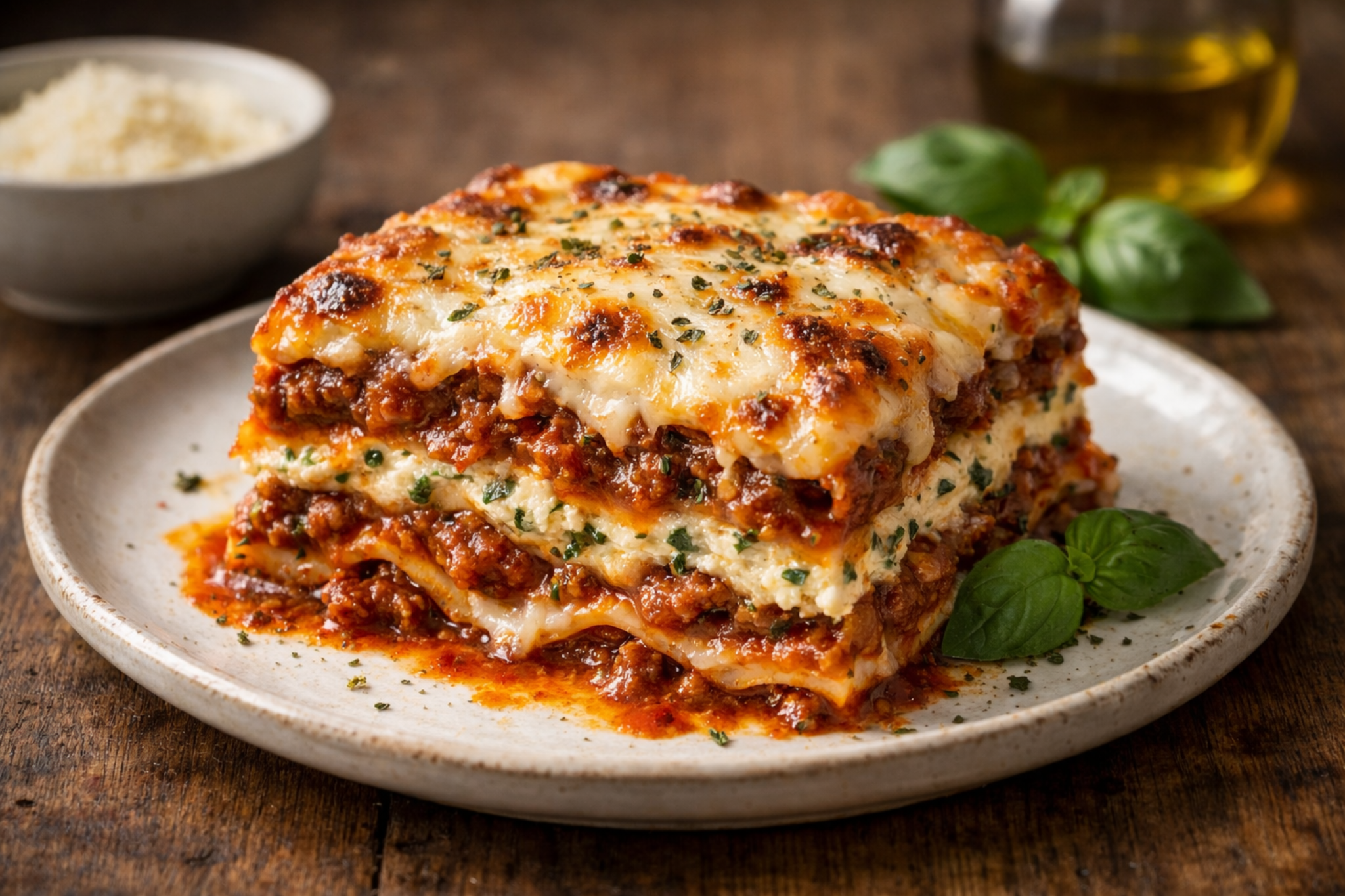
This is a sauce that benefits from the right pairing. It works best with wider, textured pasta or tubes—tagliatelle or pappardelle or penne rigate—where the sauce has something to cling to. It also holds up well in layered dishes like lasagna, where that depth carries through multiple components.
On its own, this lives in the Simmer category—a standalone sauce built slowly and intentionally. But I classify it as a Main Course beccause in practice, it’s meant to become one. Once it’s paired with pasta or layered into a dish, it shifts from component to centerpiece. However it’s served, the goal is the same: let the sauce lead.
You’ll find the full method outlined below. The ingredients are straightforward, but the structure is what makes it work—each step building toward a sauce that feels composed from start to finish.
And if you do make it, let me know how it turns out—and what you pair it with.
Daddy's Ragù alla Bolognese
Daddy’s Ragù alla Bolognese is a deeply layered, slow-built sauce rooted in tradition but shaped by experience. It takes the foundation I learned from my mother and refines it with a few intentional tweaks—drawing from time spent close to Italian-American kitchens—resulting in something richer, meatier, and more personal without losing its sense of origin.
Peel (make sure to remove the tough outer layer), wash, and dry 1 med yellow onion; using your chef knife, dice the onion; set aside in small bowl.
Wash, trim and dry the celery stalks; chop until you have 1½ cups celery; set aside in a small bowl.
Wash, trim, and peel carrots; give them a final rinse and dry them; dice until you have 1½ cups carrots; set aside in a small bowl.
Wash, dry, and trim the ends off 2 whole plum tomatoes; remove seeds and dice; set aside in small bowl.
Wash and dry 4 whole basil leaves; stack leaves and roll tightly; take your chef knife and cut into ribbons (chiffonade); set aside.
If including, thoroughly wash and dry portobello mushrooms; mince until you have enough to fill 2 cups.
Brown the Sausage
In a large Dutch oven over medium heat, cook 1 lb sweet Italian sausage until browned and lightly caramelized. Remove with a slotted spoon and transfer to a large bowl, leaving the rendered fat in the pot.
Cook the Mushrooms (optional)
If using mushrooms, add them to the sausage fat and cook until their moisture has released and reduced, and they begin to brown.Transfer to the bowl with the sausage.
Build the Soffritto
Add onion, celery, and carrots to the pot. Cook over medium heat until softened and lightly golden, about 8–10 minutes.Transfer to the bowl with the sausage and mushrooms.
Brown & Season the Beef
Add 1 lb ground beef to the pot. As it begins to cook, season directly in the pan with:
½ tsp Kosher salt
¼ tsp black pepper
⅛ tsp crushed red pepper flakes
½ tsp onion powder
1 dash nutmeg
Break the meat apart and allow it to brown, developing color rather than steaming.Transfer to the bowl with the sausage, vegetables, and mushrooms.Drain excess fat, leaving about 1 tablespoon in the pot.
Infuse the Stock
In a small saucepan, bring the 1 cup beef stock to a light simmer with 2 sprigs fresh thyme leaves(placed inside a spice infuser ball). Remove from heat and let steep while continuing the recipe.
Build the Base & Deglaze
Add 1 tbsp garlic (minced) to the remaining fat and cook over medium-low heat until fragrant, about 30–60 seconds.Stir in 1 tbsp anchovy paste until dissolved.Add 1 cup Sauvignon Blanc and deglaze the pan, scraping up any fond from the bottom. Let the wine reduce by about half.
Simmer the Sauce
Return all reserved ingredients (sausage, mushrooms, vegetables, beef) to the Dutch oven and stir to combine.
Remove thyme from beef stock.
Add the following to the Dutch oven:
24 oz passata
1 tbsp tomato paste
diced tomatoes
infused beef stock
2 whole bay leaves
Stir to combine and bring to a gentle simmer.
Reduce heat to low and simmer uncovered for at least 2 hours, stirring occasionally. The sauce should gradually thicken and develop a cohesive texture.
Finish
Once the sauce has finished simmering, remove bay leaves. Stir in ½ cup half and half until fully incorporated, then add basil.