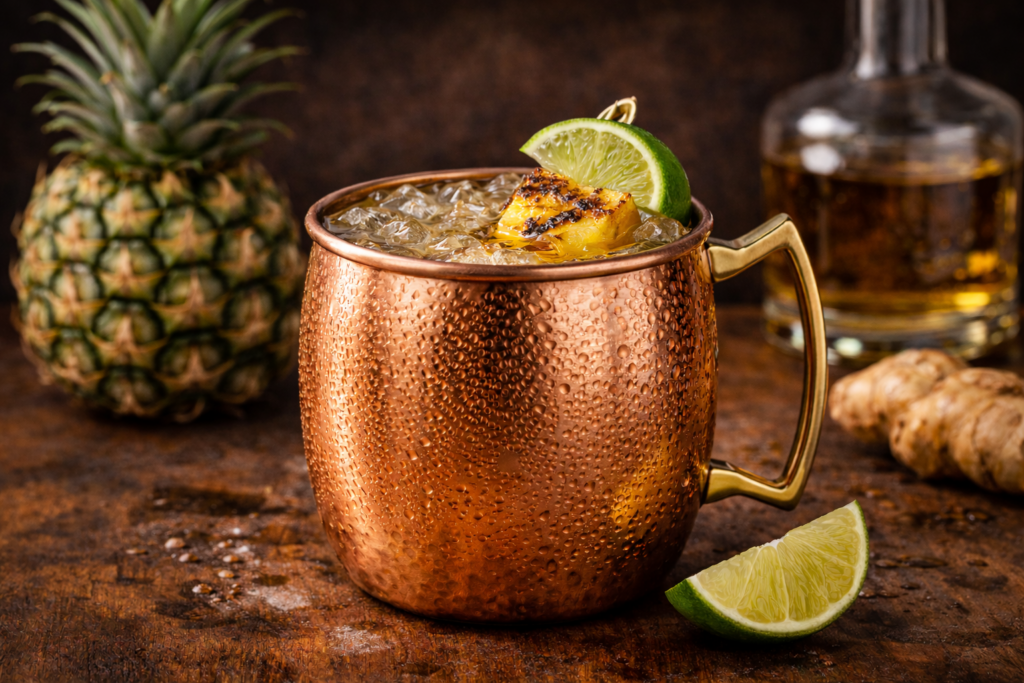
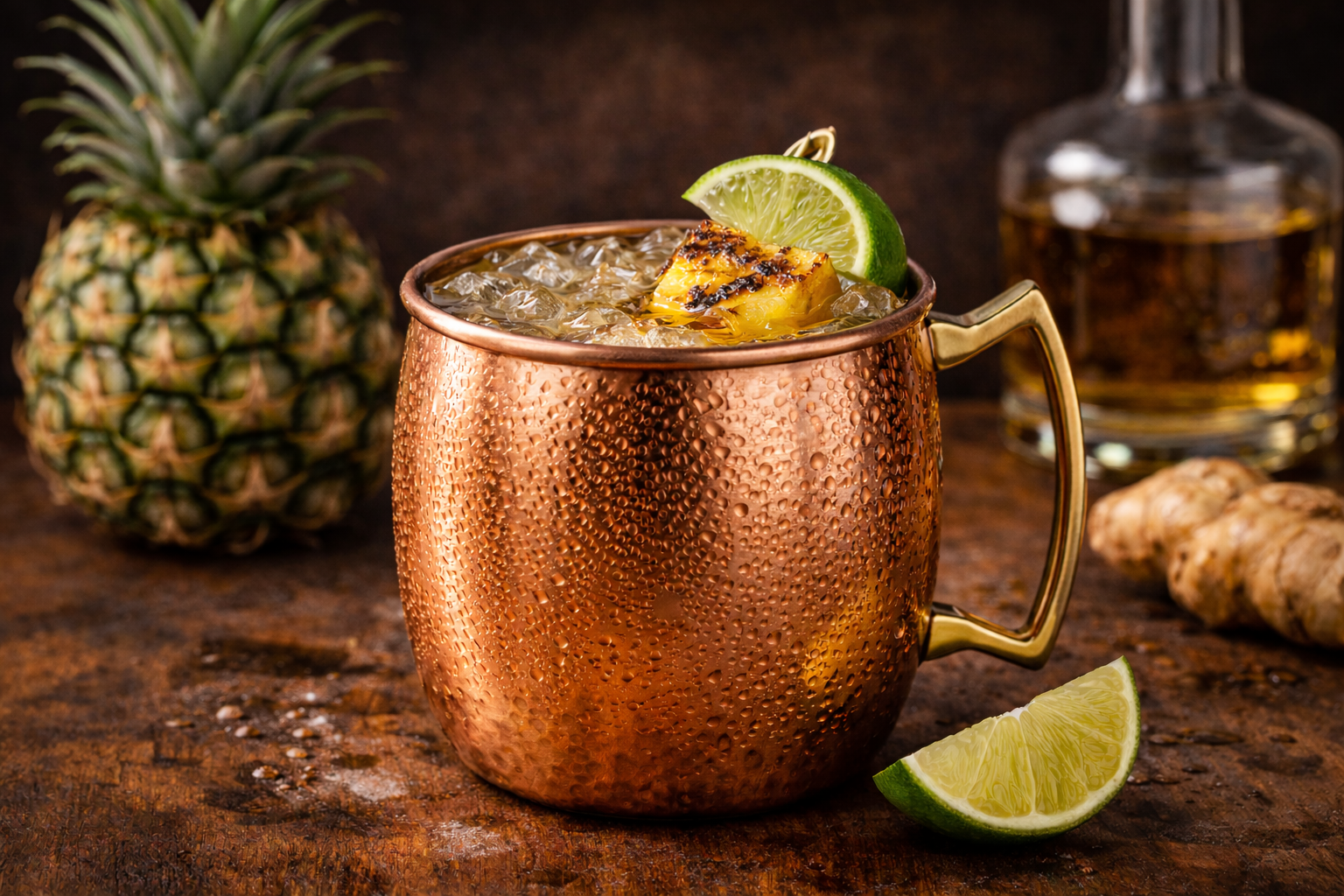
This drink didn’t start out called Ass on Fire. Its original name during the concept build was Burro en Fuego—a nod to the mule format, the Mexican influence in the tequila and habanero, and the heat coming from the Piña de Fuego syrup. It worked. It was clever, a little restrained, and very much in line with everything else.
At some point, it became clear that the literal translation—Ass on Fire—wasn’t just more accurate, it was better. More direct, more memorable, and honestly, more aligned with how the drink actually lands. So it stayed. Because if you’re going to build something around pineapple and habanero, there’s no reason to pretend it’s anything else.
The Structure
At its core, this is a mule derivative, but one that’s been reworked with a bit more intention. The familiar structure is still there—spirit, citrus, sweetness, and lift—but the roles are more clearly defined. Pineapple carries the body, lime keeps it tight, ginger beer provides both spice and effervescence, and the heat is integrated rather than sitting on top. What changes is how those pieces interact. Instead of competing, they move in sequence, each one supporting the next.
Why Reposado Tequila
Reposado does the work that a neutral base never could here. The light oak and soft agave sweetness give the drink a center, something to anchor the brighter elements without pulling them down. It allows the pineapple to feel fuller and the ginger to sit more naturally, while keeping the heat from coming across as sharp or aggressive. A blanco would push everything forward—brighter, greener, more angular—but at the cost of balance. Reposado keeps it composed.
Coconut, Used Properly
Coconut shows up here in the smallest way possible, and that’s exactly why it works. Instead of adding sweetness or pushing the drink further into tropical territory, the coconut water softens the edges just enough to keep everything from feeling rigid. It doesn’t read as coconut-forward; it reads as smooth. More about texture than flavor, and more about restraint than expression.
Choosing the Right Ginger Beer
This is the piece that makes or breaks the drink. A good ginger beer should be spicy, bright, and just dry enough to keep the finish clean. Too sweet, and the entire structure softens. Too aggressive, and it overwhelms the pineapple and heat. What you’re looking for is something with real ginger bite and moderate carbonation—enough to lift the drink and carry the heat, but not so much that it takes over.
For this cocktail, I recommend one with medium spice so it doesn’t compete with the habanero and lower on the sweetness profile so it doesn’t compete with the pineapple. The recipe below calls for Q Mixers Ginger Beer for this very reason, but you can substitute with your favorite as long as it follows the rules I just mentioned: not too spicy, not too sweet. Want some guidance? Read my post on Choosing the Best Ginger Beer for your cocktail.
Final Thought
The first impression is bright—lime and pineapple landing cleanly without excess sweetness. As it settles, the reposado gives the drink its shape, rounding the mid-palate without adding weight. The ginger beer lifts everything through the center, spreading the heat so it builds gradually instead of spiking. By the time it finishes, the warmth is there, but controlled—lingering just long enough to feel intentional.
This is what happens when you take a mule and give it a bit more thought. The structure is familiar, but the balance is tighter, the ingredients are more deliberate, and nothing is doing more than it needs to. And the name tells you exactly what to expect.
The recipe card below breaks everything down. Keep your proportions clean, choose a ginger beer with a balanced bite—enough spice to lift the drink without overpowering it—and let the pineapple and habanero carry through on their own.
Ass on Fire
A mule with a tropical edge, Ass on Fire leans on ginger beer to lift the pineapple, lime, and reposado tequila into a bright, balanced build. Coconut water keeps it smooth, while the habanero heat lands right where the name suggests.