










Member Features Save ingredients to your Stock, Shopping List, and Avoid List.
Sign In

Leek (/liːk/)

Allium ampeloprasum var. porrum
Also known asGarden Leek, Common Leek

A member of the allium family prized for its mild flavor, tender texture, and subtle sweetness. Leeks deliver gentle onion character without the pungency associated with most bulb onions.

About

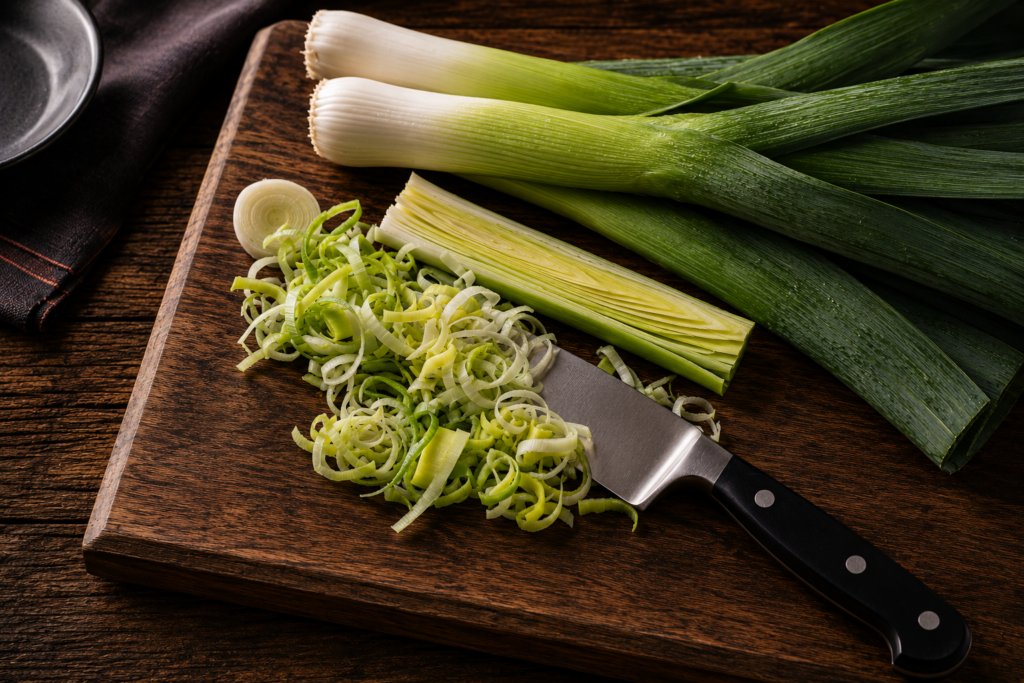
Leeks are one of the most refined members of the allium family, valued for their mild sweetness, delicate aroma, and remarkable versatility in savory cooking. Unlike onions, which form rounded bulbs, leeks develop long cylindrical stalks composed of tightly layered leaf sheaths that gradually transition from white to deep green.

The white and pale green portions are most commonly used in cooking, offering a flavor that is gentler and sweeter than onions while still providing the aromatic depth expected from an allium. This balance makes leeks especially popular in dishes where subtlety is preferred over intensity.

Leeks have long been associated with European cooking, particularly French cuisine, where they appear in soups, stocks, braises, gratins, quiches, and vegetable preparations. They pair exceptionally well with potatoes, cream, butter, seafood, poultry, mushrooms, and fresh herbs.

Their ability to contribute richness without overpowering a dish has earned them a place among the most important supporting vegetables in classical cooking.

Flavor Profile

Leeks offer a gentle allium flavor that sits between onion and scallion in intensity. Their flavor is sweet, mild, and aromatic with very little of the sharp sulfurous bite associated with bulb onions.

Raw leeks possess a clean vegetal freshness with subtle herbal notes. When cooked, they become remarkably mellow, buttery, and sweet, developing a silky richness that makes them especially popular in soups, braises, gratins, and cream-based dishes.

Unlike onions, leeks rarely dominate a dish. Instead, they contribute elegance, depth, and aromatic complexity while allowing surrounding ingredients to remain the focus.

SWEET
UMAMI
EARTHY
HERBAL

Texture Profile

Raw leeks are firm and layered with tightly packed leaf sheaths that become progressively more tender toward the pale white and light green sections.

When cooked, leeks soften dramatically into silky, almost creamy textures. Slow cooking causes them to collapse into delicate strands that integrate beautifully into soups, sauces, and braised dishes.

Their ability to become tender without becoming mushy is one of their most prized culinary qualities.

TENDER
SOFT
FIRM
Culinary Use

Leeks are commonly sliced and gently cooked into soups, stews, stocks, braises, gratins, quiches, risottos, pasta dishes, and vegetable side dishes.

They are especially valued in cream-based preparations where their sweetness and softness complement dairy exceptionally well. Leeks also pair beautifully with potatoes, seafood, chicken, mushrooms, eggs, and root vegetables.

Though typically cooked, younger tender leeks may also be used raw in salads, slaws, and vinaigrettes when sliced very thinly.

Cooking Methods
Raw No heat applied. Sautéed Quick cooking in a small amount of fat. Roasted Slow, dry heat in an oven for browning. Grilled Direct heat (usually from below) for char and smokiness. Braised Searing followed by slow cooking in a small amount of liquid. Blanched Briefly boiled then "shocked" in ice water to preserve color and snap. Steamed Cooking with hot vapor to retain nutrients and moisture. Simmered Gentle cooking in liquid just below the boiling point. Baked Dry heat in an oven, typically at lower temperatures than roasting. Poached Gently cooked in hot liquid. Stewed Slow cooking small pieces fully submerged in liquid.
Best Uses
Aromatic Bases & Simmers Sauces & Gravies Stocks & Broths Pasta Dishes Rice & Grain Dishes Roasted Dishes Soups & Stews Sautés

Prep Notes

Leeks are notorious for trapping soil and grit between their tightly packed layers. Proper cleaning is essential before cooking.

Most recipes utilize only the white and pale green portions, though darker green leaves may be reserved for stocks and broths. Slice according to recipe requirements before thoroughly rinsing.

Washing Notes

After trimming, slice leeks lengthwise and rinse thoroughly between every layer to remove trapped dirt and sand. Alternatively, sliced leeks may be submerged in cold water and agitated, allowing grit to settle to the bottom before draining.

Proper washing is one of the most important steps when preparing leeks.

Trimming & Cutting Notes

Remove the root end and dark green tops before preparation unless specifically using the greens for stock making (see my recipe for Homemade Vegetable Broth).

Discard any wilted, damaged, or excessively tough outer leaves. Retain the white and pale green sections for most culinary applications.

Storage Notes

Store whole leeks unwashed in the refrigerator. Excess moisture can accelerate deterioration and shorten shelf life. Wrap loosely or place in a produce drawer to maintain humidity while preserving airflow.

Freezer Friendly

Leeks freeze well after blanching. Blanched leeks maintain flavor and texture better during long-term frozen storage.

Frozen leeks are best used in soups, sauces, stocks, braises, and other cooked applications.

Shelf Life

Whole leeks generally remain usable for one to two weeks under proper refrigerated storage conditions.

Prepared or sliced leeks should be used within several days for best quality.

Spoilage Signs

Discard leeks that become slimy, excessively wilted, moldy, foul-smelling, or heavily discolored. Yellowing, soft spots, and significant moisture accumulation may indicate declining quality.

Storage Locations
Refrigerator Standard cold storage for perishables. Freezer Long-term sub-zero storage.
Storage Methods
Airtight Container The gold standard for dry goods (flour, sugar, cereal) and leftovers to prevent staleness and pests. Damp Wrap Wrapping an ingredient (like hardy herbs or asparagus) in a damp paper towel before bagging.

Did You Know

Leeks are the national symbol of Wales and have been associated with Welsh culture and military history for centuries.

Buying Tips

Choose leeks with firm white stalks, crisp green tops, and minimal yellowing. Smaller to medium-sized leeks are often more tender and less fibrous than oversized specimens.

Avoid leeks with excessive wilting, softness, or damaged outer leaves.

Seasonal Notes

Leeks thrive in cooler weather and are often harvested from autumn through spring. Many varieties become sweeter after exposure to cold temperatures and light frost.

Cultural Notes

Leeks have deep roots in European culinary traditions, particularly French, British, Welsh, and Belgian cooking. They are celebrated for their ability to provide subtle allium flavor while maintaining elegance and restraint in soups, braises, and vegetable-focused dishes.

Where to Buy

Shop this item online from trusted retailers.

Nutrition Facts Servings per container: ; Serving size: 100 g (100g) Amount per serving: Calories 6, Sodium 17.7mg, Dietary Fiber 3g, Total Sugars 3.1g, Protein 1.5g, Calcium 51.4mg, Iron 0.8mg, Potassium 319mg.
More nutrition
Soluble Fiber not listed, Insoluble Fiber not listed, Sugar Alcohols not listed, Net Carbs not listed, Vitamin B6 0.2mg, Biotin 2.9mcg, Phosphorus 34.6mg, Magnesium 15.7mg, Zinc 0.3mg, Copper 0.1mg, Manganese 0.1mg, Water 87.4g.
Nutrition information is estimated using USDA FoodData Central and other reference sources. Actual values may vary based on ingredient variety, preparation method, brand, ripeness, processing, and measurement accuracy.

come back again
Because our site features alcohol, you must be over 21 to enter
are you at least 21 yearold?