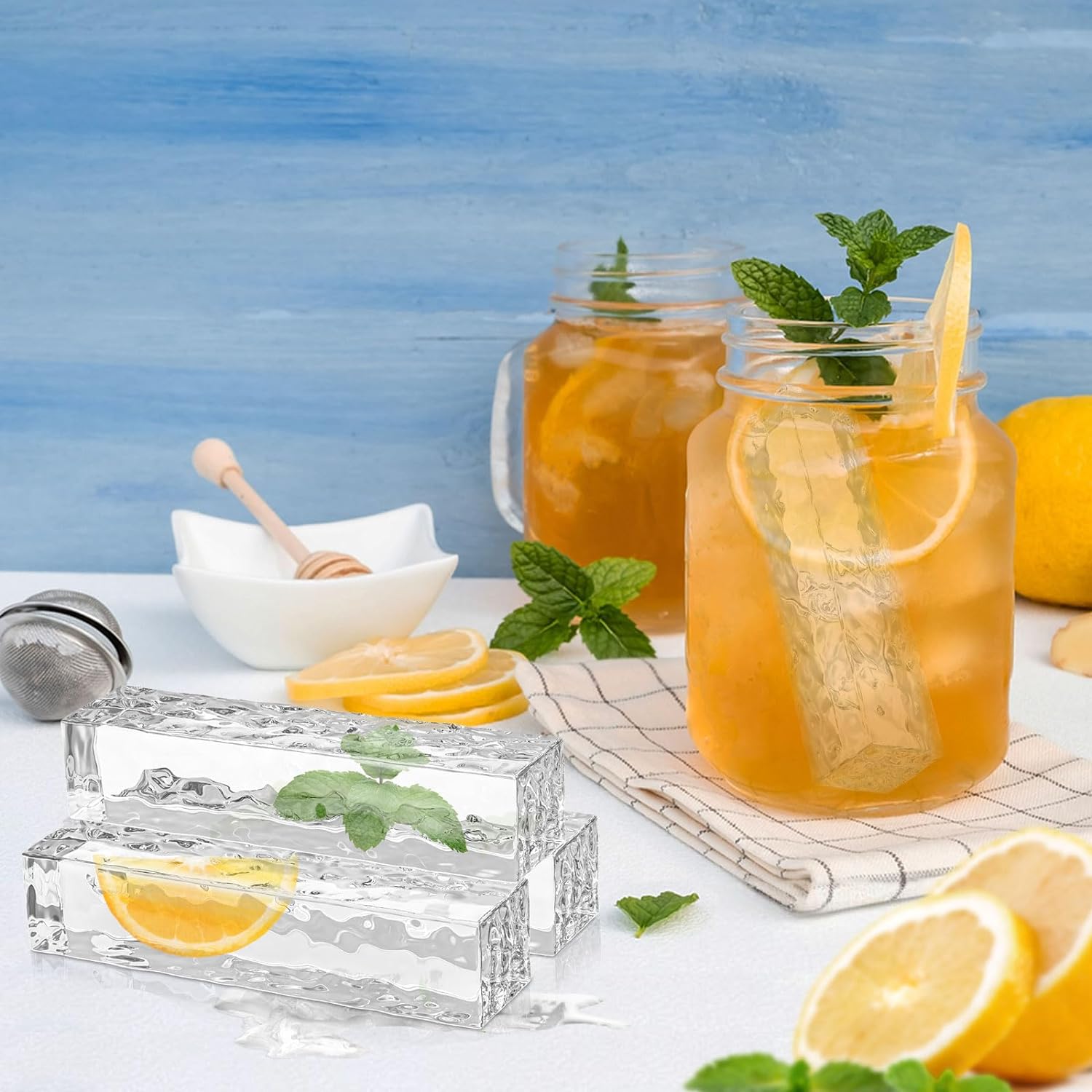
Blueberry Lavender Lemon Ice is designed for presentation—suspending garnish directly within the ice so it becomes part of the drink’s composition rather than an afterthought. Clean, structured, and intentional, it elevates the glass or pitcher by building the visual story in from the start.
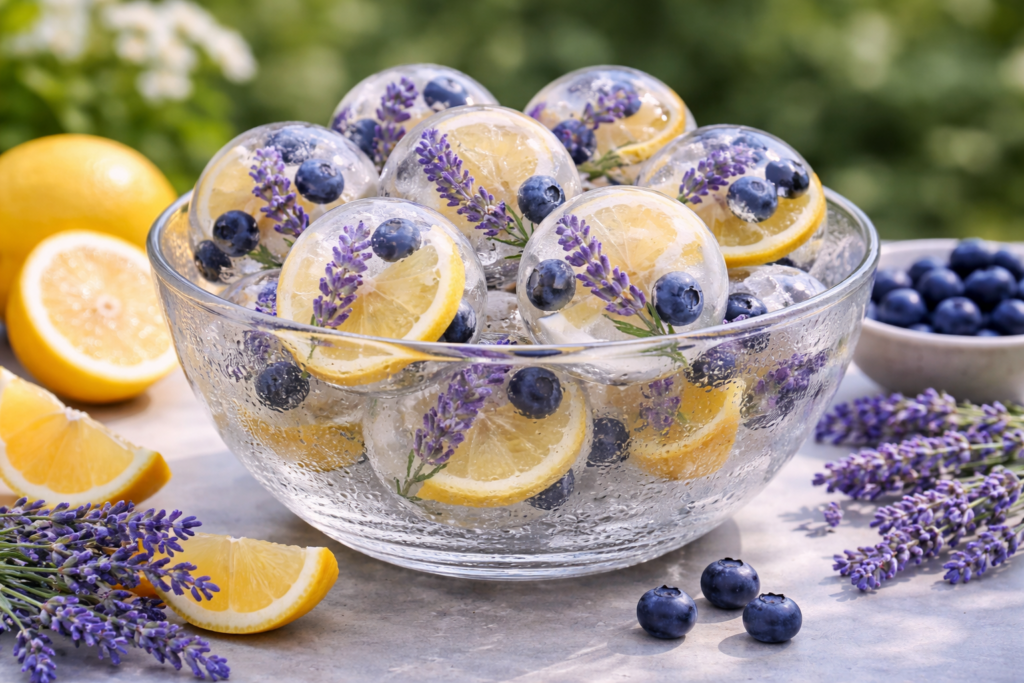
Blueberry Lavender Lemon Ice
Presentation, built in.
Ice doesn’t have to disappear into the background. When it’s handled with intention, it becomes part of the drink’s composition—adding structure, contrast, and a sense of finish before the first sip. It gives the glass a focal point, something that feels considered rather than incidental.
These decorative pieces are built for that purpose. Clean, well-formed ice with suspended elements that echo what’s in the glass, reinforcing the drink visually without adding clutter. Instead of layering garnish on top, everything is contained, controlled, and integrated—resulting in a presentation that feels composed from the start.
Controlling the placement.
What separates these from standard molds is how they’re built. If everything goes in at once, it floats, shifts, and freezes without structure—leaving the final piece looking scattered rather than composed. Freezing in stages changes that. It allows you to place each element deliberately, then lock it in position before adding the next layer. The result is controlled from the inside out, not left to chance.
That control is what gives the finished ice its clarity and intention. Each piece reads cleanly, with elements suspended exactly where they should be, creating something that feels designed rather than incidental. It’s a small adjustment in process, but it completely changes how the ice presents in the glass.
Where they work.
These are built for drinks where presentation carries weight—where the glass is part of the experience, not just the vessel.
They’re especially effective in something like Blueberry Lavender Lemonade, where the ingredients inside the ice mirror what’s already in the drink. That continuity keeps the build cohesive without adding anything extra.
They also translate well across a range of lighter, more aromatic drinks:
- Lavender Collins or Blueberry Lavender Collins – the vertical glass gives the ice room to read clearly, reinforcing the botanical and fruit elements
- Blueberry Margarita – adds contrast against the citrus-forward base, elevating a more casual build into something more composed
- Spritzers and wine-based drinks – where the color and clarity of the ice stand out against lighter liquids
- Iced teas and tea-based cocktails – where the lavender becomes more visually pronounced and complements the structure of the drink
- Mocktails and non-alcoholic builds – where presentation carries even more of the experience
In each case, the ice doesn’t compete—it reinforces what’s already there.
The process.
- Fill each mold halfway with filtered water
- Add your elements (lemon, blueberries, lavender), spacing them intentionally
- Freeze until partially set (about 1–2 hours)
- Top off with more water to fully encase the ingredients
- Freeze until solid
Once frozen, remove and store in a sealed container until ready to use.
Other shapes.
This approach isn’t limited to spheres—the same method works across different molds, with small adjustments to fit the form.
- Large cubes: use lemon wheel halves or segments so they sit flat and remain visible
- Collins spears: switch to lemon twists or peels, layering blueberries along the length
- Smaller molds: scale everything down—fewer blueberries, smaller lavender sprigs, thinner citrus cuts
The principle stays consistent: keep the composition clean, scale the ingredients to the mold, and build in stages so everything stays where you place it.

Silicone Ice Sphere Mold

Silicone Large Ice Cube Mold