Blueberry Lavender Lemonade

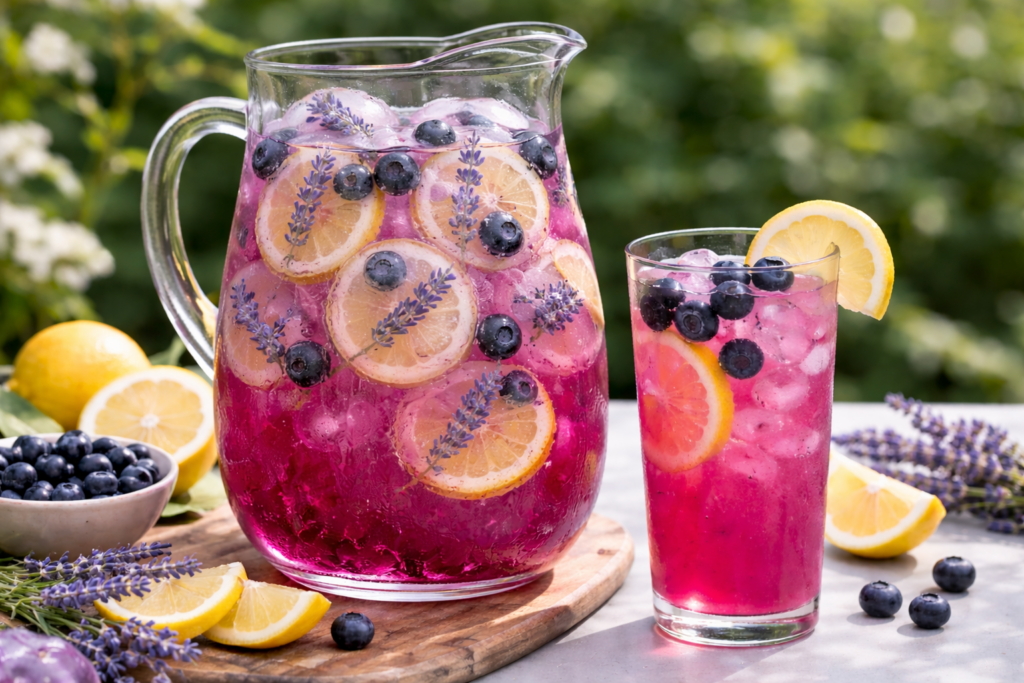
Blueberry Lavender Lemonade brings a brighter, more aromatic edge to a classic—tart lemon layered with jammy blueberry and a subtle floral lift from lavender. It’s refreshing without being one-note, with just enough depth to keep it structured and clean from the first sip to the last.
Blueberry Lavender Lemonade

Bright, layered, and composed.

Blueberry Lavender Lemonade takes a familiar build and gives it more structure—tart lemon sharpened by a fruit-forward syrup and lifted with a subtle floral edge. The citrus stays bright and direct, while the blueberry adds body and a soft, rounded sweetness that keeps the drink from feeling thin. The lavender sits just behind it, not as a dominant flavor, but as a quiet lift that keeps everything clean and balanced.

It’s refreshing in the way lemonade should be—crisp, cooling, and easy to drink—but with enough depth to hold your attention. Instead of flattening into simple sweet and sour, it moves with a bit more intention, giving you something that feels composed rather than basic.

A classic, rebalanced.

At its core, this is still lemonade—citrus, sweetener, and water—but the sweetener here does more than just balance the acidity. Blueberry lavender syrup brings a different kind of weight to the drink. The blueberry gives it a soft, rounded depth that fills out the lemon without dulling it, while the lavender keeps everything from settling too heavily. It doesn’t come across as distinctly floral—it reads more as a clean edge that keeps the drink feeling open. That shift changes how the lemonade carries itself. The citrus stays clear, the sweetness feels integrated rather than added on, and the overall profile has a bit more shape to it—something that feels composed, not just mixed together.

Building it in layers.

The process is simple, but the order matters. Starting with freshly pressed lemon juice gives you a base that’s bright and direct—no muted citrus, no added bitterness. From there, the syrup is stirred directly into the juice, allowing the sweetness and fruit to integrate fully before dilution. This step sets the balance early, so nothing feels disconnected later. Once the water is added, the drink opens up. The acidity softens slightly, the aromatics become more noticeable, and everything settles into a profile that feels cohesive rather than mixed together at the end. A final stir is all it needs—clean, controlled, and ready to chill.

Where the ice comes in.

This is where the presentation shifts from simple to composed. Blueberry Lavender Lemon Ice is designed to mirror the drink itself—suspending the same visual elements inside the ice so the garnish becomes part of the structure. Instead of layering components on top, everything is built in from the start.

As the lemonade is poured over the spheres, the glass reads clearly and intentionally. The color of the drink, the shape of the ice, and the elements within it all align, giving the finished glass a sense of cohesion without adding anything unnecessary. It’s a detail that doesn’t complicate the build, but it changes how the drink presents from the moment it hits the table.

What I typically serve with it.

This is a drink that carries well across a range of settings because it’s balanced without being heavy. It works alongside lighter, citrus-forward dishes where the acidity complements rather than competes. It also pairs well with herb-driven plates, where the lavender finds a natural connection without standing out on its own.

As a non-alcoholic option, it holds its own—it doesn’t feel like a placeholder. It’s structured enough to stand independently, but flexible enough to build from. Add sparkling water for a lighter, more effervescent version, or use it as a base for a spritz or spirit-forward cocktail depending on the direction you want to take.

You’ll find the full method outlined below. The ingredients are simple, but the balance is what makes it work—clean citrus, controlled sweetness, and just enough lift to keep everything aligned.

Blueberry Lavender Lemonade

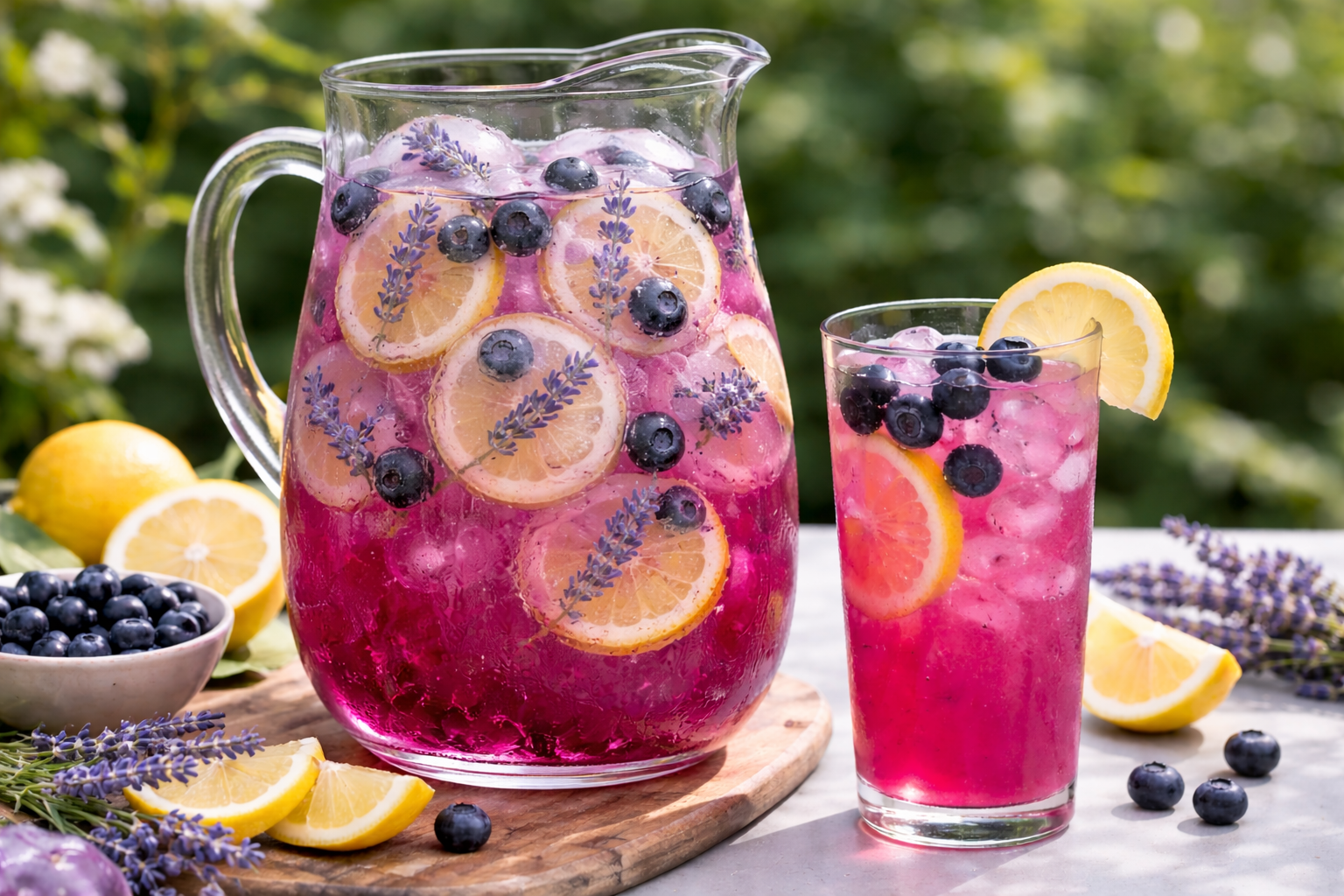
Blueberry Lavender Lemonade brings a brighter, more aromatic edge to a classic—tart lemon layered with juicy blueberry and a subtle floral lift from lavender. It’s refreshing without being one-note, with just enough depth to keep it structured and clean from the first sip to the last.
Print Pin
Category: THIRST
Cuisine: Global
Course: Drinks
Keyword: Blueberry, Lavender, Lemon, Lemonade
Prep: 15 minutes
Total: 15 minutes
Servings: 8 servings
Calories: 0.1kcal
Author: TastyDaddy

Ingredients

Instructions

  • Cut the 4 lemons in half.
  • Using the citrus press, juice the lemon halves into a 10-cup glass measuring cup (should yield approximately 1 cup juice).
  • Add 1 cup blueberry lavender simple syrup to the lemon juice and stir to combine.
  • Add 5 cups water to measuring cup and stir.
  • Using the bar spoon, stir contents of measuring glass until combined.
  • Add 6 blueberry lavender lemon ice spheres to a glass pitcher and pour contents from measuring cup into pitcher over ice to chill.
  • Serve immediately in ice-filled glasses. Garnish with blueberries and lemon wheel.

Notes

Please note: Nutritional facts are estimated and not an exact measurement.

Nutrition

Calories: 0.1kcal | Carbohydrates: 0.05g | Protein: 0.01g | Fat: 0.001g | Sodium: 7mg | Potassium: 1mg | Fiber: 0.01g | Sugar: 0.01g | Vitamin A: 0.1IU | Vitamin C: 0.3mg | Calcium: 5mg | Iron: 0.003mg
Blueberry Lavender Lemon Ice

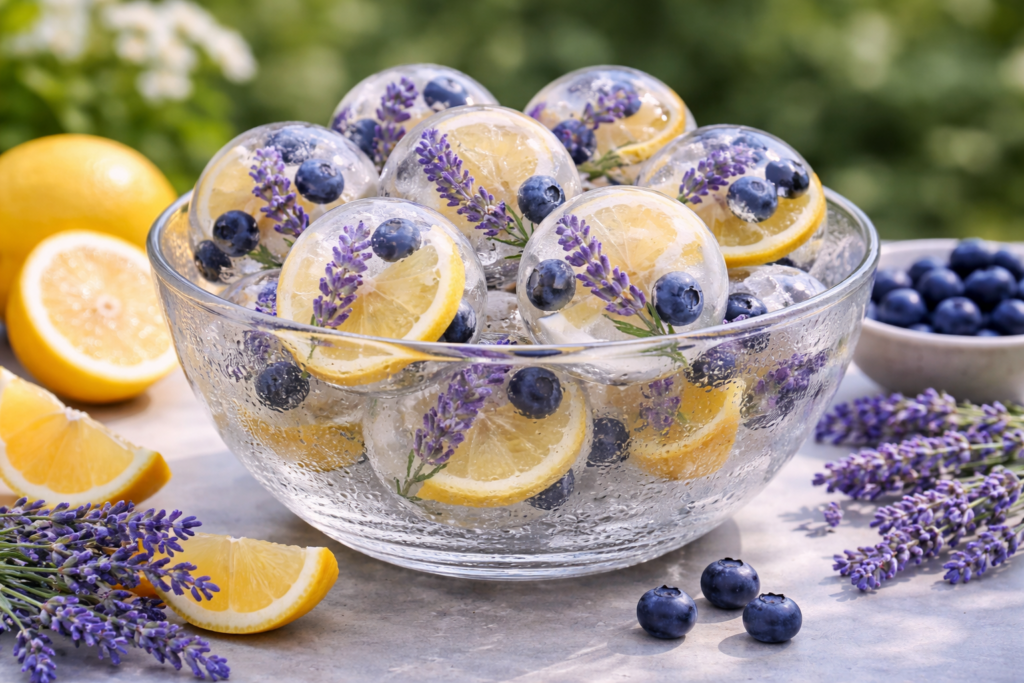
Blueberry Lavender Lemon Ice is designed for presentation—suspending garnish directly within the ice so it becomes part of the drink’s composition rather than an afterthought. Clean, structured, and intentional, it elevates the glass or pitcher by building the visual story in from the start.

Blueberry Lavender Lemon Ice

Presentation, built in.

Ice doesn’t have to disappear into the background. When it’s handled with intention, it becomes part of the drink’s composition—adding structure, contrast, and a sense of finish before the first sip. It gives the glass a focal point, something that feels considered rather than incidental.

These decorative pieces are built for that purpose. Clean, well-formed ice with suspended elements that echo what’s in the glass, reinforcing the drink visually without adding clutter. Instead of layering garnish on top, everything is contained, controlled, and integrated—resulting in a presentation that feels composed from the start.

Controlling the placement.

What separates these from standard molds is how they’re built. If everything goes in at once, it floats, shifts, and freezes without structure—leaving the final piece looking scattered rather than composed. Freezing in stages changes that. It allows you to place each element deliberately, then lock it in position before adding the next layer. The result is controlled from the inside out, not left to chance.

That control is what gives the finished ice its clarity and intention. Each piece reads cleanly, with elements suspended exactly where they should be, creating something that feels designed rather than incidental. It’s a small adjustment in process, but it completely changes how the ice presents in the glass.

Where they work.

These are built for drinks where presentation carries weight—where the glass is part of the experience, not just the vessel.

They’re especially effective in something like Blueberry Lavender Lemonade, where the ingredients inside the ice mirror what’s already in the drink. That continuity keeps the build cohesive without adding anything extra.

They also translate well across a range of lighter, more aromatic drinks:

  • Lavender Collins or Blueberry Lavender Collins – the vertical glass gives the ice room to read clearly, reinforcing the botanical and fruit elements
  • Blueberry Margarita – adds contrast against the citrus-forward base, elevating a more casual build into something more composed
  • Spritzers and wine-based drinks – where the color and clarity of the ice stand out against lighter liquids
  • Iced teas and tea-based cocktails – where the lavender becomes more visually pronounced and complements the structure of the drink
  • Mocktails and non-alcoholic builds – where presentation carries even more of the experience

In each case, the ice doesn’t compete—it reinforces what’s already there.

The process.

  1. Fill each mold halfway with filtered water
  2. Add your elements (lemon, blueberries, lavender), spacing them intentionally
  3. Freeze until partially set (about 1–2 hours)
  4. Top off with more water to fully encase the ingredients
  5. Freeze until solid

Once frozen, remove and store in a sealed container until ready to use.

Other shapes.

This approach isn’t limited to spheres—the same method works across different molds, with small adjustments to fit the form.

  • Large cubes: use lemon wheel halves or segments so they sit flat and remain visible
  • Collins spears: switch to lemon twists or peels, layering blueberries along the length
  • Smaller molds: scale everything down—fewer blueberries, smaller lavender sprigs, thinner citrus cuts

The principle stays consistent: keep the composition clean, scale the ingredients to the mold, and build in stages so everything stays where you place it.

Silicone Ice Sphere Mold

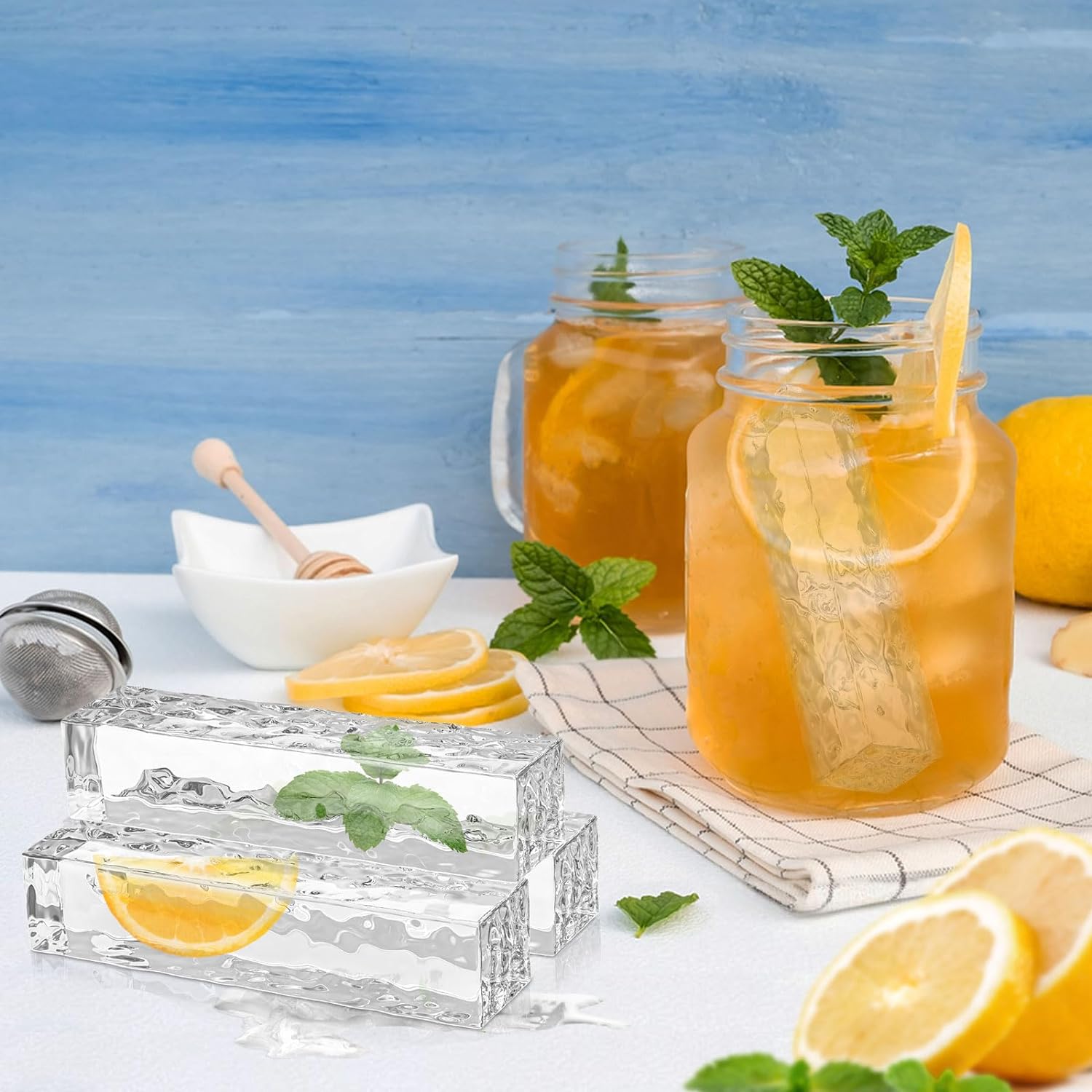
A 2.5-inch silicone ice sphere mold produces a single, large piece of ice that chills efficiently while slowing dilution. The flexible silicone allows for easy release, and the size gives the sphere enough presence to elevate the drink from casual to intentional.

Silicone Large Ice Cube Mold

A silicone large ice cube mold produces a clean, solid cube that chills with control while slowing dilution—one of the reasons it’s a staple for Old Fashioneds. The size gives the drink a more composed, deliberate look, and the flexible silicone ensures an easy, consistent release every time.

Silicone Collins Spear Ice Mold

A silicone Collins spear ice mold creates long, narrow ice designed for highball and Collins glasses. The shape chills efficiently while maintaining a clean, vertical presentation that keeps taller drinks looking structured and intentional.