Blueberry Lavender Collins

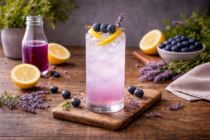
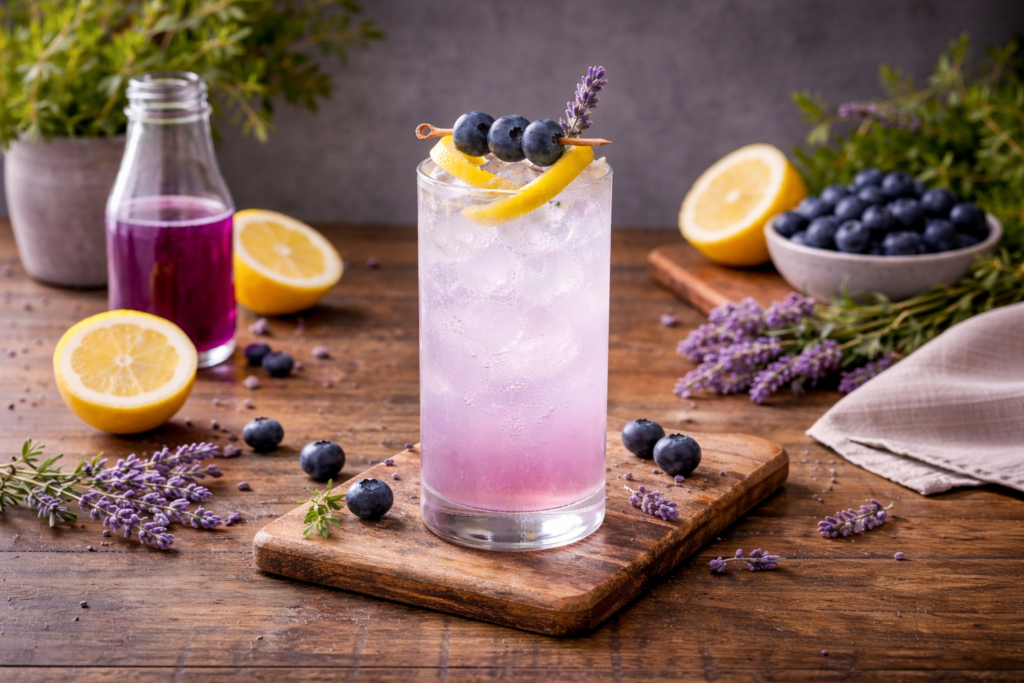
Bright, aromatic, and built to refresh, the Blueberry Lavender Collins balances soft berry sweetness with a restrained floral edge and a clean citrus backbone. Lemon juice brings just enough haze and acidity to keep the drink lifted, while gin ties the fruit and lavender together without letting either take over. Finished with soda for a light, effervescent finish, it drinks crisp and structured—more composed than sweet, and designed to stay refreshing from first sip to last.
Blueberry Lavender Collins

Start with the Syrup

To make this drink, you’ll need to have the Blueberry Lavender Syrup ready ahead of time—preferably made the day before and fully chilled, or at least prepared a few hours in advance.

That rest time matters. Freshly made, the syrup can feel a bit disjointed—the blueberry hasn’t fully rounded out, and the lavender can come across sharper than intended. Given time in the fridge, everything settles into place. The fruit becomes more defined, the floral note softens, and the overall profile reads cleaner and more controlled.

It also improves how the drink comes together. A cold syrup helps manage dilution and keeps the texture consistent, so you’re not compensating with extra shaking or ice. With the syrup already balanced and at temperature, the rest of the build becomes straightforward and precise.

Choosing the Right Gin

This is where the drink is won or lost. Lavender is already doing the floral work. If you pair it with a highly botanical or floral-forward gin, the drink stacks those aromatics on top of each other—and that’s when it starts to feel perfumed instead of refreshing. You’re not trying to showcase the gin here—you’re using it to anchor the drink and keep the lavender from getting out of control.

Go with something dry, clean, and restrained:

  • London Dry styles work beautifully
  • Avoid anything described as “garden,” “floral,” or “new western” heavy on botanicals

Ice Matters More Than You Think

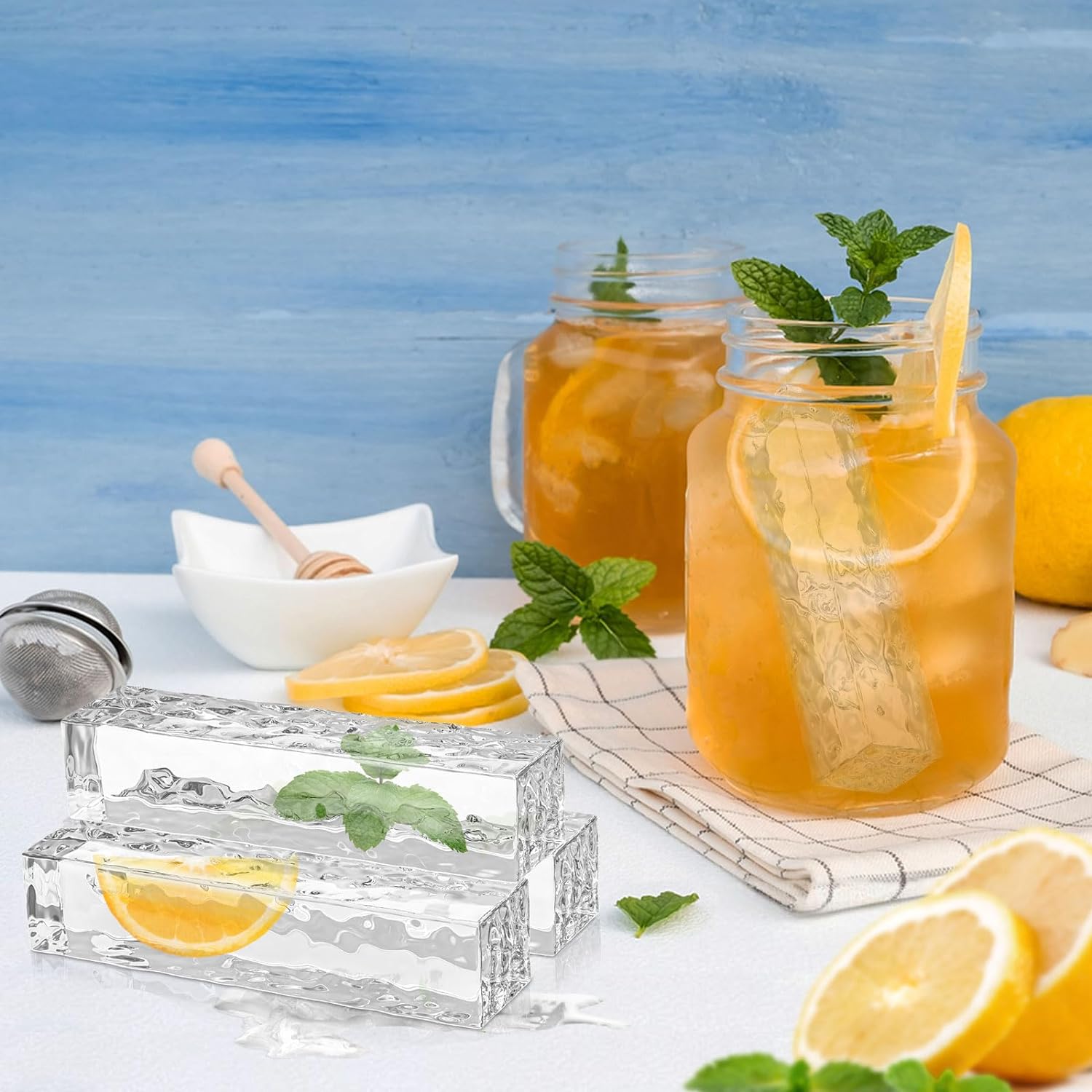
A Collins is a long drink, which means dilution is part of the structure—not just a side effect. If you want to elevate the presentation and control that dilution, use a Collins spear instead of standard cubes. Even better, suspend a few blueberries or a strip of lemon peel inside the ice when you freeze it. Check out my post on Blueberry Lavender Lemon Ice.

It’s one of those small upgrades that makes the whole drink feel more considered. You get a slower, more controlled dilution, a cleaner visual (no floating debris, no clutter), and a built-in garnish that evolves as the drink opens up

Rethinking the Balance: Lemon vs. Soda

Traditionally, a Collins leans heavily on club soda to give the drink its length. That approach works, but it also means you’re diluting flavor just as much as you’re adding lift. I tend to pull that balance back a bit. Too much soda can flatten a drink over time, stretching it out while muting the very flavors you built it around. Instead, I lean slightly heavier on lemon juice and ease up on the soda—just enough to keep the acidity present and carry the structure of the drink forward.

That shift does a few important things. The citrus stays active instead of fading, the fruit reads more clearly, and the overall profile holds together from the first sip through the last. You still get the brightness and lift that define a Collins, but with more intention behind how the drink evolves in the glass.

The Garnish: Clean, Intentional, Functional

The final garnish should echo the drink rather than compete with it. In this case, a lemon twist wrapped around a garnish skewer of blueberries keeps everything aligned with what’s already in the glass while maintaining a clean, intentional presentation.

The twist reinforces the citrus aromatics that carry through the drink, adding a subtle lift each time it’s brought to the nose. The blueberries tie directly back to the syrup, giving visual continuity without introducing anything unnecessary. Everything stays structured—no loose herbs, no excess, nothing drifting out of place as the drink sits.

If you want to refine it further, technique starts to matter. A proper twist isn’t just decorative; it controls how the oils are expressed across the surface of the drink and how long that aroma lingers. I’ll be putting together a separate post on using a channel knife to create clean, consistent spirals that hold their shape and finish the drink with the same level of precision as the build itself.

Final Thoughts

What makes this drink stand out is how easily it moves beyond the glass. The balance of citrus, soft fruit, and restrained floral notes gives it a natural place at the table, not just as a standalone refresher.

It pairs especially well with food that leans fresh, herb-driven, or lightly rich. Grilled chicken, seared shrimp, or a simple piece of fish with lemon and olive oil all benefit from the drink’s acidity and lift. The subtle lavender plays nicely with herbs like thyme or rosemary without clashing, while the blueberry adds just enough roundness to soften sharper flavors.

It’s also a strong match for creamy elements—goat cheese, burrata, or even a lightly dressed pasta—where the citrus can cut through and reset the palate between bites. And because it stays clean and structured, it works just as well at the start of a meal as it does alongside it, without ever feeling like it’s competing for attention.

You’ll find the full method outlined below. The ingredients are simple, but the balance is what makes it work—clean citrus, controlled sweetness, and just enough lift to keep everything aligned.

Blueberry Lavender Collins

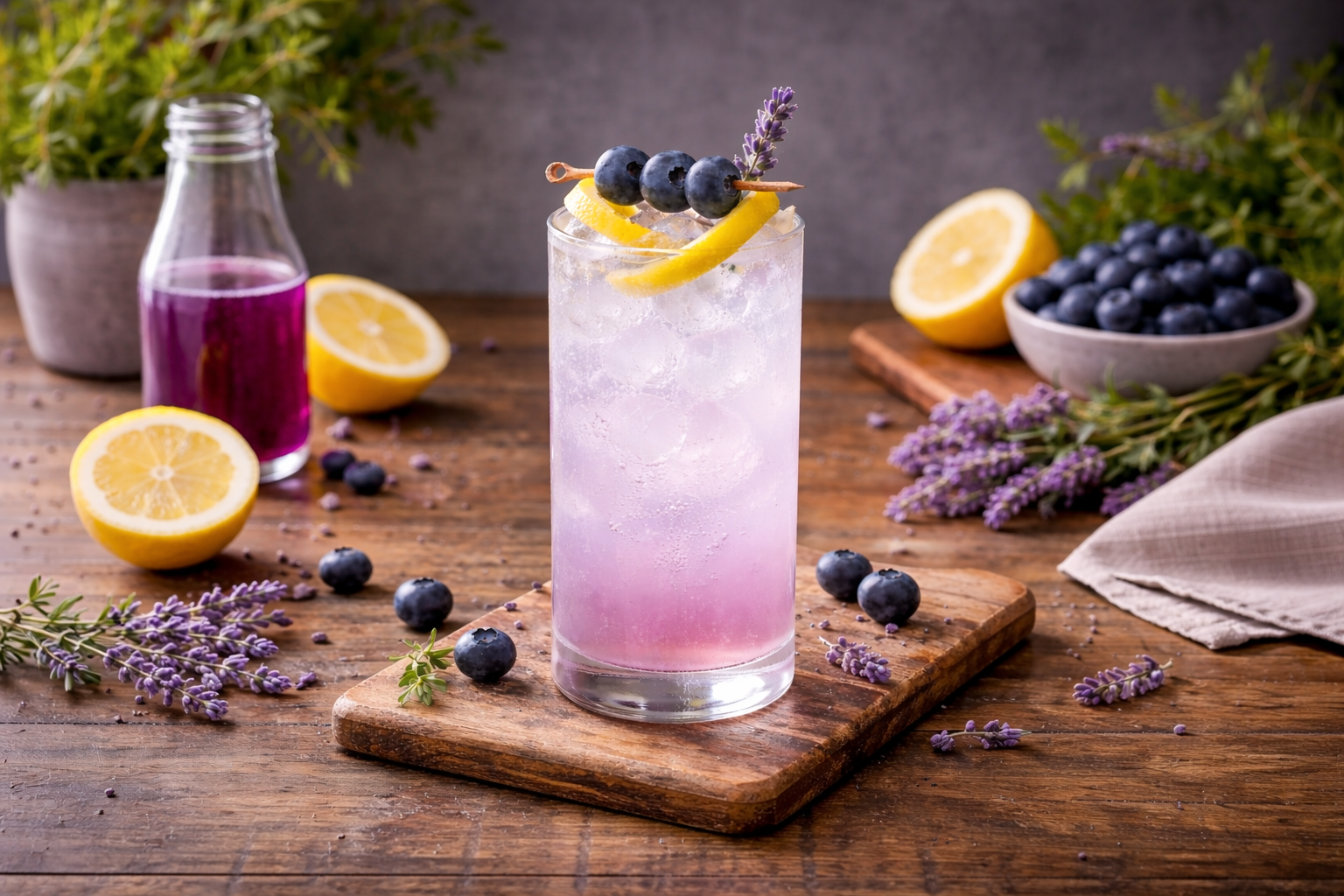
Bright, aromatic, and built to refresh, the Blueberry Lavender Collins balances soft berry sweetness with a restrained floral edge and a clean citrus backbone. Lemon juice brings just enough haze and acidity to keep the drink lifted, while gin ties the fruit and lavender together without letting either take over. Finished with soda for a light, effervescent finish, it drinks crisp and structured—more composed than sweet, and designed to stay refreshing from first sip to last.
Print Pin
Category: THIRST
Cuisine: Global
Course: Drinks
Keyword: Blueberry, Gin, Lavender, Lemon, Simple Syrup, Soda Water, Tom Collins
Prep: 5 minutes
Total: 5 minutes
Servings: 1 drink
Calories: 217kcal
Author: TastyDaddy

Ingredients

Drink

Garnish

Instructions

Glass Prep

  • Filled chilled Collins glass with ice.
  • PRO TIP: Use a decorative Collins spear for your ice. See my post on creating your own Blueberry Lavender Lemon Ice.

Drink Prep

  • In a Boston shaker, add 2 oz dry gin, ¾ oz Blueberry Lavender syrup, and ¾ oz lemon juice; fill with ice.
  • Shake vigorously until outside of tin is frosty.
  • Strain contents of tin through Hawthorne strainer into prepared Collins glass.
  • Top off with 2-3 oz soda water.

Garnish Prep

  • Using a channel knife, remove a lemon twist.
  • Skewer 2-3 whole blueberries with garnish skewer and wrap 1 whole lemon twist around blueberries.

Nutrition

Calories: 217kcal | Carbohydrates: 23g | Protein: 0.2g | Fat: 0.1g | Saturated Fat: 0.02g | Polyunsaturated Fat: 0.02g | Monounsaturated Fat: 0.01g | Sodium: 14mg | Potassium: 37mg | Fiber: 0.4g | Sugar: 21g | Vitamin A: 11IU | Vitamin C: 10mg | Calcium: 7mg | Iron: 0.1mg
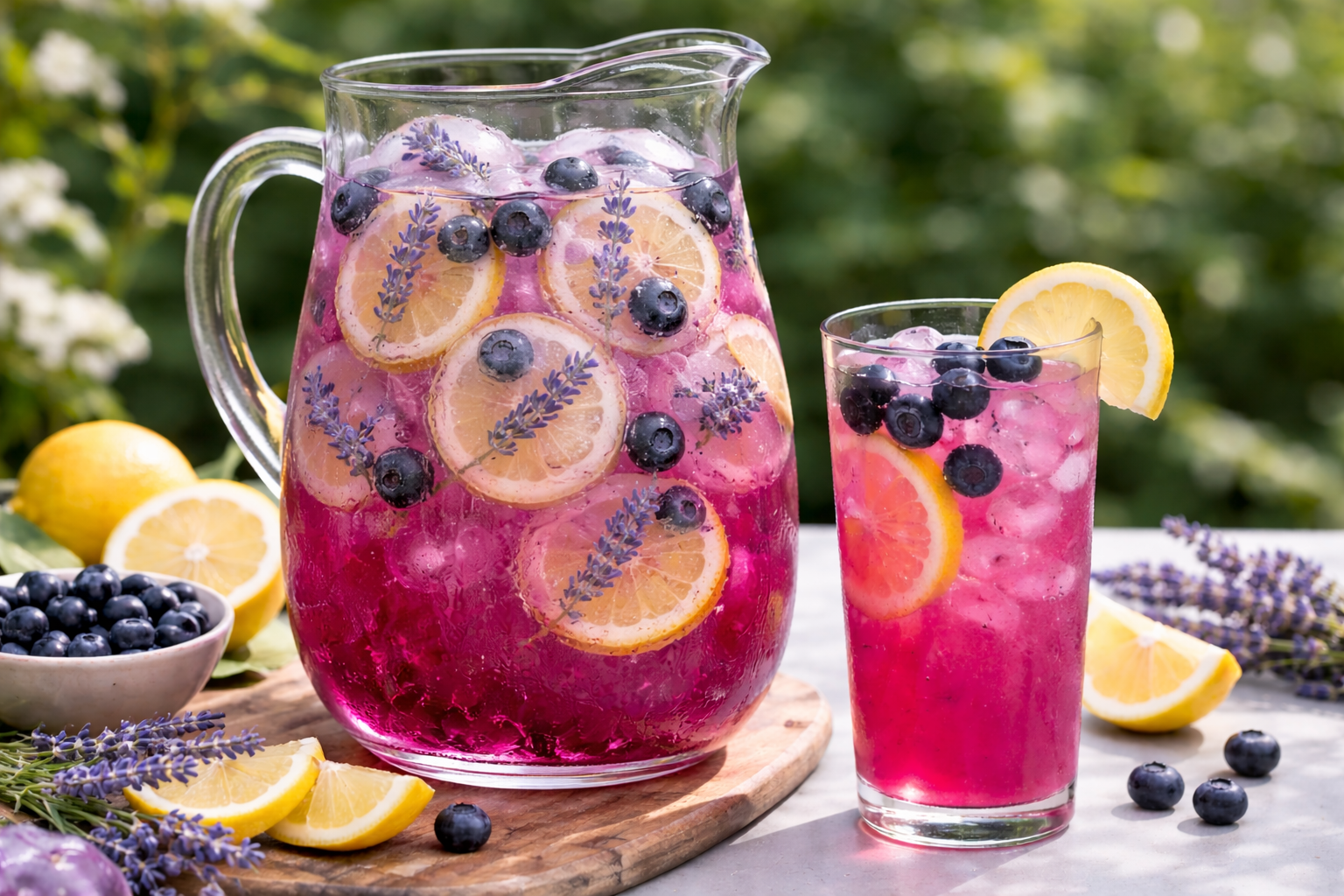
Blueberry Lavender Lemonade

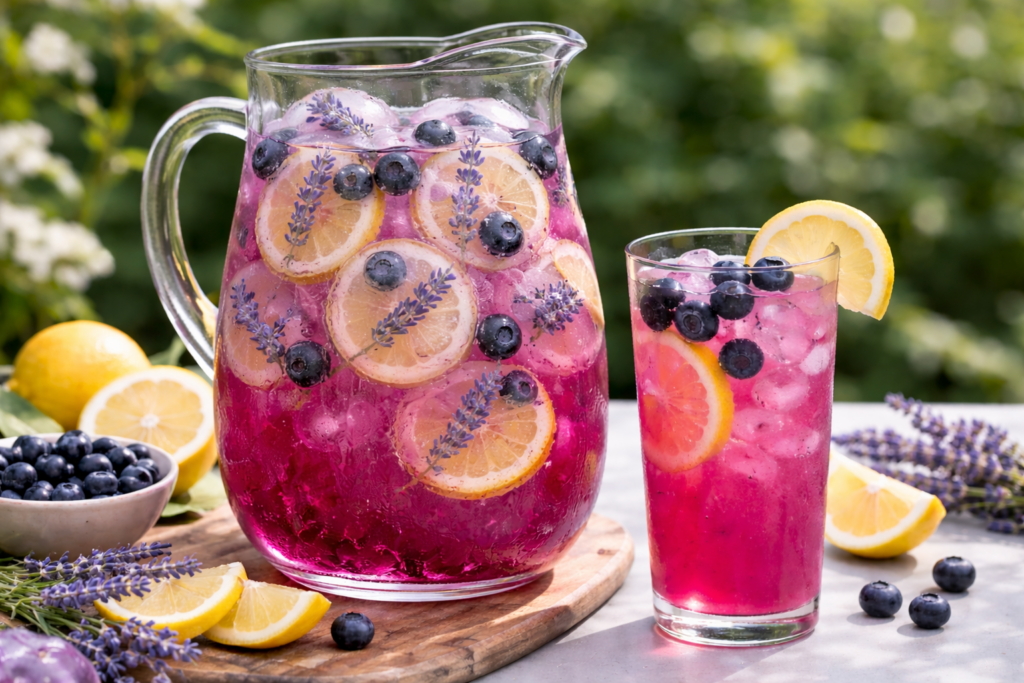
Blueberry Lavender Lemonade brings a brighter, more aromatic edge to a classic—tart lemon layered with jammy blueberry and a subtle floral lift from lavender. It’s refreshing without being one-note, with just enough depth to keep it structured and clean from the first sip to the last.

Blueberry Lavender Lemonade

Bright, layered, and composed.

Blueberry Lavender Lemonade takes a familiar build and gives it more structure—tart lemon sharpened by a fruit-forward syrup and lifted with a subtle floral edge. The citrus stays bright and direct, while the blueberry adds body and a soft, rounded sweetness that keeps the drink from feeling thin. The lavender sits just behind it, not as a dominant flavor, but as a quiet lift that keeps everything clean and balanced.

It’s refreshing in the way lemonade should be—crisp, cooling, and easy to drink—but with enough depth to hold your attention. Instead of flattening into simple sweet and sour, it moves with a bit more intention, giving you something that feels composed rather than basic.

A classic, rebalanced.

At its core, this is still lemonade—citrus, sweetener, and water—but the sweetener here does more than just balance the acidity. Blueberry lavender syrup brings a different kind of weight to the drink. The blueberry gives it a soft, rounded depth that fills out the lemon without dulling it, while the lavender keeps everything from settling too heavily. It doesn’t come across as distinctly floral—it reads more as a clean edge that keeps the drink feeling open. That shift changes how the lemonade carries itself. The citrus stays clear, the sweetness feels integrated rather than added on, and the overall profile has a bit more shape to it—something that feels composed, not just mixed together.

Building it in layers.

The process is simple, but the order matters. Starting with freshly pressed lemon juice gives you a base that’s bright and direct—no muted citrus, no added bitterness. From there, the syrup is stirred directly into the juice, allowing the sweetness and fruit to integrate fully before dilution. This step sets the balance early, so nothing feels disconnected later. Once the water is added, the drink opens up. The acidity softens slightly, the aromatics become more noticeable, and everything settles into a profile that feels cohesive rather than mixed together at the end. A final stir is all it needs—clean, controlled, and ready to chill.

Where the ice comes in.

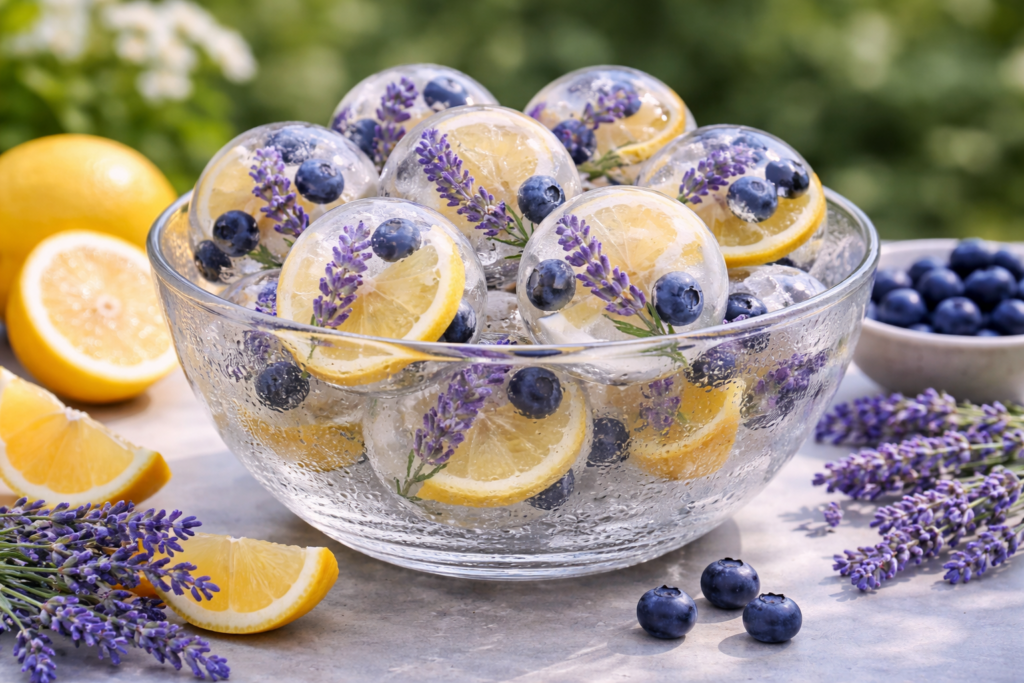
This is where the presentation shifts from simple to composed. Blueberry Lavender Lemon Ice is designed to mirror the drink itself—suspending the same visual elements inside the ice so the garnish becomes part of the structure. Instead of layering components on top, everything is built in from the start.

As the lemonade is poured over the spheres, the glass reads clearly and intentionally. The color of the drink, the shape of the ice, and the elements within it all align, giving the finished glass a sense of cohesion without adding anything unnecessary. It’s a detail that doesn’t complicate the build, but it changes how the drink presents from the moment it hits the table.

What I typically serve with it.

This is a drink that carries well across a range of settings because it’s balanced without being heavy. It works alongside lighter, citrus-forward dishes where the acidity complements rather than competes. It also pairs well with herb-driven plates, where the lavender finds a natural connection without standing out on its own.

As a non-alcoholic option, it holds its own—it doesn’t feel like a placeholder. It’s structured enough to stand independently, but flexible enough to build from. Add sparkling water for a lighter, more effervescent version, or use it as a base for a spritz or spirit-forward cocktail depending on the direction you want to take.

You’ll find the full method outlined below. The ingredients are simple, but the balance is what makes it work—clean citrus, controlled sweetness, and just enough lift to keep everything aligned.

Blueberry Lavender Lemonade

Blueberry Lavender Lemonade brings a brighter, more aromatic edge to a classic—tart lemon layered with juicy blueberry and a subtle floral lift from lavender. It’s refreshing without being one-note, with just enough depth to keep it structured and clean from the first sip to the last.
Print Pin
Category: THIRST
Cuisine: Global
Course: Drinks
Keyword: Blueberry, Lavender, Lemon, Lemonade
Prep: 15 minutes
Total: 15 minutes
Servings: 8 servings
Calories: 0.1kcal
Author: TastyDaddy

Ingredients

Instructions

  • Cut the 4 lemons in half.
  • Using the citrus press, juice the lemon halves into a 10-cup glass measuring cup (should yield approximately 1 cup juice).
  • Add 1 cup blueberry lavender simple syrup to the lemon juice and stir to combine.
  • Add 5 cups water to measuring cup and stir.
  • Using the bar spoon, stir contents of measuring glass until combined.
  • Add 6 blueberry lavender lemon ice spheres to a glass pitcher and pour contents from measuring cup into pitcher over ice to chill.
  • Serve immediately in ice-filled glasses. Garnish with blueberries and lemon wheel.

Notes

Please note: Nutritional facts are estimated and not an exact measurement.

Nutrition

Calories: 0.1kcal | Carbohydrates: 0.05g | Protein: 0.01g | Fat: 0.001g | Sodium: 7mg | Potassium: 1mg | Fiber: 0.01g | Sugar: 0.01g | Vitamin A: 0.1IU | Vitamin C: 0.3mg | Calcium: 5mg | Iron: 0.003mg

Blueberry Lavender Lemon Ice

Blueberry Lavender Lemon Ice is designed for presentation—suspending garnish directly within the ice so it becomes part of the drink’s composition rather than an afterthought. Clean, structured, and intentional, it elevates the glass or pitcher by building the visual story in from the start.

Blueberry Lavender Lemon Ice

Presentation, built in.

Ice doesn’t have to disappear into the background. When it’s handled with intention, it becomes part of the drink’s composition—adding structure, contrast, and a sense of finish before the first sip. It gives the glass a focal point, something that feels considered rather than incidental.

These decorative pieces are built for that purpose. Clean, well-formed ice with suspended elements that echo what’s in the glass, reinforcing the drink visually without adding clutter. Instead of layering garnish on top, everything is contained, controlled, and integrated—resulting in a presentation that feels composed from the start.

Controlling the placement.

What separates these from standard molds is how they’re built. If everything goes in at once, it floats, shifts, and freezes without structure—leaving the final piece looking scattered rather than composed. Freezing in stages changes that. It allows you to place each element deliberately, then lock it in position before adding the next layer. The result is controlled from the inside out, not left to chance.

That control is what gives the finished ice its clarity and intention. Each piece reads cleanly, with elements suspended exactly where they should be, creating something that feels designed rather than incidental. It’s a small adjustment in process, but it completely changes how the ice presents in the glass.

Where they work.

These are built for drinks where presentation carries weight—where the glass is part of the experience, not just the vessel.

They’re especially effective in something like Blueberry Lavender Lemonade, where the ingredients inside the ice mirror what’s already in the drink. That continuity keeps the build cohesive without adding anything extra.

They also translate well across a range of lighter, more aromatic drinks:

  • Lavender Collins or Blueberry Lavender Collins – the vertical glass gives the ice room to read clearly, reinforcing the botanical and fruit elements
  • Blueberry Margarita – adds contrast against the citrus-forward base, elevating a more casual build into something more composed
  • Spritzers and wine-based drinks – where the color and clarity of the ice stand out against lighter liquids
  • Iced teas and tea-based cocktails – where the lavender becomes more visually pronounced and complements the structure of the drink
  • Mocktails and non-alcoholic builds – where presentation carries even more of the experience

In each case, the ice doesn’t compete—it reinforces what’s already there.

The process.

  1. Fill each mold halfway with filtered water
  2. Add your elements (lemon, blueberries, lavender), spacing them intentionally
  3. Freeze until partially set (about 1–2 hours)
  4. Top off with more water to fully encase the ingredients
  5. Freeze until solid

Once frozen, remove and store in a sealed container until ready to use.

Other shapes.

This approach isn’t limited to spheres—the same method works across different molds, with small adjustments to fit the form.

  • Large cubes: use lemon wheel halves or segments so they sit flat and remain visible
  • Collins spears: switch to lemon twists or peels, layering blueberries along the length
  • Smaller molds: scale everything down—fewer blueberries, smaller lavender sprigs, thinner citrus cuts

The principle stays consistent: keep the composition clean, scale the ingredients to the mold, and build in stages so everything stays where you place it.

Silicone Ice Sphere Mold

A 2.5-inch silicone ice sphere mold produces a single, large piece of ice that chills efficiently while slowing dilution. The flexible silicone allows for easy release, and the size gives the sphere enough presence to elevate the drink from casual to intentional.

Silicone Large Ice Cube Mold

A silicone large ice cube mold produces a clean, solid cube that chills with control while slowing dilution—one of the reasons it’s a staple for Old Fashioneds. The size gives the drink a more composed, deliberate look, and the flexible silicone ensures an easy, consistent release every time.

Silicone Collins Spear Ice Mold

A silicone Collins spear ice mold creates long, narrow ice designed for highball and Collins glasses. The shape chills efficiently while maintaining a clean, vertical presentation that keeps taller drinks looking structured and intentional.

Blueberry Lavender Simple Syrup

Blueberry Lavender Simple Syrup leans into an unexpected pairing—ripe, jammy blueberry layered with the soft, aromatic lift of lavender—bringing fruit and floral together in a way that feels balanced rather than competing. The blueberry provides depth and natural sweetness, while the lavender adds just enough brightness to keep it from reading heavy or overly sweet, creating a syrup that’s both structured and nuanced.

Blueberry Lavender Simple Syrup

Fruit meets floral.

Blueberry and lavender aren’t a conventional pairing, and if either one is pushed too far, they can easily work against each other. But when they’re handled with restraint, they meet in a place that feels balanced rather than competing. The blueberry brings depth and natural sweetness—soft, slightly jammy, and familiar—while the lavender sits just behind it, adding a gentle aromatic lift that keeps the syrup from feeling heavy or one-dimensional. It doesn’t read as overtly floral. Instead, it sharpens and brightens the fruit, giving the syrup a cleaner, more structured finish.

Fruit and floral can easily work against each other if one isn’t kept in check. Lavender, especially, has a tendency to overpower if it’s not handled carefully. Here, the goal is restraint. The blueberry leads—rich, slightly jammy, and familiar—while the lavender sits just behind it, adding a subtle aromatic layer rather than taking over. It should read as lifted, not perfumed. That balance is what makes the syrup usable across more than just one application.

Building flavor without losing clarity.

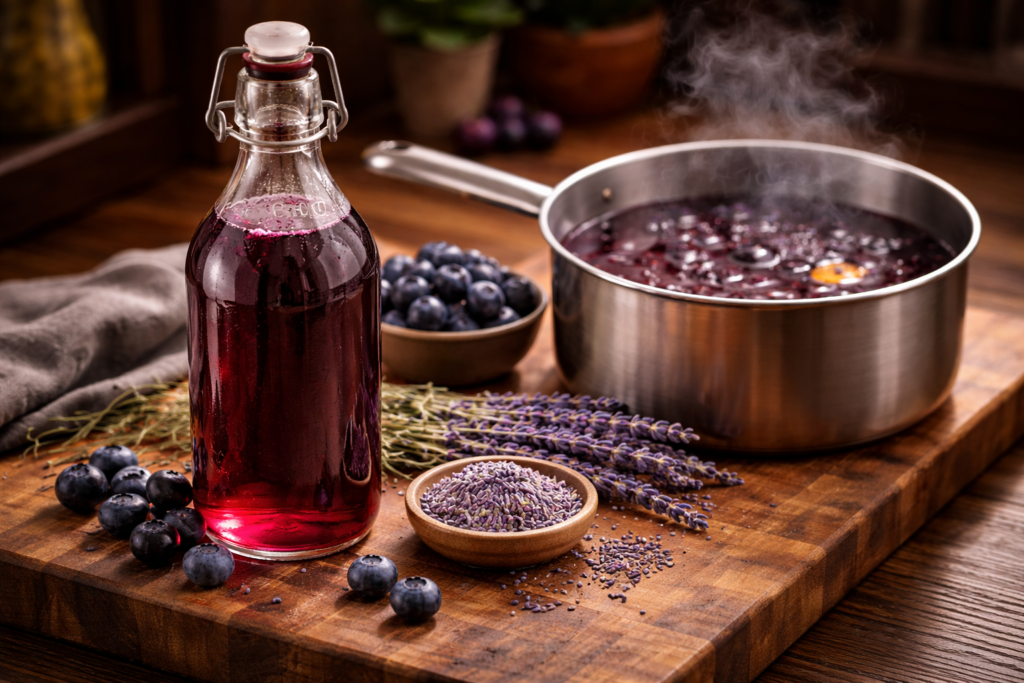
Like any infused syrup, this comes down to timing—but more importantly, control. Blueberries break down quickly once they hit heat, releasing their juice, color, and natural pectin into the liquid. That early breakdown is what gives the syrup its body and structure, creating a base that feels full rather than thin. The fruit does most of its work upfront, and it does it fast.

Lavender doesn’t follow the same rules. It extracts quickly, but not always cleanly. Left too long, it can shift from soft and aromatic to sharp, medicinal, or overly perfumed. It’s not something you build over time—it’s something you layer in carefully and pull back before it takes over. That’s why the process is split in intention. A controlled simmer allows the blueberries to fully express themselves, while the lavender is handled with a shorter, more deliberate steep—just long enough to integrate, not dominate. You’re not chasing intensity here. You’re managing it. Push the lavender too far, and the syrup loses clarity. Pull it at the right moment, and it simply lifts the fruit, sharpening the edges and keeping everything balanced.

Where it lands.

When it’s dialed in, the syrup reads as focused and adaptable rather than overtly fruit-forward or floral. The blueberry gives it body and a subtle tartness that holds up under dilution, while the lavender keeps the profile lifted and clean, preventing it from settling into something dense or overly sweet. That balance is what makes it useful—it doesn’t dominate, it integrates.

It’s the kind of syrup that opens up once it’s in use. Stir it into lemonade and the citrus sharpens the fruit, bringing the blueberry forward while keeping the finish clean. Add it to iced tea and the lavender becomes more pronounced against the tannins, giving the drink a more aromatic, almost structured quality. Build it into a cocktail and it shifts again—gin pulls the floral notes forward, vodka lets the blueberry lead, and something like bourbon or a darker spirit rounds it out into something deeper and more grounded.

What you end up with isn’t a syrup that dictates direction—it’s one that responds to it. It adapts to what you build around it, giving you something that can move between bright and refreshing, or more layered and composed, depending on how you use it.

What I typically use it in.

This is a syrup that works best when it sets the direction rather than competing for it, especially in lighter, more aromatic builds where that balance of fruit and floral can stay intact.

At the bar, it shifts depending on the base. With gin, the lavender becomes more pronounced and structured without feeling overly botanical. With vodka, the blueberry carries more of the weight, while the lavender keeps the profile clean. Added to sparkling wine or soda, it opens up—lighter, more refreshing, and more aromatic as it stretches across the glass. It also works well in tea-based builds, where tannins give the lavender more definition and keep the drink from drifting too sweet.

In the kitchen, it’s just as effective where a little lift is needed. Brushed into cakes or sponge layers, it adds moisture without weighing them down. Spoon-drizzled over ice cream, panna cotta, or custards, it cuts through richness and adds structure. Folded into fruit-based desserts—compotes, fillings, or macerated fruit—it sharpens and refines rather than simply sweetening.

Recipes that use this syrup...

Blueberry Lavender Simple Syrup

Blueberry Lavender Simple Syrup leans into an unexpected pairing—ripe, jammy blueberry layered with the soft, aromatic lift of lavender—bringing fruit and floral together in a way that feels balanced rather than competing. The blueberry provides depth and natural sweetness, while the lavender adds just enough brightness to keep it from reading heavy or overly sweet, creating a syrup that’s both structured and nuanced.
Print Pin
Category: THIRST
Cuisine: Global
Course: Drinks
Keyword: Blueberry, Lavender, Simple Syrup
Prep: 30 minutes
Cook: 30 minutes
Cooling Time: 4 hours 15 minutes
Total: 5 hours 15 minutes
Servings: 24 servings
Calories: 107kcal
Author: TastyDaddy

Ingredients

Instructions

Infusion Ingredient Prep

  • If you are using fresh blueberries, wash thoroughly. Skip this step if using frozen.

Syrup Prep

  • Pour 3 cups of granulated white sugar into 6-cup stockpot.
  • Add 3 cups of blueberries into stockpot and muddle into sugar until blueberries are thoroughly smashed and sugar is stained with blueberry juice completely.
  • Add 3 cups filtered water onto muddled sugar and stir to combine.

Cooking

  • Bring ingredients to a boil in the stockpot until sugar is completely dissolved.
  • Reduce heat to and let ingredients simmer for at least 30 minutes.
  • Add 1 tbsp culinary grade lavender buds.
  • Remove stockpot from heat and let lavender steep in mixture while it cools for at least 1 hour.

Straining

  • Place mesh strainer over large pot or bowl (deeper than the depth of the strainer so that the liquid clears the bottom of the strainer).
  • Slowly pour contents of simmered liquid into strainer. Using muddler, gently press as much liquid from the contents of the strainer as possible (without damaging your strainer from the pressure).

Storing

  • Pour syrup into glass swing-top bottle (or jar if you don't have a bottle) and store at least 4 hours in the fridge to cool. Overnight cooling is even better.

Nutrition

Serving: 1oz | Calories: 107kcal | Carbohydrates: 28g | Protein: 0.1g | Fat: 0.1g | Saturated Fat: 0.01g | Polyunsaturated Fat: 0.03g | Monounsaturated Fat: 0.01g | Sodium: 2mg | Potassium: 15mg | Fiber: 0.4g | Sugar: 27g | Vitamin A: 12IU | Vitamin C: 2mg | Calcium: 4mg | Iron: 0.1mg