Dicing an onion is one of the first knife skills most people learn, but it’s also one of the most commonly rushed. The result is often uneven pieces, wasted product, or an unstable onion that makes the process harder than it needs to be.
A proper dice isn’t about speed. It’s about control, consistency, and using the structure of the onion to guide your cuts.
The Perfect Onion Dice
A foundational cut, done properly.
Dicing an onion is one of the first knife skills most people learn, but it’s also one of the most commonly rushed. The result is often uneven pieces, wasted product, or an unstable onion that makes the process harder than it needs to be. A proper dice isn’t about speed. It’s about control, consistency, and using the structure of the onion to guide your cuts.
Step 1: Start Clean
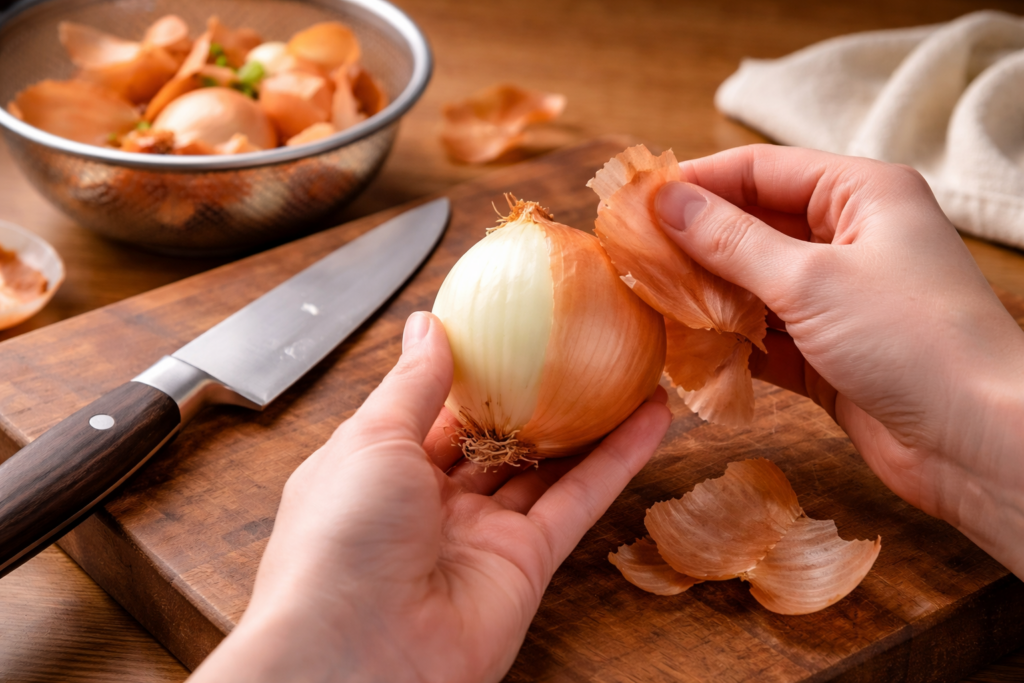
Before making a single cut, remove the papery outer skin of the onion. Once peeled, give the whole onion a quick rinse under cold water to remove any residual skin or debris, then dry it thoroughly with a paper towel. Starting with a clean, dry surface makes the onion easier to handle and keeps your knife from slipping.
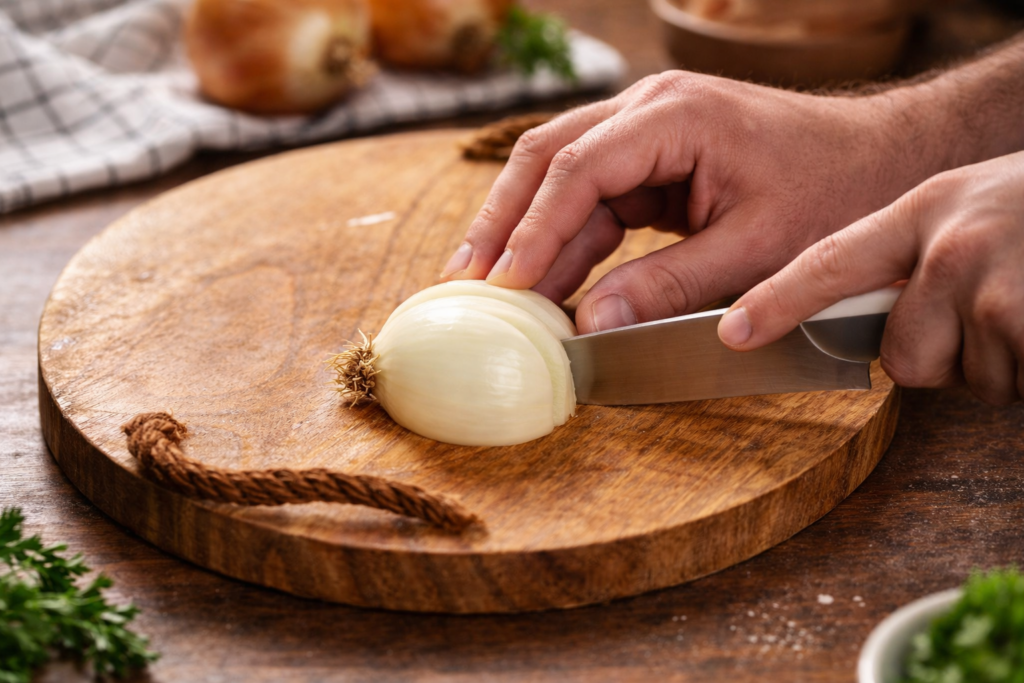
After peeling and drying, trim the stem end, then slice the onion in half from root to tip, leaving the root intact. The root holds the layers together and gives you control as you work. If the first outer layer beneath the skin feels dry or tough, it can be removed and discarded, as it doesn’t always soften well when cooked.
Place each half flat-side down on the cutting board to create a stable base.
Step 2: Work with the Grain
An onion is naturally structured in lines that run from root to tip, and those lines are your guide. Make your first series of cuts vertically, following those natural lines. The spacing of these cuts determines the final size of your dice. For a finer dice, keep the cuts closer together; for a larger dice, give them more space.
Next, make one or two horizontal cuts parallel to the cutting board. This step creates the internal structure that allows the onion to fall into evenly sized pieces once you begin slicing downward. Keep your knife level and controlled as you work.
Step 3: Let the Knife Do the Work
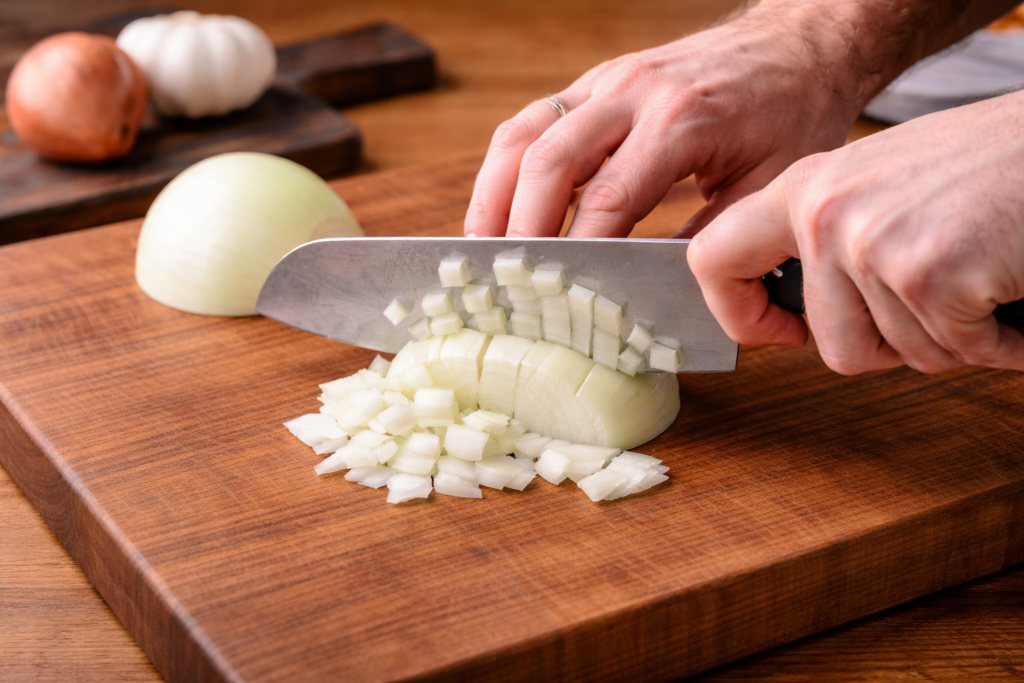
With the structure in place, the final cuts are straightforward. Slice downward across the onion, perpendicular to your earlier cuts. As you move from front to back, the onion will separate naturally into a uniform dice. Keep your guiding hand in a claw position, letting your knuckles lead the blade while your fingertips stay tucked safely away. This helps maintain even spacing and gives you better control with each cut. As you approach the root end, you’ll notice the layers begin to hold together more tightly. Rather than forcing the knife through, stop and set that portion aside.
TIP: Instead of worrying about dicing the last inch or so near the root, simply trim it off and save it with your vegetable scraps for broth. Clean onion skins, celery stalks and inner leaves, tomato trimmings, well-washed potato peels (free of dirt and dark spots), parsnip and carrot tops and skins, along with fennel, leek, garlic, and shallot scraps can all be collected and stored in the freezer. Once you have enough, they can be used to make a deeply flavorful vegetable broth—turning what would have been waste into something useful. Check out my post on Building the Perfect Vegetable Broth.
Conclusion.
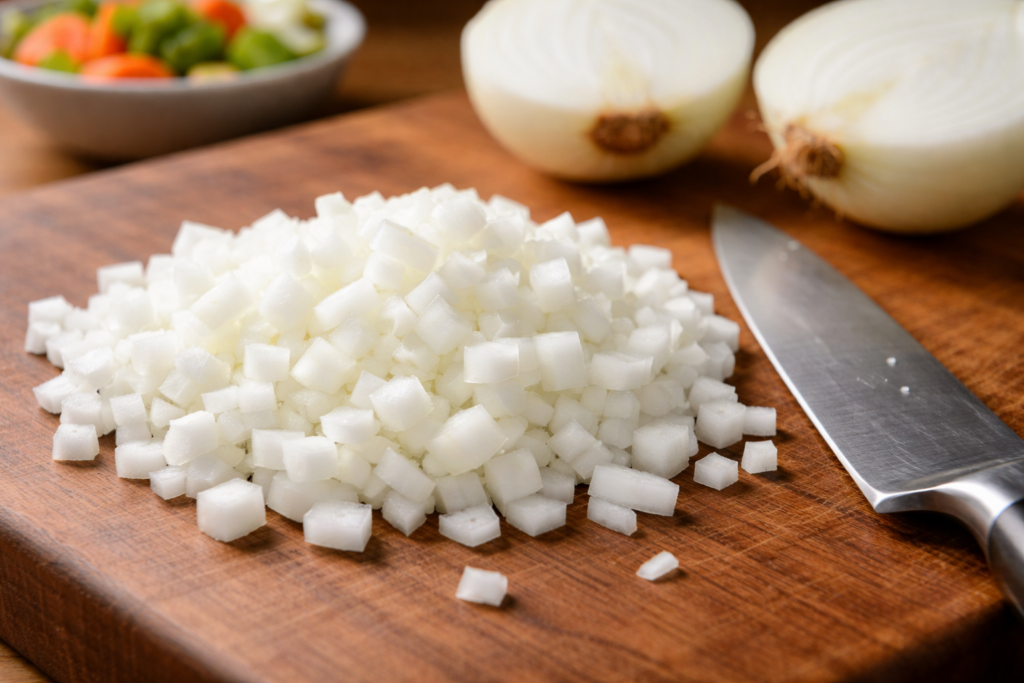
A proper dice should be uniform. Even pieces cook evenly, distribute flavor more consistently, and improve the overall texture of a dish. Speed will come naturally with repetition, but control is what matters—working steadily and deliberately will always produce better results than rushing.
This same method applies whether you’re building a base for a sauce, layering flavor into a soup, or finishing a dish with a finer garnish. Once the structure is understood, the technique scales easily without changing the fundamentals, making it one of the most useful skills to carry through everything else you cook.