The Perfect Onion Dice

Dicing an onion is one of the first knife skills most people learn, but it’s also one of the most commonly rushed. The result is often uneven pieces, wasted product, or an unstable onion that makes the process harder than it needs to be.

A proper dice isn’t about speed. It’s about control, consistency, and using the structure of the onion to guide your cuts.
The Perfect Onion Dice

A foundational cut, done properly.

Dicing an onion is one of the first knife skills most people learn, but it’s also one of the most commonly rushed. The result is often uneven pieces, wasted product, or an unstable onion that makes the process harder than it needs to be. A proper dice isn’t about speed. It’s about control, consistency, and using the structure of the onion to guide your cuts.
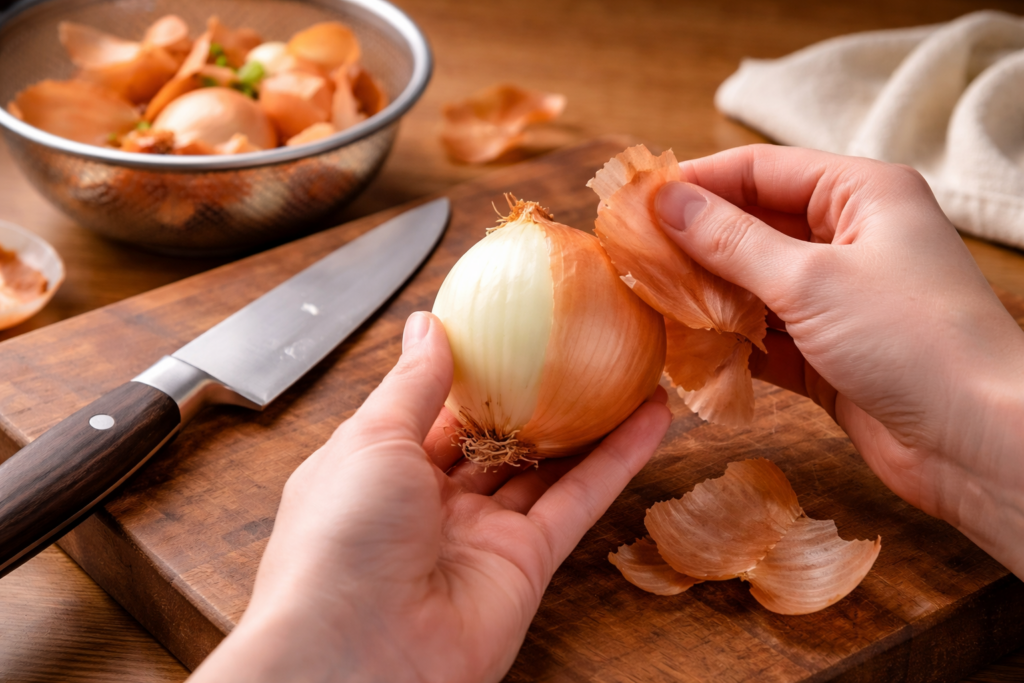
Step 1: Start Clean

Before making a single cut, remove the papery outer skin of the onion. Once peeled, give the whole onion a quick rinse under cold water to remove any residual skin or debris, then dry it thoroughly with a paper towel. Starting with a clean, dry surface makes the onion easier to handle and keeps your knife from slipping.

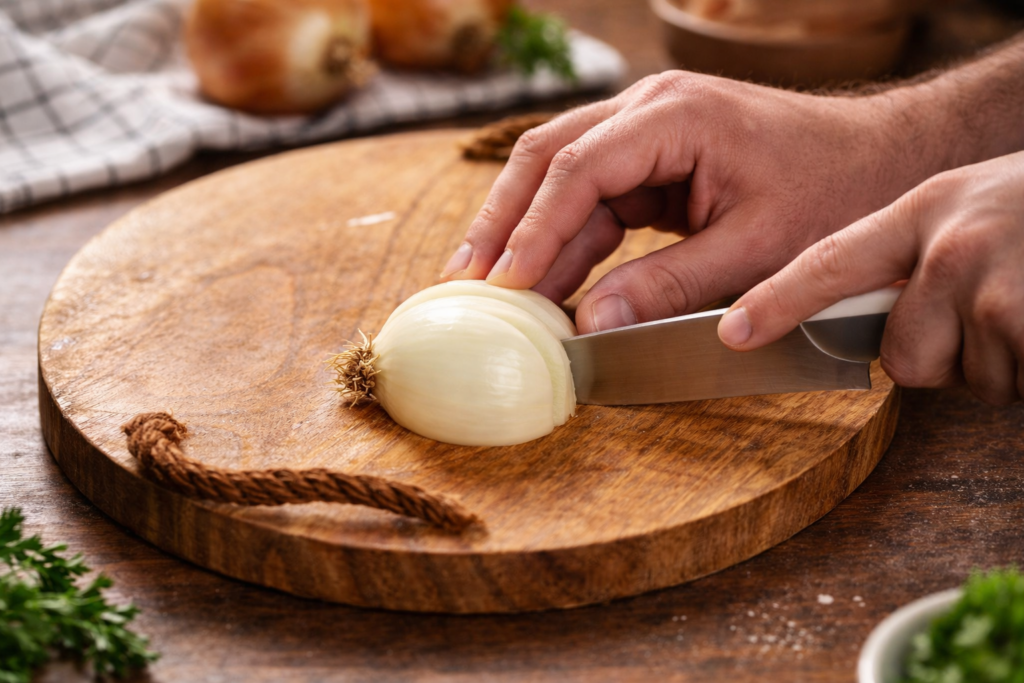
After peeling and drying, trim the stem end, then slice the onion in half from root to tip, leaving the root intact. The root holds the layers together and gives you control as you work. If the first outer layer beneath the skin feels dry or tough, it can be removed and discarded, as it doesn’t always soften well when cooked.

Place each half flat-side down on the cutting board to create a stable base.

Step 2: Work with the Grain

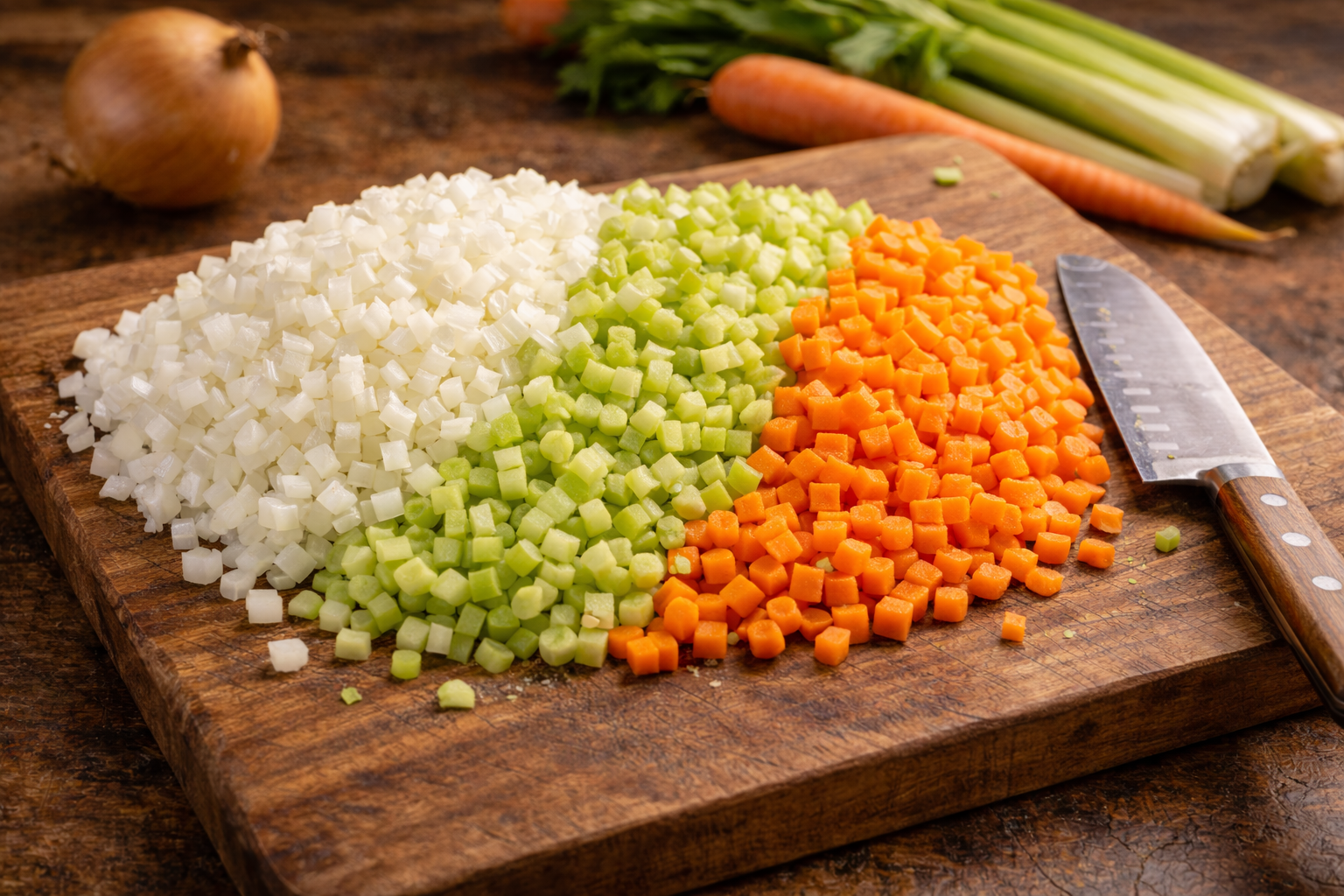
An onion is naturally structured in lines that run from root to tip, and those lines are your guide. Make your first series of cuts vertically, following those natural lines. The spacing of these cuts determines the final size of your dice. For a finer dice, keep the cuts closer together; for a larger dice, give them more space.

Next, make one or two horizontal cuts parallel to the cutting board. This step creates the internal structure that allows the onion to fall into evenly sized pieces once you begin slicing downward. Keep your knife level and controlled as you work.

Step 3: Let the Knife Do the Work

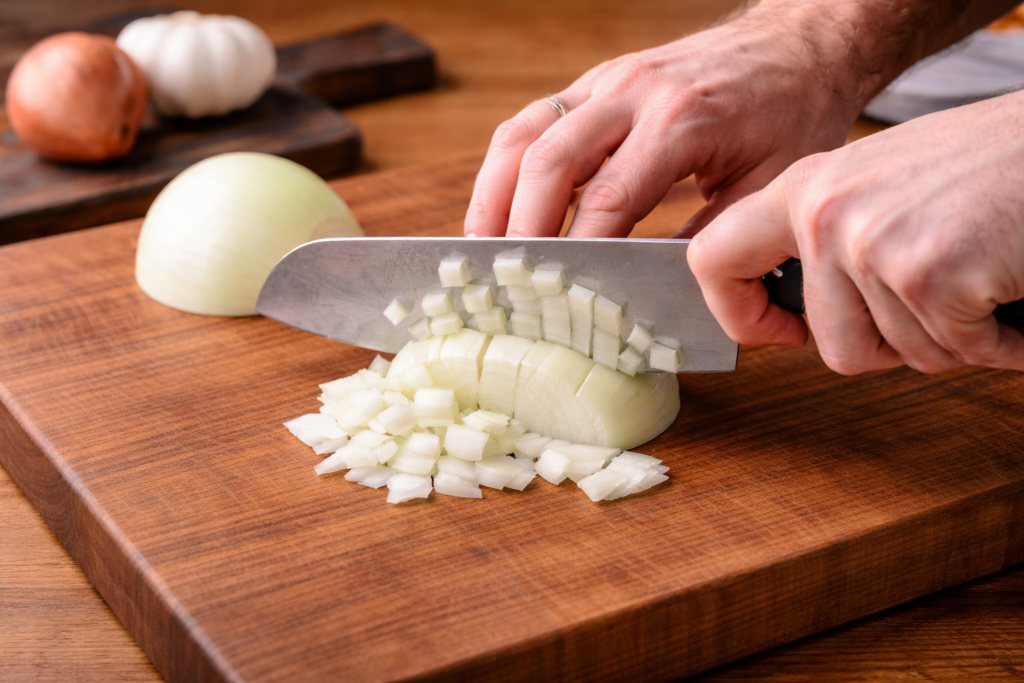
With the structure in place, the final cuts are straightforward. Slice downward across the onion, perpendicular to your earlier cuts. As you move from front to back, the onion will separate naturally into a uniform dice. Keep your guiding hand in a claw position, letting your knuckles lead the blade while your fingertips stay tucked safely away. This helps maintain even spacing and gives you better control with each cut. As you approach the root end, you’ll notice the layers begin to hold together more tightly. Rather than forcing the knife through, stop and set that portion aside.

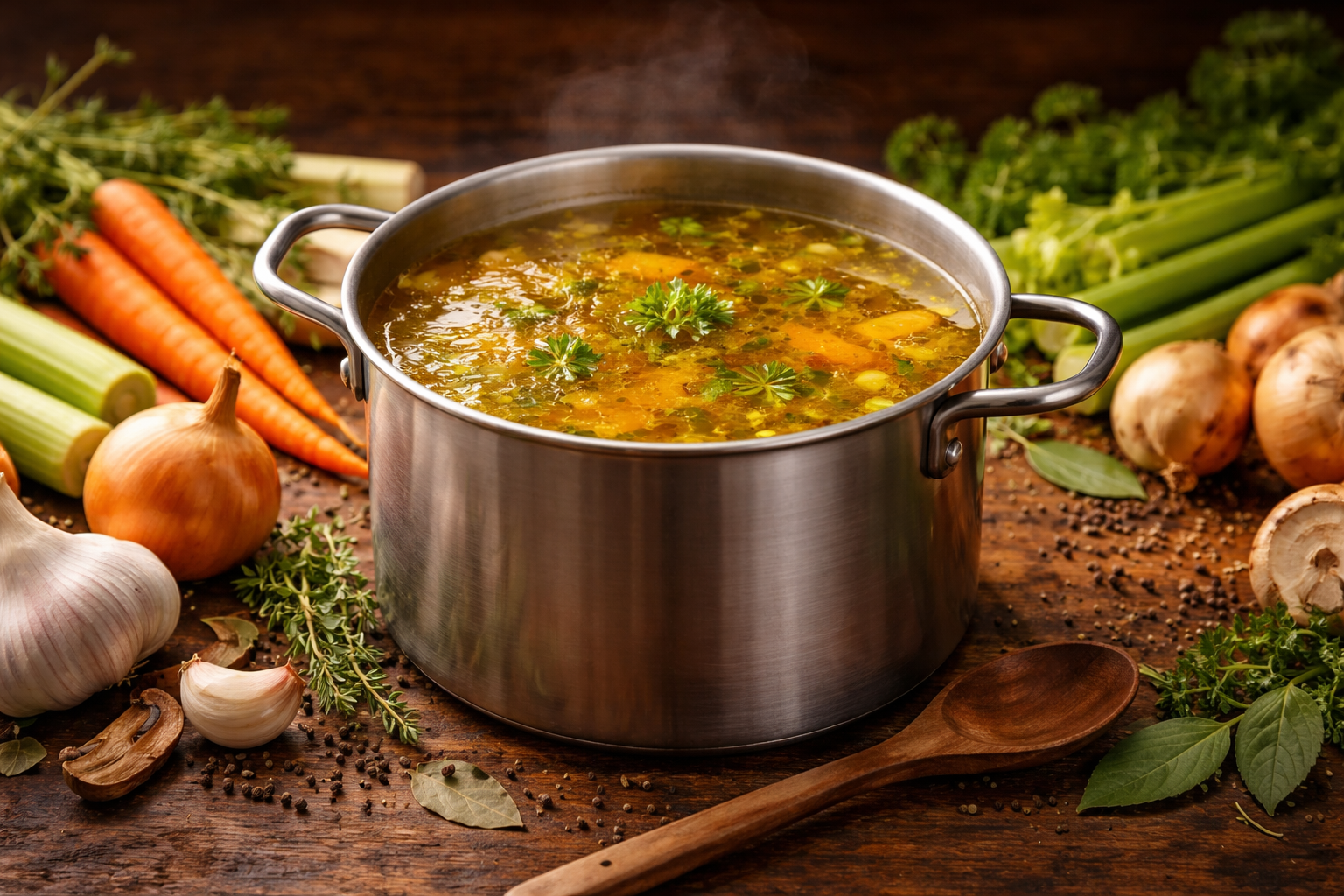
TIP: Instead of worrying about dicing the last inch or so near the root, simply trim it off and save it with your vegetable scraps for broth. Clean onion skins, celery stalks and inner leaves, tomato trimmings, well-washed potato peels (free of dirt and dark spots), parsnip and carrot tops and skins, along with fennel, leek, garlic, and shallot scraps can all be collected and stored in the freezer. Once you have enough, they can be used to make a deeply flavorful vegetable broth—turning what would have been waste into something useful. Check out my post on Building the Perfect Vegetable Broth.

Conclusion.

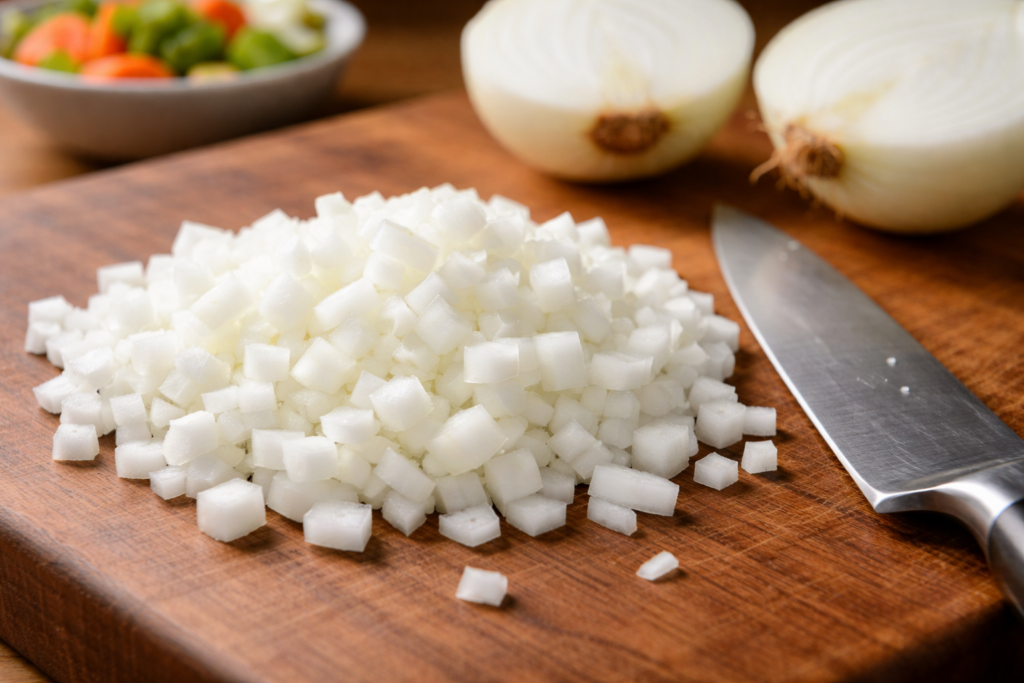
A proper dice should be uniform. Even pieces cook evenly, distribute flavor more consistently, and improve the overall texture of a dish. Speed will come naturally with repetition, but control is what matters—working steadily and deliberately will always produce better results than rushing.

This same method applies whether you’re building a base for a sauce, layering flavor into a soup, or finishing a dish with a finer garnish. Once the structure is understood, the technique scales easily without changing the fundamentals, making it one of the most useful skills to carry through everything else you cook.

Onion

Onions have been feeding people for thousands of years, long before written recipes existed. They’re one of the earliest cultivated crops, valued not just for their flavor, but for their ability to store well and travel. Ancient civilizations used them as both food and medicine, and they became a staple across cultures because they were reliable, accessible, and endlessly adaptable.

Onion

Layers of Flavor

Understanding onions isn’t just about knowing what they are. It’s about understanding how flavor is built from the very beginning. It’s easy to overlook because it’s always there. There are very few ingredients that show up as consistently—or matter as much—as the onion. It’s in the background of soups, stews, sauces, sautés, braises, and roasts. It’s often the first thing in the pan and rarely the star on the plate, but it’s doing more work than almost anything else in your kitchen. If your food ever feels flat, there’s a good chance the issue isn’t salt or spice—it’s how your onions were handled.

Onions don’t just shape flavor—they carry a quiet layer of nutritional value as well. They’re mostly water, but what’s left includes vitamin C, B6, folate, and potassium, along with antioxidant compounds like quercetin. None of it is overwhelming on its own, but onions show up often enough in cooking that they contribute more than they get credit for. What matters even more is the chemistry behind their flavor—because that’s what determines how they behave in a pan.

Onions also behave very differently depending on how you use them. Raw, they’re sharp, bright, and assertive, driven by sulfur compounds that create their bite. Cook them, and that edge softens as those compounds begin to break down, shifting the onion into something sweeter, rounder, and easier to integrate into a dish. That transition—from raw to cooked—is the foundation of how onions work.

A Brief History

Onions have been feeding people for thousands of years, long before written recipes existed. They’re one of the earliest cultivated crops, valued not just for their flavor, but for their ability to store well, travel easily, and grow in a wide range of climates. Long before refrigeration or modern supply chains, that kind of reliability mattered. Onions could be harvested, dried, and kept for months, making them a dependable source of flavor and sustenance when fresh ingredients were scarce. Ancient civilizations didn’t just cook with onions—they relied on them. They were used as food, as medicine, and even as a form of currency in some cultures. Their layered structure and resilience made them symbolic in certain traditions, but more importantly, they were practical. They could stretch a meal, add depth to simple ingredients, and bring life to otherwise bland staples like grains and legumes. As trade routes expanded and cultures intersected, onions traveled with them. They adapted to new regions, new soils, and new cuisines, becoming deeply embedded in the way people cooked around the world. Whether raw, cooked down, pickled, or dried, onions proved themselves again and again as an ingredient that could shift with context while still doing the same essential job—building flavor. That legacy still holds today. You’ll find onions at the foundation of cuisines across the globe—not because of tradition alone, but because they work. They’re one of the few ingredients that can be both subtle and transformative, capable of supporting a dish quietly or shaping it entirely depending on how they’re used.

Types of Onions — And When to Use Them

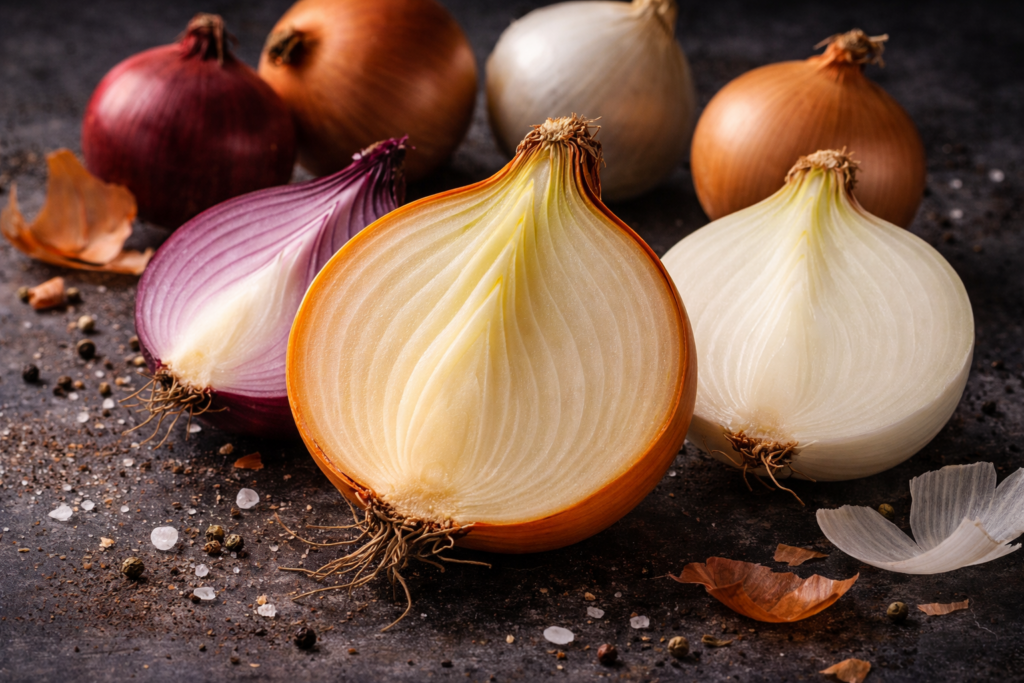
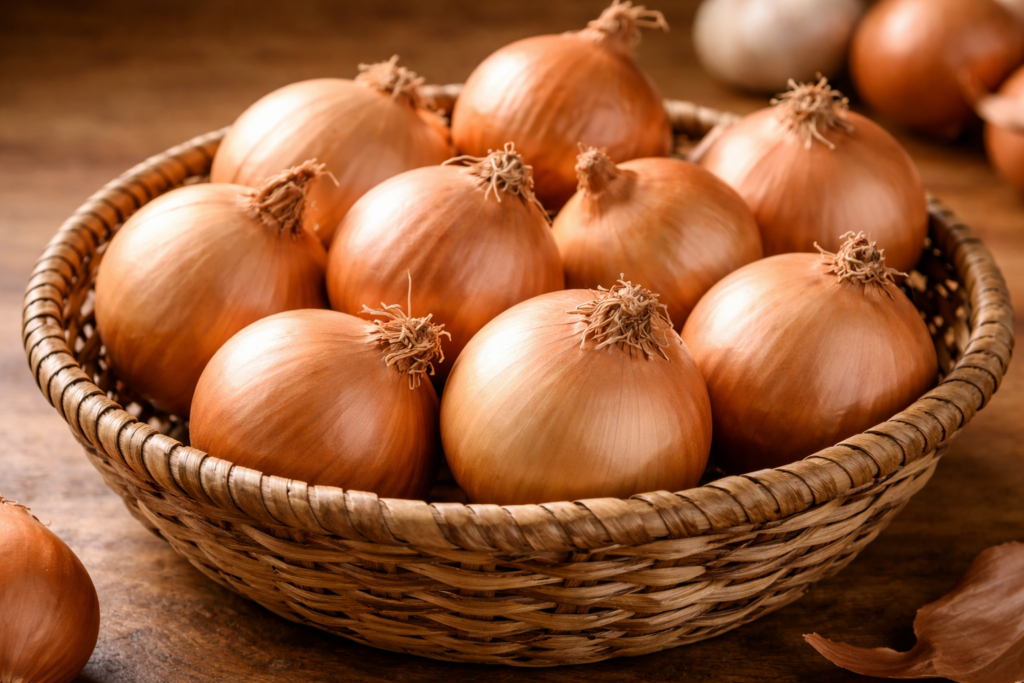
  • Yellow Onions: This is your workhorse. Yellow onions strike the best balance between sweetness and sharpness, which makes them ideal for most cooked applications. They break down well, develop deep flavor over time, and are the backbone of soups, sauces, braises, and anything that starts with a pan. If a recipe just says “onion,” this is usually what it means.
  • White Onions: Cleaner, sharper, and a little more direct. White onions have a more pronounced bite and a slightly lighter flavor than yellow onions. They’re commonly used in Latin American and Southwestern cooking, especially in salsas, raw applications, and quick-cooked dishes where you still want that brightness to come through.
  • Red Onions: Sharper raw, milder when handled properly. Red onions are often used raw—in salads, salsas, and garnishes—because of their color and bite. When treated correctly, they can also be softened or pickled to bring out a more balanced, slightly sweet flavor. They’re not just for color. They’re for contrast.

All(ium) in the Family

Onions are part of a larger family known as alliums—alongside garlic, shallots, leeks, scallions (aka green onions), and chives. What they share is that sharp, pungent bite when raw and the ability to mellow, sweeten, and deepen when cooked. That transformation is driven by the same underlying chemistry—compounds that start out intense and aggressive, then soften and round out with heat.

Each brings its own balance. Garlic is more intense and direct. Shallots are softer and slightly sweet. Leeks are mild and more vegetal. Scallions and chives add freshness and bite, often used toward the end rather than as a base. They’re not interchangeable, but they are closely related. Once you understand onions, the rest of the allium family becomes easier to use—whether you’re building depth at the start or adding brightness at the finish.

How Flavor Develops

What you do with an onion matters just as much—if not more—as which one you choose. If you throw onions into a hot pan and rush the process, you’ll get sharpness, uneven cooking, and often bitterness from partial burning. Onions need time and control. Starting them over lower heat allows them to release moisture gradually while the sulfur compounds responsible for their raw bite begin to break down, softening their edge and setting the stage for sweetness to develop. Heat, timing, and intention change everything. That’s where the depth comes from—not speed, but patience.

There’s also a practical side to this. Raw onions retain more of their sharp compounds and a bit more of their vitamin C, which is why they taste brighter but more aggressive. Cooking trades that sharpness for sweetness and makes the onion easier to integrate—not just in flavor, but in how it sits in the dish.

There’s a difference between:

  • Sweating onions (gentle heat, no browning)
    This is about softening, not coloring. The onions release moisture, turn translucent, and the sharp sulfur compounds mellow without developing much sweetness. You’re not building flavor yet—you’re removing harshness. This is the foundation for soups, sauces, and dishes where you want a clean, subtle base that supports everything else.
  • Sautéing onions (moderate heat, light color)
    Here, you’re building more dimension. As heat increases, those same compounds continue to break down while natural sugars begin to develop, giving you light golden edges and a balance of sweetness and sharpness. The onions still hold some structure, making this ideal for quick-cooked dishes where they should be present but not dominant.
  • Caramelizing onions (low and slow, deep brown)
    This is where transformation fully takes hold. Over time, sugars concentrate and deepen, and the last of the onion’s sharpness disappears as those earlier compounds fully break down. What’s left is something entirely different—deeply golden, soft, rich, and almost jam-like. This isn’t something you rush—it’s something you commit to.

Each of these approaches creates a completely different result, even though the ingredient is the same. Once you understand how to control that transformation—what’s happening as moisture releases, compounds break down, and sugars develop—you’re not just cooking onions. You’re deciding how the entire dish is going to taste.

Global Foundations

Almost every cuisine has its own version of starting with onions.
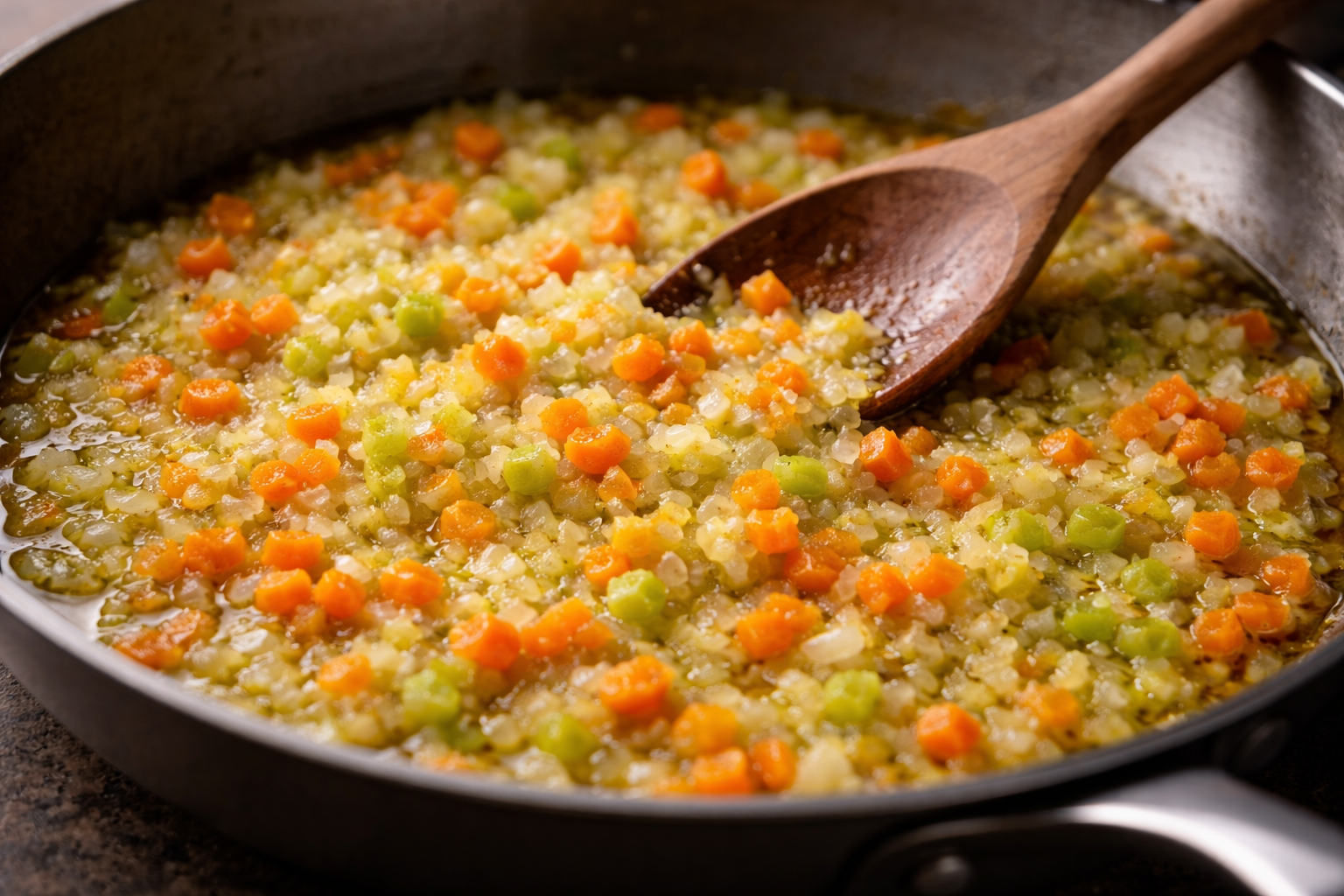
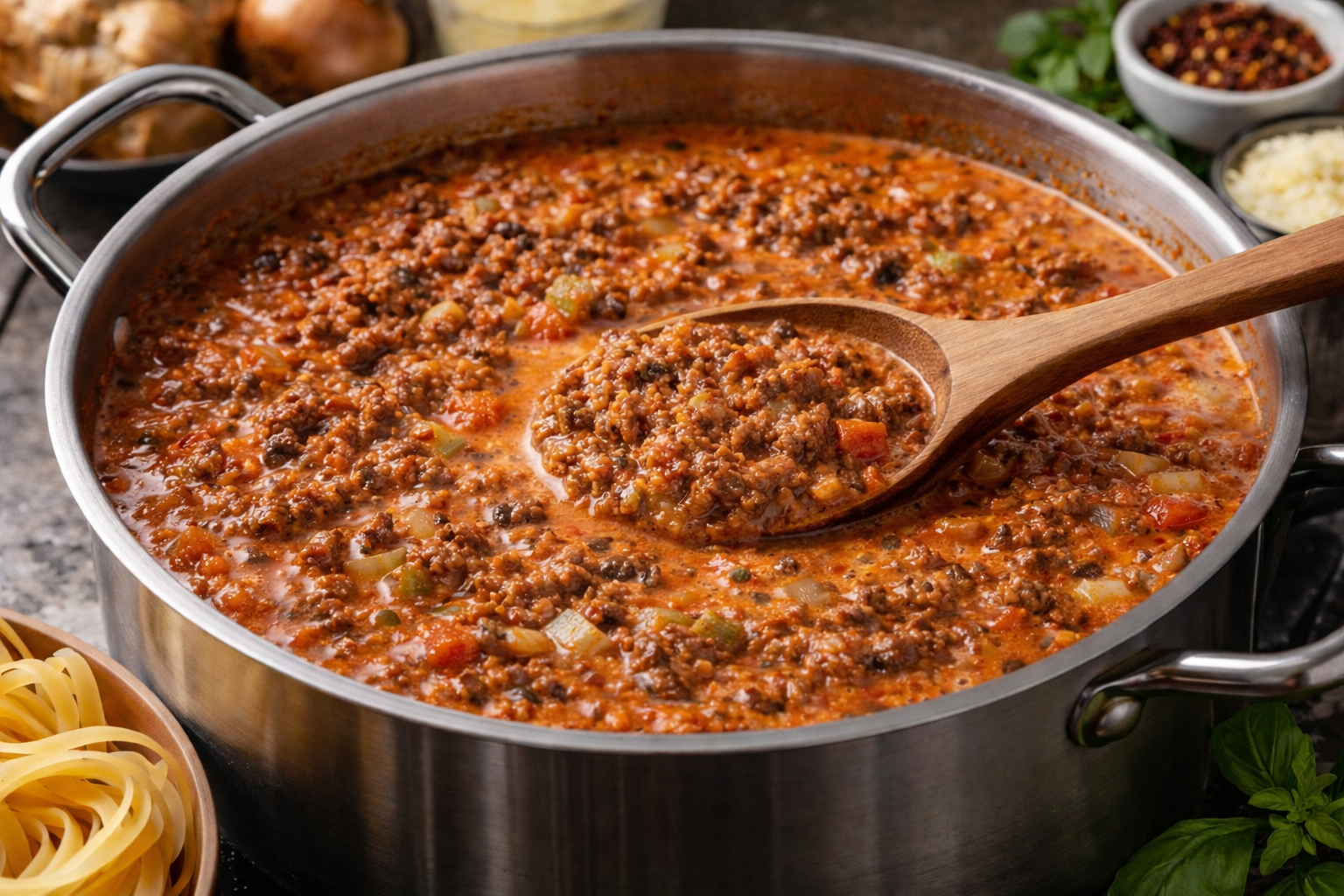
  • French and Cajun cooking builds flavor with mirepoix—a mix of onions, carrots, and celery.
  • Italian cooking uses a similar base called soffritto.
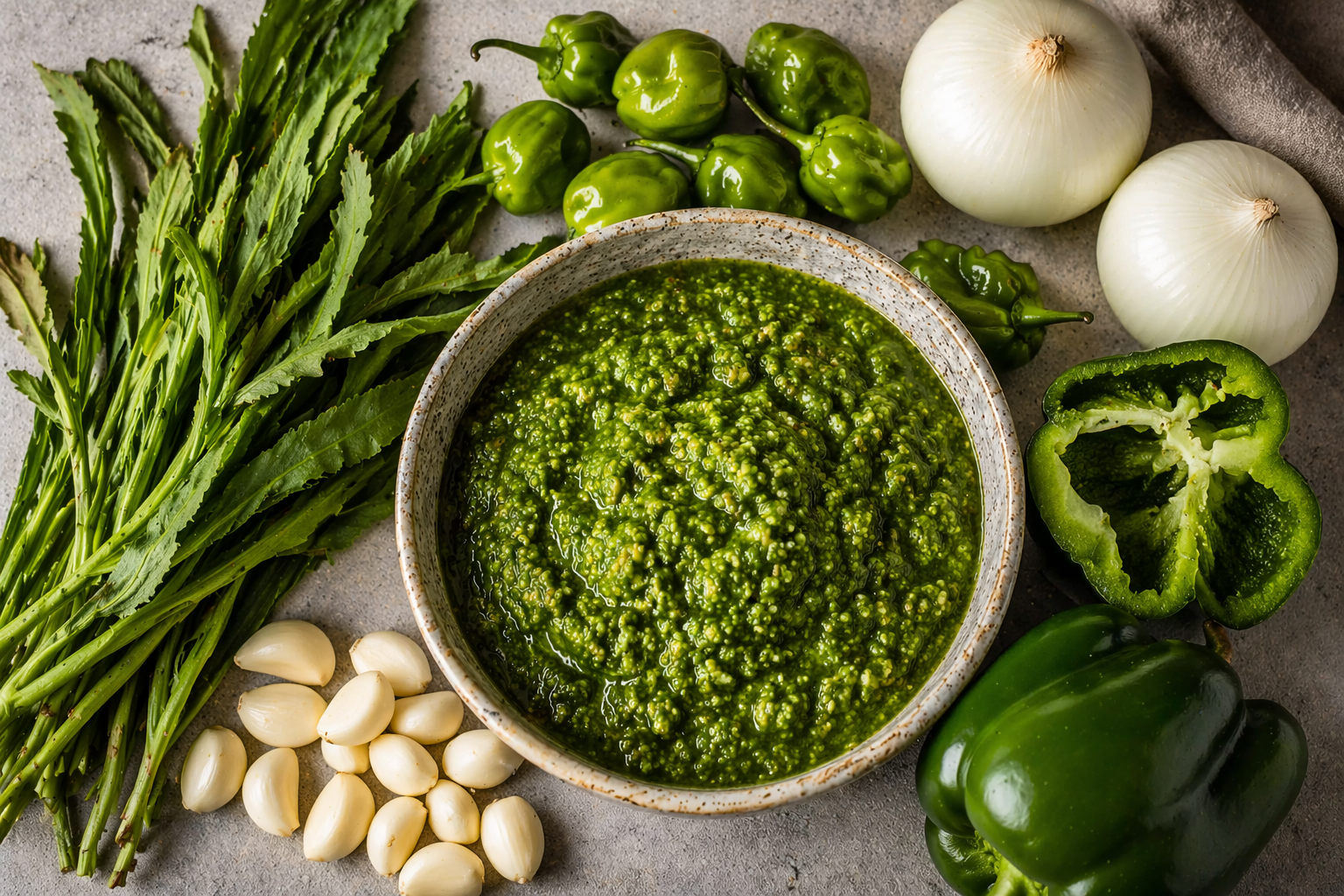
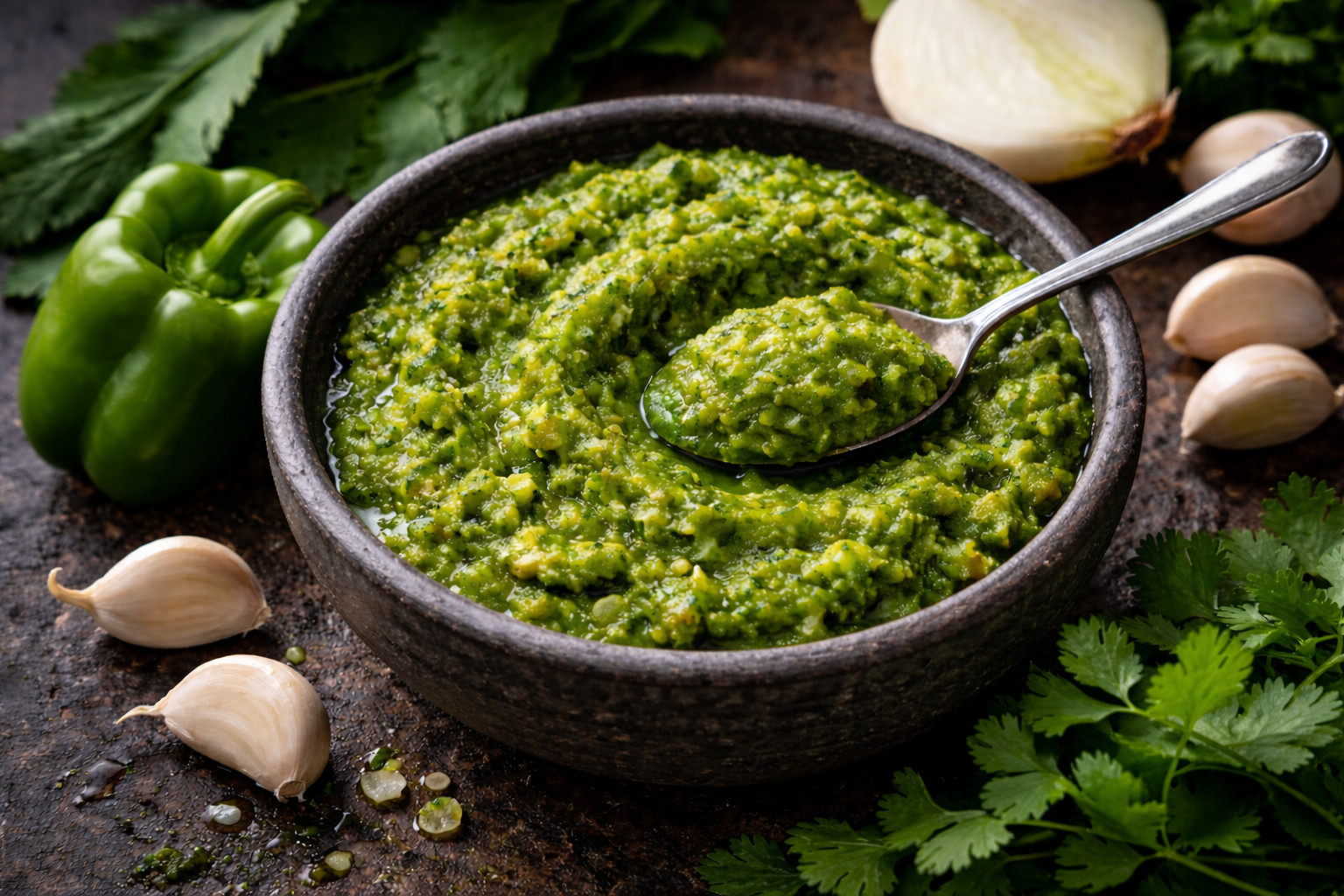
  • Spanish and Latin cuisines also rely on sofrito, but their blend is often layered with garlic, green or red peppers, and herbs like culantro and cilantro.
  • South Asian cooking frequently starts with onions cooked down into deeply-spiced bases.
  • Middle Eastern and North African cuisines use onions as the backbone of stews, rice dishes, and braises.
Different ingredients, different techniques—but the same idea: Onions are where flavor begins.

Final Thoughts

Onions aren’t just another ingredient on a list. They’re the starting point for how a dish is built. They shape sweetness, depth, aroma, and balance. They carry other flavors, bridge ingredients, and give structure to something that would otherwise feel flat or disconnected. That’s why they show up everywhere—not by accident, but because they work. Quietly, consistently, and fundamentally. When you understand onions—how to choose them, cut them, and cook them—you’re not just improving one recipe. You’re improving everything you make.

Read my post on how to perfectly dice an onion.

Recipes Featuring Onions

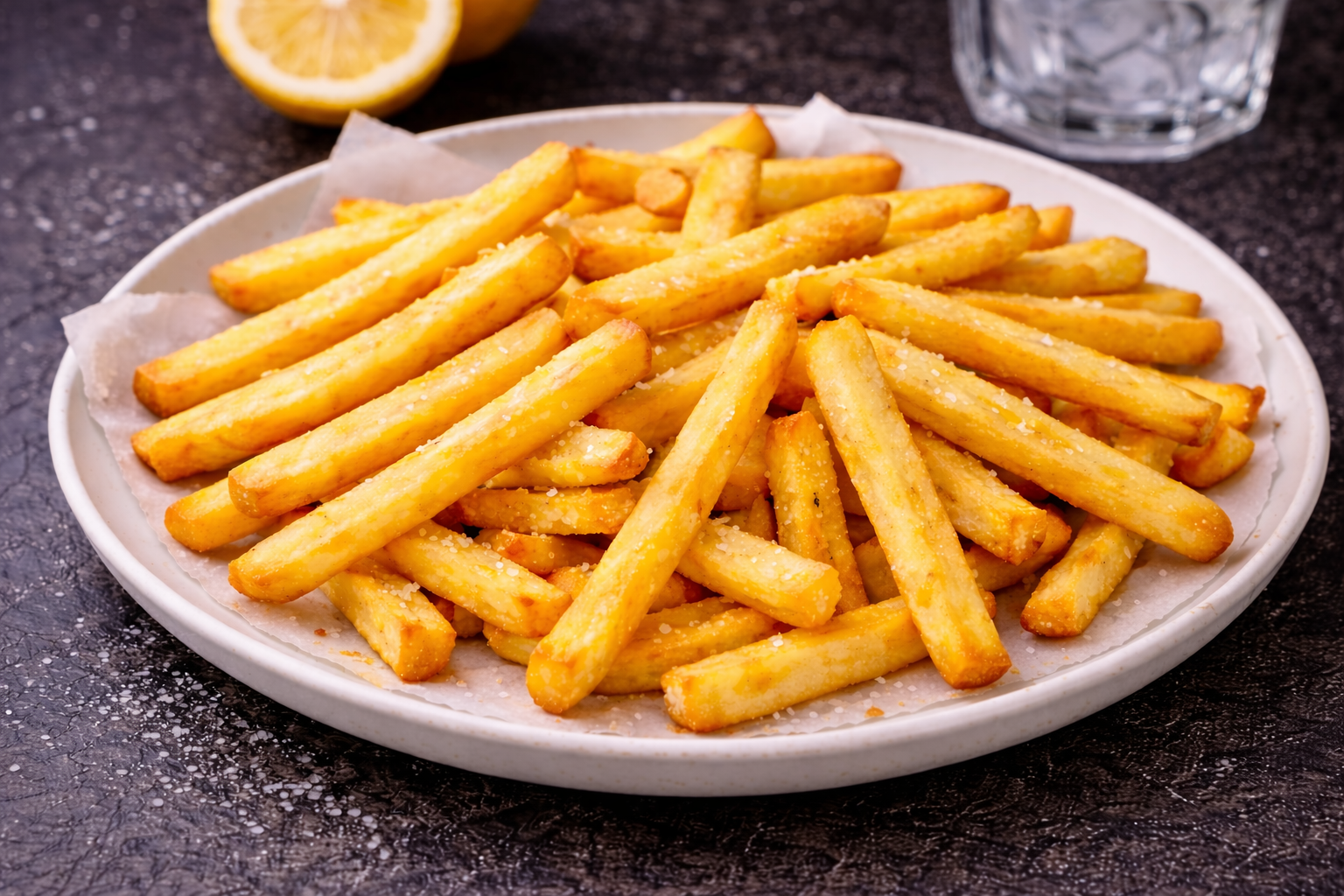
Hand Cut Pommes Frites

Classic hand-cut pommes frites made using the traditional double-fry method with a twist: a gentle vinegar blanch at a low temperature, an initial fry, a rest in the refrigerator, and a final fry. The technique produces fries that are beautifully crisp on the outside and a soft, fluffy inside.

Hand Cut Pommes Frites

Belgian by origin. Classic by design.

Despite the name, French fries don’t originate in France. They trace back to Belgium, where potatoes were fried in fat as early as the late 1600s. The name likely came later, popularized by English speakers who associated the technique with French culinary terminology.

Whatever you call them, great fries aren’t accidental. The difference between limp and exceptional comes down to technique—how the potatoes are cut, treated, and cooked from start to finish. This method leans into those details to create fries that are crisp on the outside and soft, almost pillowy, on the inside.

Why the potato matters.

Not all potatoes behave the same when fried. For fries, a high-starch potato is the goal. Starchier varieties break down just enough during cooking to create that fluffy interior, while also allowing the exterior to crisp properly in hot oil.

Lower-starch potatoes tend to hold their structure too well, resulting in a firmer, less airy center and a less defined crust. Starting with the right potato sets the foundation for everything that follows.

The importance of blanching.

Handled carefully, this step sets up both the texture and the finish. Just like the Golden Girls wouldn’t have worked without Blanche, your fries won’t be as golden without this step. Instead of relying on a long soak alone, the potatoes are blanched in water with a small amount of vinegar. This step does more than just par-cook the fries—it actively improves their structure and color.

The vinegar introduces a gentle acidity that helps the exterior of the potatoes hold together, preventing them from breaking down or turning mushy during frying. At the same time, the hot water draws out excess surface sugars, which reduces premature browning in the oil and allows the fries to develop a more even, golden color later on.

Drying and the first fry.

After blanching, the potatoes are dried thoroughly before hitting the oil. Removing surface moisture is critical—any remaining water interferes with frying and prevents the exterior from setting properly.

The first fry is quick and intentional. It cooks the potatoes through without adding color, creating the soft interior that defines a great fry. At this stage, the fries are pale and delicate, but structurally prepared for what comes next.

Why the chill and second fry matter.

Once the first fry is complete, the fries are chilled before going back into the oil. This pause allows the interior to firm up slightly and the exterior to dry out further, which is essential for achieving that final crisp texture.

The second fry is where everything comes together. The hotter oil finishes the exterior, creating a golden, crisp shell while the inside remains tender. This two-step frying method is standard in professional kitchens for a reason—it consistently delivers fries with contrast, structure, and balance.

Salt is added only after this final fry, ensuring it adheres to the surface without interfering with the oil during cooking.

Simple, but not careless.

Hand-cut fries are a perfect example of how a simple dish can benefit from precision. Each step—cutting, blanching, drying, frying, and resting—builds toward a final result that feels intentional rather than incidental.

What I serve with it.

You’ll find the full method outlined below, from cutting the batons to the double fry that brings everything together. The process takes a little time, but most of it is hands-off, and the payoff is fries that are crisp, golden, and built the way they’re meant to be.

Hand Cut Pommes Frites

Classic hand-cut pommes frites made using the traditional double-fry method with a twist: a gentle vinegar blanch at a low temperature, an initial fry, a rest in the refrigerator, and a final fry. The technique produces fries that are beautifully crisp on the outside and a soft, fluffy inside.
Print Pin
Category: SAVOR
Cuisine: American, Belgian, French
Course: Side Dish
Keyword: French Fries, Potatoes
Prep: 15 minutes
Cook: 25 minutes
Chill Time: 35 minutes
Total: 1 hour 15 minutes
Servings: 4 servings
Calories: 2094kcal
Author: TastyDaddy

Ingredients

Instructions

Wash & Peel

  • Wash and peel potatoes, making sure to re-rinse each potato after peeling, drying each with a paper towel, and setting aside on butcher block for next step.

Cut

  • Using your chef's knife, cut potatoes into ¼" (6mm) batons.
  • Place cut batons into a bowl of lightly-salted water to prevent browning as you cut all the potatoes. Though the cut batons soak here, I veer from the traditional longer soak method and opt for blanching (see below).

Rinse

  • Carefully transfer cut batons into a strainer or colander and rinse thoroughly under running water for about 30 seconds.

Vinegar Blanch

  • Carefully transfer rinsed batons into a 6-quart stockpot and add 1 tbsp salt, 2 quarts water, and 2 tbsp white vinegar to the pot. Bring pot to a boil over high heat, immediately reducing heat to low once it reaches a boil. Cook for 10 minutes, then carefully transfer batons back into colander using a spider strainer or slotted spoon.
  • TIP: DO NOT dump stock pot into colander! Blanching has softened the batons and they will break.

Sheet-Pan Dry

  • Line two baking sheets with paper towels.
  • Carefully spread the batons evenly on lined baking sheets and leave to dry for at least 5 minutes.
  • Carefully lift paper towel with dried batons from baking sheet and place onn counter.
  • Re-line baking sheets with fresh paper towels.

Frying - Round One

  • Heat 1 quart canola (or peanut) oil to 400℉ in wok (or fry pan) over medium-high heat.
  • TIP: After 2-3 minutes of burner being on, place a toothpick in the oil. You know the oil is ready (hot enough) when bubbles form around the toothpick.
  • Using a spiderweb or slotted spoon, lower potato batons in small batches and cook for 1 minute, moving them around once or twice while they cook. Remove from oil and place cooked fries onto freshly-lined baking sheet.
  • TIP: DO NOT salt the fries when they come out of the oil during the first round of frying. Salt breaks down the fat in the oil and also reduces the smoking point, so if you salt them during this round, you will be adding tons of salt to the oil during round two of frying and your fries will not cook properly.
  • Repeat with small batches until all fries are cooked.

Chill

  • Place fries to chill in refrigerator to chill for a minimum of 30 minute
  • TIP: If you have to prep other parts of your meal, this is the perfect time to do it. Save Round Two of frying for the final step in your meal prep so your fries are piping hot when served.

Frying - Round Two

  • Line a large bowl with paper towels.
  • Reheat the canola (or peanut) oil to 400℉ in wok (or fry pan) over medium-high heat.
  • Fry half the fries for 4 minutes, moving them around once or twice, until golden and crispy, transferring cooked fried to the lined bowl.
  • Repeat with second half, then sprinkle with salt (or preferred seasoning). Gently toss to coat the fries with seasoning and serve!

Nutrition

Calories: 2094kcal | Carbohydrates: 0.2g | Protein: 0.02g | Fat: 237g | Saturated Fat: 17g | Polyunsaturated Fat: 66g | Monounsaturated Fat: 150g | Trans Fat: 1g | Sodium: 1744mg | Potassium: 5mg | Fiber: 0.01g | Sugar: 0.01g | Vitamin A: 0.01IU | Vitamin C: 0.1mg | Calcium: 2mg | Iron: 0.03mg