
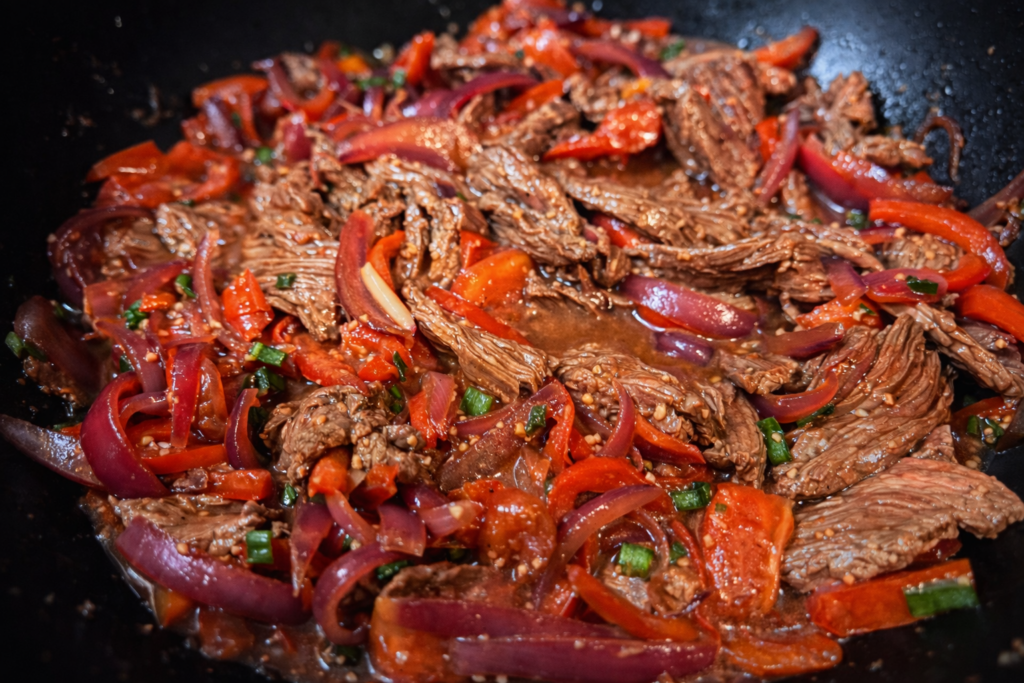
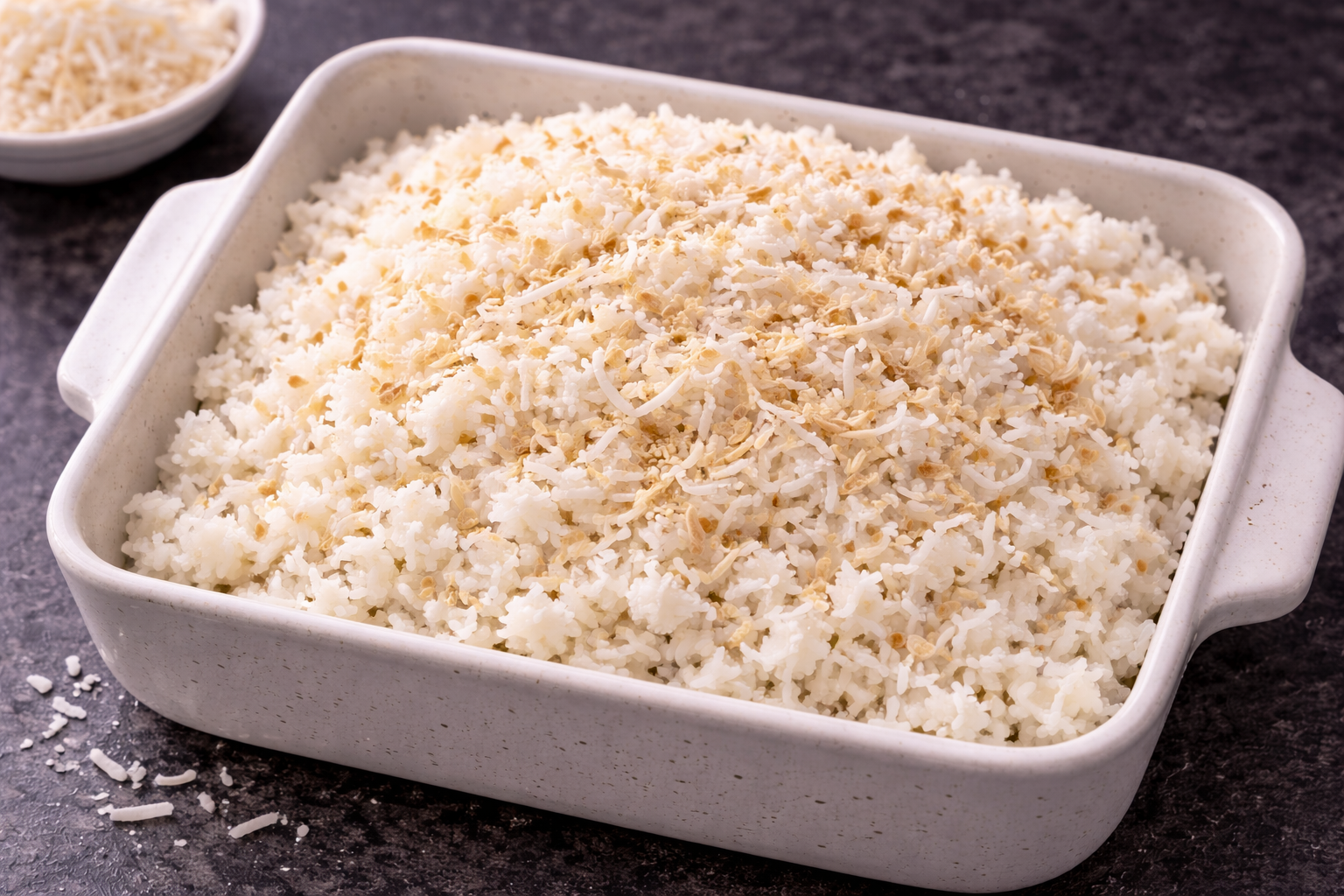
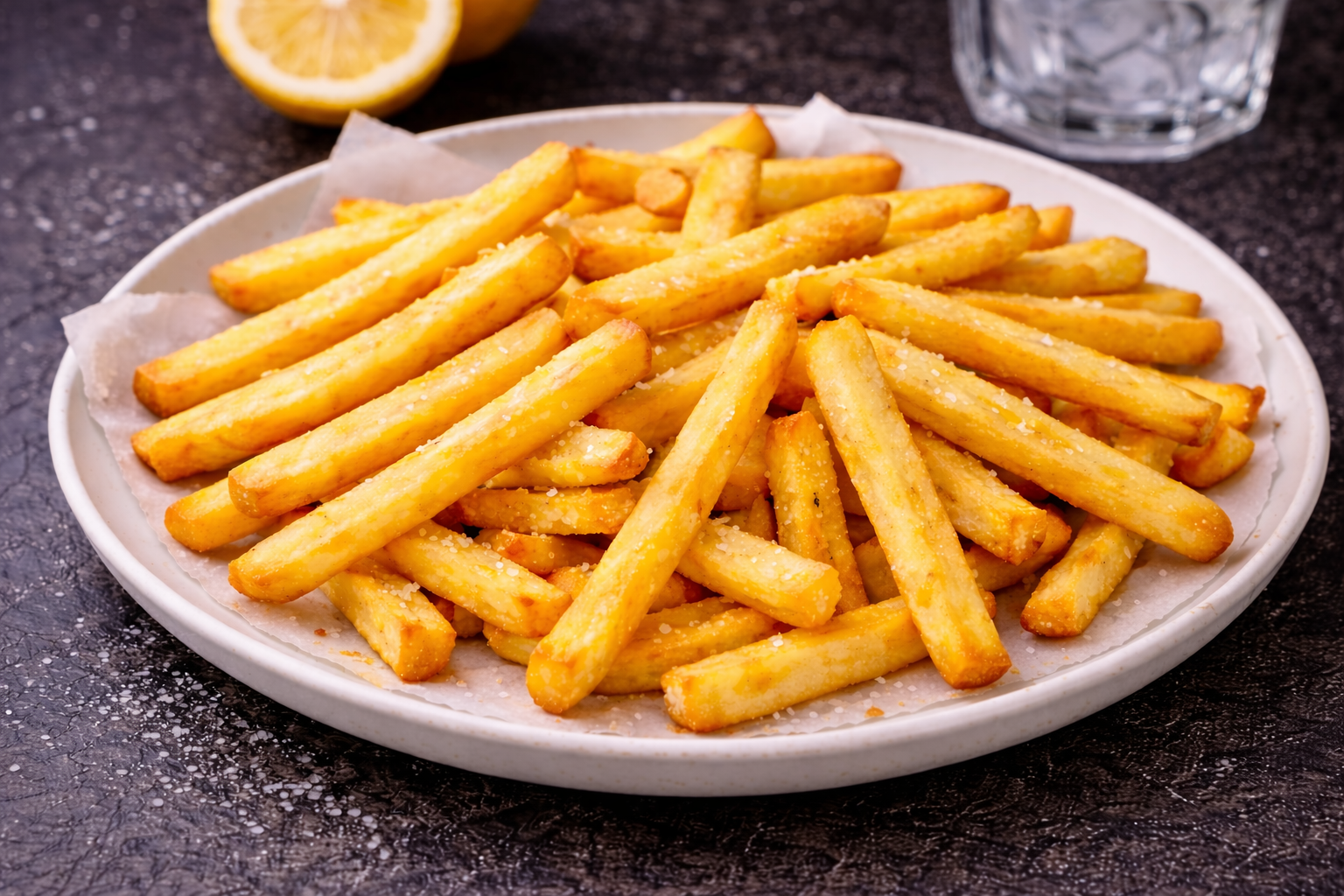
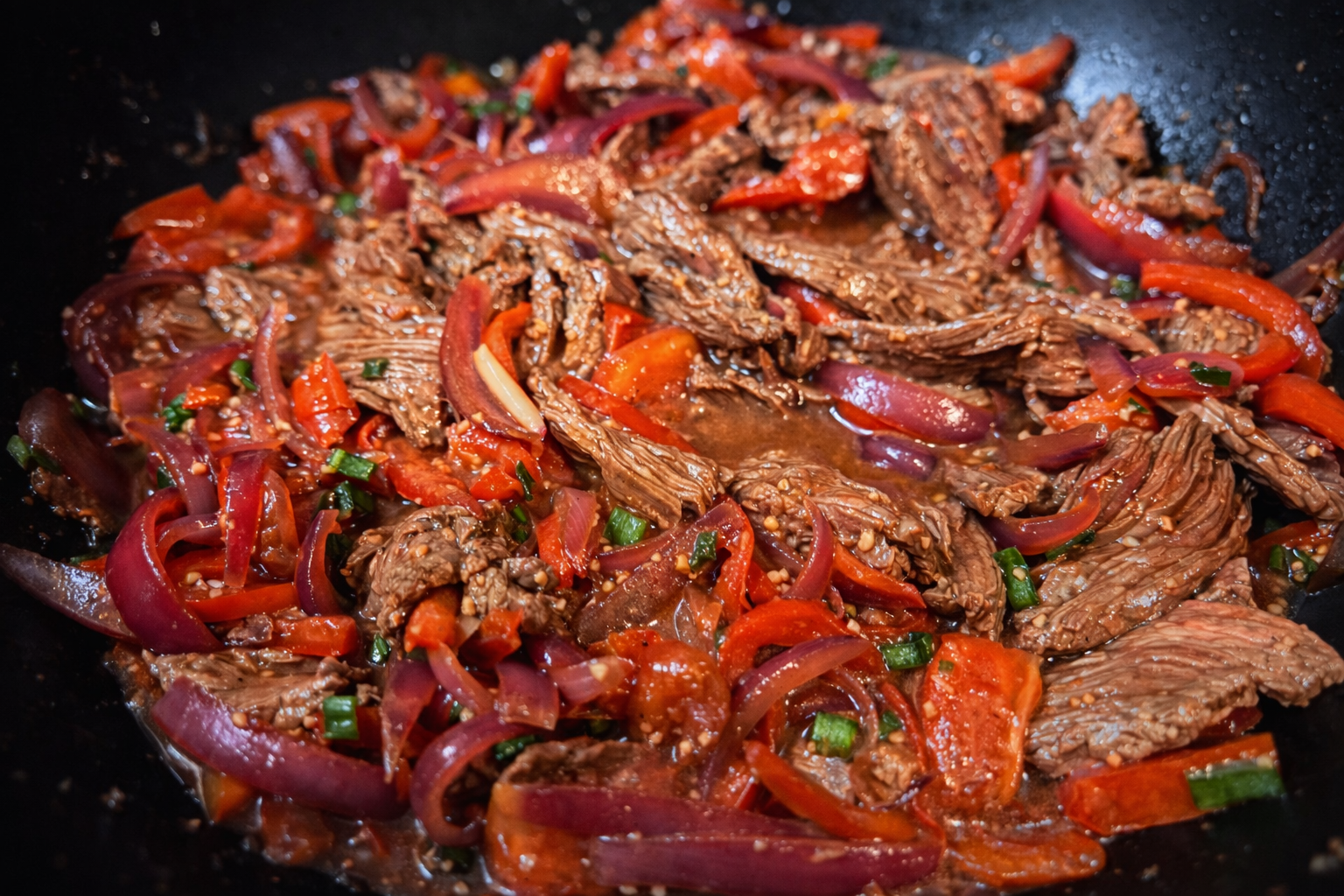
Flash-seared beef meets blistered vegetables, ají amarillo, and a ginger-laced soy reduction in this bold Peruvian staple. Served with crisp fries and rice, it’s a study in contrast—smoky wok heat, bright spice, and layered savory flavor.

Lomo Saltado
Flash-seared beef meets blistered vegetables, ají amarillo, and a ginger-laced soy reduction in this bold Peruvian staple. Served with crisp fries and rice, it’s a study in contrast—smoky wok heat, bright spice, and layered savory flavor.
Print
Pin
Servings: 4 servings
Calories: 335kcal
Equipment
Ingredients
Marinade
- 2 tbsp soy sauce (low sodium)
- 1 tsp garlic (minced)
- 1 tsp ginger (ground or paste)
- ¼ tsp baking soda (or meat tenderizer; optional, for tenderizing)
Sauce
- 4 tbsp soy sauce (low sodium)
- 1 tbsp oyster sauce
- 1 tbsp red wine vinegar (or rice wine vinegar)
- 1 tbsp Ají amarillo paste
- 1 tsp ginger (ground or paste)
- 1 tsp cornstarch
Stir Fry
- 1 lb steak (sliced medium thin)
- 1 whole red onion (sliced in wedges)
- 4 tsp garlic (minced)
- 3 whole roma tomatoes (sliced in wedges)
- 1 whole Ají amarillo pepper (sliced)
- SUBSTITUTION: Fresh Ají amarillo peppers aren't easy to find, so if you can't find one in your area, feel free to substitute a small yellow or orange bell pepper.
- 5 stalks green onions (ends trimmed, cut into 1" pieces)
- ¼ cup cilantro (chopped)
- 2-3 tbsp vegetable oil (or canola oil)
Garnish
- 2 stalks green onions (finely chopped)
- 2 tbsp cilantro (finely chopped)
Instructions
Slicing the Steak
- Using a butcher's block and a Santoku knife, slice your meat into medium thin slices—thin enough that they won't take a long time to cook, but thick enough so they won't overcook when seared.

TIP: As with any meat, it slices better when a bit firmer. I place my steak in the freezer for about 12-15 minutes before slicing.PRO TIP: While the meat is chilling in the freezer, move to next steps and prepare the marinade and sauce.
Marinade
- Combine 2 tbsp soy sauce, 1 tsp minced garlic, 1 tsp ginger paste.
- Pour prepared marinade over sliced meat in a marinade dish and marinate in refrigerator at least 10 minutes.
TIP: If you selected a tougher cut of meat, add ¼ tsp baking soda to your marinade. Baking soda will help loosen the protein fibers, making it easier to chew. You can also use meat tenderizer.
TIP: If you used baking soda in your marinade due to a tougher cut of meat, increase your marinating time to 1 hour.
Sauce
- In a 2-cup measuring glass (spouted), combine 3 tbsp soy sauce, 1 tbsp oyster sauce, 1 tbsp red wine (or rice wine) vinegar, 1 tbsp Ají amarillo paste, 1 tsp ginger paste, and 1 tsp cornstarch.
- Blend with whisk and set aside.
Vegetable Prep
- Wash all vegetables before cutting.
- If you've already sliced your meat, wash your butcher's block (or cutting board) before prepping your vegetables.
- You'll be using your Chef's knife to prep the vegetables.
- Slice red onion into ½" wedges and set aside in a ramekin (or small bowl).
- Cut top (stem side) off roma tomatoes and slice into ½" wedges. If your tomatoes are particularly seed-heavy, remove them an add them into your sauce mixture. Set tomato wedges aside in ramekin (or small bowl).
- Slice Ají amarillo pepper (or bell pepper, if substituting) and set aside in ramekin.
- Trim white ends off 7 stalks of green onions.Slice 5 stalks into 1" pieces, setting aside in ramekin.Take remaining 2 stalks and coarsely chop, setting aside in separate ramekin for garnish later.
- Remove cilantro leaves from stems (discard the stems) and coarsely chop leaves, setting aside about ¼ cup in one ramekin and about 2 tbsp in an additional ramekin for garnish later.
PRO TIP: If you leave at least 1½-2" of green stalk above the white root end, you can wrap a rubber band loosely around the bunch to hold together and add to a shallow dish of water. The onion stalks will regenerate after a few days and you can plant in a small pot to put in a windowsill to always have fresh green onions on hand.
Cooking the Stir Fry
- Remove marinated sliced beef from fridge and strain marinade from meat; this will prevent excessive splatter while searing
- Add about 1 tbsp of vegetable (or canola) oil to wok over high heat until it starts to shimmer.
- Sear the meat in batches for about 2 minutes, flipping as needed to ensure an even cook. Remove from heat and add to mixing bowl or plate (I opt for a bowl because adding the meat in batches means the top layer will hold the heat in for the layers below it.
- Once all meat is seared, drain excess oil and juices from wok. Add 1 tbsp of fresh oil to wok and bring back to med-high heat until it starts to shimmer.
- Add the ramekin of onions and sauté for 1 minute.
- Add in 4 tsp minced garlic and sauté for another minute.
- Add in ramekins of tomatoes, cilantro, and green onions and cook for another 2 minutes or until tomatoes are slightly tender but still have their shape.
- Add sauce to pan and bring to a low simmer to thicken the sauce.
- Turn off heat and add meat back into wok, mixing and thoroughly incorporating with other ingredients until sauce coats the meat.
- Garnish with cilantro and green onions.
TIP: I leave my meat pretty pink in the middle for two reasons: 1) The meat will continue to cook a bit more as it rests in the bowl or plate; 2) The meat is added back to the wok in the final steps, and adding it to a bubbling sauce will cook it slightly more. You don't want to overcook your meat and make it tough.
Nutrition
Calories: 335kcal | Carbohydrates: 7g | Protein: 27g | Fat: 23g | Saturated Fat: 8g | Polyunsaturated Fat: 5g | Monounsaturated Fat: 9g | Trans Fat: 0.04g | Cholesterol: 69mg | Sodium: 1764mg | Potassium: 466mg | Fiber: 1g | Sugar: 1g | Vitamin A: 324IU | Vitamin C: 7mg | Calcium: 39mg | Iron: 3mg