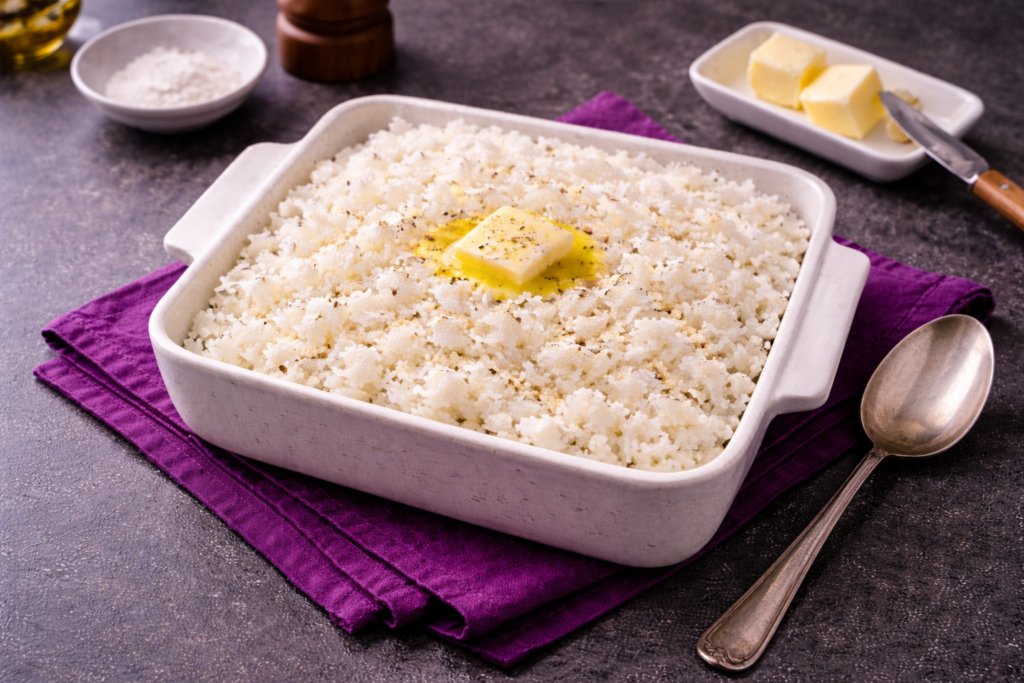
Perfect Oven-Baked White Rice

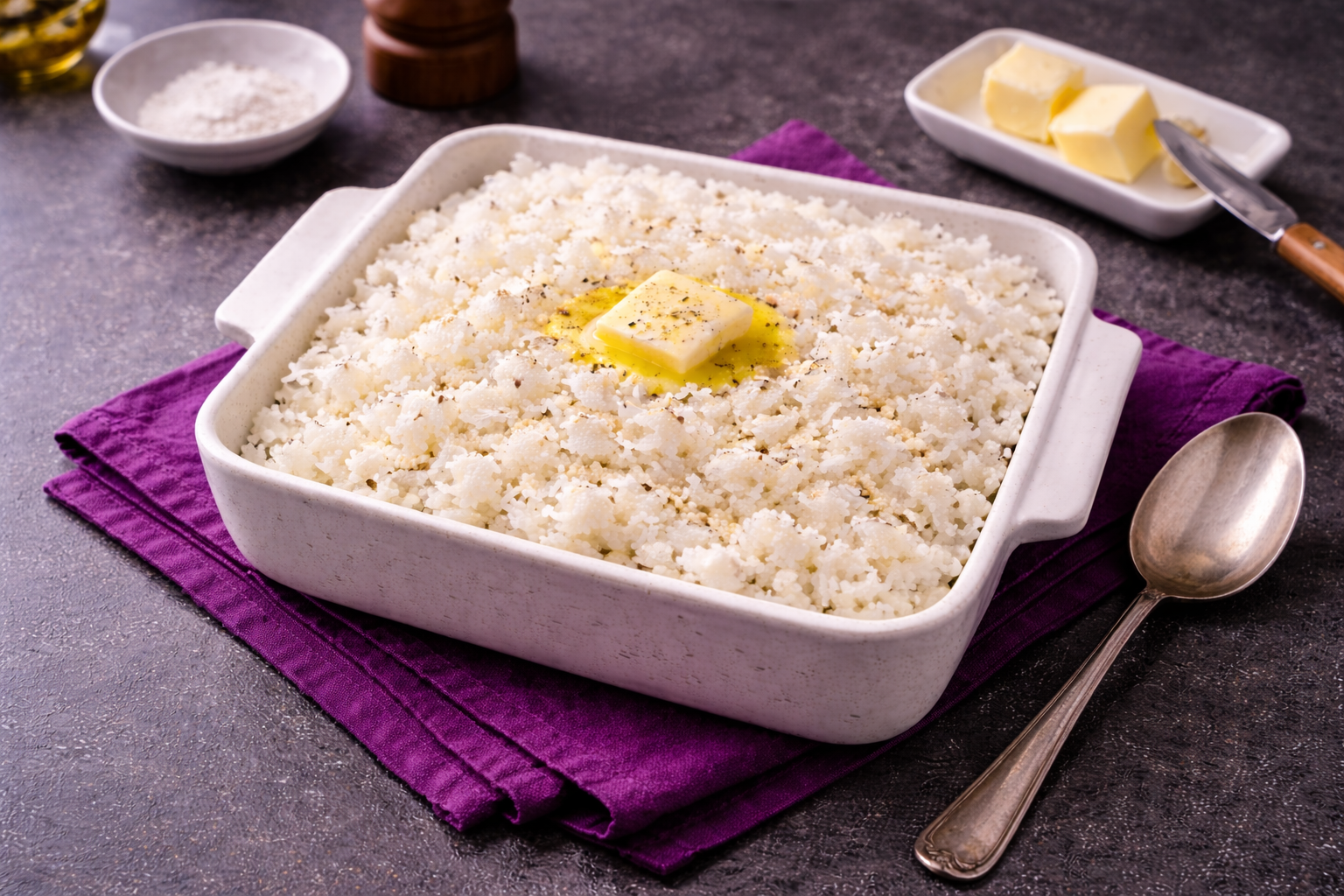
Light, fluffy white rice baked gently in the oven for perfectly cooked grains every time. This simple, reliable method removes the guesswork of stovetop rice and delivers consistent results with almost no effort.
Perfect Oven-Baked White Rice

A simple side done right.

White rice might be one of the most widely served side dishes in the world. It appears alongside countless meals across cultures—not as the centerpiece of the plate, but as the quiet foundation that lets everything else shine.

When it’s cooked well, rice should be light, fluffy, and perfectly separated, ready to soak up sauces, gravies, and pan juices without turning heavy or sticky. Achieving that texture consistently doesn’t require complicated technique, but it does benefit from a few deliberate steps that focus on controlling starch, temperature, and even cooking.

Why rinsing the rice matters.

Long grain white rice naturally carries a layer of starch that coats the grains. That starch is what causes rice to clump together during cooking, which is ideal for certain dishes but not for a clean, fluffy side. Rinsing the rice until the water runs nearly clear removes that excess starch before cooking begins, allowing the grains to remain distinct rather than sticking together as they cook. Taking the extra minute to rinse the rice dramatically improves the finished texture and keeps the dish light instead of dense or gummy.

Starting with warm liquid.

Before the rice goes into the oven, the cooking liquid is warmed first. Bringing the water, butter, salt, and pepper to a gentle simmer melts the butter and ensures the seasoning dissolves evenly throughout the liquid. Starting with warm liquid also allows the rice to begin cooking immediately once it enters the oven, rather than forcing the oven to spend time bringing cold liquid up to temperature. This small adjustment helps the rice cook more evenly and consistently from the start.

Why the oven works so well.

Cooking rice in the oven creates steady, even heat around the pan, allowing the grains to absorb liquid gradually without scorching the bottom or cooking unevenly. Once the dish is covered and placed in the oven, the process becomes almost entirely hands-off.

After baking, the rice rests undisturbed before the foil is removed, allowing the remaining steam to gently finish cooking the grains. This short rest helps the rice settle into its final texture so it fluffs easily and remains tender without becoming sticky.

A side that adapts to almost anything.

One of the strengths of plain white rice is its flexibility. The base recipe is intentionally simple, allowing it to complement a wide range of cuisines and flavor profiles. The cooking liquid can be swapped for broth, spices can be added to match the dish it’s served with, and herbs or vegetables can be folded in at the end. Instead of competing with the main course, the rice acts as a balanced foundation that supports the rest of the meal and brings the plate together.

What I serve with it.

You’ll find the full method outlined below, from rinsing the rice to warming the cooking liquid and letting the oven handle the rest. The process is simple and largely hands-off—once everything is combined in the pan, steady heat and a short rest do most of the work. If you make it, let me know how it turns out—and what you decided to serve with it.

Perfect Oven-Baked White Rice

Light, fluffy white rice baked gently in the oven for perfectly cooked grains every time. This simple, reliable method removes the guesswork of stovetop rice and delivers consistent results with almost no effort.
Print Pin
Category: SAVOR
Cuisine: Southeast Asian
Course: Side Dish
Keyword: Baked, White Rice
Prep: 15 minutes
Cook: 40 minutes
Resting Time: 15 minutes
Total: 1 hour 10 minutes
Servings: 4 servings
Calories: 388kcal
Author: TastyDaddy

Ingredients

Instructions

Rinsing & Soaking Rice

  • Using a 4-in-1 strainer, rinse 2 cups long grain white rice until nearly clear. This step removes excess starch that typically coats the grains, which would make the rice on the sticky/clumpy side when cooked.

Preparing Rice

  • Let the rice drain for 5 minutes while you move onto the next step.
  • Preheat oven to 375℉.
  • While the rice is straining and the oven is preheating, add 3 cups water (or substitute with chicken or vegetable broth for a more flavorful rice), 2 tbsp butter, 1 tsp salt, and ½ tsp ground black pepper to a sauce pan and bring to a simmer, stirring to make sure the butter is melted and salt is dissolved.
  • OPTIONAL SPICE & FLAVOR ADDITIONS: Because this is a pretty flavorless side, this recipe goes well with a diverse variety of cuisines and can also be tailored to fit the cuisine you are planning to pair with it by adding additional spices—from garlic, onion powder, cumin, turmeric, sazon, cardamon, cilantro, tarragon, etc—or other ingredients. Spices can be added into the broth mixture at this step; if you are adding solid ingredients like vegetables, I recommend adding them as the last step.
  • Pour drained rice into an 8" square baking dish and add warmed liquid mixture over the top, using a wooden spoon or spatula for a quick mix, and cover with foil.

Cooking Rice

  • Place pan in 375 ℉ preheated oven and cook undisturbed for 40 minutes.

Rest Time

  • After 40 minutes, remove from oven and let rest on trivet on counter for an additional 15 minutes undisturbed. DO NOT lift foil until the 15-minute rest time has passed.
  • Remove foil and fluff rice with wooden spoon or spatula.
  • Serve and enjoy.

Nutrition

Calories: 388kcal | Carbohydrates: 74g | Protein: 7g | Fat: 6g | Saturated Fat: 4g | Polyunsaturated Fat: 0.4g | Monounsaturated Fat: 2g | Trans Fat: 0.2g | Cholesterol: 15mg | Sodium: 640mg | Potassium: 111mg | Fiber: 1g | Sugar: 0.1g | Vitamin A: 176IU | Calcium: 34mg | Iron: 1mg
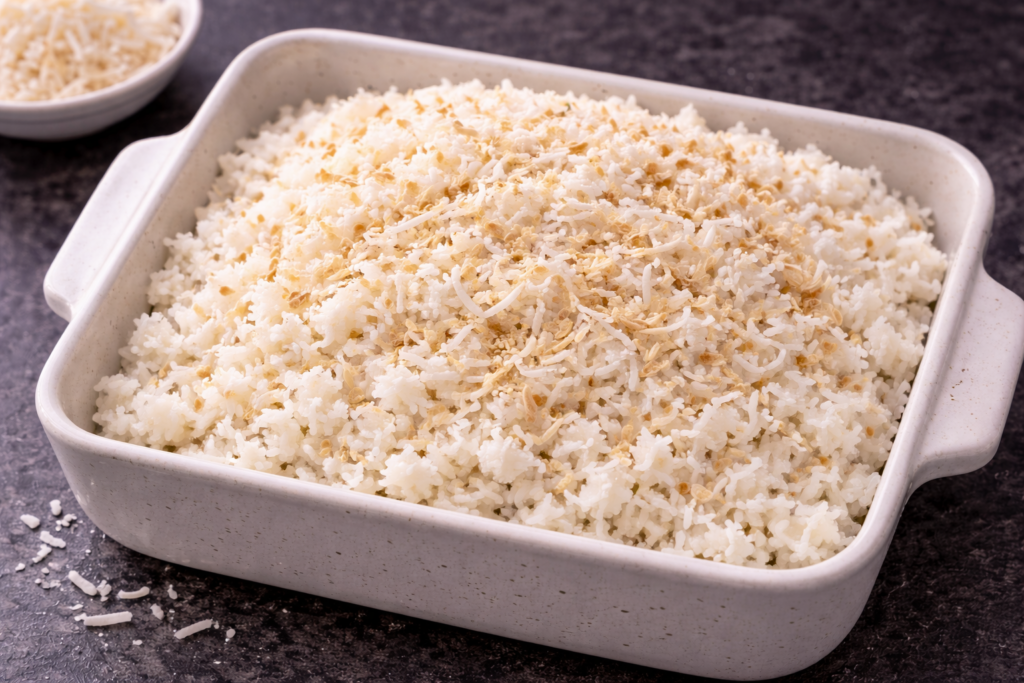
Perfect Oven-Baked Coconut Rice

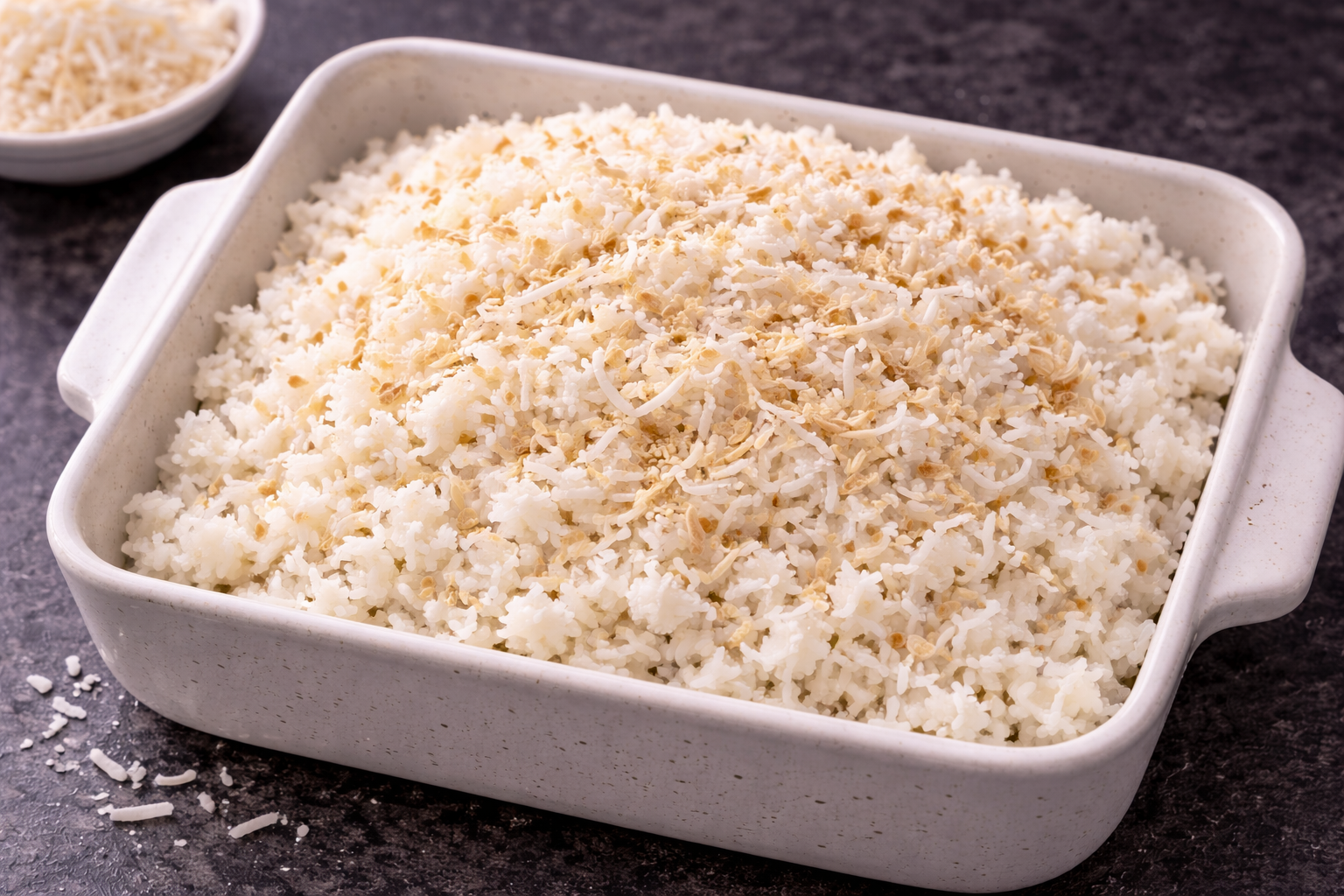
Tender jasmine rice baked in coconut milk until perfectly fluffy and fragrant. This simple oven method creates consistently perfect coconut rice without the need to babysit a pot on the stove.

Perfect Oven-Baked Coconut Rice

Baking versus stovetop.

Coconut rice is one of those deceptively simple dishes that can quietly make an entire meal better. When it’s done right, the grains are tender and fragrant, lightly sweet from the coconut milk, and fluffy enough to soak up whatever flavors surround it.

Most recipes cook coconut rice on the stovetop like traditional rice, but I’ve found that baking it produces a more reliable and consistent result. The oven provides steady, even heat, allowing the rice to absorb the coconut milk and water gradually without scorching the bottom or creating pockets of uneven texture. The result is rice that cooks gently and evenly—soft, aromatic, and perfectly separated.

Why rinsing and soaking matters.

Jasmine rice naturally carries a layer of starch that clings to the grains. That starch is what gives some rice dishes their stickiness, but with coconut rice it can quickly turn the dish heavy or clumpy. Rinsing the rice until the water runs nearly clear removes that excess starch and keeps the finished rice light and fluffy. I also like to soak the rice for about an hour before baking. That extra step allows the grains to hydrate evenly before they ever hit the heat, which helps them cook more uniformly in the oven. It’s a small bit of patience that pays off in texture.

Infusing the coconut flavor.

Rather than pouring the coconut milk mixrture over the rice cold, the liquid is warmed first. Bringing the coconut milk, water, and coconut palm sugar together in a saucepan allows the sugar to dissolve completely and ensures the flavor distributes evenly before it ever reaches the rice. Starting with warm liquid also helps the rice begin cooking immediately once it goes into the oven, rather than forcing the oven to spend extra time bringing the liquid up to temperature.

The coconut palm sugar adds just a hint of sweetness—enough to highlight the coconut without pushing the dish into dessert territory. Paired with a touch of salt, it creates the gentle balance coconut rice is known for: lightly sweet, lightly savory, and deeply aromatic. From there, the rice simply absorbs everything as it bakes.

A rice that adapts.

One of the things I love most about coconut rice is how easily it adapts to different cuisines. The base recipe stays beautifully simple, but it welcomes additional flavors depending on what you’re serving alongside it. Sometimes that means lime and cilantro for a brighter finish. Other times it might be ginger, lemongrass, pandan, or kaffir lime leaves to lean into Southeast Asian flavors. The coconut base is flexible enough to support all of those directions without losing its character. At its core, though, the goal is always the same: fluffy jasmine rice infused with coconut, balanced with just enough sweetness and salt to make every bite feel intentional.

What I serve with it.

You’ll find the full method outlined below, from rinsing and soaking the rice to warming the coconut base and letting the oven do the rest. The process is simple and largely hands-off—precision and patience matter more than complexity. If you make it, let me know how it turns out—and what you decided to pair it with.

Perfect Oven-Baked Coconut Rice

Tender jasmine rice baked in coconut milk until perfectly fluffy and fragrant. This simple oven method creates consistently perfect coconut rice without the need to babysit a pot on the stove.
Print Pin
Category: SAVOR
Cuisine: Asian, Thai
Course: Side Dish
Keyword: Coconut Milk, Jasmine Rice
Prep: 1 hour 15 minutes
Cook: 40 minutes
Resting Time: 15 minutes
Total: 2 hours 10 minutes
Servings: 4 servings
Calories: 546kcal
Author: TastyDaddy

Ingredients

Instructions

Rinsing & Soaking Rice

  • Using a 4-in-1 strainer, rinse 2 cups jasmine rice until nearly clear. This step removes excess starch that typically coats the grains, which would make the rice on the sticky/clumpy side when cooked with the coconut milk.
  • Once rinsed, soak rice for 1 hour.

Preparing Rice

  • Once the rice has soaked for an hour, strain; let continue to drain for 5 minutes while you move onto the next step.
  • Preheat oven to 400℉.
  • While the rice is straining and the oven is preheating, add 14 oz coconut milk, 8 oz water, and 4 tsp coconut sugar to a sauce pan and bring to a simmer, stirring to make sure the coconut sugar is dissolved.
  • OPTIONAL SPICE & FLAVOR ADDITIONS: This coconut rice recipe goes well with a diverse variety of cuisines and can also be tailored to fit the cuisine you are planning to pair with it by adding additional spices or ingredients—from ginger, garlic, cumin, curry, lemongrass, cilantro, pandam, or kaffir lime leaves. Some variations have you add ingredients in this step, while others have you add them at the end. See Recipe Notes below.
  • Pour drained rice into an 8" square baking dish and add warmed liquid mixture over the top, using a wooden spoon or spatula for a quick mix, and cover with foil.

Cooking Rice

  • Place pan in 400 ℉ preheated oven and cook undisturbed for 40 minutes.

Rest Time

  • After 40 minutes, remove from oven and let rest on trivet on counter for an additional 15 minutes undisturbed. DO NOT lift foil until the 15-minute rest time has passed.
  • Remove foil and fluff rice with wooden spoon or spatula.
  • OPTIONAL SPICE & FLAVOR ADDITIONS: Some variations in the Recipe Notes below have you add additional ingredients here.
  • Serve and enjoy.

Notes

  • Coconut Lime Rice: stir in the juice and zest of one lime once rice is fully cooked and fluffed. Pairs well with the following cuisines:
    • Southeast Asian (Thai, Malaysian)
    • Polynesian (Hawai'ian)
    • Carribbean (Jamaican Jerk)
    • Mexican
  • Cilantro Lime Coconut Rice: stir in the juice and zest of one lime and ½ cup loosely-packed cilantro once rice is fully cooked and fluffed. Pairs well with the following cuisines:
    • Thai
    • Carribbean (Jamaican Jerk)
    • Mexican
  • Thai Coconut Rice: season the coconut milk mixture with ⅛ tsp turmeric, ½ tsp garlic powder, ½ tsp onion powder, 1 tsp ground ginger. Before covering with foil, add two Pandam leaves (tied in a knot) -OR- 2-3 kaffir lime leaves submerged in the liquid. I've also substituted the Pandam or kaffir leaves with 1 tbsp of lemongrass paste because I had it on hand, and it worked beautifully. Pairs well with the following cuisines:
    • Southeast Asian (Thai, Malaysian, Indian)
    • North Asian (Korean)
    • Carribbean
  • Coconut Ginger Rice: season the coconut milk mixture with 2 tsp ground ginger (or ginger paste). Pairs well with the following cuisines:
    • Southeast Asian (Thai, Malaysian, Indian)
    • North Asian (Korean)
    • Carribbean
    • Chifa (aka Chinese-Peruvian Fusion)

Nutrition

Calories: 546kcal | Carbohydrates: 80g | Protein: 9g | Fat: 22g | Saturated Fat: 19g | Polyunsaturated Fat: 0.4g | Monounsaturated Fat: 1g | Sodium: 319mg | Potassium: 325mg | Fiber: 1g | Sugar: 3g | Vitamin C: 1mg | Calcium: 46mg | Iron: 4mg

Lomo Saltado

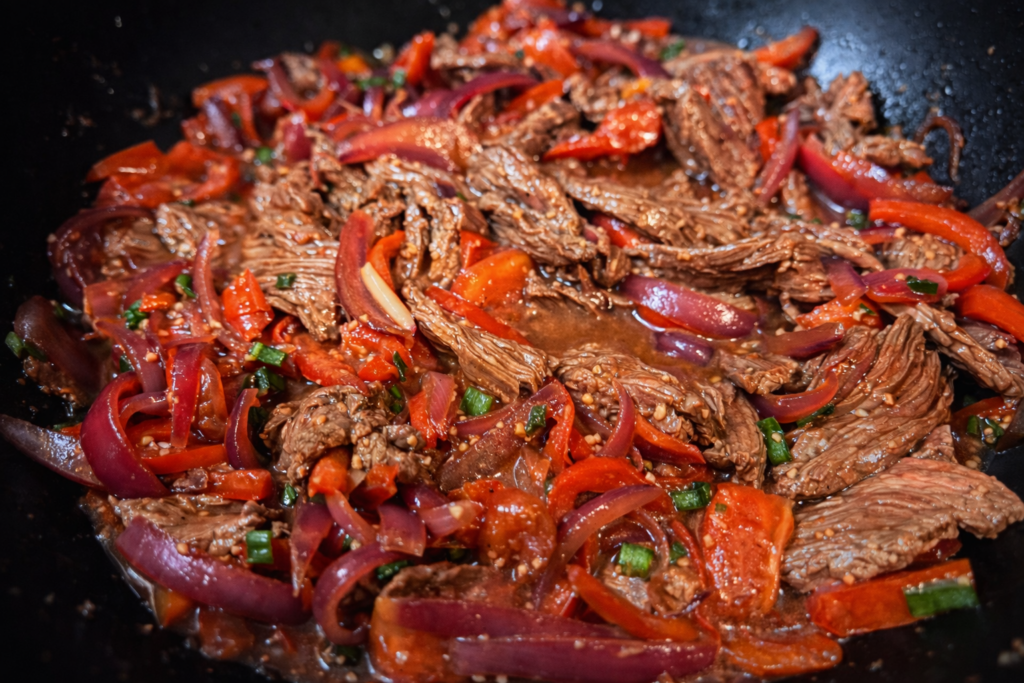
Flash-seared beef meets blistered vegetables, ají amarillo, and a ginger-laced soy reduction in this bold Peruvian staple. Served with crisp fries and rice, it’s a study in contrast—smoky wok heat, bright spice, and layered savory flavor.

Lomo Saltado

Wok this way.

Lomo Saltado is one of those dishes that perfectly captures what makes Peruvian cuisine so exciting. It’s bold, fast, and deeply satisfying—tender strips of beef seared over high heat and tossed with onions, tomatoes, and a savory sauce that comes together in minutes.

At its heart, the dish reflects the Chinese influence on Peruvian cooking—what’s known as Chifa—where wok techniques meet local ingredients and flavors. This version stays true to that spirit while leaning a little more intentionally into the aromatics and balance that make the stir-fry so vibrant.

Honoring the Chifa roots.

What makes Lomo Saltado unique isn’t just the ingredients—it’s the technique. The dish emerged from Chinese immigrant communities in Peru who adapted familiar stir-fry methods to the ingredients available to them, creating something entirely new in the process. Soy sauce, garlic, and high-heat cooking bring unmistakable Chinese influence, while tomatoes and aji peppers ground the dish firmly in Peru. That fusion is the entire identity of Lomo Saltado. It isn’t meant to feel purely one thing or the other—it’s meant to live comfortably in the middle.

For me, the goal is to preserve that balance while sharpening the flavors just enough to let each component stand on its own.

Building flavor inside the pan.

Because this dish cooks quickly, every ingredient needs to pull its weight. Instead of relying only on soy sauce and vinegar to carry the flavor, I like to build a little more depth into the stir-fry itself. That starts with a few small additions:

    • aji amarillo paste
    • a touch of freshly grated ginger
    • red wine vinegar or rice wine vinegar

Fresh aji amarillo peppers can be difficult to find where I live, so I typically use yellow bell peppers for their color and gentle sweetness, then bring the true Peruvian flavor back into the dish with aji amarillo paste. The paste adds that distinctive fruity heat without overwhelming the stir-fry.

The grated ginger gives the dish a subtle aromatic lift that nods to its chifa roots, while the vinegar adds brightness and keeps the sauce from feeling too heavy. I usually reach for red wine vinegar or rice wine vinegar, both of which complement the soy sauce beautifully and help round out the pan. None of it overwhelms the dish. It simply builds layers.

The magic of the stir-fry.

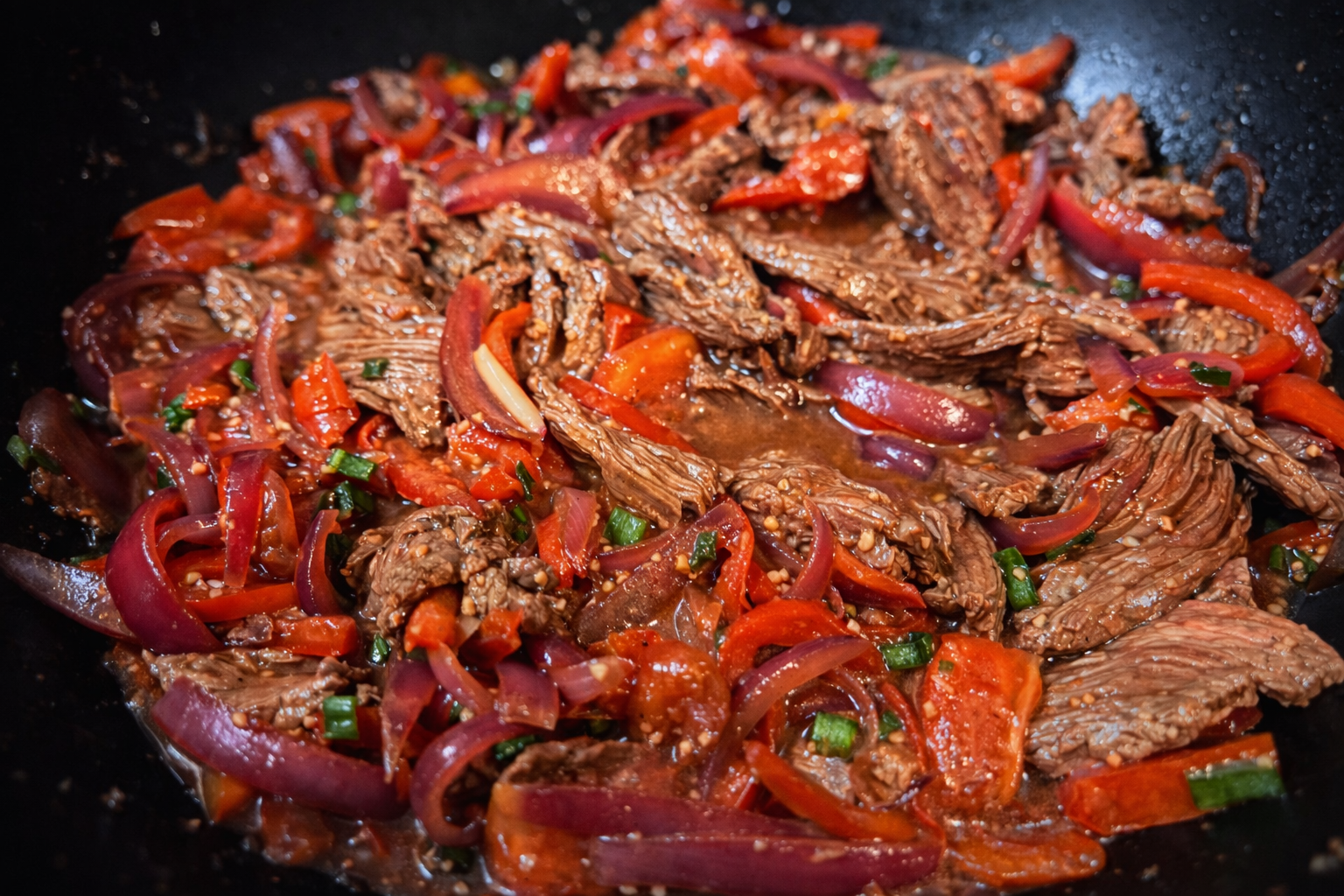
Lomo Saltado works because of contrast—high heat against fresh ingredients, savory depth balanced by brightness. The beef caramelizes quickly, the onions soften while still keeping their bite, and the tomatoes release just enough juice to bring everything together in a glossy, flavorful sauce.

When it’s done right, the dish feels vibrant and alive—rich without being heavy, bold without being complicated. It’s the kind of stir-fry that proves how powerful a handful of well-chosen ingredients can be when they meet a hot pan and a little intention.

What I typically serve with it.

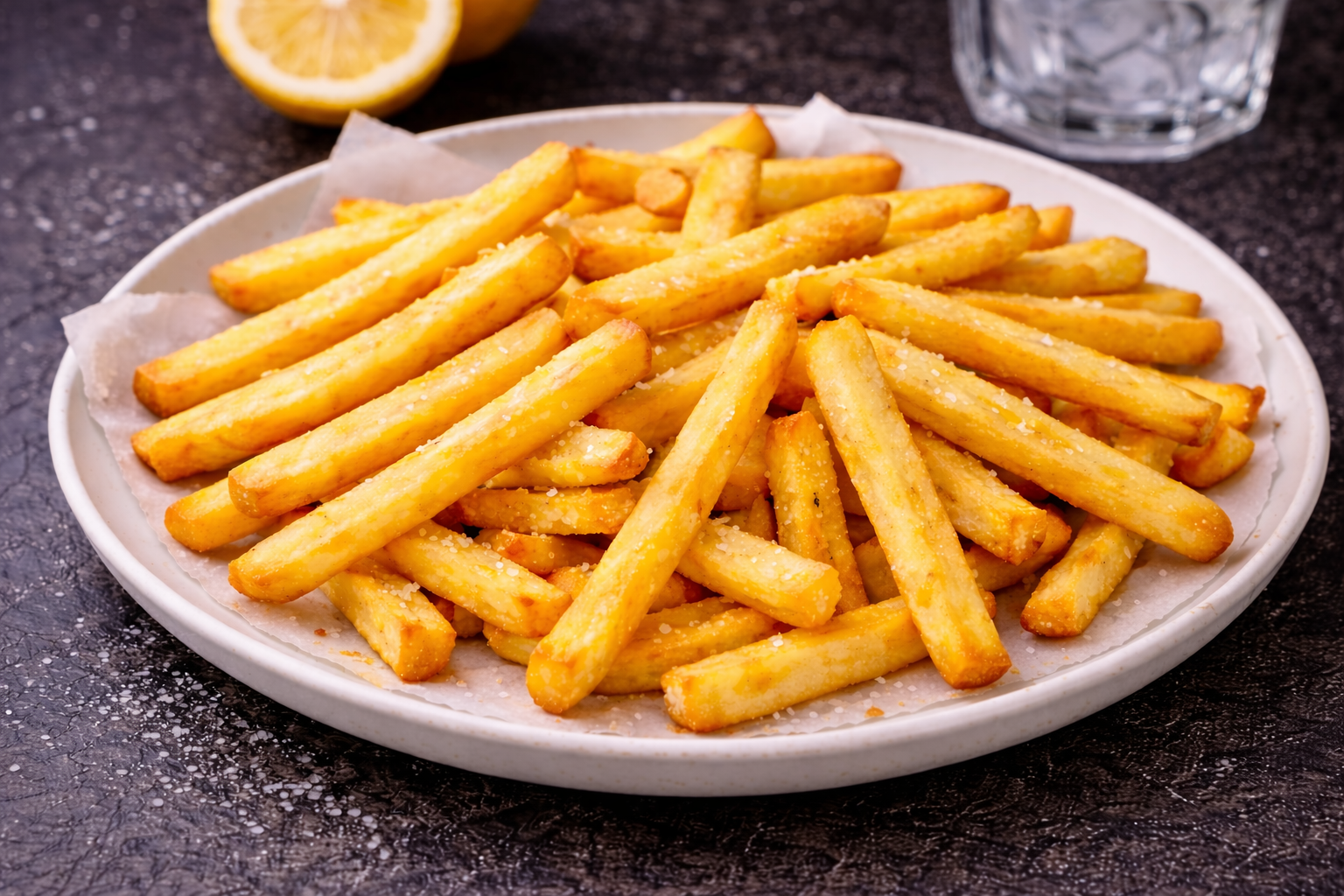
Traditionally, Lomo Saltado is served with BOTH white rice and fries (some recipes even suggest stirring the fries into the sauce before serving, but I am personally not a fan of this method). I still have the fries part of the traditional recipe linked below, but I have a coconut recipe linked, which is the side I now typically pair with it (versus the white rice). The sweetness of the coconut balances the saltiness of the fries and the tangy-umami flavors of the sauce. I also add a bit of ginger into my coconut rice to complement the flavor of the beef stir-fry nicely.

Want a more in-depth glance at the full meal preparation of Lomo Saltado with both sides? Check out my post below, which leads you step-by-step through my prep and cooking process so that everything is timed perfectly:

You’ll find the full method outlined below, from searing the beef to bringing the stir-fry together in the pan. The process moves quickly—high heat and timing matter more than complexity. If you make it, let me know how it turns out—and what you paired it with.

Lomo Saltado

Flash-seared beef meets blistered vegetables, ají amarillo, and a ginger-laced soy reduction in this bold Peruvian staple. Served with crisp fries and rice, it’s a study in contrast—smoky wok heat, bright spice, and layered savory flavor.
Print Pin
Category: FEAST
Cuisine: Peruvian
Course: Main Course
Keyword: Ají Amarillo, Beef, Chifa, Ginger, Red Onion, Stir Fry, Tomato
Prep: 20 minutes
Cook: 15 minutes
Total: 30 minutes
Servings: 4 servings
Calories: 335kcal
Author: TastyDaddy

Ingredients

Marinade

Sauce

Stir Fry

  • 1 lb steak (sliced medium thin)
  • 1 whole red onion (sliced in wedges)
  • 4 tsp garlic (minced)
  • 3 whole roma tomatoes (sliced in wedges)
  • 1 whole Ají amarillo pepper (sliced)
  • SUBSTITUTION: Fresh Ají amarillo peppers aren't easy to find, so if you can't find one in your area, feel free to substitute a small yellow or orange bell pepper.
  • 5 stalks green onions (ends trimmed, cut into 1" pieces)
  • ¼ cup cilantro (chopped)
  • 2-3 tbsp vegetable oil (or canola oil)

Garnish

Instructions

Slicing the Steak

  • Using a butcher's block and a Santoku knife, slice your meat into medium thin slices—thin enough that they won't take a long time to cook, but thick enough so they won't overcook when seared.
  • TIP: As with any meat, it slices better when a bit firmer. I place my steak in the freezer for about 12-15 minutes before slicing.
    PRO TIP: While the meat is chilling in the freezer, move to next steps and prepare the marinade and sauce.

Marinade

  • Combine 2 tbsp soy sauce, 1 tsp minced garlic, 1 tsp ginger paste.
  • TIP: If you selected a tougher cut of meat, add ¼ tsp baking soda to your marinade. Baking soda will help loosen the protein fibers, making it easier to chew. You can also use meat tenderizer.
  • Pour prepared marinade over sliced meat in a marinade dish and marinate in refrigerator at least 10 minutes.
  • TIP: If you used baking soda in your marinade due to a tougher cut of meat, increase your marinating time to 1 hour.

Sauce

  • In a 2-cup measuring glass (spouted), combine 3 tbsp soy sauce, 1 tbsp oyster sauce, 1 tbsp red wine (or rice wine) vinegar, 1 tbsp Ají amarillo paste, 1 tsp ginger paste, and 1 tsp cornstarch.
  • Blend with whisk and set aside.

Vegetable Prep

  • Wash all vegetables before cutting.
  • If you've already sliced your meat, wash your butcher's block (or cutting board) before prepping your vegetables.
  • You'll be using your Chef's knife to prep the vegetables.
  • Slice red onion into ½" wedges and set aside in a ramekin (or small bowl).
  • Cut top (stem side) off roma tomatoes and slice into ½" wedges. If your tomatoes are particularly seed-heavy, remove them an add them into your sauce mixture. Set tomato wedges aside in ramekin (or small bowl).
  • Slice Ají amarillo pepper (or bell pepper, if substituting) and set aside in ramekin.
  • Trim white ends off 7 stalks of green onions.
    Slice 5 stalks into 1" pieces, setting aside in ramekin.
    Take remaining 2 stalks and coarsely chop, setting aside in separate ramekin for garnish later.
  • PRO TIP: If you leave at least 1½-2" of green stalk above the white root end, you can wrap a rubber band loosely around the bunch to hold together and add to a shallow dish of water. The onion stalks will regenerate after a few days and you can plant in a small pot to put in a windowsill to always have fresh green onions on hand.
  • Remove cilantro leaves from stems (discard the stems) and coarsely chop leaves, setting aside about ¼ cup in one ramekin and about 2 tbsp in an additional ramekin for garnish later.

Cooking the Stir Fry

  • Remove marinated sliced beef from fridge and strain marinade from meat; this will prevent excessive splatter while searing
  • Add about 1 tbsp of vegetable (or canola) oil to wok over high heat until it starts to shimmer.
  • Sear the meat in batches for about 2 minutes, flipping as needed to ensure an even cook. Remove from heat and add to mixing bowl or plate (I opt for a bowl because adding the meat in batches means the top layer will hold the heat in for the layers below it.
  • TIP: I leave my meat pretty pink in the middle for two reasons: 1) The meat will continue to cook a bit more as it rests in the bowl or plate; 2) The meat is added back to the wok in the final steps, and adding it to a bubbling sauce will cook it slightly more. You don't want to overcook your meat and make it tough.
  • Once all meat is seared, drain excess oil and juices from wok. Add 1 tbsp of fresh oil to wok and bring back to med-high heat until it starts to shimmer.
  • Add the ramekin of onions and sauté for 1 minute.
  • Add in 4 tsp minced garlic and sauté for another minute.
  • Add in ramekins of tomatoes, cilantro, and green onions and cook for another 2 minutes or until tomatoes are slightly tender but still have their shape.
  • Add sauce to pan and bring to a low simmer to thicken the sauce.
  • Turn off heat and add meat back into wok, mixing and thoroughly incorporating with other ingredients until sauce coats the meat.
  • Garnish with cilantro and green onions.

Nutrition

Calories: 335kcal | Carbohydrates: 7g | Protein: 27g | Fat: 23g | Saturated Fat: 8g | Polyunsaturated Fat: 5g | Monounsaturated Fat: 9g | Trans Fat: 0.04g | Cholesterol: 69mg | Sodium: 1764mg | Potassium: 466mg | Fiber: 1g | Sugar: 1g | Vitamin A: 324IU | Vitamin C: 7mg | Calcium: 39mg | Iron: 3mg