
Celery is rarely the reason you notice a dish—but it’s often the reason it works. It shows up early, cooks down quietly, and supports everything around it without asking for attention. Like onions, it’s foundational. The difference is that celery doesn’t bring sweetness or depth—it brings structure, freshness, and balance. If your food ever feels heavy, flat, or one-note, celery is often the missing piece.
Celery is mostly water, but what it contributes goes beyond that. It contains vitamin K, vitamin C, potassium, and small amounts of folate, along with antioxidant compounds like flavonoids. Like onions, nothing here is overwhelming on its own—but celery shows up often enough that it contributes steadily. What matters more is how it behaves. Celery has a clean, slightly bitter, vegetal profile with a subtle aromatic quality. It doesn’t dominate—it lifts. It keeps richer ingredients from feeling heavy and helps bridge flavors that would otherwise sit apart.
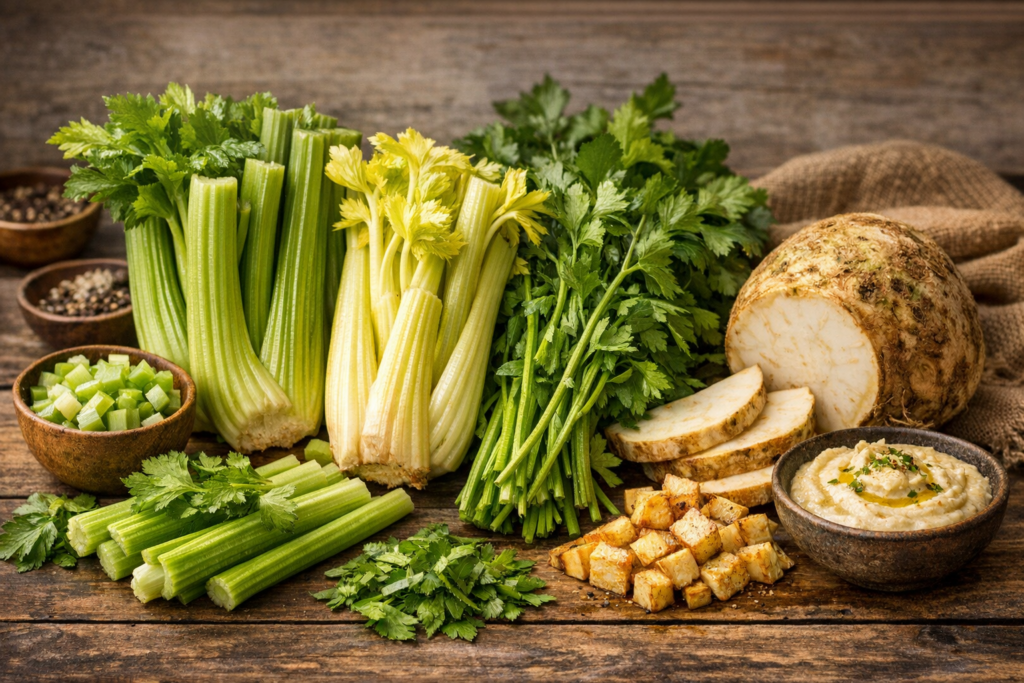
Most recipes assume standard celery, but there are a few variations worth understanding once you start paying attention to how it behaves.
Celery doesn’t build depth the way onions do. It builds balance. When it’s cooked gently, celery softens and settles into the background, contributing a subtle bitterness and a clean, aromatic note that shapes how the rest of the dish comes across. It acts more like a stabilizer than a driver—guiding the overall profile without calling attention to itself.
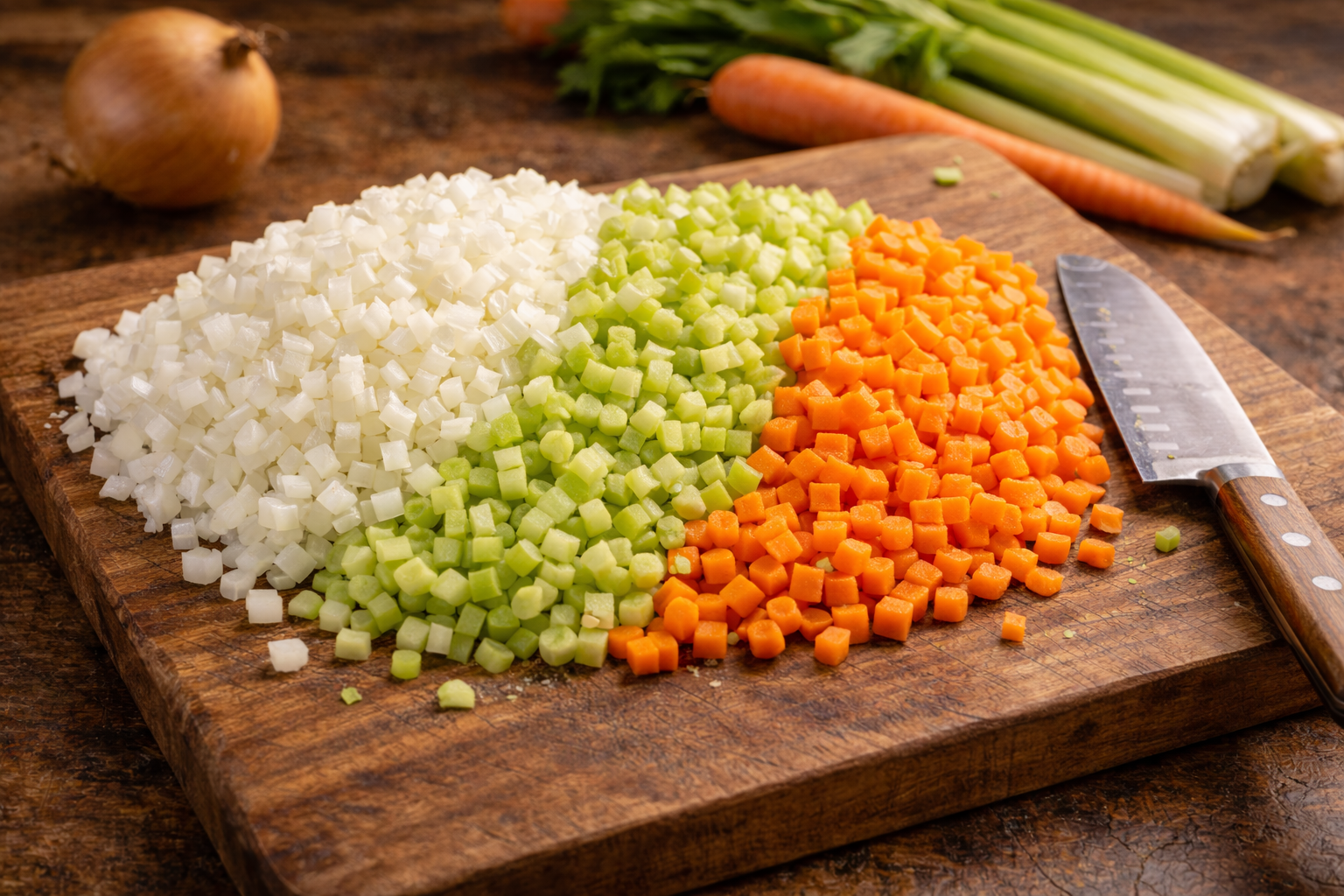
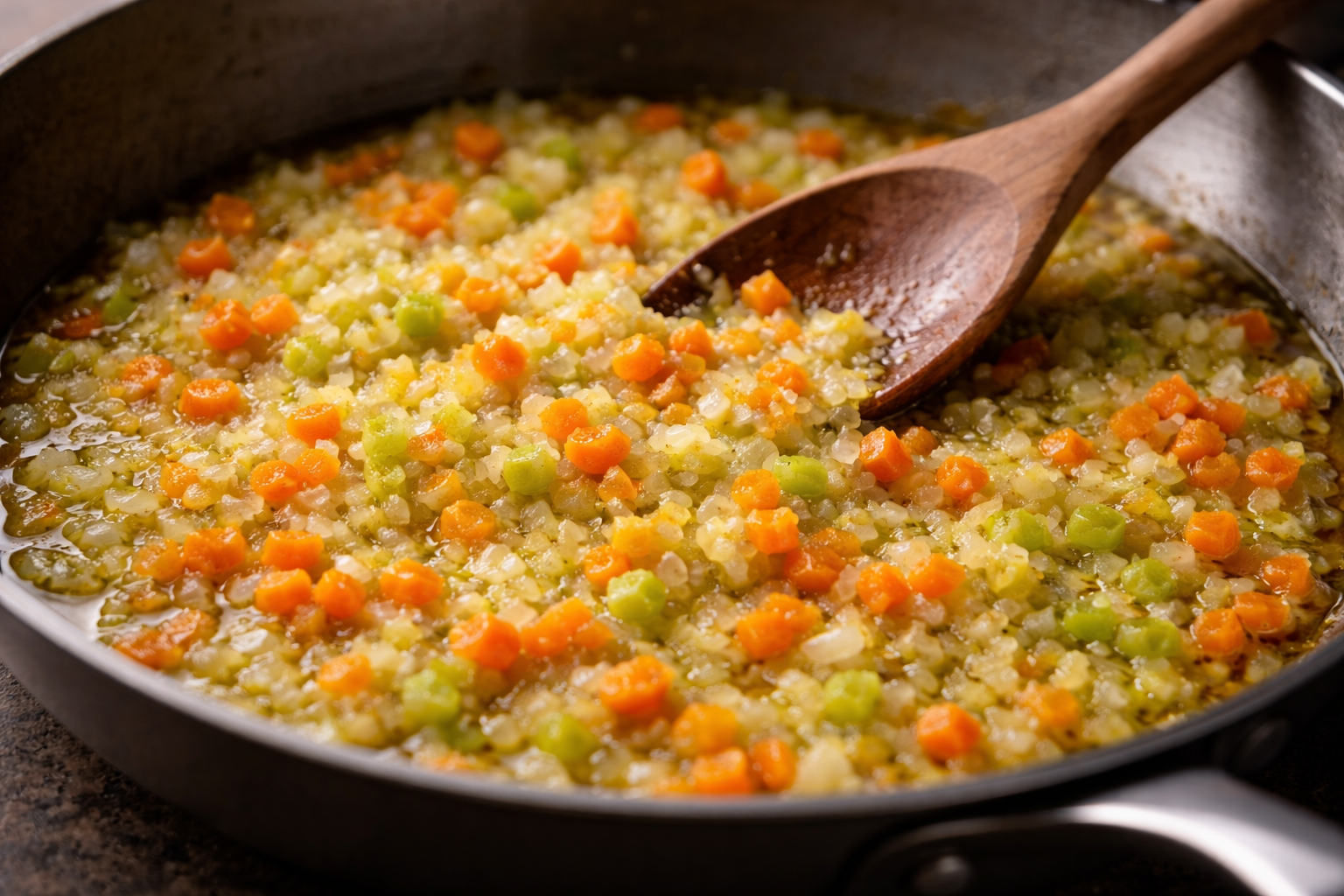
That role is most clearly defined in mirepoix, where celery sits alongside onions and carrots as part of a deliberate structure rather than an interchangeable mix. Each ingredient has a purpose, and celery’s is restraint. It keeps the base from drifting too far in any one direction, maintaining clarity and cohesion as the dish develops. Used this way, celery isn’t just present—it’s active, quietly controlling how everything else lands.
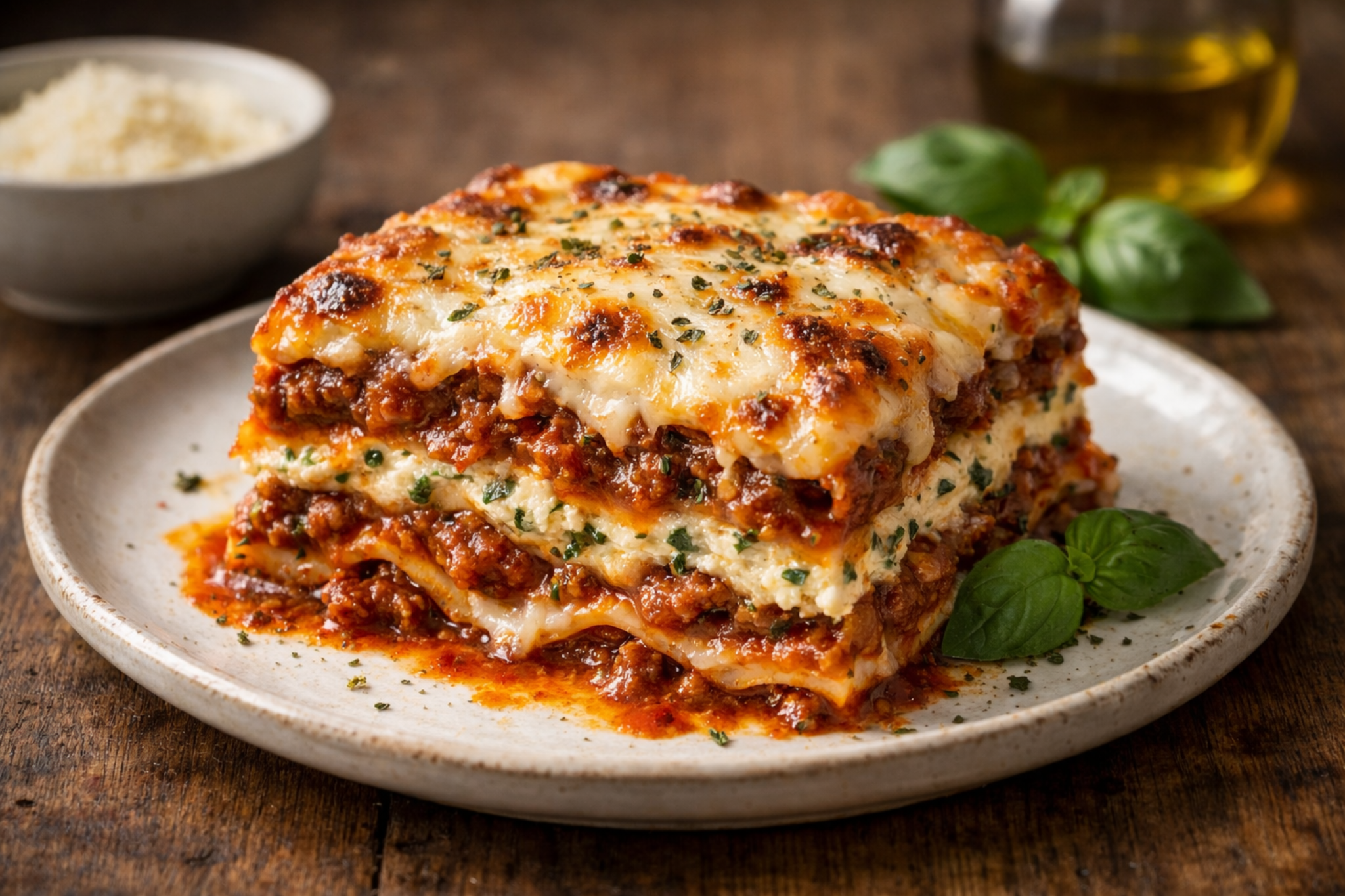
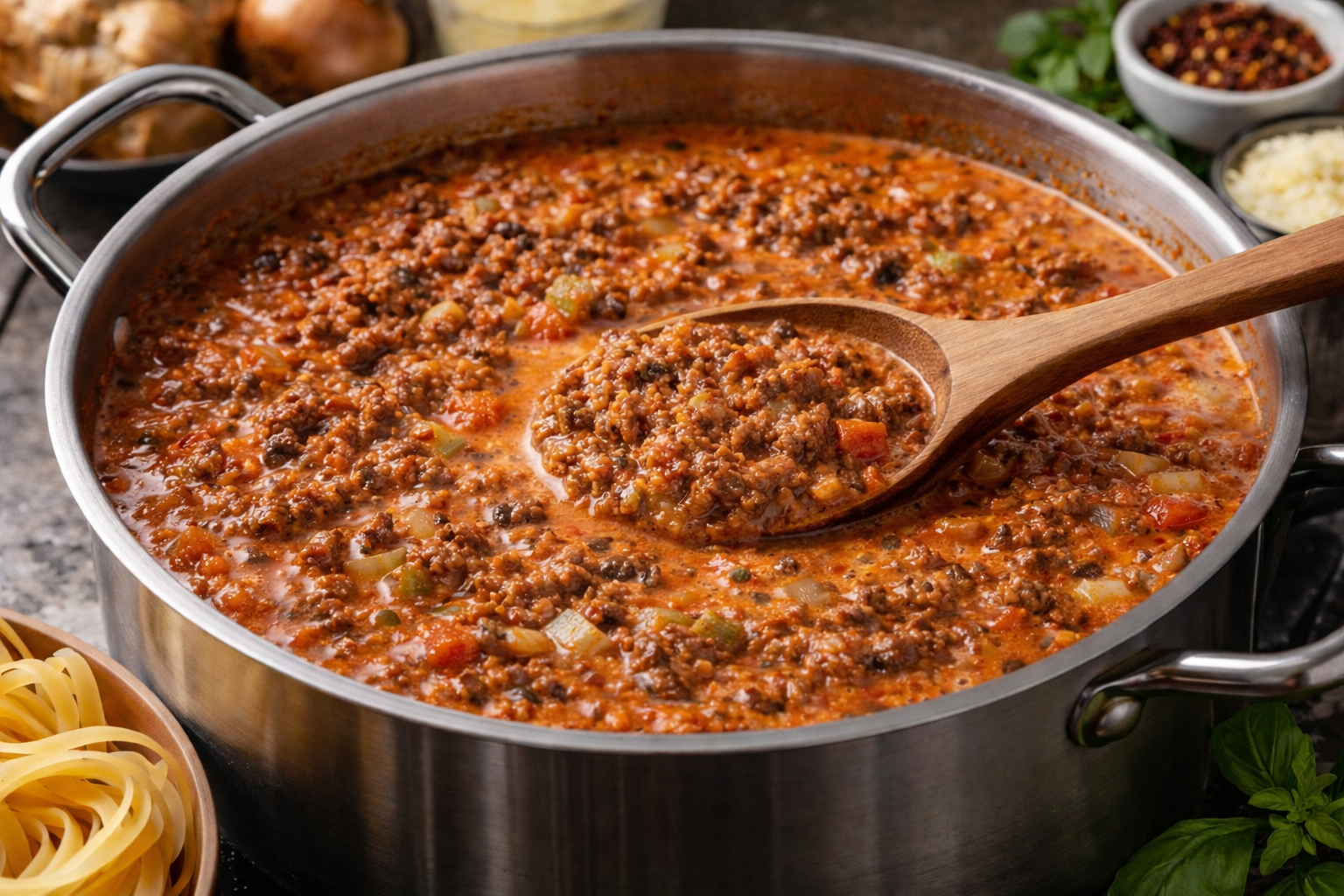
Almost every cuisine has its own way of working celery into a dish.
Different ingredients, different techniques—but the same idea: celery is there to keep everything in balance.
Celery’s high water content makes it light, but its fibrous structure can make it tough if not handled properly. Raw celery can be stringy and harder to chew or digest for some, especially the outer stalks. Cooking softens those fibers and makes it easier to integrate into a dish. Inner stalks tend to be more tender and better suited for raw use, while outer stalks benefit from longer cooking. Like onions, technique determines outcome.
Celery isn’t there to impress—it’s there to stabilize. It gives you a way to control direction without adding weight. When a dish starts leaning too far—too sweet, too rich, too soft—celery is one of the few ingredients that can pull it back without introducing something new or completely disruptive to the flavor. It doesn’t compete. It corrects.
That makes it one of the most useful tools you have when building flavor from the ground up. It lets you layer ingredients more aggressively because there’s something in place to keep them from collapsing into each other. It creates separation where things might otherwise blur, keeping a dish defined instead of muddled.
Used intentionally, celery also gives you flexibility. You can push richness further, lean into sweetness more confidently, or build longer, slower flavors without losing clarity along the way. It’s not just balancing what’s there—it’s giving you room to go further without losing control.