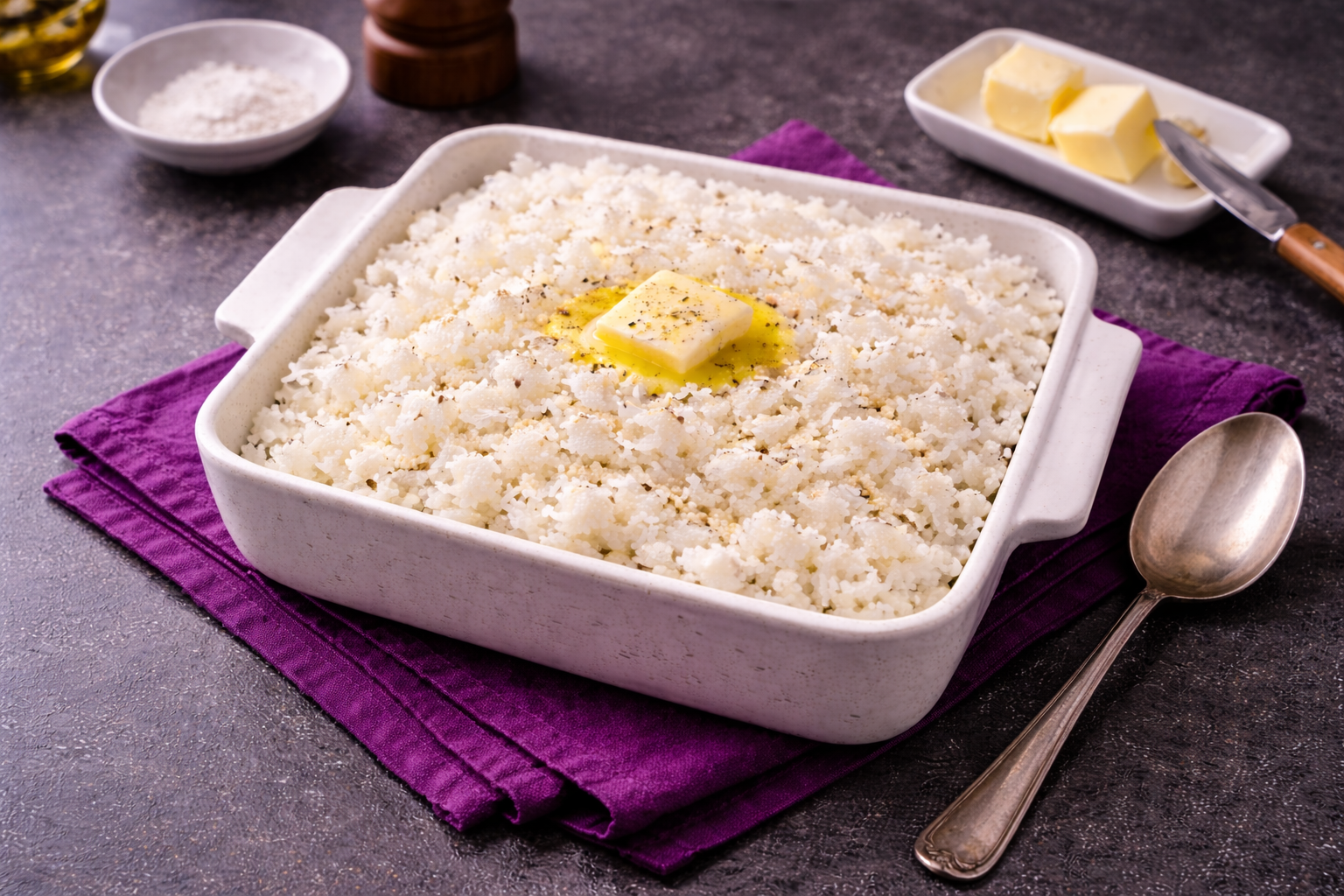
Perfect Oven-Baked White Rice

Light, fluffy white rice baked gently in the oven for perfectly cooked grains every time. This simple, reliable method removes the guesswork of stovetop rice and delivers consistent results with almost no effort.
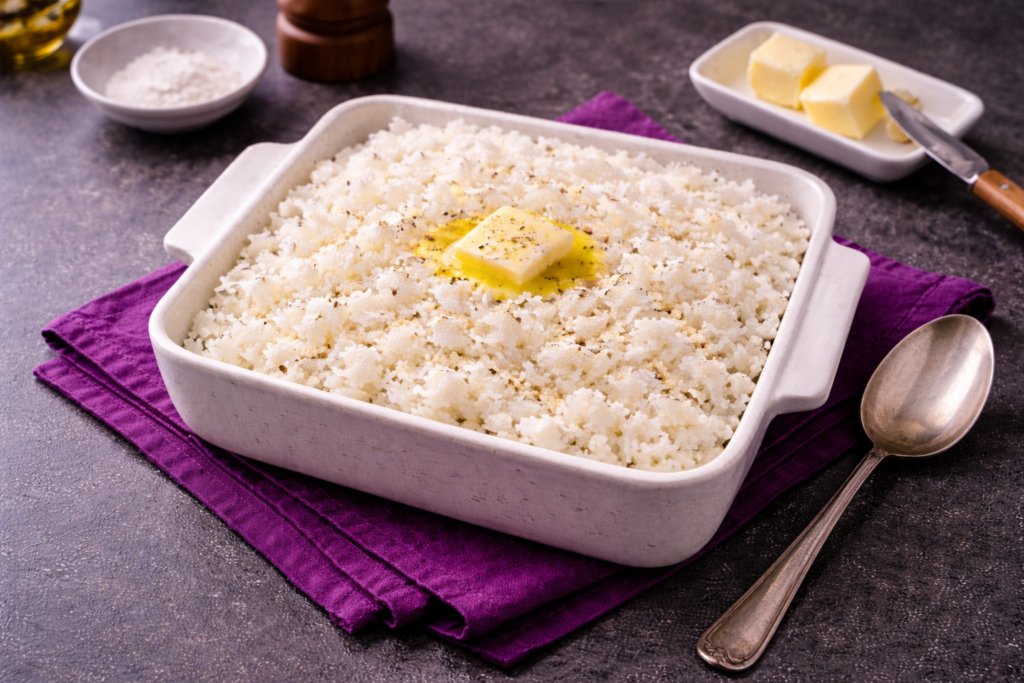
Perfect Oven-Baked White Rice

A simple side done right.

White rice might be one of the most widely served side dishes in the world. It appears alongside countless meals across cultures—not as the centerpiece of the plate, but as the quiet foundation that lets everything else shine.

When it’s cooked well, rice should be light, fluffy, and perfectly separated, ready to soak up sauces, gravies, and pan juices without turning heavy or sticky. Achieving that texture consistently doesn’t require complicated technique, but it does benefit from a few deliberate steps that focus on controlling starch, temperature, and even cooking.

Why rinsing the rice matters.

Long grain white rice naturally carries a layer of starch that coats the grains. That starch is what causes rice to clump together during cooking, which is ideal for certain dishes but not for a clean, fluffy side. Rinsing the rice until the water runs nearly clear removes that excess starch before cooking begins, allowing the grains to remain distinct rather than sticking together as they cook. Taking the extra minute to rinse the rice dramatically improves the finished texture and keeps the dish light instead of dense or gummy.

Starting with warm liquid.

Before the rice goes into the oven, the cooking liquid is warmed first. Bringing the water, butter, salt, and pepper to a gentle simmer melts the butter and ensures the seasoning dissolves evenly throughout the liquid. Starting with warm liquid also allows the rice to begin cooking immediately once it enters the oven, rather than forcing the oven to spend time bringing cold liquid up to temperature. This small adjustment helps the rice cook more evenly and consistently from the start.

Why the oven works so well.

Cooking rice in the oven creates steady, even heat around the pan, allowing the grains to absorb liquid gradually without scorching the bottom or cooking unevenly. Once the dish is covered and placed in the oven, the process becomes almost entirely hands-off.

After baking, the rice rests undisturbed before the foil is removed, allowing the remaining steam to gently finish cooking the grains. This short rest helps the rice settle into its final texture so it fluffs easily and remains tender without becoming sticky.

A side that adapts to almost anything.

One of the strengths of plain white rice is its flexibility. The base recipe is intentionally simple, allowing it to complement a wide range of cuisines and flavor profiles. The cooking liquid can be swapped for broth, spices can be added to match the dish it’s served with, and herbs or vegetables can be folded in at the end. Instead of competing with the main course, the rice acts as a balanced foundation that supports the rest of the meal and brings the plate together.

What I serve with it.

You’ll find the full method outlined below, from rinsing the rice to warming the cooking liquid and letting the oven handle the rest. The process is simple and largely hands-off—once everything is combined in the pan, steady heat and a short rest do most of the work. If you make it, let me know how it turns out—and what you decided to serve with it.

Perfect Oven-Baked White Rice

Light, fluffy white rice baked gently in the oven for perfectly cooked grains every time. This simple, reliable method removes the guesswork of stovetop rice and delivers consistent results with almost no effort.
Print Pin
Category: SAVOR
Cuisine: Southeast Asian
Course: Side Dish
Keyword: Baked, White Rice
Prep: 15 minutes
Cook: 40 minutes
Resting Time: 15 minutes
Total: 1 hour 10 minutes
Servings: 4 servings
Calories: 388kcal
Author: TastyDaddy

Ingredients

Instructions

Rinsing & Soaking Rice

  • Using a 4-in-1 strainer, rinse 2 cups long grain white rice until nearly clear. This step removes excess starch that typically coats the grains, which would make the rice on the sticky/clumpy side when cooked.

Preparing Rice

  • Let the rice drain for 5 minutes while you move onto the next step.
  • Preheat oven to 375℉.
  • While the rice is straining and the oven is preheating, add 3 cups water (or substitute with chicken or vegetable broth for a more flavorful rice), 2 tbsp butter, 1 tsp salt, and ½ tsp ground black pepper to a sauce pan and bring to a simmer, stirring to make sure the butter is melted and salt is dissolved.
  • OPTIONAL SPICE & FLAVOR ADDITIONS: Because this is a pretty flavorless side, this recipe goes well with a diverse variety of cuisines and can also be tailored to fit the cuisine you are planning to pair with it by adding additional spices—from garlic, onion powder, cumin, turmeric, sazon, cardamon, cilantro, tarragon, etc—or other ingredients. Spices can be added into the broth mixture at this step; if you are adding solid ingredients like vegetables, I recommend adding them as the last step.
  • Pour drained rice into an 8" square baking dish and add warmed liquid mixture over the top, using a wooden spoon or spatula for a quick mix, and cover with foil.

Cooking Rice

  • Place pan in 375 ℉ preheated oven and cook undisturbed for 40 minutes.

Rest Time

  • After 40 minutes, remove from oven and let rest on trivet on counter for an additional 15 minutes undisturbed. DO NOT lift foil until the 15-minute rest time has passed.
  • Remove foil and fluff rice with wooden spoon or spatula.
  • Serve and enjoy.

Nutrition

Calories: 388kcal | Carbohydrates: 74g | Protein: 7g | Fat: 6g | Saturated Fat: 4g | Polyunsaturated Fat: 0.4g | Monounsaturated Fat: 2g | Trans Fat: 0.2g | Cholesterol: 15mg | Sodium: 640mg | Potassium: 111mg | Fiber: 1g | Sugar: 0.1g | Vitamin A: 176IU | Calcium: 34mg | Iron: 1mg
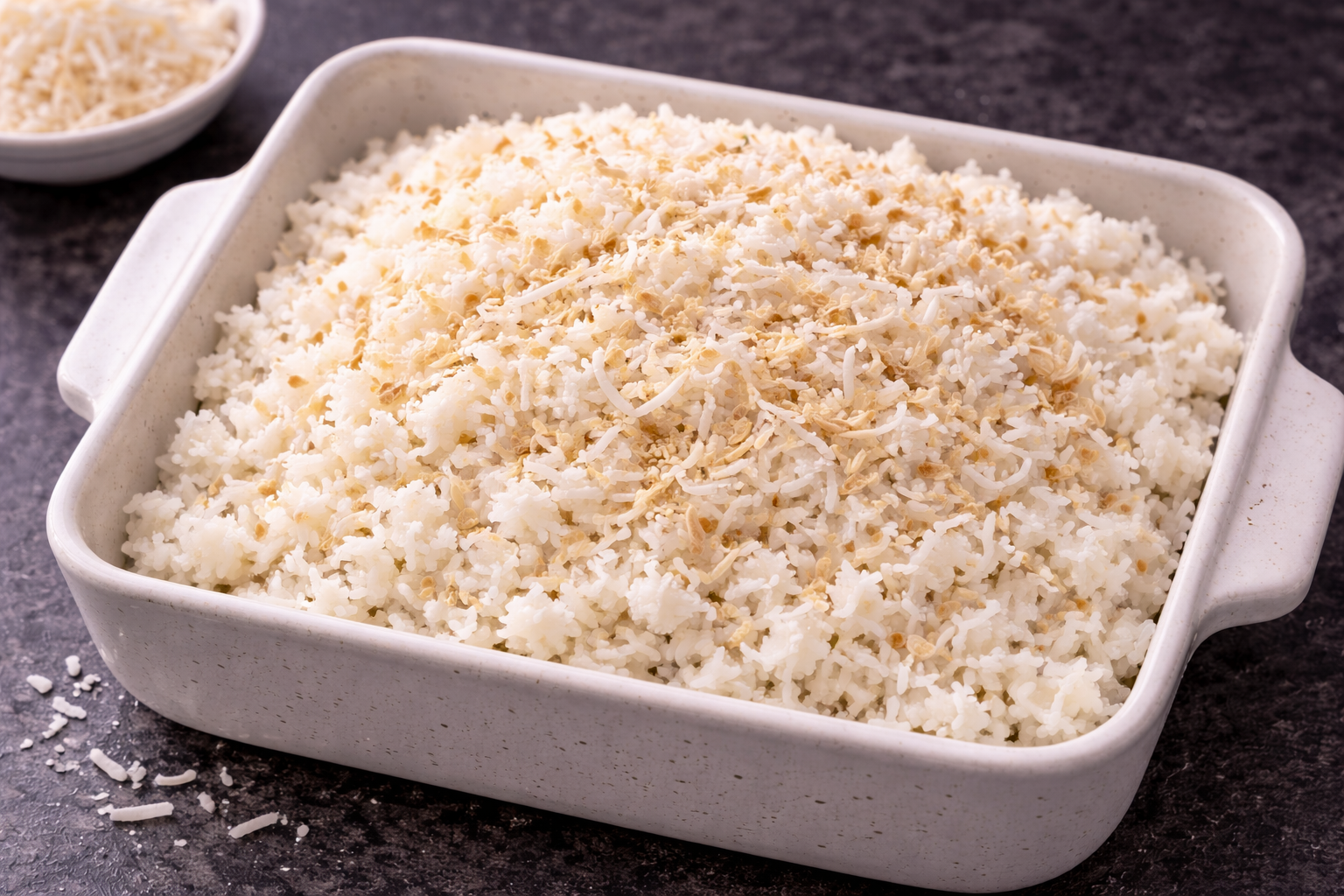
Perfect Oven-Baked Coconut Rice

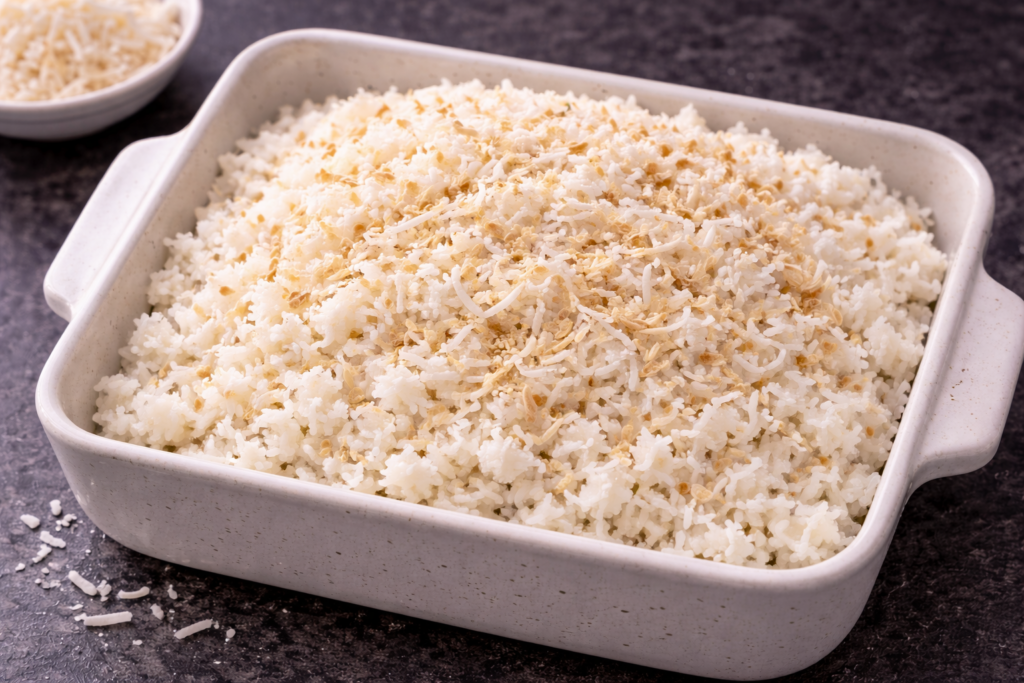
Tender jasmine rice baked in coconut milk until perfectly fluffy and fragrant. This simple oven method creates consistently perfect coconut rice without the need to babysit a pot on the stove.

Perfect Oven-Baked Coconut Rice

Baking versus stovetop.

Coconut rice is one of those deceptively simple dishes that can quietly make an entire meal better. When it’s done right, the grains are tender and fragrant, lightly sweet from the coconut milk, and fluffy enough to soak up whatever flavors surround it.

Most recipes cook coconut rice on the stovetop like traditional rice, but I’ve found that baking it produces a more reliable and consistent result. The oven provides steady, even heat, allowing the rice to absorb the coconut milk and water gradually without scorching the bottom or creating pockets of uneven texture. The result is rice that cooks gently and evenly—soft, aromatic, and perfectly separated.

Why rinsing and soaking matters.

Jasmine rice naturally carries a layer of starch that clings to the grains. That starch is what gives some rice dishes their stickiness, but with coconut rice it can quickly turn the dish heavy or clumpy. Rinsing the rice until the water runs nearly clear removes that excess starch and keeps the finished rice light and fluffy. I also like to soak the rice for about an hour before baking. That extra step allows the grains to hydrate evenly before they ever hit the heat, which helps them cook more uniformly in the oven. It’s a small bit of patience that pays off in texture.

Infusing the coconut flavor.

Rather than pouring the coconut milk mixrture over the rice cold, the liquid is warmed first. Bringing the coconut milk, water, and coconut palm sugar together in a saucepan allows the sugar to dissolve completely and ensures the flavor distributes evenly before it ever reaches the rice. Starting with warm liquid also helps the rice begin cooking immediately once it goes into the oven, rather than forcing the oven to spend extra time bringing the liquid up to temperature.

The coconut palm sugar adds just a hint of sweetness—enough to highlight the coconut without pushing the dish into dessert territory. Paired with a touch of salt, it creates the gentle balance coconut rice is known for: lightly sweet, lightly savory, and deeply aromatic. From there, the rice simply absorbs everything as it bakes.

A rice that adapts.

One of the things I love most about coconut rice is how easily it adapts to different cuisines. The base recipe stays beautifully simple, but it welcomes additional flavors depending on what you’re serving alongside it. Sometimes that means lime and cilantro for a brighter finish. Other times it might be ginger, lemongrass, pandan, or kaffir lime leaves to lean into Southeast Asian flavors. The coconut base is flexible enough to support all of those directions without losing its character. At its core, though, the goal is always the same: fluffy jasmine rice infused with coconut, balanced with just enough sweetness and salt to make every bite feel intentional.

What I serve with it.

You’ll find the full method outlined below, from rinsing and soaking the rice to warming the coconut base and letting the oven do the rest. The process is simple and largely hands-off—precision and patience matter more than complexity. If you make it, let me know how it turns out—and what you decided to pair it with.

Perfect Oven-Baked Coconut Rice

Tender jasmine rice baked in coconut milk until perfectly fluffy and fragrant. This simple oven method creates consistently perfect coconut rice without the need to babysit a pot on the stove.
Print Pin
Category: SAVOR
Cuisine: Asian, Thai
Course: Side Dish
Keyword: Coconut Milk, Jasmine Rice
Prep: 1 hour 15 minutes
Cook: 40 minutes
Resting Time: 15 minutes
Total: 2 hours 10 minutes
Servings: 4 servings
Calories: 546kcal
Author: TastyDaddy

Ingredients

Instructions

Rinsing & Soaking Rice

  • Using a 4-in-1 strainer, rinse 2 cups jasmine rice until nearly clear. This step removes excess starch that typically coats the grains, which would make the rice on the sticky/clumpy side when cooked with the coconut milk.
  • Once rinsed, soak rice for 1 hour.

Preparing Rice

  • Once the rice has soaked for an hour, strain; let continue to drain for 5 minutes while you move onto the next step.
  • Preheat oven to 400℉.
  • While the rice is straining and the oven is preheating, add 14 oz coconut milk, 8 oz water, and 4 tsp coconut sugar to a sauce pan and bring to a simmer, stirring to make sure the coconut sugar is dissolved.
  • OPTIONAL SPICE & FLAVOR ADDITIONS: This coconut rice recipe goes well with a diverse variety of cuisines and can also be tailored to fit the cuisine you are planning to pair with it by adding additional spices or ingredients—from ginger, garlic, cumin, curry, lemongrass, cilantro, pandam, or kaffir lime leaves. Some variations have you add ingredients in this step, while others have you add them at the end. See Recipe Notes below.
  • Pour drained rice into an 8" square baking dish and add warmed liquid mixture over the top, using a wooden spoon or spatula for a quick mix, and cover with foil.

Cooking Rice

  • Place pan in 400 ℉ preheated oven and cook undisturbed for 40 minutes.

Rest Time

  • After 40 minutes, remove from oven and let rest on trivet on counter for an additional 15 minutes undisturbed. DO NOT lift foil until the 15-minute rest time has passed.
  • Remove foil and fluff rice with wooden spoon or spatula.
  • OPTIONAL SPICE & FLAVOR ADDITIONS: Some variations in the Recipe Notes below have you add additional ingredients here.
  • Serve and enjoy.

Notes

  • Coconut Lime Rice: stir in the juice and zest of one lime once rice is fully cooked and fluffed. Pairs well with the following cuisines:
    • Southeast Asian (Thai, Malaysian)
    • Polynesian (Hawai'ian)
    • Carribbean (Jamaican Jerk)
    • Mexican
  • Cilantro Lime Coconut Rice: stir in the juice and zest of one lime and ½ cup loosely-packed cilantro once rice is fully cooked and fluffed. Pairs well with the following cuisines:
    • Thai
    • Carribbean (Jamaican Jerk)
    • Mexican
  • Thai Coconut Rice: season the coconut milk mixture with ⅛ tsp turmeric, ½ tsp garlic powder, ½ tsp onion powder, 1 tsp ground ginger. Before covering with foil, add two Pandam leaves (tied in a knot) -OR- 2-3 kaffir lime leaves submerged in the liquid. I've also substituted the Pandam or kaffir leaves with 1 tbsp of lemongrass paste because I had it on hand, and it worked beautifully. Pairs well with the following cuisines:
    • Southeast Asian (Thai, Malaysian, Indian)
    • North Asian (Korean)
    • Carribbean
  • Coconut Ginger Rice: season the coconut milk mixture with 2 tsp ground ginger (or ginger paste). Pairs well with the following cuisines:
    • Southeast Asian (Thai, Malaysian, Indian)
    • North Asian (Korean)
    • Carribbean
    • Chifa (aka Chinese-Peruvian Fusion)

Nutrition

Calories: 546kcal | Carbohydrates: 80g | Protein: 9g | Fat: 22g | Saturated Fat: 19g | Polyunsaturated Fat: 0.4g | Monounsaturated Fat: 1g | Sodium: 319mg | Potassium: 325mg | Fiber: 1g | Sugar: 3g | Vitamin C: 1mg | Calcium: 46mg | Iron: 4mg