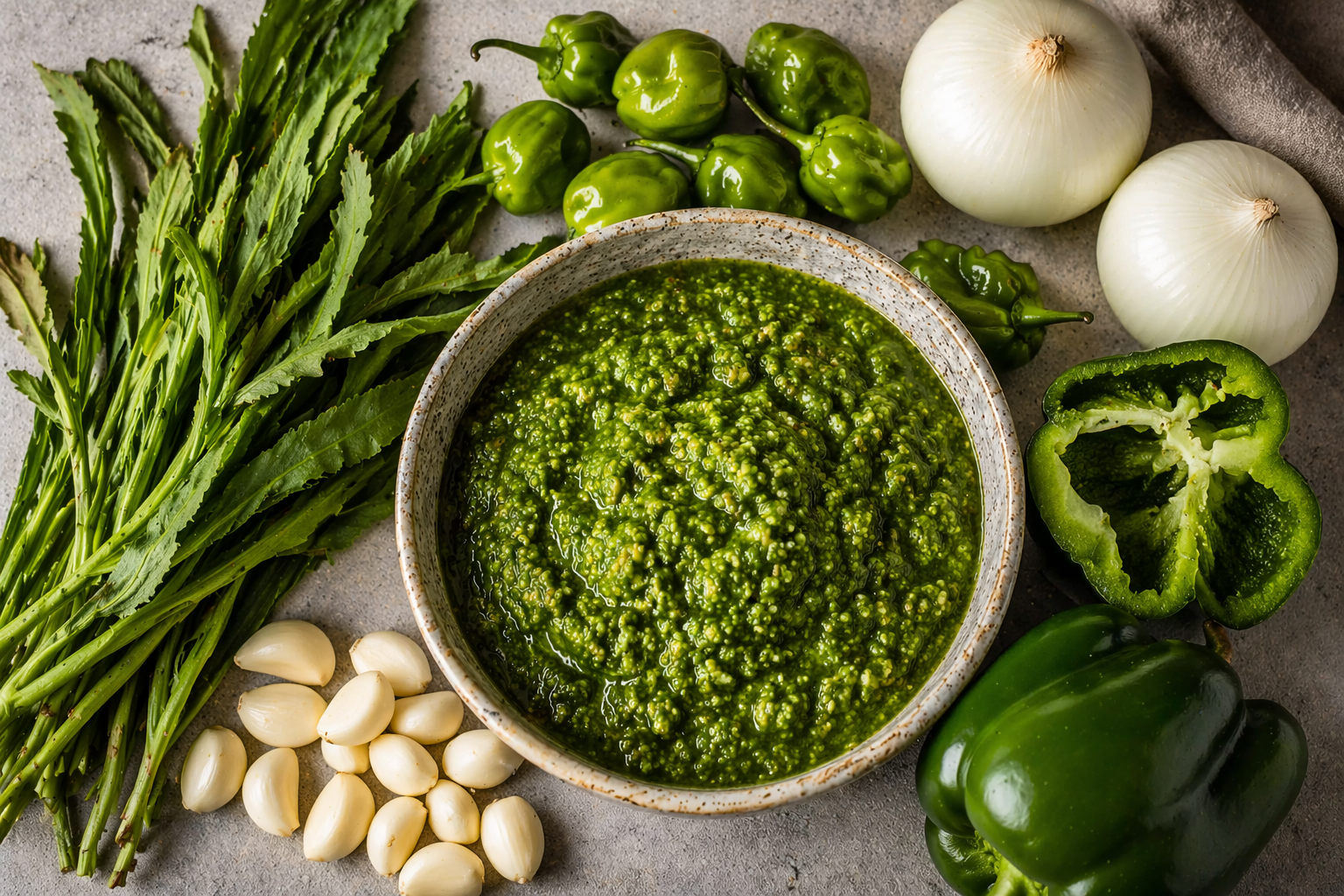
Sofrito

Sofrito is a foundational aromatic blend used across Latin and Caribbean cuisines, built from a combination of peppers, onion, garlic, and herbs that are either finely chopped or blended into a paste and used at the start of a dish. While the ingredients and technique vary by region, the purpose remains consistent: to establish flavor early, allowing it to develop and carry through everything that follows.

Some versions are cooked briefly in oil to deepen and round out their intensity, while others are added fresh, bringing brightness and immediacy to the dish. Whether subtle or assertive, sofrito shapes the identity of what’s being made, providing a base that ties ingredients together and defines the overall flavor from the very first step.
Sofrito

What It Is and Where It Comes From

Sofrito is a foundational aromatic base used across Spanish, Latin American, and Caribbean cuisines. At its core, it’s a blend of alliums, peppers, and often tomatoes or herbs, used to establish flavor at the very start of a dish. What ties them together isn’t a single ingredient or method, but their role: sofrito is the first layer of flavor, the point where a dish begins to take shape.

The name comes from the Spanish verb sofreír, meaning “to sauté,” and in its earliest form, that’s exactly what it was—a mixture built in the pan, slowly cooked to develop depth and sweetness. As the technique moved across regions, it evolved. Some versions remain rooted in that slow, cooked approach, while others incorporate fresh herbs or are prepared as blended pastes ahead of time.

How It Works

Sofrito works by establishing a base that everything else builds on. In some traditions, it’s made directly in the pan—onions, garlic, peppers, and sometimes tomatoes cooked gently in oil until softened, sweetened, and fully integrated. This slow transformation develops depth over time, creating a foundation that feels rounded and cohesive.

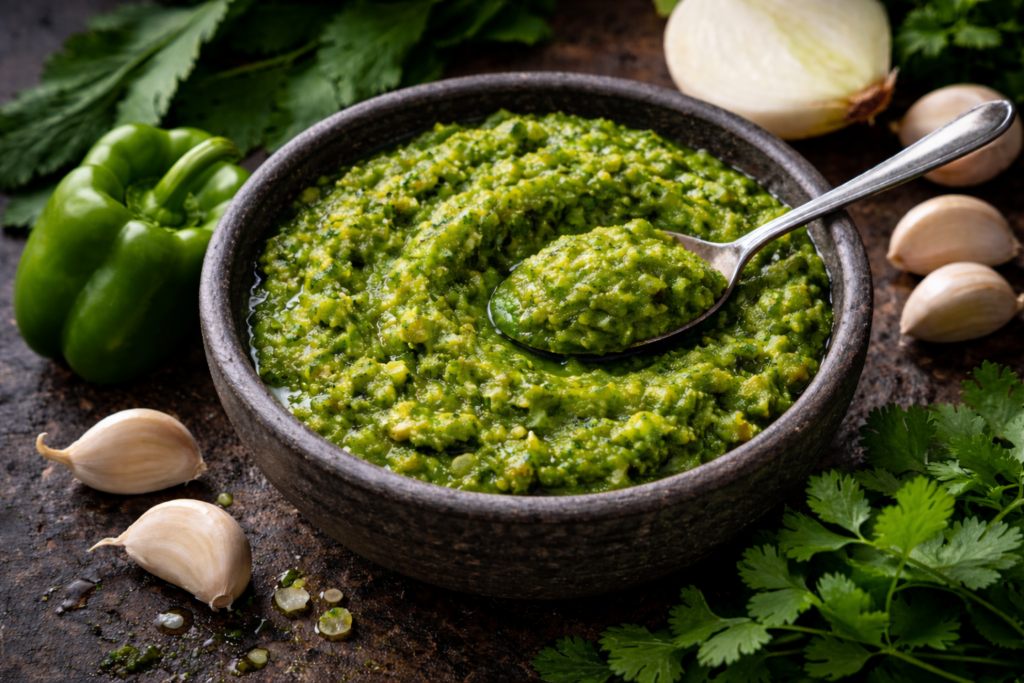
In others, the ingredients are blended beforehand into a coarse paste using a blender or food processor, often with fresh herbs. In this form, sofrito is prepared in advance and used as needed, shifting the process. Instead of building flavor gradually from separate components, the mixture is already unified before it ever hits the heat.

How It’s Used

Sofrito is typically added at the beginning of cooking, introduced to hot oil so it can bloom and release its aroma before other ingredients are added. Because it forms the foundation, it doesn’t sit in the background. In rice dishes, it defines how the grains absorb flavor from the start. In beans and stews, it provides continuity through longer cooking, anchoring the dish as liquid is added and reduced. In sauces, it sets the direction early, shaping how everything that follows develops. The amount used depends on the preparation, but it’s often added with intention rather than excess. A measured quantity establishes the base, and additional amounts can be layered in if the dish calls for it—reinforcing flavor without overwhelming it.

Variations

Sofrito shifts from region to region, reflecting local ingredients and cooking styles. Texture can range from finely minced to fully blended, depending on how it’s meant to integrate into the dish. The balance of ingredients—how much onion, how much pepper, whether herbs or tomatoes take the lead—changes the character, but not the purpose.

Some versions are cooked down with tomatoes and olive oil, leaning deeper and slightly sweeter. Others are greener and more aromatic, built with fresh herbs and milder peppers. In some kitchens, it’s always made to order in the pan; in others, it’s kept on hand as a prepared blend, ready to be used at a moment’s notice.

Recipes that Use Sofrito