Celery is defined by what it contributes without overwhelming the dish. Crisp and bright when raw, soft and integrated when cooked, it shifts easily between roles depending on how it’s used. Its subtle bitterness, high water content, and aromatic character give it a unique ability to add structure, freshness, and balance while remaining understated. Whether used as a base, a finishing element, or in more concentrated forms like leaves or seeds, celery brings clarity and control to the overall flavor.
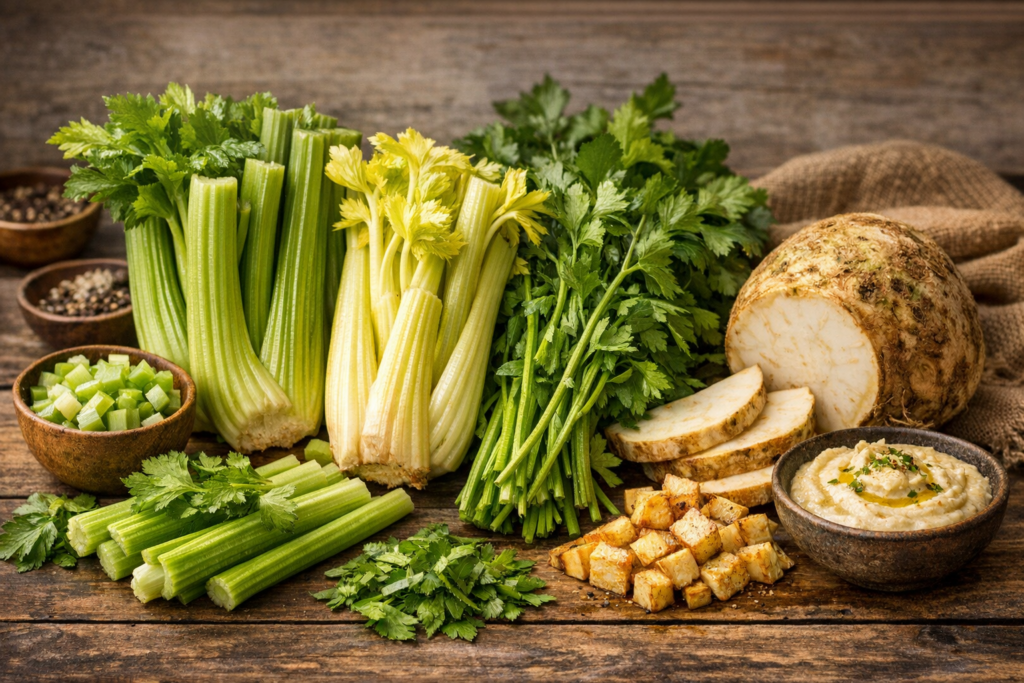
Celery
These Ribs Have Backbone
Celery is rarely the reason you notice a dish—but it’s often the reason it works. It shows up early, cooks down quietly, and supports everything around it without asking for attention. Like onions, it’s foundational. The difference is that celery doesn’t bring sweetness or depth—it brings structure, freshness, and balance. If your food ever feels heavy, flat, or one-note, celery is often the missing piece.
What Celery Actually Brings
Celery is mostly water, but what it contributes goes beyond that. It contains vitamin K, vitamin C, potassium, and small amounts of folate, along with antioxidant compounds like flavonoids. Like onions, nothing here is overwhelming on its own—but celery shows up often enough that it contributes steadily. What matters more is how it behaves. Celery has a clean, slightly bitter, vegetal profile with a subtle aromatic quality. It doesn’t dominate—it lifts. It keeps richer ingredients from feeling heavy and helps bridge flavors that would otherwise sit apart.
Types of Celery — And When to Use Them
Most recipes assume standard celery, but there are a few variations worth understanding once you start paying attention to how it behaves.
- Pascal (Standard) Celery: This is what you’ll find in most grocery stores. Crisp, high in water, and mild with a slight bitterness, it works across the board—raw, cooked, or as part of a base. If a recipe just says “celery,” this is what it means.
- Golden Celery: Paler, more tender, and less fibrous, golden celery has a milder, slightly sweeter flavor. It’s better suited for raw use or lighter cooking where you want the freshness without as much bite or stringiness.
- Chinese (Leaf) Celery: Thinner, more aromatic, and much more assertive. This is celery that doesn’t sit quietly in the background. It’s used more like an herb in stir-fries, soups, and finishing applications where you want that flavor to stand out.
- Celeriac (Celery Root): Same plant, different role. The root is dense, earthy, and more substantial, with a deeper, nuttier version of celery’s flavor. It’s suited for roasting, purées, soups, and salads where celery becomes the body of the dish rather than the support.
- Celery Leaves: Often overlooked, but they shouldn’t be. The leaves carry a more concentrated, slightly bitter, herbaceous celery flavor. Use them like a soft herb—garnish, finish, or fold into salads for a fresh top note.
- Celery Seeds: Celery seeds are small, potent, and intensely aromatic, carrying a concentrated version of celery’s flavor with a slightly bitter, earthy edge. A little goes a long way. They’re most often used in spice blends, pickling, and dishes where you want celery’s presence without the texture or water content. You’ll find them in coleslaw, potato salad, brines, and cured or preserved foods. They don’t soften or mellow the way fresh celery does—they stay sharp and direct, which makes them useful when you need that flavor to cut through richer or heavier components.
Raw vs. Cooked: A Shift in Role
How It Builds Flavor
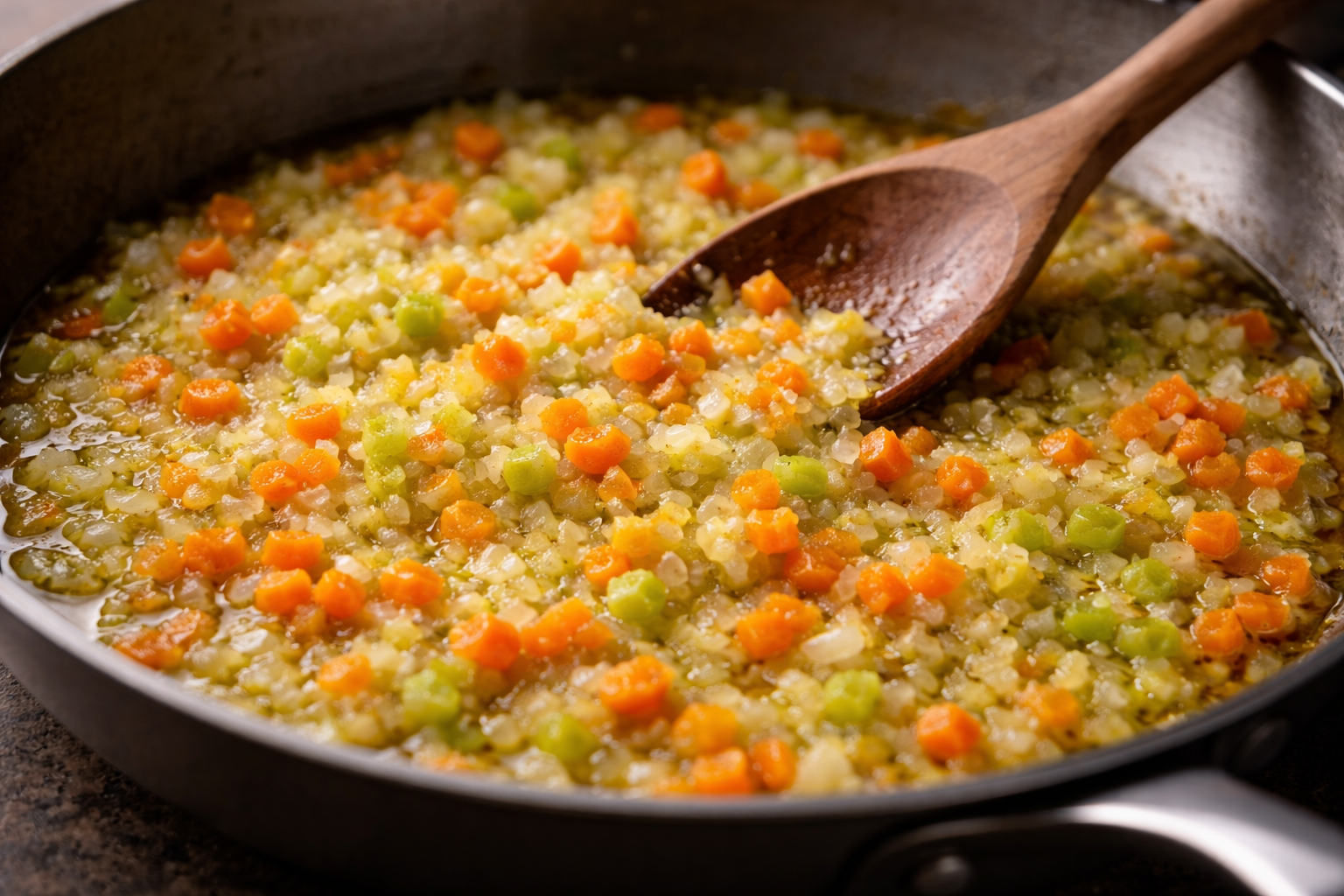
Celery doesn’t build depth the way onions do. It builds balance. When it’s cooked gently, celery softens and settles into the background, contributing a subtle bitterness and a clean, aromatic note that shapes how the rest of the dish comes across. It acts more like a stabilizer than a driver—guiding the overall profile without calling attention to itself.
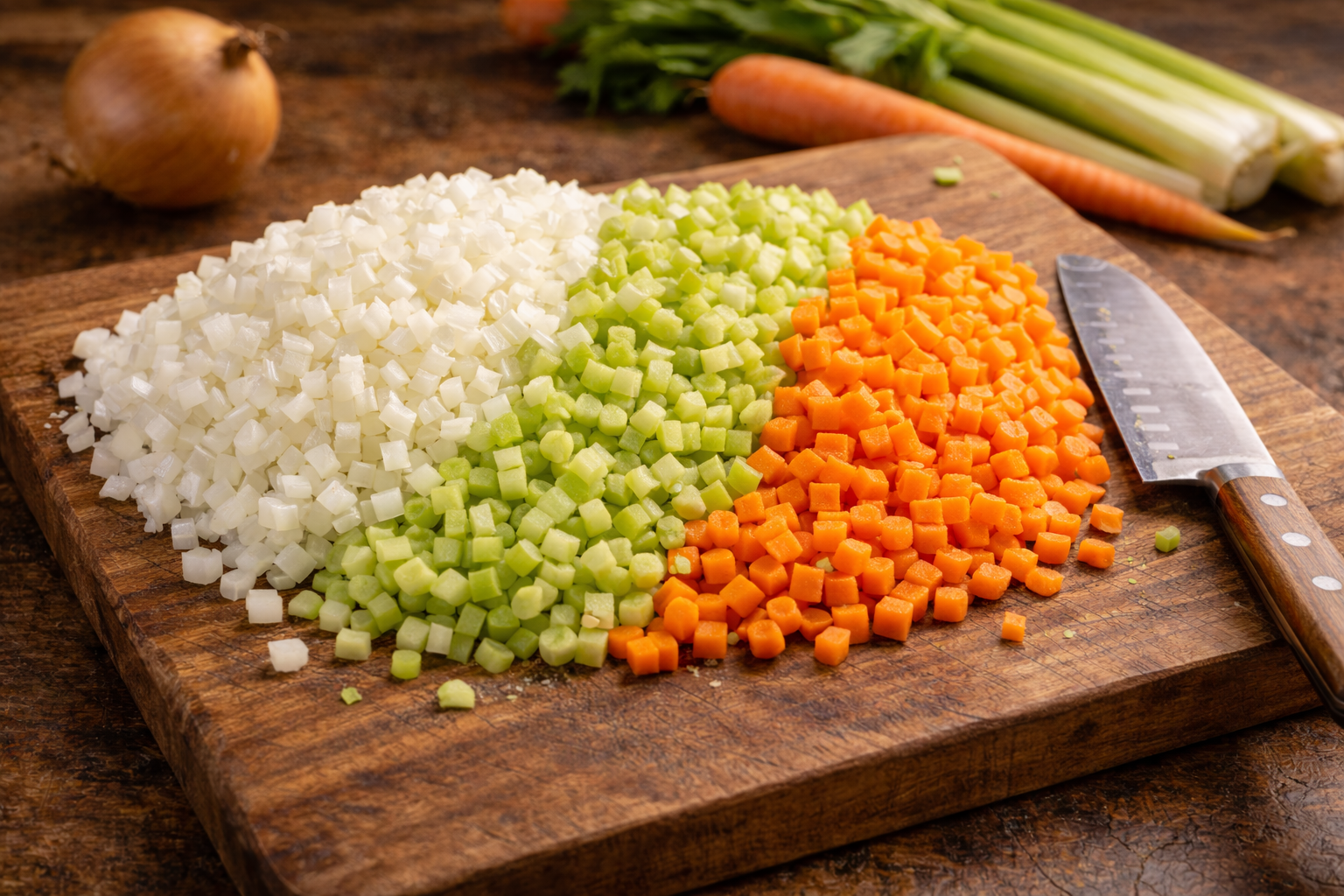
That role is most clearly defined in mirepoix, where celery sits alongside onions and carrots as part of a deliberate structure rather than an interchangeable mix. Each ingredient has a purpose, and celery’s is restraint. It keeps the base from drifting too far in any one direction, maintaining clarity and cohesion as the dish develops. Used this way, celery isn’t just present—it’s active, quietly controlling how everything else lands.
Global Foundations
Almost every cuisine has its own way of working celery into a dish.
- French and Cajun cooking builds flavor with mirepoix—a mix of onions, carrots, and celery.
- Italian cooking uses a similar base called soffritto, often cooked gently in olive oil to form the foundation of sauces and braises.
- Spanish and Latin cuisines build with sofrito, where celery is sometimes included or layered in depending on the region, supporting longer-cooked dishes and stews.
- British and Eastern European cuisines rely on celery in soups, broths, and stews, where it supports long-simmered dishes without standing out.
- Chinese cooking uses Chinese celery in stir-fries, where it’s cut into short lengths and cooked quickly, staying crisp and aromatic rather than melting into the base.
- Southeast Asian cooking occasionally uses celery and celery leaves in soups, broths, and herb-driven dishes, adding a fresh, slightly bitter lift at the finish.
- Middle Eastern and Mediterranean cooking use celery and celeriac in salads, braises, and slow-cooked dishes—celery for structure, celeriac for a deeper, more substantial presence.
- Classical European cooking (especially French) also leans on celeriac in purées, soups, and remoulade, where celery shifts from background to body.
- Midwestern American cooking often uses celery seed rather than fresh celery—most notably in coleslaw, potato salad, and as part of the defining flavor of a Chicago-style hot dog. It delivers a concentrated celery note without adding texture or moisture.
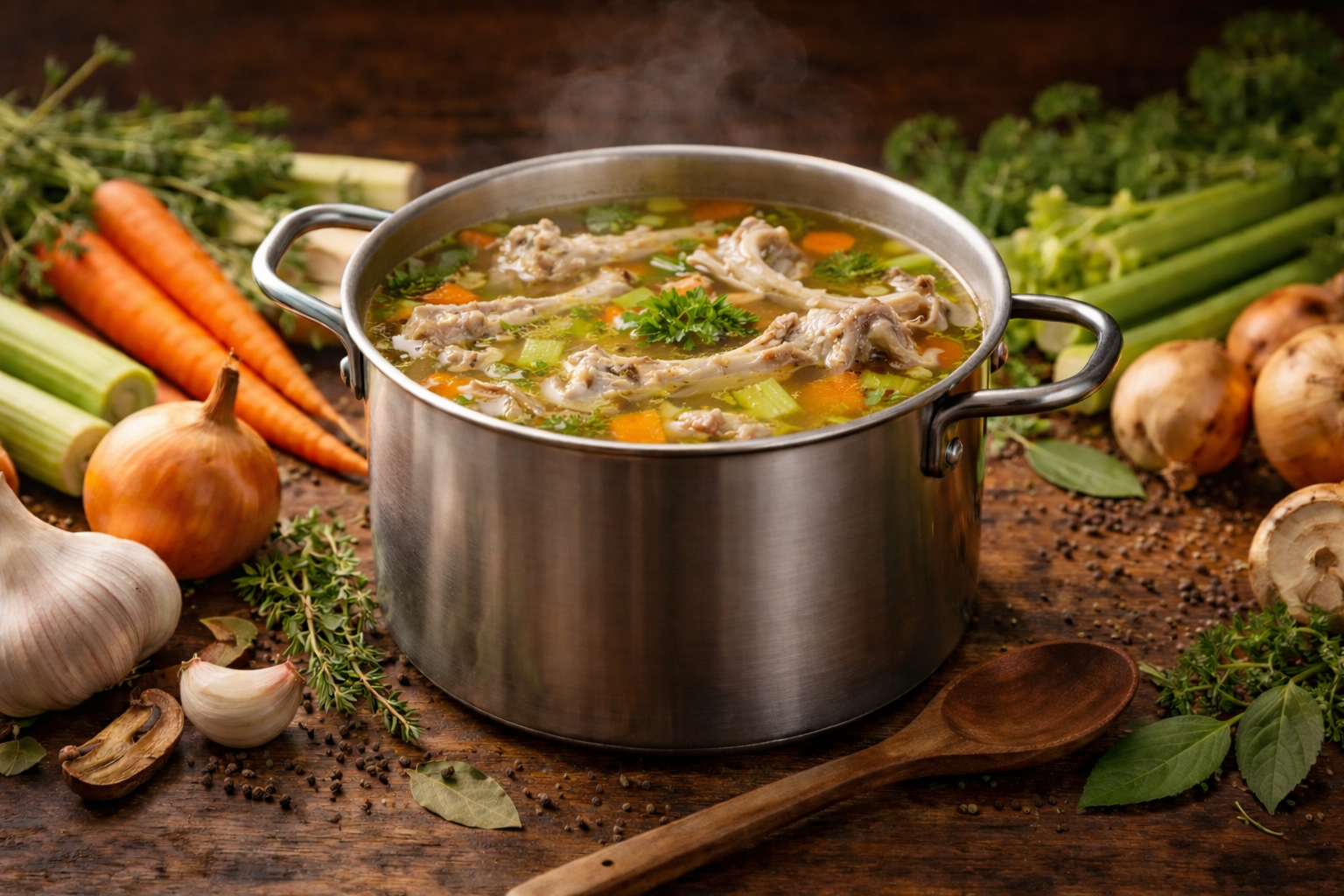
- Soups, stocks, and broths across cuisines use celery as a structural element, helping define the overall flavor without dominating it.
Different ingredients, different techniques—but the same idea: celery is there to keep everything in balance.
Digestibility & Practical Use
Celery’s high water content makes it light, but its fibrous structure can make it tough if not handled properly. Raw celery can be stringy and harder to chew or digest for some, especially the outer stalks. Cooking softens those fibers and makes it easier to integrate into a dish. Inner stalks tend to be more tender and better suited for raw use, while outer stalks benefit from longer cooking. Like onions, technique determines outcome.
Final Thoughts
Celery isn’t there to impress—it’s there to stabilize. It gives you a way to control direction without adding weight. When a dish starts leaning too far—too sweet, too rich, too soft—celery is one of the few ingredients that can pull it back without introducing something new or completely disruptive to the flavor. It doesn’t compete. It corrects.
That makes it one of the most useful tools you have when building flavor from the ground up. It lets you layer ingredients more aggressively because there’s something in place to keep them from collapsing into each other. It creates separation where things might otherwise blur, keeping a dish defined instead of muddled.
Used intentionally, celery also gives you flexibility. You can push richness further, lean into sweetness more confidently, or build longer, slower flavors without losing clarity along the way. It’s not just balancing what’s there—it’s giving you room to go further without losing control.