Mirepoix is the quiet starting point behind countless dishes—onion, carrot, and celery cooked low and slow to build depth from the ground up. It’s less about the ingredients themselves and more about how they’re handled, setting the tone for everything that follows.
Mirepoix
What It Is and Where It Comes From
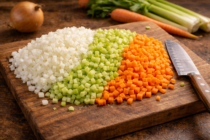
Pronounced meer-PWAH, mirepoix is the classic French combination of onion, carrot, and celery—traditionally in a 2:1:1 ratio—used as the starting point for everything from soups and stocks to braises and sauces. The name traces back to Charles Pierre Gaston François de Lévis, the Duc de Mirepoix—whose chef de cuisine is credited with popularizing the aromatic base in 18th-century France by naming it in honor of his patron.
At its core, mirepoix is about building flavor early, before anything else has a chance to define the dish. The vegetables themselves are simple, but once they’re cut and gently cooked, they begin to shift—softening, sweetening, and losing their edges. By the time you move on to the next step, they’re no longer three separate ingredients. They’ve become a base. You’ll see versions of this idea across cuisines—different vegetables, different fats, different directions—but the role is always the same: establish balance from the start so everything that follows has somewhere to land.
How to Prepare It
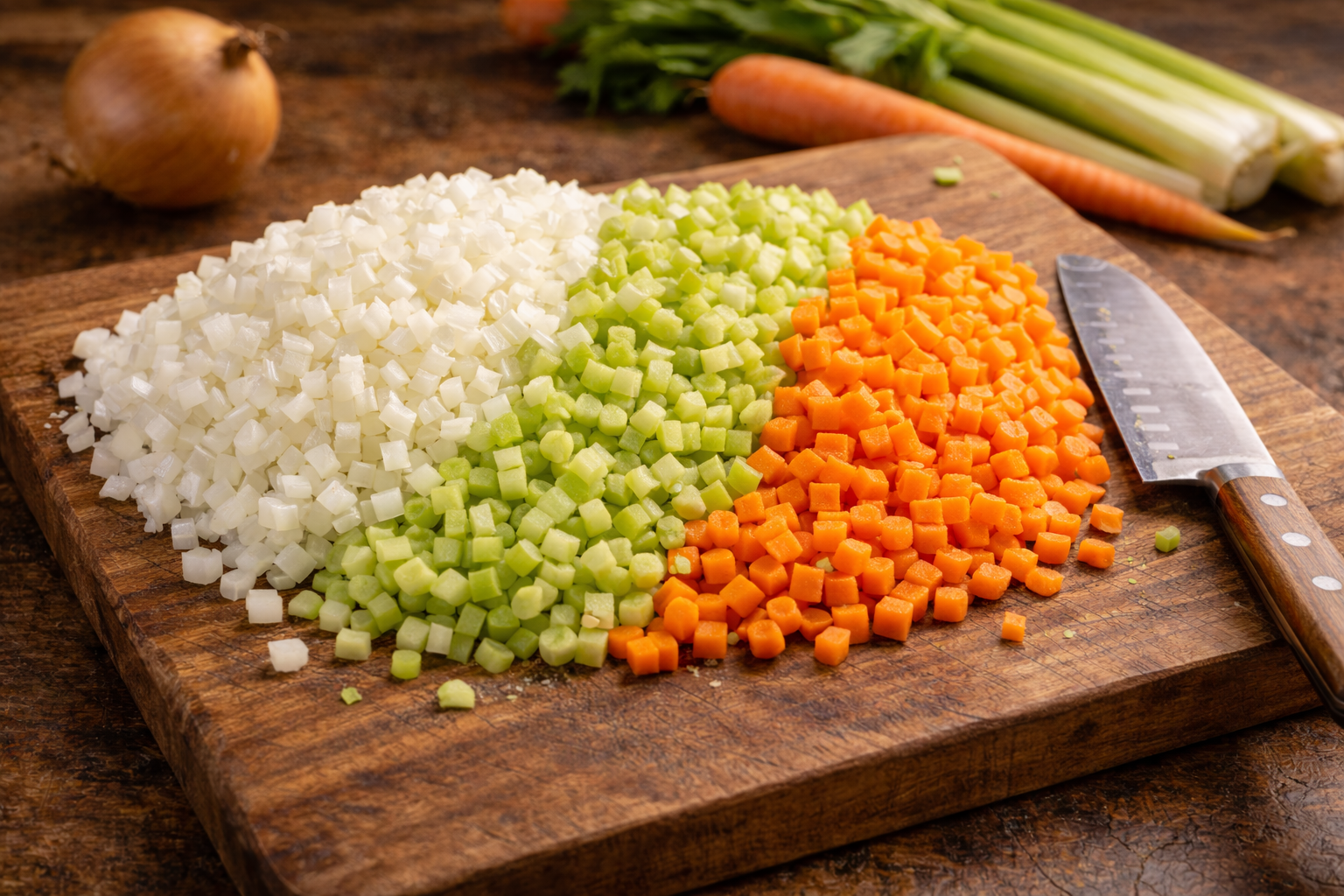
Mirepoix doesn’t require perfect knife work, but it does benefit from consistency. The size of the cut should reflect how it’s being used. Larger pieces make sense in stocks or broths where everything will be strained out later. Smaller dice work better when the mirepoix stays in the dish, softening into sauces, stews, or braises.
Once it hits the pan, the focus shifts to heat and timing. Mirepoix is cooked gently—low to medium-low, usually in butter or a neutral oil, depending on the direction of the dish—butter for richness and roundness, oil when you want a cleaner base or higher heat tolerance. The vegetables are given time to release moisture and soften without taking on color. The goal isn’t browning. It’s that point where the onion turns translucent, the carrot loses its firmness, and the celery settles into the background.
Push the heat too hard, and that shift never quite happens. The vegetables cook, but they don’t relax, and the flavor stays a step short of where it should be. Once you move past that gentle phase and introduce color, you’re no longer building a mirepoix—you’re moving into something deeper, closer to a roasted or fond-driven base. Given a little time, though, everything evens out and the base starts to feel cohesive.
Why It Matters
Mirepoix doesn’t stand out, but it sets the tone for everything that follows. It’s the first point where separate ingredients begin to behave like a single thing—where sweetness, aromatics, and structure start to settle into place instead of competing for space. Given the time it needs, it softens the edges before they ever reach the rest of the dish. The onion loses its sharpness, the carrot rounds things out, the celery brings just enough lift to keep it from feeling heavy. By the time liquid is added or heat is increased, that balance is already in motion.
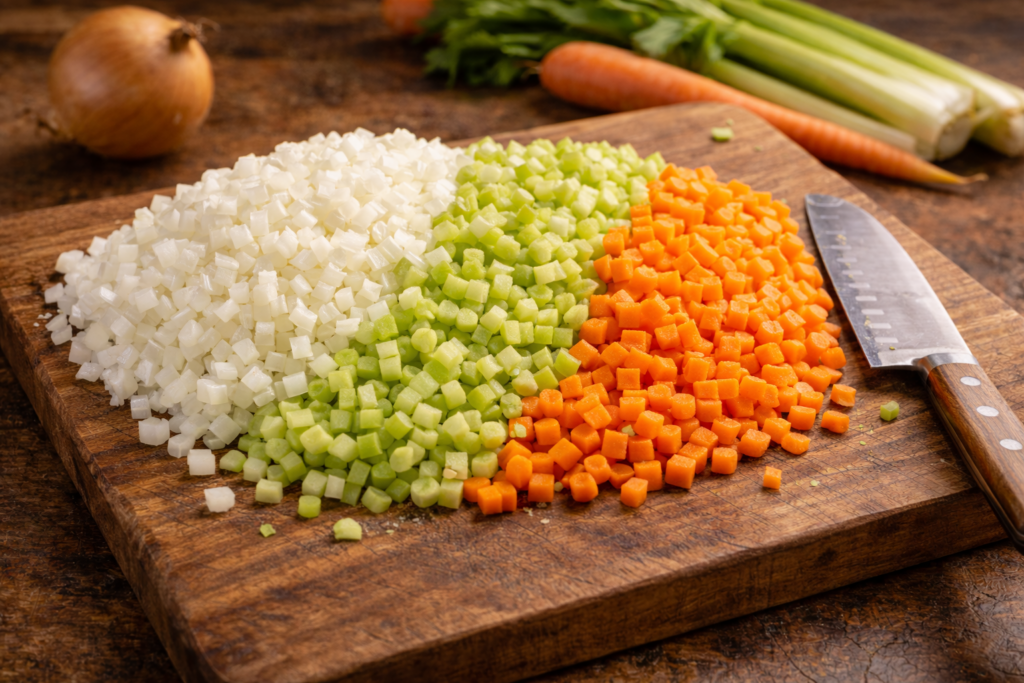
It also carries forward in ways that aren’t always obvious. A well-built mirepoix doesn’t just sit at the bottom of the pan—it moves through the entire dish, shaping how flavors layer, how aromas open up, and how everything finishes on the palate. When it’s right, you don’t notice it. You just notice that the dish feels complete.
Recipes that Use Mirepoix

Mirepoix
Equipment
Ingredients
- 2 medium yellow onion (about 2 cups)
- 4 stalks celery (about 1 cup)
- 3 large carrots (about 1 cup)
- 2 tbsp butter
Instructions
Washing & Prepping Vegetables
- It is very important to thoroughly wash and dry 2 medium yellow onion, 4 stalks celery, and 3 large carrots before starting to cut.
- Peel washed onion and remove tough outer layers of onions. Remove both root and leaf ends of washed celery stalks. Trim top of carrots. If carrots still appear a bit dirty after washing, you can give them a quick peel; be sure to rewash them after peeling.
Chopping Vegetables
- With your butcher block and chef knife, cut onion, celery, and carrot according to the type of recipe you'll be using the mirepoix in:
- Sauce or stir fry = small dice (⅛ - ¼ inch pieces)
- Stews and soups = medium dice (½ inch pieces)
- Stocks and broths = large dice (1 - 2 inch pieces)
Cooking
- Melt the butter in a medium or large skillet or pot over medium heat. Add the onions, celery, and carrots, tossing to coat them evenly. Cook, stirring often, until the vegetables are tender and the onions turn soft and translucent, about 10 minutes.