Lasagna Bolognese with Ricotta

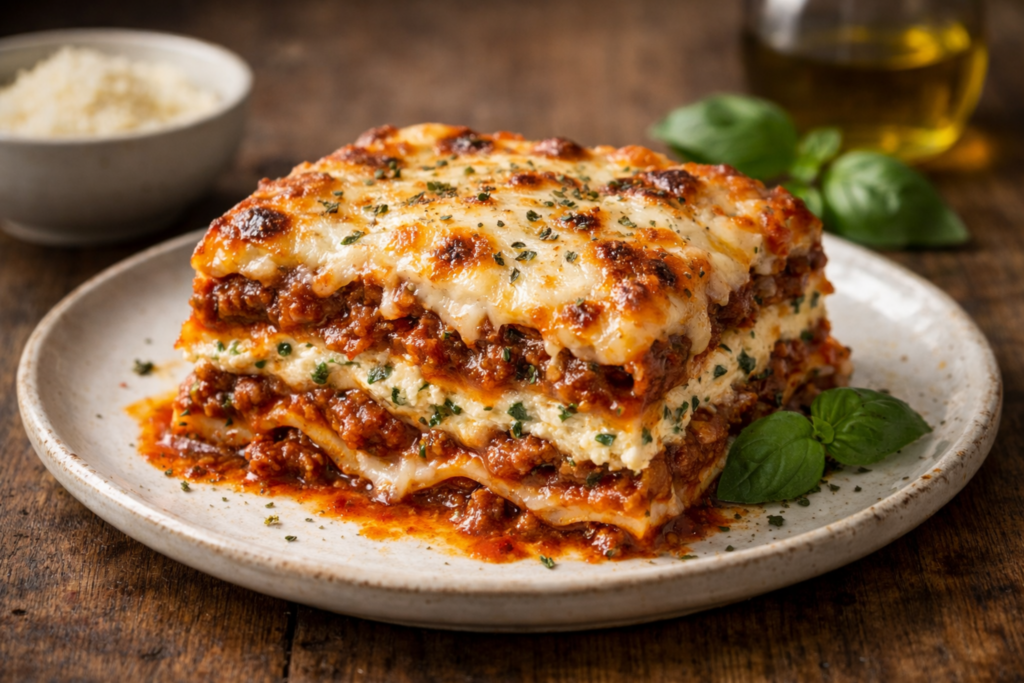
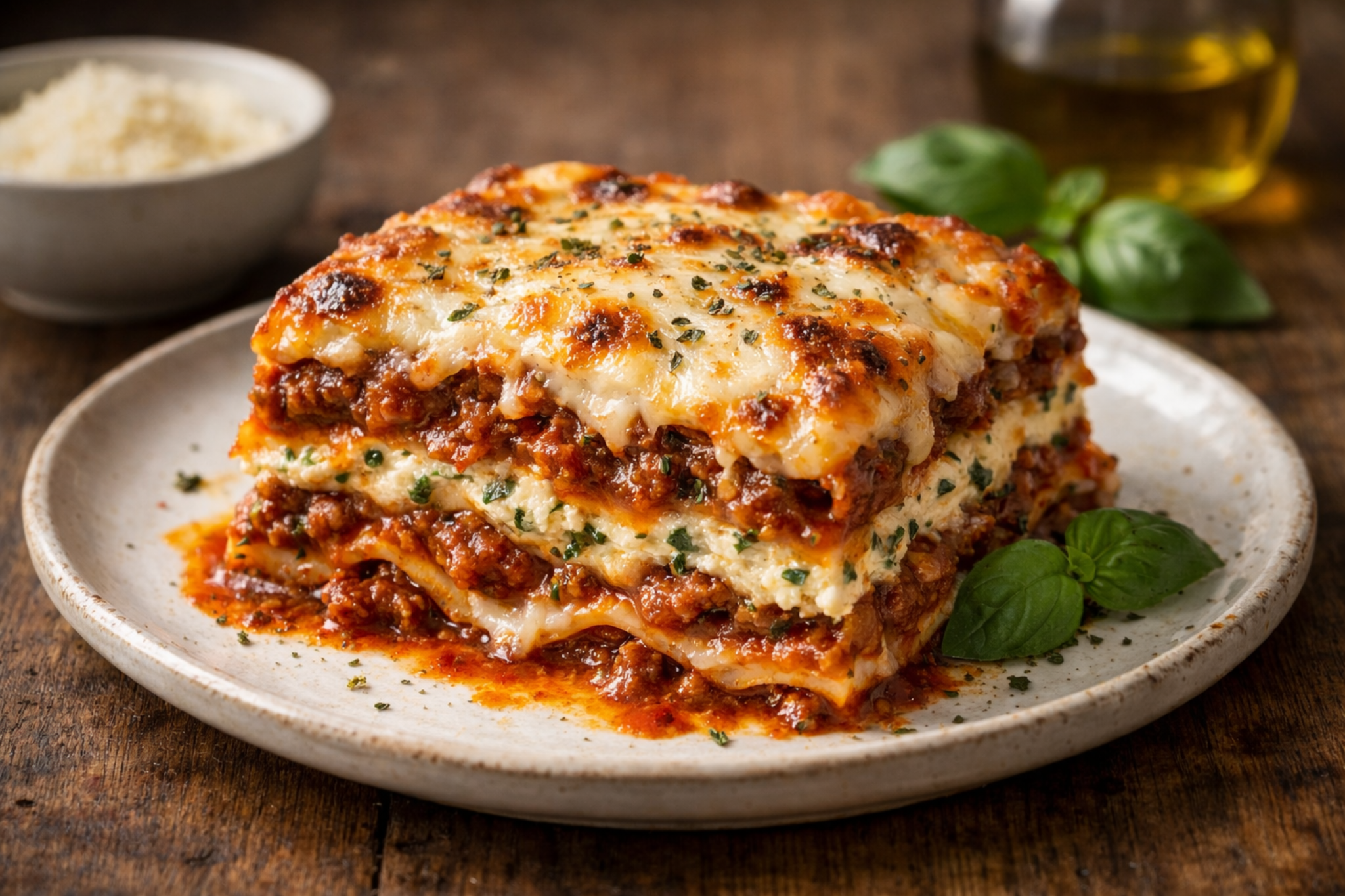
Pasta, herbed ricotta, ragù alla bolognese, and melted cheeses layered with enough control to keep each component defined. The focus is on how everything comes together in the dish, so the final slice holds its structure from edge to center without collapsing or blending into one.
Lasagna Bolognese with Ricotta

Layered with intention.

This is where Daddy’s Ragù alla Bolognese moves into a full build—pasta, herbed ricotta, and melted cheeses layered with enough control to keep each component defined. The focus is on how everything comes together in the dish, so the final slice holds its structure from edge to center without collapsing or blending into one.
Start with the ragù.

This lasagna is built around my ragù, so it’s best to make that ahead of time. Let it cool slightly before assembling—warm enough to work with, but not hot. That gives you better control when layering and keeps the ricotta from breaking down as you build. It also gives the sauce time to settle, which helps it hold its place between layers instead of spreading too thin. Think of the lasagna as an extension of the ragù, not a separate recipe. The sauce is doing most of the work—you’re just giving it structure.

Breaking the build into parts.

Start by mixing the ricotta fully—egg, cheese, and herbs integrated so it spreads evenly without clumping. From there, divide it into three equal portions. Do the same with your shredded cheese. It’s a small step, but it keeps the layers consistent and prevents you from overloading one section while leaving another thin.

Once everything is portioned, the assembly becomes controlled instead of guesswork. Each layer has a clear role, and the final result reflects that. What makes this come together cleanly is treating each component as its own step.

Layering with structure.

The order matters. A thin layer of ragù goes down first to anchor the noodles. From there, the pattern builds—noodles, ricotta, cheese, then a heavier layer of sauce. That sequence repeats, giving you a balance of creaminess, melt, and depth in every bite.

The final layers shift slightly to finish clean:

  • noodles
  • herb ricotta cheese mixture
  • a layer of sauce
  • shredded cheese
  • and a final layer of cheese with a light dusting of oregano

That top layer sets the tone—golden, structured, and just enough texture to contrast what’s underneath.

Why this works.

This lasagna comes together cleanly because each component is built and layered with intention. As it bakes, everything settles into place. The sauce thickens slightly, the cheese melts and integrates, and the layers hold without blending into each other.

The ragù provides depth and structure, the ricotta—set with egg and fresh herbs—spreads evenly and holds its place, and the cheese layers bind everything without overwhelming the dish. Dividing the ricotta and cheese ahead of time keeps each layer consistent, so nothing feels heavy in one section or thin in another.

When it’s rested and cut, the slice should hold clean lines—defined layers, balanced proportions, and a structure that carries from the first cut to the plate.

You’ll find the full method outlined below. The ingredients are familiar, but the structure is what makes this version work—built step by step so the final dish feels as intentional as the sauce it’s based on.

Lasagna Bolognese with Ricotta

Lasagna Bolognese is a layered build that turns a slow-cooked ragù into something structured and complete—pasta, herbed ricotta, and melted cheeses stacked with intention so each layer holds its place. It’s rich without being heavy, balanced between meat, creaminess, and acidity, and built to let the ragù carry the dish from the first bite to the last.
Print Pin
Category: FEAST
Cuisine: Italian
Course: Main Course
Keyword: Bolognese, Lasagna, Ricotta
Prep: 40 minutes
Cook: 50 minutes
Resting Time: 20 minutes
Total: 1 hour 50 minutes
Servings: 8 servings
Calories: 451kcal
Author: TastyDaddy

Ingredients

Lasagna Noodles

Ricotta Mixture

Cheese Mixture

Topping

Instructions

Pre-heat

  • Pre-heat oven to 375℉

Cook & Cool the Noodles

  • Bring a large pot of salted water to a boil. Cook 15 whole lasagna noodles until just shy of al dente—they'll finish cooking while the lasagna bakes in oven.
  • Drain and rinse lightly with cool water to stop the cooking. Dry and lay noodles flat on a sheet tray or parchment so they don’t stick. Let cool completely in fridge.

Prepare the Ricotta Mixture

  • Add the following to the mixing bowl:
    • 15 oz ricotta cheese
    • 1 large egg
    • ¼ cup parmesan cheese
    • 2 tsp onion powder
    • ½ tsp Kosher salt
    • ¼ tsp black pepper
  • Wash and dry basil, parsley, and thyme.
  • Chop all herbs and place in the mixing bowl with the other ingredients.
  • Combine all ingredients until thoroughly integrated.
  • Separate into 3 equal portions.

Divide the Shredded Cheese

  • Separate the 6 cups mozzarella cheese(shredded) and 1½ cups parmesan cheese (shredded) into 3 equal parts (2 cups of mozzarella + ½ cup of parmesan) so you have even amounts for each layer.

Assemble the Lasagna

  • Spread a thin layer of Daddy's Ragù alla Bolognese (about 1 cup) into the bottom of a deep 9x13 baking dish.
  • Use a slotted spoon when measuring out sauce to remove almost all of the liquid, making your sauce layers more concentrated. Excess liquid will cause the lasagna to become watery/runny. You can even strain with cheese cloth, if needed.
  • Add a layer of lasagna noodles, followed by ⅓ of the Ricotta mixture, followed by 2 cups Daddy's Ragù alla Bolognese, followed by ⅓ of shredded cheese.
  • Repeat layer sequence two more times.
  • On final shredded cheese layer, top with 1 tsp Kosher salt and ½ tsp dried oregano.

Baking

  • Cover 9x13 dish with tented aluminum foil and bake at 375℉ for 30 minutes.
  • Remove foil after 30 minutes and bake an additional 15-20 minutes until golden and bubbling.

Resting

  • Let rest for 15–20 minutes before cutting. This allows the layers to set and hold their structure.

Notes

NUTRITION NOTE: Because the internal nutrition calculator uses an API program to pull the nutrition information, it did not pull the nutritional information for the ragù. For correct nutritional calculations, you must add the nutritional information for 7 servings of Daddy's Ragù alla Bolognese to 8 servings of the amounts listed above and divide the total by 8 servings to get the TRUE nutritional information per serving—I've done the math for you below:
  • Calories: 849.125 kcal
  • Carbohydrates: 21g
  • Protein: 53.25g
  • Fat: 60g
  • Saturated Fat: 29.5g
  • Polyunsaturated Fat: 3.625g
  • Monounsaturated Fat: 21.25g
  • Trans Fat: 0.878g
  • Cholesterol: 210.75g
  • Sodium: 2081.125mg
  • Potassium: 1095.125mg
  • Fiber: 4g
  • Sugar: 8g
  • Vitamin A: 5857.25 IU
  • Vitamin C: 18.875mg
  • Calcium: 904.75mg
  • Iron: 4.5mg

Nutrition

Calories: 451kcal | Carbohydrates: 7g | Protein: 34g | Fat: 32g | Saturated Fat: 19g | Polyunsaturated Fat: 1g | Monounsaturated Fat: 9g | Trans Fat: 0.003g | Cholesterol: 132mg | Sodium: 1368mg | Potassium: 179mg | Fiber: 0.5g | Sugar: 1g | Vitamin A: 1232IU | Vitamin C: 4mg | Calcium: 812mg | Iron: 1mg
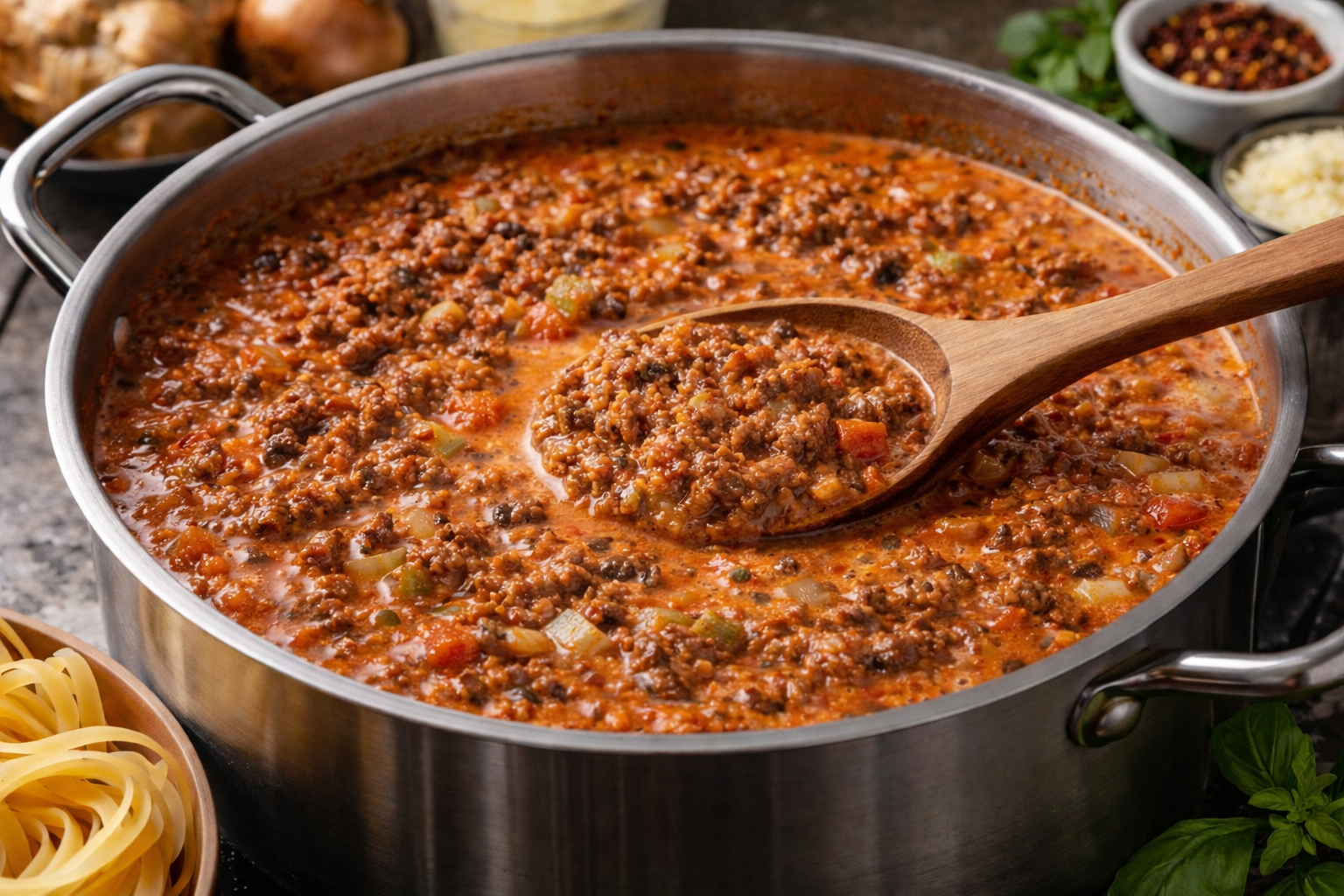
Daddy’s Ragù alla Bolognese

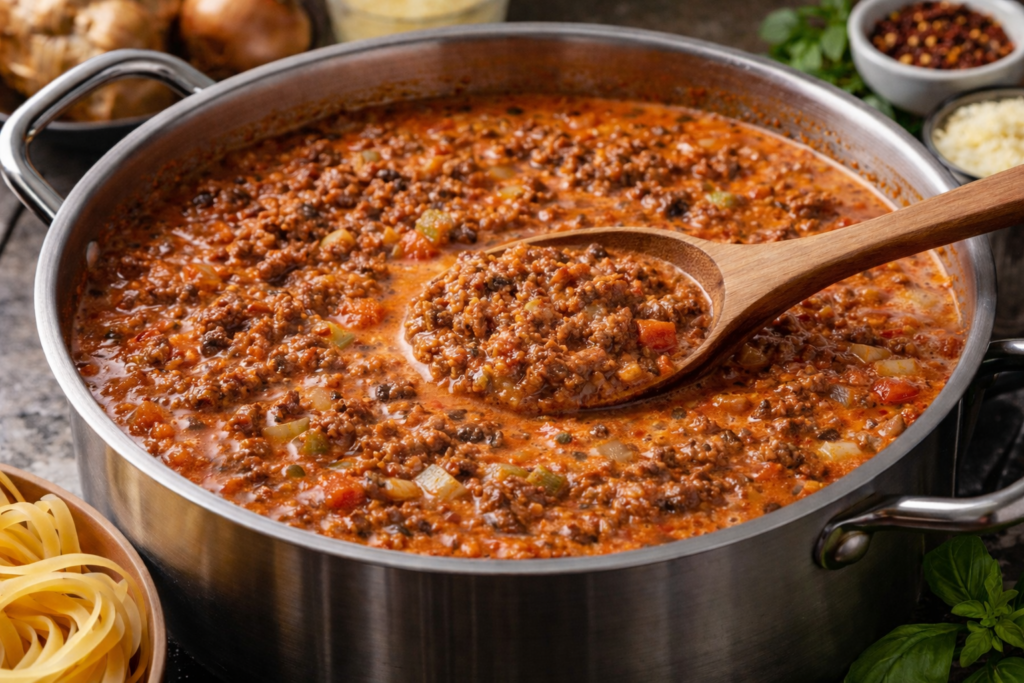
This version of ragù leans into tradition but makes a few deliberate shifts—ground sausage in place of pancetta, mushrooms for added depth, and a controlled, staged build that keeps each element defined before it comes together.

It’s rich, meaty, and structured, with just enough cream at the end to round everything out without softening the identity of the sauce.

Daddy’s Ragù alla Bolognese

Slow-built, deeply layered.

This is a ragù that leans into tradition but doesn’t stay rigid to it—ground sausage in place of pancetta, and a staged build that keeps each element defined before it comes together. The mushrooms in this version are optional, but I like to include them for the added layer of umami and depth they bring to the sauce. It’s rich, meaty, and structured, finished with just enough cream to round it out without softening its identity.

Where it comes from.

This is a recipe that sits somewhere between memory and refinement. The foundation came from my mother—simple, comforting, and built with intention. I remember standing at the counter helping where I could, washing vegetables, cutting onions and carrots, and being handed the spoon every so often to stir the pot. It wasn’t rushed. The sauce would sit and develop, filling the house slowly, becoming part of the rhythm of the day as much as the meal itself.

Later, when I was in college, that foundation picked up a few new layers. A close Italian-American friend introduced me to his grandmother, who had her own way of doing things—small adjustments that made a difference. One of the simplest was adding just a pinch of sugar to the tomatoes to soften their acidity. Not enough to sweeten the sauce, just enough to round it out. It’s a detail I still come back to when the tomatoes need it.

Over time, those influences came together. What I’ve kept is the patience and intention behind the original—nothing rushed, nothing overloaded—just a process that builds gradually so each component has its place. What’s changed is how deliberately I approach each step now, paying closer attention to how everything comes together in the end. It’s still rooted in where it started. It’s just been shaped along the way.

Building it in stages.

What makes this ragù work isn’t just the ingredient list—it’s the sequencing. Each component is cooked separately at first, allowing it to develop its own flavor before being combined. The sausage renders fat and builds the base. The mushrooms deepen the savory profile. The soffritto softens and sweetens. The beef is seasoned and browned on its own, giving it structure before it ever hits the sauce. Nothing is rushed into the pot all at once. Everything is given space to develop, then brought together once it’s ready.

Why the adjustments work.

A few small shifts change the character of the sauce without pulling it away from its roots. Using sweet Italian sausage instead of pancetta keeps the pork element but adds more body and seasoning. The mushrooms—optional, but worth it—reinforce that depth, giving the sauce a more rounded, savory backbone without changing its identity.

From there, the adjustments are more subtle, but just as important. Garlic isn’t traditional in a classic ragù, but used sparingly, it adds a layer of aroma that supports the soffritto without taking over. Anchovy paste works the same way—completely disappearing into the sauce while adding a quiet, underlying umami that deepens everything around it.

Seasoning the beef directly in the pan builds flavor early, giving the meat its own structure before it’s incorporated into the sauce. The wine deglaze then pulls everything together, lifting the fond and setting a clean, cohesive base before the rest of the ingredients come in. None of these changes are meant to redefine the dish. They’re there to refine it—small adjustments that build a little more depth, a little more structure, and a little more control into the final result.

Letting it come together.

Once everything is in the pot, the work slows down. The simmer is where the sauce becomes cohesive—where the fat, liquid, and solids integrate into something that feels unified rather than layered. It thickens gradually, deepens in flavor, and settles into a texture that holds together without feeling heavy. There’s no shortcut here. Time is what turns the individual components into a proper ragù.

What I typically serve it with.

This is a sauce that benefits from the right pairing. It works best with wider, textured pasta or tubes—tagliatelle or pappardelle or penne rigate—where the sauce has something to cling to. It also holds up well in layered dishes like lasagna, where that depth carries through multiple components.

On its own, this lives in the Simmer category—a standalone sauce built slowly and intentionally. But I classify it as a Main Course beccause in practice, it’s meant to become one. Once it’s paired with pasta or layered into a dish, it shifts from component to centerpiece. However it’s served, the goal is the same: let the sauce lead.

Recipes that use this sauce.

You’ll find the full method outlined below. The ingredients are straightforward, but the structure is what makes it work—each step building toward a sauce that feels composed from start to finish.

And if you do make it, let me know how it turns out—and what you pair it with.

Daddy's Ragù alla Bolognese

Daddy’s Ragù alla Bolognese is a deeply layered, slow-built sauce rooted in tradition but shaped by experience. It takes the foundation I learned from my mother and refines it with a few intentional tweaks—drawing from time spent close to Italian-American kitchens—resulting in something richer, meatier, and more personal without losing its sense of origin.
Print Pin
Category: SIMMER
Cuisine: Italian
Course: Main Course
Keyword: Bolognese, Pasta, Ragù, Sauce
Prep: 30 minutes
Cook: 45 minutes
Simmer Time: 2 hours
Total: 3 hours 15 minutes
Servings: 8 servings
Calories: 455kcal
Author: TastyDaddy

Ingredients

Spices & Seasonings

Meat

Optional

Soffritto

Sauce

Instructions

Wash & Prep the Vegetables

  • Peel (make sure to remove the tough outer layer), wash, and dry 1 med yellow onion; using your chef knife, dice the onion; set aside in small bowl.
  • Wash, trim and dry the celery stalks; chop until you have 1½ cups celery; set aside in a small bowl.
  • Wash, trim, and peel carrots; give them a final rinse and dry them; dice until you have 1½ cups carrots; set aside in a small bowl.
  • Wash, dry, and trim the ends off 2 whole plum tomatoes; remove seeds and dice; set aside in small bowl.
  • Wash and dry 4 whole basil leaves; stack leaves and roll tightly; take your chef knife and cut into ribbons (chiffonade); set aside.
  • If including, thoroughly wash and dry portobello mushrooms; mince until you have enough to fill 2 cups.

Brown the Sausage

  • In a large Dutch oven over medium heat, cook 1 lb sweet Italian sausage until browned and lightly caramelized. Remove with a slotted spoon and transfer to a large bowl, leaving the rendered fat in the pot.

Cook the Mushrooms (optional)

  • If using mushrooms, add them to the sausage fat and cook until their moisture has released and reduced, and they begin to brown.
    Transfer to the bowl with the sausage.

Build the Soffritto

  • Add onion, celery, and carrots to the pot. Cook over medium heat until softened and lightly golden, about 8–10 minutes.
    Transfer to the bowl with the sausage and mushrooms.

Brown & Season the Beef

  • Add 1 lb ground beef to the pot. As it begins to cook, season directly in the pan with:
    • ½ tsp Kosher salt
    • ¼ tsp black pepper
    • ⅛ tsp crushed red pepper flakes
    • ½ tsp onion powder
    • 1 dash nutmeg
    Break the meat apart and allow it to brown, developing color rather than steaming.
    Transfer to the bowl with the sausage, vegetables, and mushrooms.Drain excess fat, leaving about 1 tablespoon in the pot.

Infuse the Stock

  • In a small saucepan, bring the 1 cup beef stock to a light simmer with 2 sprigs fresh thyme leaves (placed inside a spice infuser ball). Remove from heat and let steep while continuing the recipe.

Build the Base & Deglaze

  • Add 1 tbsp garlic (minced) to the remaining fat and cook over medium-low heat until fragrant, about 30–60 seconds.
    Stir in 1 tbsp anchovy paste until dissolved.
    Add 1 cup Sauvignon Blanc and deglaze the pan, scraping up any fond from the bottom. Let the wine reduce by about half.

Simmer the Sauce

  • Return all reserved ingredients (sausage, mushrooms, vegetables, beef) to the Dutch oven and stir to combine.
  • Remove thyme from beef stock.
  • Add the following to the Dutch oven:
    • 24 oz passata
    • 1 tbsp tomato paste
    • diced tomatoes
    • infused beef stock
    • 2 whole bay leaves
    Stir to combine and bring to a gentle simmer.
  • Reduce heat to low and simmer uncovered for at least 2 hours, stirring occasionally. The sauce should gradually thicken and develop a cohesive texture.

Finish

  • Once the sauce has finished simmering, remove bay leaves. Stir in ½ cup half and half until fully incorporated, then add basil.

Nutrition

Calories: 455kcal | Carbohydrates: 16g | Protein: 22g | Fat: 32g | Saturated Fat: 12g | Polyunsaturated Fat: 3g | Monounsaturated Fat: 14g | Trans Fat: 1g | Cholesterol: 90mg | Sodium: 815mg | Potassium: 1047mg | Fiber: 4g | Sugar: 8g | Vitamin A: 5286IU | Vitamin C: 17mg | Calcium: 106mg | Iron: 4mg

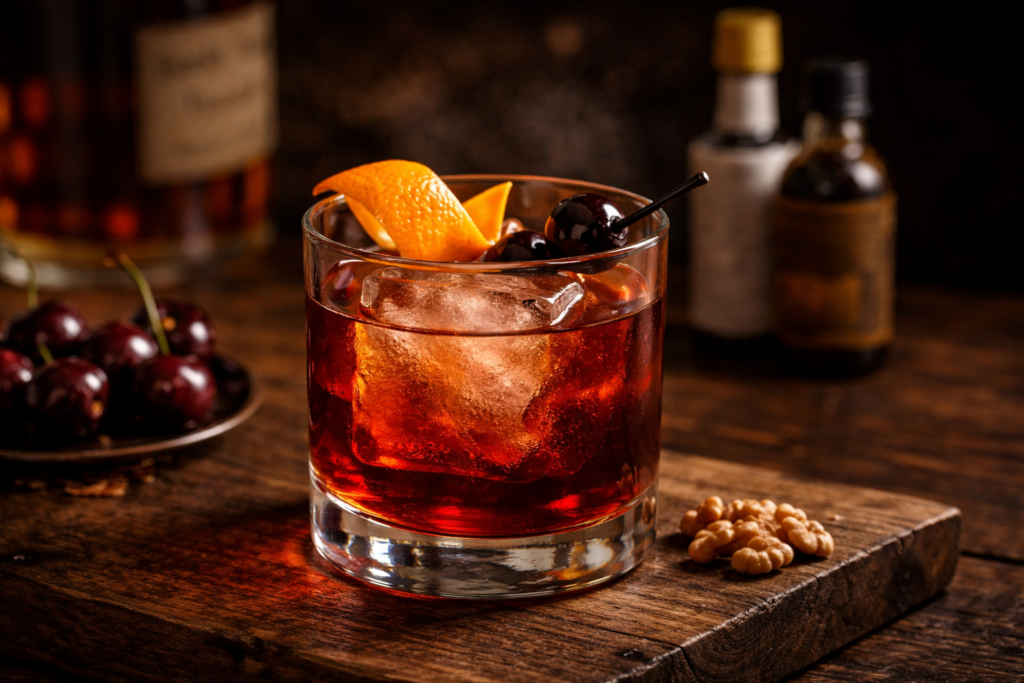
Black Orchard Old Fashioned

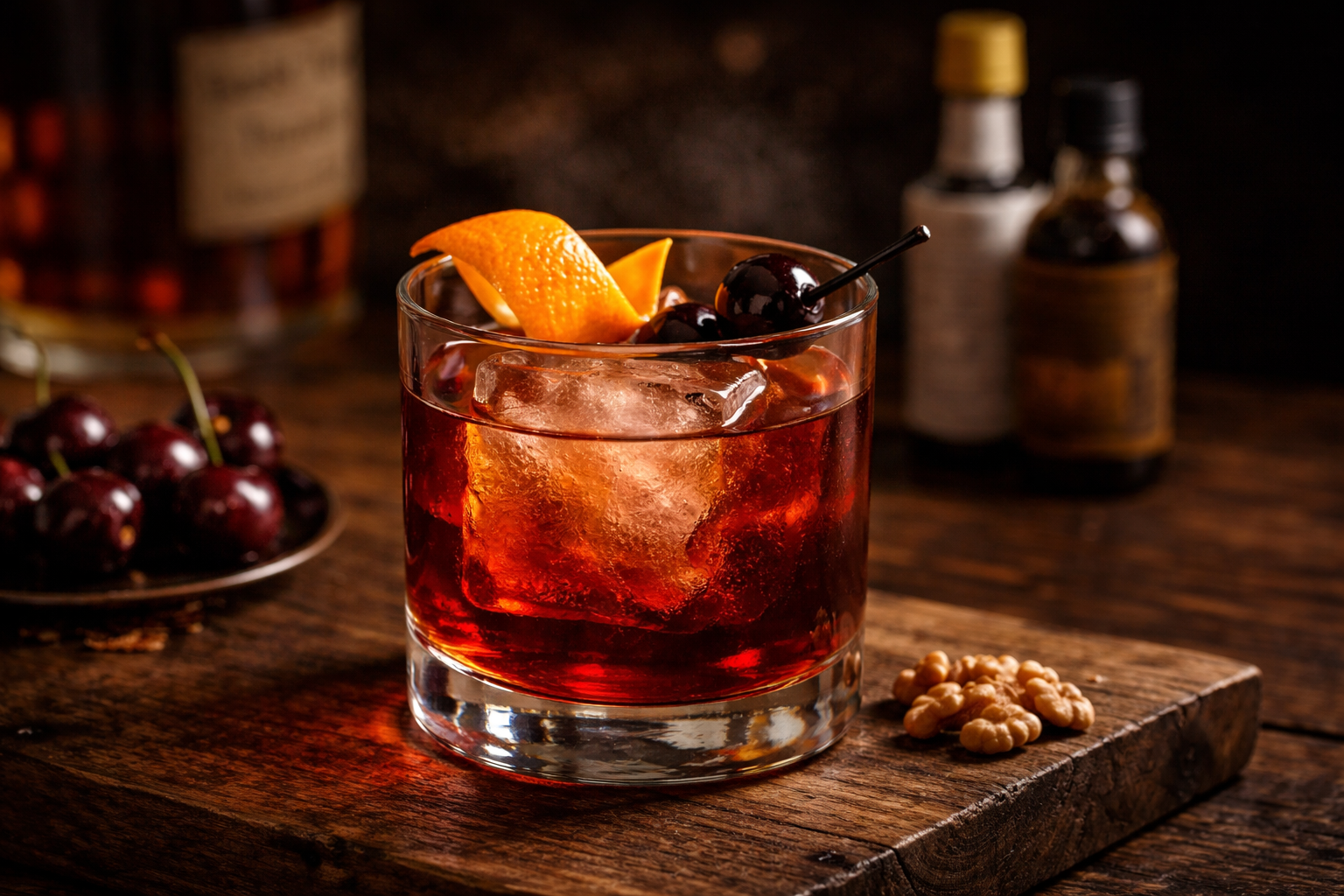
Black Orchard Old Fashioned leans into depth without losing its edge. ZingBing Syrup brings a layered sweetness—ginger up front, cherry just behind—while bourbon anchors the drink with warmth and structure. Angostura adds familiar spice, and black walnut bitters round everything out with a subtle, nutty richness that lingers on the finish.

It drinks darker than a classic Old Fashioned, but more defined—sweetness sharpened by bite, fruit grounded by bitterness. The result is balanced, composed, and just a little unexpected without straying from what makes the original work.

Black Orchard Old Fashioned

Dark fruit, sharpened.

The Black Orchard Old Fashioned leans deeper than the classic without losing its structure—ZingBing Syrup brings ginger heat and tart cherry, while black walnut bitters round it out with a subtle, nutty finish. It’s familiar at its core, just pushed slightly darker and more defined.

A classic, adjusted.

At its heart, this is still an Old Fashioned. The structure doesn’t change—spirit, sugar, bitters—but the syrup shifts the balance.

ZingBing replaces the sugar cube with something that already carries contrast. Ginger adds lift, cherry adds depth, and together they give the drink more shape before the bourbon even enters the glass. The role of the bitters becomes more important here, not less. Angostura keeps the drink grounded in its original profile, while black walnut adds a layer that softens and deepens without getting in the way.

Building the drink in the glass.

Like any Old Fashioned, this comes down to control more than complexity. Start with the syrup and bitters so they integrate fully. Once the ice goes in, the pour and stir should be deliberate—just enough to chill and slightly dilute, but not enough to flatten the edges. The goal is to keep the progression intact: ginger up front, cherry through the middle, bourbon and spice on the finish.

The orange peel isn’t just garnish here. Warming it before expressing pulls out a deeper, slightly caramelized citrus oil that sits on top of the drink and ties everything together.

Where it lands.

It drinks darker than a classic Old Fashioned, but more structured—sweetness held in check, not leading the way. When it’s balanced, the drink moves cleanly:

  • bright ginger heat at the front
  • cherry and bourbon through the center
  • warm spice and walnut lingering at the end

What I typically serve with it.

This is the version I pair with my Lomo Saltado. The ginger in the syrup leans into the aromatics in the stir-fry instead of competing with them, while the black walnut bitters echo the nuttiness in the coconut rice. It ends up feeling cohesive across the plate—nothing fighting for attention, everything reinforcing the same flavor direction.

It also holds up well alongside grilled or roasted meats, or with darker, nut-forward desserts—but it’s at its best when it’s part of a full build rather than standing on its own.

You’ll find the full method outlined below. The process is simple, but the details matter—small adjustments in dilution, expression, and balance are what make this version work.

Black Orchard Old Fashioned

The Black Orchard Old Fashioned leans into depth without losing its edge. My ZingBing Syrup brings a layered sweetness—ginger up front, cherry just behind—while bourbon anchors the drink with warmth and structure. Angostura adds familiar spice, and black walnut bitters round everything out with a subtle, nutty richness that lingers on the finish.
It drinks darker than a classic Old Fashioned, but more defined—sweetness sharpened by bite, fruit grounded by bitterness. The result is balanced, composed, and just a little unexpected without straying from what makes the original work.
Print Pin
Category: THIRST
Cuisine: Global
Course: Drinks
Keyword: Angostura Bitters, Black Walnut Bitters, Bourbon, Cherry, Ginger
Prep: 3 minutes
Total: 3 minutes
Servings: 1 drink
Calories: 140kcal
Author: TastyDaddy

Ingredients

Instructions

  • In an Old Fashioned (rocks) glass, add ¼ oz ZingBing simple syrup, 2 dashes Angostura bitters, and 1 dash Fee Brothers Black Walnut bitters.
  • Add ice sphere to glass and pour 2 oz bourbon over sphere.
  • With your bar spoon, stir contents of glass to chill the cocktail.
  • With a vegetable peeler (or knife), remove an inch-wide section of an orange peel. Be sure not to cut past the pith (white part) so that the flesh of the orange isn't exposed.
  • Strike a match and gently heat the orange part of the rind with the flame for 5-10 seconds.
  • While holding match between the glass and the peel, give the rind a gentle squeeze to express the oil; the citrus oil will flame and settle onto the drink.
  • Take the orange side of the peel and rub along the rim of the glass—this will ensure the remaining oil will flavor and scent the entire rim; place orange peel in glass.
  • Skewer a Filthy® cherry with a garnish pick and toss in glass alongside the peel.

Nutrition

Calories: 140kcal | Carbohydrates: 1g | Sodium: 1mg | Potassium: 1mg | Sugar: 0.3g | Iron: 0.02mg

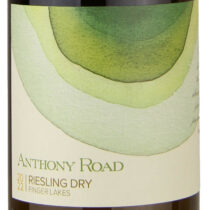
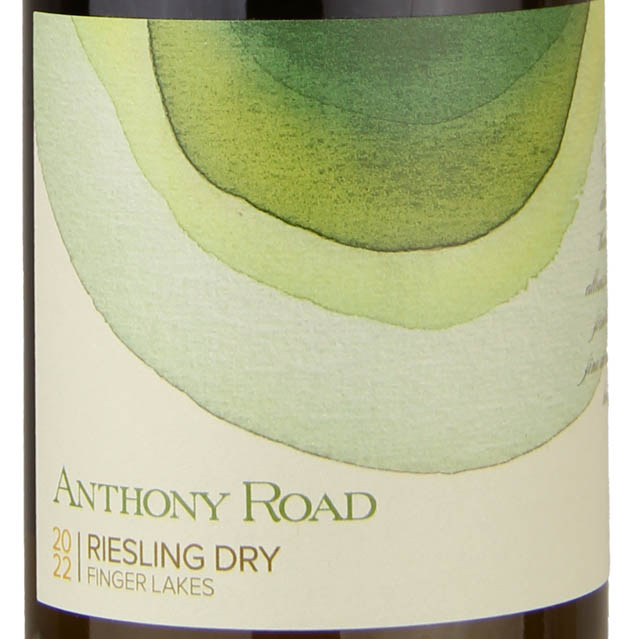
Anthony Road | Finger Lakes Dry Riesling (2022)

Anthony Road | Finger Lakes Dry Riesling (2022)

Dry Riesling plays differently depending on how it’s built. Anthony Road leans toward balance over austerity—the 2022 is bright and structured, with a touch of softness that makes it easier to work with across a range of dishes.

On the Nose

Clean and expressive—crisp apple, tangerine, and lime zest lead, with delicate floral notes and a subtle herbal edge. There’s a light mineral thread running underneath that keeps everything grounded.

On the Tongue

Bright and precise, but not sharp. The acidity is high, as expected, but it’s balanced by a slight softness that rounds out the edges. Citrus and orchard fruit carry through the palate, with a clean, mineral finish and just enough texture from lees aging to give it some presence. It reads dry—but not aggressive.

On the Record

Details:

  • Producer: Anthony Road Wine Company
  • Region: Finger Lakes, New York
  • Vintage: 2022
  • Varietal: Riesling
  • ABV: 11.7%
  • pH: 2.9
  • Acidity: 8.5 g/L
  • Residual Sugar: 7.5 g/L
  • Average Brix at Harvest: 19.6°Bx
  • Harvest: October 11th, 12th, & 14th, 2022
  • Winemaking Notes: Machine harvested fruit. Pressed into stainless steel tank to cold settle for two days then racked off the juice bottoms into stainless steel tanks to ferment. Native and commercial yeasts were employed to create many expressions of the fruit that would be used in the final blending of the wine. The wine spent about 7 months resting on the lees before the wine was readied for bottling.

Critical Reception:

  • Vinous — 92 pts
  • James Suckling — 90 pts
  • Wine & Spirits — 92 pts

TastyDaddy Rating: 8.9 / 10
Highly versatile, technically precise, and more adaptable than most wines labeled “dry.”

On the Table

This is where the wine really shows its value—it’s built to handle complexity. It works best with dishes that balance salt, acidity, and a bit of richness, especially when there’s an aromatic component in play. The high acidity keeps everything lifted, while the slight softness prevents it from turning sharp against soy, citrus, or spice.

It’s particularly strong with:

  • Soy-based dishes and umami-driven sauces
  • Ginger, citrus, and lightly spiced profiles
  • Fried elements and starch (fries, rice, noodles)
  • Seafood or lighter proteins with bold seasoning

On the Wallet

Typically $18–$25, depending on the retailer.

This sits firmly in the high-value tier—you’re getting precision, balance, and versatility at a price point where most wines are far less interesting. For what it delivers, this punches well above its weight.

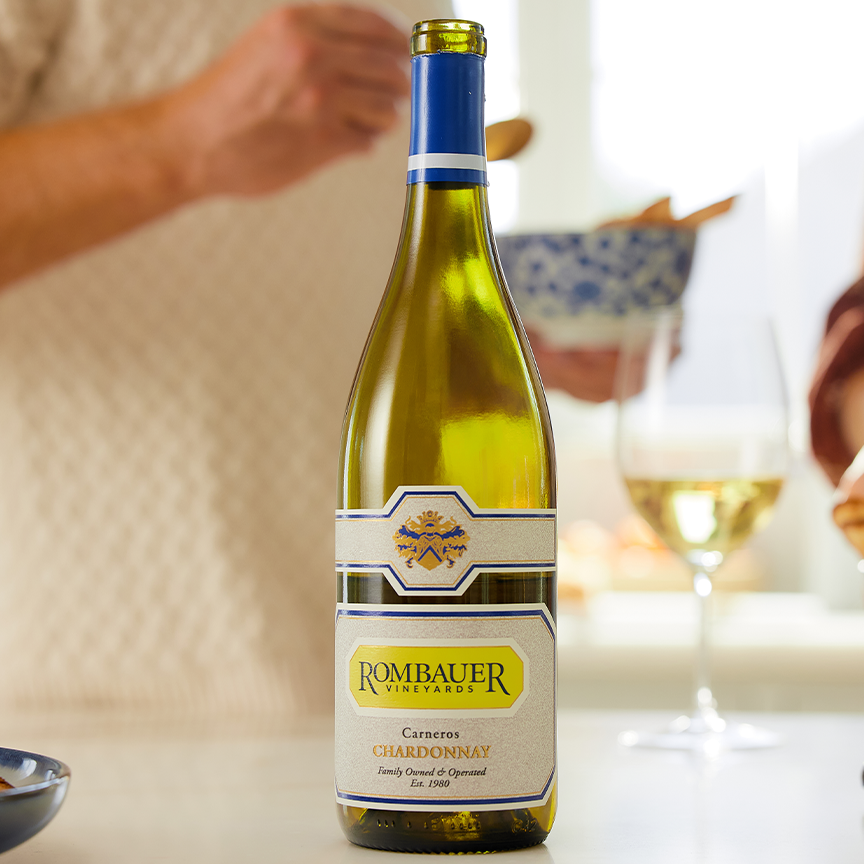
Rombauer | Carneros Chardonnay (2024)

Drinkware isn’t about aesthetics—it’s about intention. Different drinks call for different vessels, each designed to influence temperature, dilution, aroma, and overall experience. From glass to metal, the material and shape both play a role in how a drink is served and how it evolves. The right choice enhances what’s already there, while the wrong one works against it. Learn the difference, and your drinks instantly feel more dialed in.

Rombauer | Carneros Chardonnay (2024)

Not all Chardonnay plays the same role at the table. Some are built for acidity and precision—others are built for richness and weight. Rombauer has long leaned into the latter, producing a style that’s full, expressive, and designed to hold its own alongside more indulgent dishes. The 2024 Carneros release continues that approach with confidence.

On the Nose

Immediately expressive and unmistakably ripe—pineapple, mango, and baked apple come forward first, followed by notes of vanilla, buttercream, and a touch of toasted oak. There’s a hint of citrus underneath, but this leans warm and lush rather than bright and restrained. It’s aromatic in a way that announces itself the moment it’s poured.

On the Tongue

Full-bodied and creamy, with that signature Rombauer richness. The palate is layered with ripe tropical fruit—pineapple and peach—wrapped in vanilla and caramelized oak. Malolactic fermentation shows clearly here, giving it that smooth, buttery texture people either seek out or avoid.

The acidity is present, but it plays a supporting role—it keeps the wine from feeling heavy, but this is very much about texture and indulgence over sharpness or minerality. The finish is long, round, and slightly sweet-leaning in perception due to the ripeness of the fruit.

On the Record

Details:

  • Producer: Rombauer Vineyards
  • Region: Carneros, California
  • Vintage: 2024
  • Varietal: Chardonnay
  • ABV: 14.6%
  • Average Brix at Harvest: 24°Bx
  • Harvest: August 28 – October 8, 2024
  • Cooperage: 9 months in French & American oak (37% new)
  • Fermentation: Full malolactic
  • Bâtonnage: Lees stirring every 7-10 days

Critical Reception:

  • Not yet widely reviewed for the 2024 vintage.
    Historically, Rombauer Carneros Chardonnay vintages tend to land in the low-mid 90s among major critics (92-96 points in the past years).

TastyDaddy Rating: 8.6 / 10
Not subtle—but that’s the point. It delivers exactly what it promises, and it does it well.

On the Table

This leans rich and full, so the food needs to meet it there. Dishes built around butter, cream, or cheese tend to align naturally, especially when paired with roasting or pan-searing to develop depth and light caramelization. Salt and texture do the rest—bringing the wine into balance so its richness integrates rather than dominates.

Some examples of dishes that pair well:

  • Gruyère, Comté, or aged Alpine cheeses
  • Pasta in cream or cheese-based sauces
  • Roast Chicken with pan jus or cream sauce
  • Chicken Cordon Bleu
  • Creamy Shrimp Risotto
  • Butter-poached lobster or crab

On the Wallet

Typically $40–$50 retail, depending on the market.

This sits in that upper-mid tier where you’re paying for consistency and style recognition as much as the wine itself. If you like bold, buttery Chardonnay, this feels worth it. If you prefer lean, mineral-driven wines, this will feel overpriced for your palate.